
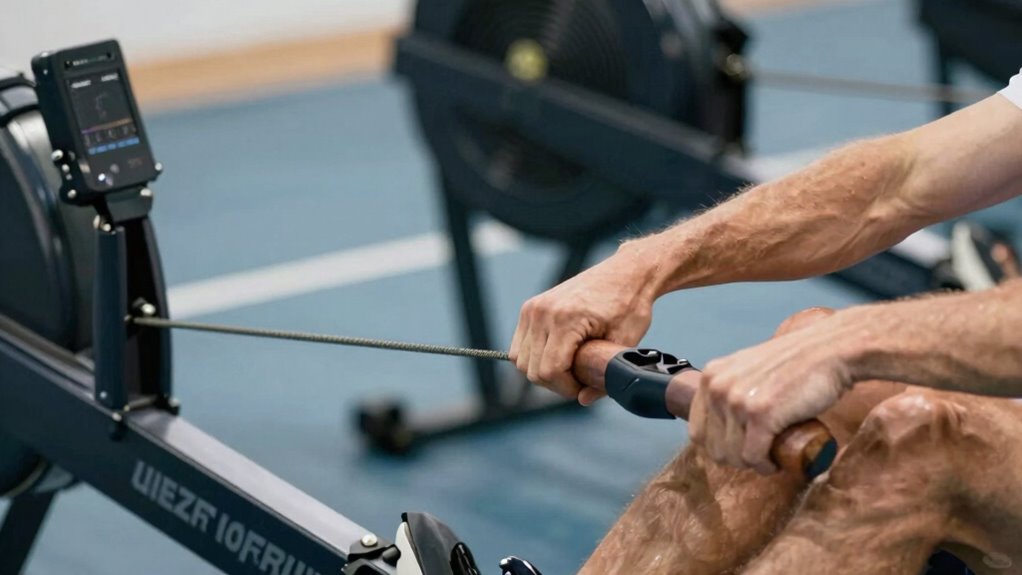

You’ll find that focusing on proper technique on a rowing machine helps you progress faster than relying solely on motivation, which can come and go. Good form guarantees you use the right muscles and avoid injuries, making each stroke more effective and efficient. It keeps your workouts consistent and safe, even when your motivation dips. By mastering technique, you’ll build endurance and strength steadily—continue exploring to discover how maintaining proper form benefits your long-term results.

Get travel and outdoor gear delivered free with Prime
- Fast, free delivery on millions of items
- Prime Video, Amazon Music and more included
- Member-only deals all year
Key Takeaways
- Proper technique ensures consistent muscle engagement, leading to faster progress regardless of fluctuating motivation levels.
- Technique promotes efficient movement, maximizing results even during low-motivation sessions.
- Correct form reduces injury risk, encouraging sustained use and long-term adherence beyond fleeting motivation.
- Technique provides a reliable foundation for improvement, making progress less dependent on motivation.
- Emphasizing proper form optimizes energy use, enhancing endurance and results more quickly than motivation alone.
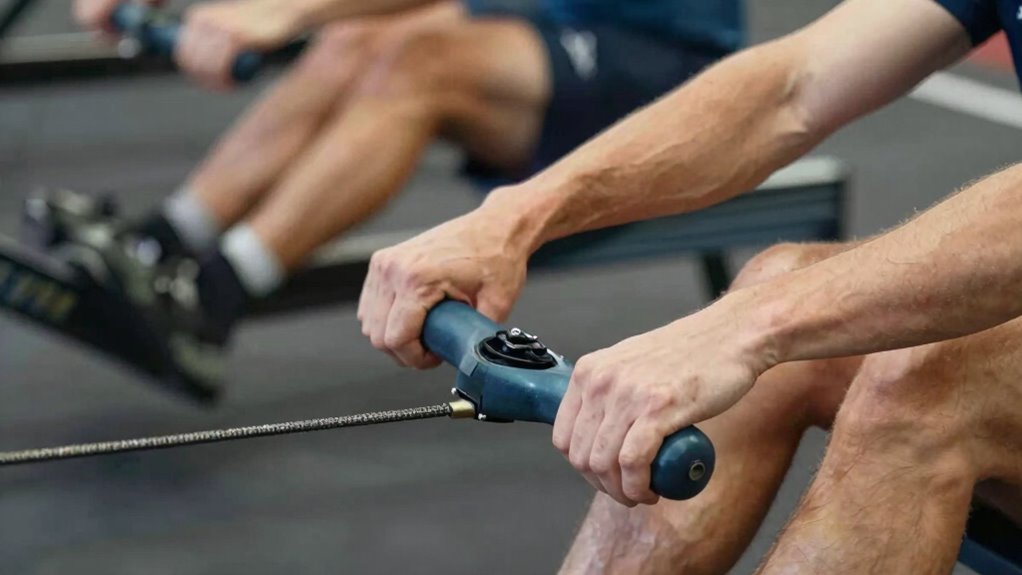
Using a rowing machine effectively can greatly enhance your workout and prevent injuries, but mastering the proper technique is essential. When you focus on correct form, you maximize muscle engagement, ensuring that every part of your body works together efficiently. Proper technique helps you target the right muscle groups—your legs, core, back, and arms—maximizing the benefits of your workout. Instead of relying solely on motivation to push through fatigue, good technique guarantees that each stroke is productive, making your time on the machine more effective.
Proper rowing technique maximizes muscle engagement and efficiency for safer, more effective workouts.
One of the key reasons technique outpaces motivation is stroke efficiency. When your movements are smooth and precise, you use less energy to generate power. This means you can sustain longer workouts without feeling exhausted too quickly. Good stroke efficiency relies on proper sequencing: you start with your legs, then engage your core, and finish with your arms pulling the handle. This coordinated movement reduces unnecessary effort and prevents you from overusing certain muscle groups, which can lead to fatigue or injury over time. As you develop better technique, your strokes become more fluid, naturally boosting your performance and endurance.
Muscle engagement is another critical factor. When you execute each stroke correctly, you activate the targeted muscles fully and evenly. This focused engagement not only improves strength gains but also helps prevent muscular imbalances that can cause discomfort or injury. Technique ensures that you’re not wasting energy by using improper form, like overextending your arms or leaning back excessively. Instead, you learn to harness your body’s natural mechanics, making each pull more powerful and controlled. Over time, this consistent muscle engagement builds endurance and muscle tone more effectively than simply trying to push harder with motivation alone.
While motivation can drive you to start and push through initial fatigue, it’s often inconsistent. When you rely on motivation alone, you risk developing bad habits or overexerting yourself, which can lead to injuries. Technique, on the other hand, provides a reliable foundation. It guides your movements, making each stroke purposeful and efficient, regardless of how tired you feel. As your technique improves, you’ll notice your stamina increases naturally because you’re conserving energy and engaging muscles properly. This consistency encourages progress that’s sustainable, unlike the fleeting boosts motivation can give.
In essence, technique is your best tool for long-term success on a rowing machine. It ensures maximum muscle engagement, enhances stroke efficiency, and fosters steady progress. While motivation might get you through tough sessions initially, mastering the proper form guarantees that every workout counts, making your efforts more effective and injury-free.
rowing machine with adjustable resistance
As an affiliate, we earn on qualifying purchases.
As an affiliate, we earn on qualifying purchases.
Frequently Asked Questions
How Long Does It Take to See Technique Improvements on a Rowing Machine?
You can start noticing technique improvements on a rowing machine within a few sessions, especially if you focus on form consistency and stroke rhythm. Initially, it might take just a week or two to feel more comfortable and develop proper habits. By regularly practicing with attention to your technique, you’ll see faster progress than relying solely on motivation. Keep refining your form, and improvements will become more noticeable quickly.
Can Motivation Alone Sustain Long-Term Rowing Machine Workouts?
Motivation alone often isn’t enough to sustain long-term rowing workouts because mental resilience is essential. As you become more familiar with the equipment, your confidence grows, helping you push through fatigue and boredom. Without mental resilience, motivation can fade, but developing technique and comfort with the machine keeps you committed. Focus on building your mental toughness and equipment familiarity for lasting progress and consistent workouts.
What Common Mistakes Hinder Progress in Rowing Technique?
You often hinder progress by neglecting form adjustments and improper breathing techniques. If you rush through strokes or neglect core engagement, your technique suffers, reducing efficiency and increasing injury risk. Focusing on smooth, controlled movements and making small form adjustments help you improve faster. Additionally, synchronized breathing enhances endurance and power. By actively refining your form and breathing, you’ll see quicker progress and develop a more effective, sustainable rowing rhythm.
Is Technique More Important Than Effort During Rowing Workouts?
Technique is more important than effort during rowing workouts because it maximizes biomechanical efficiency, allowing you to get the most out of each stroke with less energy. When you focus on proper form, consistent feedback helps you fine-tune your movements, preventing injury and promoting steady progress. Effort is essential, but without good technique, you’ll waste energy and limit your overall performance and gains.
How Do Professional Rowers Develop Their Technique Skills?
You can develop your technique by studying rowing biomechanics and actively seeking coaching feedback. Professional rowers focus on precise movement patterns, making small adjustments based on biomechanical principles. They work closely with coaches who provide targeted feedback, helping refine their stroke. Regular practice, combined with analyzing biomechanics and listening to expert advice, accelerates skill development. This disciplined approach guarantees technique improves faster than relying solely on motivation.
Conclusion
Focusing on technique with rowing machines pays off faster than relying solely on motivation. For example, imagine John, who starts with perfect form; he quickly improves his endurance and avoids injury. Unlike someone who just pushes through without technique, John’s efficiency accelerates, making workouts more effective and sustainable. So, prioritize mastering proper form—your progress will be steadier, safer, and more rewarding over time. Technique truly fuels lasting results more than motivation alone.
Halloween Picks
halloween
As an affiliate, we earn on qualifying purchases.