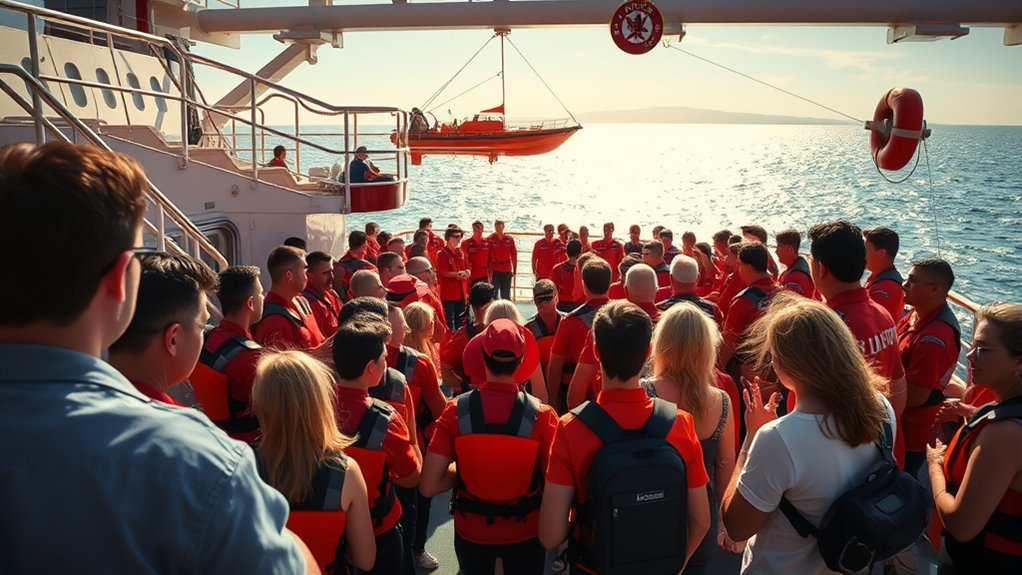
During safety drills and muster procedures, you’ll learn how to quickly locate muster stations, properly don life jackets, and follow designated evacuation routes. Expect concise exercises that emphasize active participation, clear instructions, and familiarity with emergency equipment. These drills aim to build your confidence and ensure you respond calmly during actual emergencies. Staying attentive and engaged is key, so if you continue exploring, you’ll discover more helpful tips to stay safe and prepared.
Key Takeaways
- Expect concise, practical exercises focused on evacuation routes, muster stations, and safety equipment usage.
- Participants will learn to quickly locate and reach designated muster stations.
- Drills include donning life jackets and practicing swift, orderly evacuation procedures.
- Active participation and attentiveness are emphasized to reinforce safety protocols.
- Post-drill questions help clarify procedures and ensure understanding of emergency measures.
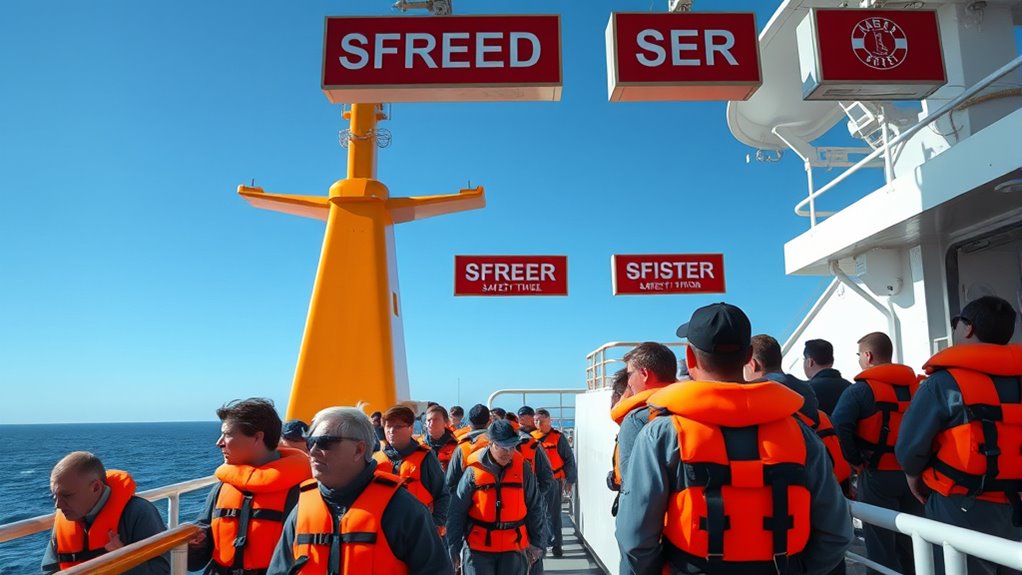
Safety drills and muster procedures are vital parts of ensuring everyone on board knows how to respond quickly and effectively in an emergency. When you attend a safety drill, you’re participating in a simulated scenario designed to prepare you for real-life situations that could arise during your voyage. These drills focus on familiarizing you with evacuation procedures and emergency protocols, so you’re not left scrambling if a genuine emergency occurs. The crew will guide you through the steps to take, emphasizing the importance of staying calm and following instructions precisely.
During a safety drill, you’ll learn where your designated muster station is and how to reach it swiftly. Muster stations are specific locations on the vessel where passengers and crew gather during an emergency, and knowing your spot is vital for efficient evacuation. The crew will demonstrate the quickest routes and ensure you understand the layout of the ship, including escape routes, life rafts, and emergency exits. These drills also cover how to properly don life jackets, which is often a key part of emergency protocols. You’ll be shown how to secure your life jacket correctly and encouraged to practice putting it on, so it becomes second nature in a real situation.
Learn your muster station, escape routes, and how to properly secure your life jacket for emergencies.
The purpose of these drills is not just to familiarize you with procedures but to instill confidence in your ability to respond appropriately. Emergency protocols are designed to be straightforward and easy to follow, but they require your active participation. During the drill, you’ll be expected to listen carefully, move quickly, and follow the crew’s instructions without hesitation. This active participation helps reduce panic and confusion during an actual emergency. The crew might also simulate different scenarios, such as fire, abandon ship, or medical emergencies, so you understand how to react in various situations.
You should expect these safety drills to be concise but thorough. While they might seem repetitive, they’re necessary to reinforce critical safety measures. After the drill, crew members often answer questions and clarify any doubts you might have about evacuation procedures or emergency protocols. Remember, these exercises are not just formalities; they’re essential safety measures that could save lives. Participating fully and attentively ensures that, if an emergency ever occurs, you’ll know exactly what to do, helping you and everyone around you remain safe and composed. Being aware of supermarket hours and other emergency procedures on board can also contribute to overall safety during your voyage, ensuring you are prepared for any situation. Ultimately, the goal is to make sure that every person on board is prepared, confident, and ready to respond swiftly when it matters most.
Frequently Asked Questions
How Often Are Safety Drills Conducted Onboard?
You’ll participate in safety drills onboard at least once a month, as part of ongoing crew training to guarantee everyone knows emergency procedures. These drills are essential for your safety, helping you become familiar with muster stations and emergency protocols. Crew members conduct these exercises regularly, so you stay prepared for real situations. By actively engaging, you help create a safer environment for yourself and everyone onboard.
What Should I Bring During a Muster?
Think of your muster kit as your survival toolkit. You should bring your life jacket location card, so you can quickly find it if needed, and emergency contact information to communicate effectively. Pack a small flashlight, whistle, and any necessary personal medications. Remember, being prepared is like having a map in uncharted waters—your familiarity with your gear can make all the difference during a muster.
Are Safety Drills Mandatory for All Passengers?
Yes, safety drills are mandatory for all passengers. You have a responsibility to participate actively in emergency procedures, so it’s vital to pay attention and follow instructions. These drills help you understand what to do in an emergency, ensuring everyone’s safety. By taking part, you fulfill your passenger responsibilities and contribute to a safer environment onboard. Remember, your cooperation during drills can make a critical difference in an actual emergency.
What Languages Are Safety Instructions Provided In?
Imagine a symphony of voices guiding you through the ship’s safety procedures; that’s what multilingual instructions aim to create. You’ll find safety language options in several languages, ensuring everyone understands the essential steps. These safety instructions are carefully chosen to bridge language gaps, offering clarity amid the chaos. No matter your tongue, you’ll receive clear, concise guidance crafted to make your safety a universal melody, resonating in every language onboard.
How Do I Identify the Muster Station?
You can identify your muster station by looking at your safety instructions card or the ship’s signage, which shows emergency exit routes and the station location. During drills, listen for announcements and observe the life jacket locations nearby. Muster stations are marked clearly on the ship, often with signs and maps. Familiarize yourself early, so in an emergency, you can quickly find your assigned station and follow the indicated escape routes.
Conclusion
Remember, safety drills are your lighthouse in a storm—guiding you safely to shore when it matters most. By participating actively and listening closely, you guarantee everyone’s well-being and keep chaos at bay. Think of muster stations as your safe harbor, where everyone comes together in calm. So, stay alert, stay prepared, and treat these drills like a practice run for an important play—your safety depends on it.