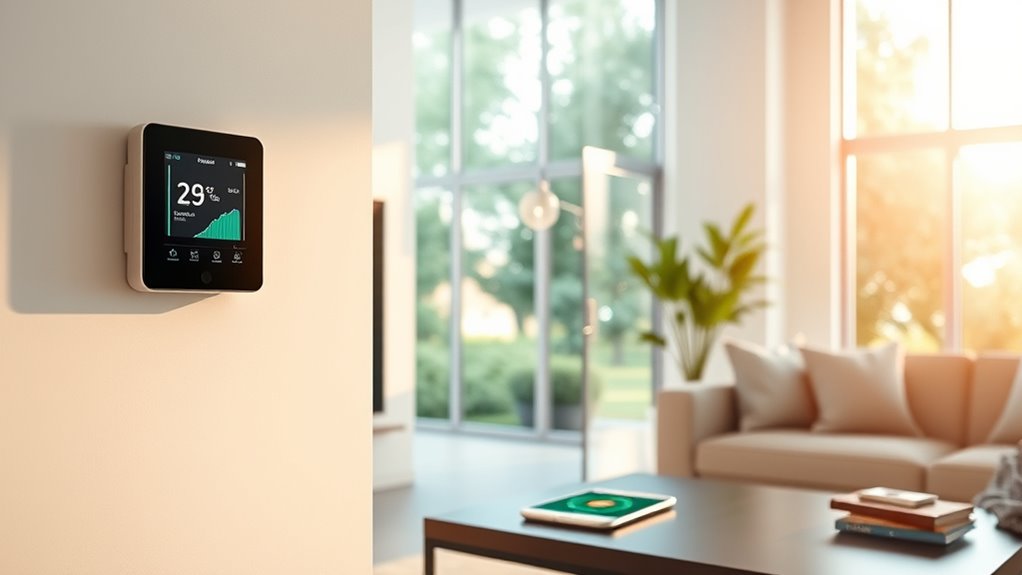

Smart home automation helps you save money by optimizing energy use through renewable sources like solar and wind, reducing reliance on fossil fuels. It uses real-time data and smart grids to adjust consumption, cut costs, and cut emissions. Demand response features automatically turn off non-essential devices during peak times, ensuring efficiency and stability. If you want to discover how these smart systems can enhance your savings and sustainability, further details will show you how to get started.
Key Takeaways
- Smart automation optimizes energy use by adjusting devices based on real-time demand and occupancy, reducing waste.
- Integrating renewable energy sources lowers utility costs and decreases reliance on fossil fuels.
- Smart grid connectivity enables dynamic energy management and cost savings through demand response programs.
- Automated energy storage systems maximize the use of stored renewable energy, lowering overall energy expenses.
- Real-time data and predictive algorithms help identify savings opportunities and prevent unnecessary energy consumption.

Have you ever wondered how smart homes can help you conserve energy and reduce costs? The answer lies in the innovative ways these homes harness technology to optimize energy use. One key aspect is integrating renewable energy sources, like solar panels or wind turbines, with your home’s power system. By generating clean energy on-site, you lower your reliance on traditional utilities, which often draw from fossil fuels. This not only reduces your carbon footprint but also cuts your energy bills. When combined with smart home automation, renewable energy becomes more effective. You can program your system to store excess power in batteries or feed it back into the grid during peak times, maximizing your savings and supporting sustainable energy practices.
Smart grid integration takes your energy management a step further. Think of the smart grid as a two-way communication system between your home and energy providers. It allows your smart home to send and receive real-time data about energy demand and supply. When energy prices are high or demand is low, your system can automatically adjust to reduce consumption or switch to stored renewable energy. This kind of responsiveness ensures you’re always using power efficiently, avoiding unnecessary costs. Your smart home can even predict when you’ll need more energy—like during cold snaps or heatwaves—and preemptively adjust settings to keep comfort levels high without waste. This seamless coordination between your home’s automation system and the grid ensures you’re making the most of renewable energy sources and minimizing energy waste.
Smart grid systems enable real-time energy management and cost savings through proactive home automation.
Furthermore, smart grid integration enables your home to participate in demand response programs. During peak periods, utilities might incentivize you to reduce consumption, and your smart system can automatically turn off non-essential devices or adjust thermostats accordingly. This not only saves you money but also helps stabilize the grid, making energy use more sustainable overall. With these technologies working together, your smart home becomes a proactive participant in energy management, rather than a passive consumer. You gain control, savings, and peace of mind knowing your home is operating efficiently and sustainably.
In essence, smart homes equipped with renewable energy and smart grid integration are transforming energy efficiency from a simple goal into a practical reality. You’re empowered to make smarter choices about when and how you use energy, reducing costs while supporting cleaner, renewable sources. It’s a win-win situation—saving money, protecting the environment, and enjoying greater comfort all at the same time. Additionally, understanding energy management systems can help you optimize your home’s overall efficiency and savings.

ECO-WORTHY 10KW Output 9.36KWH Off Grid Solar System Complete Kit for Home:12pcs 195W Solar Panels(2340W)+10KW 120V/240V Inverter (UL 1741)+ 2pcs 48V 100AH Lithium Batteries(UL 1973&UL 9540A)
[Ideally Output of 9.36KWH] The power of 9.36KWh per day under 4 hours full sunshine by the 2340W…
As an affiliate, we earn on qualifying purchases.
As an affiliate, we earn on qualifying purchases.
Frequently Asked Questions
How Do Smart Home Devices Impact Overall Energy Consumption?
Smart home devices greatly impact your overall energy consumption by enabling energy monitoring and device optimization. You can track how much energy each device uses and adjust settings to reduce waste. Automation features turn off lights or appliances when not in use, saving energy effortlessly. This proactive approach helps you cut costs, lowers your environmental footprint, and ensures your home runs efficiently, making smart technology a smart choice for energy management.
Are There Any Security Risks With Smart Home Automation Systems?
Every coin has two sides, and smart home automation is no exception. You might worry about hacking vulnerabilities and data privacy issues, which pose security risks. If you’re not careful, hackers could access your devices or personal information. To stay safe, keep software updated, use strong passwords, and enable security features. Being proactive helps you enjoy the benefits of automation without falling into common security traps.
What Is the Typical Cost to Upgrade to a Smart Home System?
Upgrading to a smart home system can vary in cost, but you’ll generally face installation costs of around $1,000 to $3,000, depending on the complexity and devices you choose. Ongoing expenses include subscription fees and maintenance, which can add a few hundred dollars annually. You should also consider the initial investment in compatible devices. Overall, budgeting for both installation costs and ongoing expenses helps guarantee a smooth upgrade experience.
Can Smart Home Technology Be Integrated With Existing Home Appliances?
You can definitely integrate smart home technology with your existing appliances through retrofit compatibility. Many smart devices offer voice control features, making it easy to control your appliances with just your voice. You might need some adapters or smart plugs, but overall, upgrading is straightforward. This way, you enhance your home’s automation without replacing everything, saving you money and making your appliances smarter and more convenient to use.
How Does Energy Savings Vary by Climate and Location?
Like a tailor customizing a suit, your energy savings depend on your climate and location. Climate-specific savings can be substantial where temperatures fluctuate greatly, while regions with consistent weather may see less impact. Regional energy patterns influence how much you save, as some areas have cheaper or more expensive energy rates. By understanding your local climate and energy trends, you can optimize your smart home setup for maximum savings.

Emporia Vue 3 Home Energy Monitor – Smart Home Automation Module and Real Time Electricity Usage Monitor, Power Consumption Meter, Solar and Net Metering for UL Certified Safe Energy Monitoring
SAFETY YOU CAN TRUST WITH UL CERTIFICATION: With Emporia Energy, your home energy monitoring is safe, reliable, and…
As an affiliate, we earn on qualifying purchases.
As an affiliate, we earn on qualifying purchases.
Conclusion
You might think automation is complicated or expensive, but it’s actually a smart investment that saves you money in the long run. By optimizing your energy use with smart devices, you’ll cut costs and reduce your carbon footprint without sacrificing comfort. Plus, modern systems are user-friendly and easy to set up. So, don’t let doubts hold you back—embrace smart home technology today and enjoy the benefits of energy efficiency and savings.

Ontel Battery Daddy Storage & Organizer Case w/Tester, Stores & Protects Up to 180 Batteries, Double-Sided, Clear Locking Lid, Secure Latches & Portable Carrying Handle – Red (Batteries Not Included)
Double-Sided Battery Organizer: The Ontel Battery Daddy is a compact & portable way to organize, store and protect…
As an affiliate, we earn on qualifying purchases.
As an affiliate, we earn on qualifying purchases.

ecobee Smart Thermostat Essential – Energy Star Certified programmable Wi-Fi Thermostat – Works with Siri, Alexa, and Google Assistant
Save up to 23% every year on heating and cooling costs, adjusts to your set schedule to save…
As an affiliate, we earn on qualifying purchases.
As an affiliate, we earn on qualifying purchases.