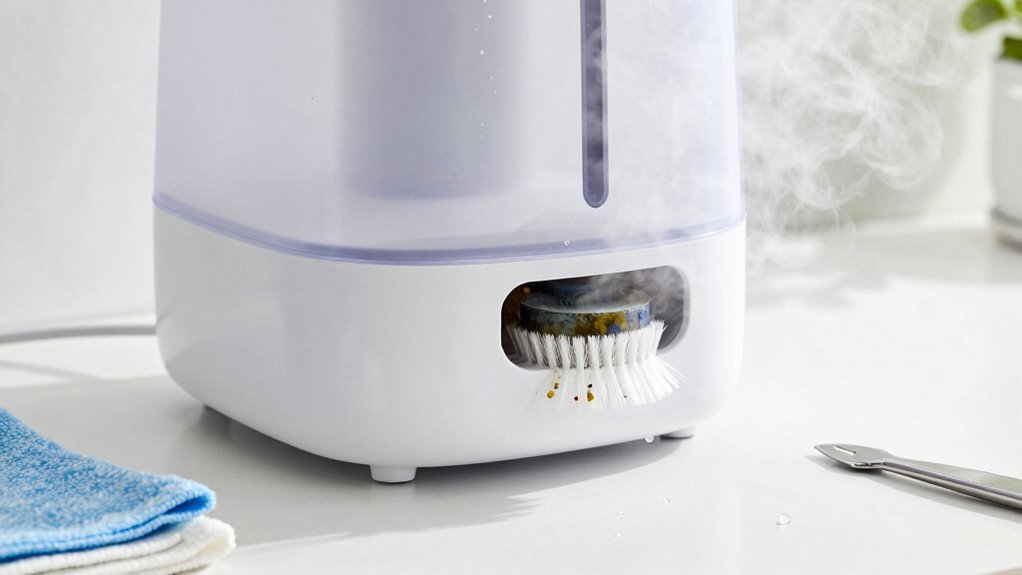

To prevent gross surprises with your smart humidifier, you should clean it daily by unplugging, emptying, and rinsing the tank thoroughly. Use a vinegar-water mixture to soak and scrub away mineral deposits and bacteria, while inspecting and replacing filters regularly. Always dry parts completely before storing in a dry, well-ventilated area. Proper water quality, like filtered or distilled water, also helps reduce buildup. Keep your device clean and well-maintained for safe, healthy air—from here, you’ll discover even more ways to keep it spotless.

Get travel and outdoor gear delivered free — and shop member deals
- Fast, free delivery on millions of items
- Access to Prime Big Deal Days deals on October 6–7
- Prime Video, Amazon Music and more included
Key Takeaways
- Empty and rinse the tank daily to prevent bacterial and mold buildup.
- Use a vinegar solution for thorough soaking and scrubbing of all internal parts weekly.
- Replace filters regularly and use distilled or filtered water to reduce mineral deposits.
- Dry all components completely before storage to inhibit microbial growth.
- Maintain a consistent cleaning schedule to ensure optimal hygiene and device performance.
A humidifier can help improve your home’s air quality, but only if you keep it clean. If you neglect regular maintenance, it can become a breeding ground for airborne bacteria and mold. These germs can circulate in your living space, potentially triggering allergies, respiratory issues, or even infections. To prevent this, adopting a smart cleaning routine is vital.
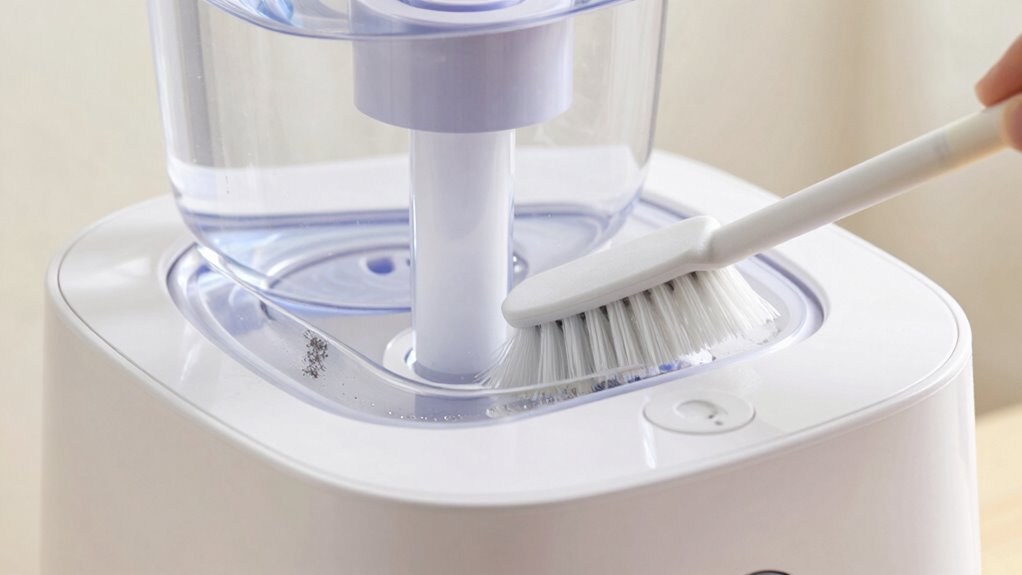
Start by unplugging your humidifier and emptying any remaining water daily. Stagnant water is a perfect environment for bacteria and mold to grow. Rinsing the tank thoroughly with clean water after each use helps remove mineral deposits and prevents buildup. For a deeper clean, use a mixture of white vinegar and water—about a 1:1 ratio—and let it sit in the tank for 20-30 minutes. Vinegar is a natural disinfectant that kills germs and discourages mold growth. After soaking, scrub the interior with a soft brush or cloth to dislodge any residue, then rinse thoroughly with water. This process guarantees that airborne bacteria don’t have a chance to multiply and spread. Maintaining proper water quality is also essential for preventing mold and mineral buildup. Using distilled or filtered water reduces mineral buildup, further minimizing mold risk, and helps keep your humidifier functioning optimally. Regularly inspecting and replacing parts like the filter ensures that contaminants don’t accumulate over time.
Unplug, empty, rinse, and soak with vinegar to prevent mold and bacteria in your humidifier.
Regular cleaning isn’t just about hygiene; it’s also about efficiency. A clean humidifier operates better, dispersing moisture evenly without creating white dust or mineral deposits. When these deposits accumulate, they can harbor bacteria, making it harder to keep your air clean. Using distilled or filtered water reduces mineral buildup, further minimizing mold risk. Additionally, proper cleaning techniques are key to ensuring all parts are thoroughly disinfected and free of debris. It’s also helpful to keep a cleaning schedule to maintain consistent hygiene practices.
Drying your humidifier thoroughly after each cleaning session is essential. Moist environments are perfect for mold to thrive, so ensure all parts are completely dry before reassembling. Storing the unit in a dry, well-ventilated area also helps prevent mold and bacteria buildup during periods of non-use. Ensuring proper air circulation around the stored unit can further prevent microbial growth.
As an affiliate, we earn on qualifying purchases.
Frequently Asked Questions
How Often Should I Replace the Humidifier Filter?
You should replace your humidifier filter every 1 to 3 months, depending on the filter’s lifespan and usage. Regular replacement guarantees peak performance and prevents mold or bacteria buildup. Check the manufacturer’s recommendations for your specific model, as some filters may need more frequent changes with heavy use. Keep an eye on signs like reduced mist output or a musty smell, which indicate it’s time for a replacement.
Can I Use Vinegar for All Types of Humidifiers?
You can generally use vinegar for cleaning different humidifiers, but always check the manufacturer’s instructions first. Vinegar safety is high because it’s natural and non-toxic, but some humidifier materials, like certain plastics or electronic components, might be sensitive. For best results and to avoid damage, test a small area first or opt for a vinegar solution specifically recommended for your humidifier type. This helps guarantee thorough cleaning without risking harm.
What Are Signs My Humidifier Needs Deep Cleaning?
You’ll notice your humidifier needs a deep clean when you see airborne bacteria or dust buildup around it. If it starts to emit a musty odor, produces less mist, or the water looks cloudy or moldy, it’s time for a thorough cleaning. Regular maintenance prevents these issues. Deep cleaning helps eliminate bacteria, mold, and dust, ensuring you breathe healthier air and keep your device functioning efficiently.
Is It Safe to Use Essential Oils in My Humidifier?
Sure, go ahead and add essential oils to your humidifier—if you enjoy the idea of clogged filters and mold. Essential oil safety isn’t always guaranteed, and not all humidifiers are compatible with oils. Check your device’s compatibility first; otherwise, you risk damaging it or spreading bacteria. For a fresh scent, consider using specially designed diffusers. Your humidifier isn’t a magic oil diffuser, after all.
How Do I Prevent Mold From Growing in My Humidifier?
To prevent mold in your humidifier, you should regularly clean and dry it thoroughly after each use. Using distilled water can improve air quality and reduce mold growth, since it’s free of minerals that promote mold. Keep the humidifier in a well-ventilated area, and replace water daily. Consistent cleaning and proper maintenance are key to mold prevention, ensuring healthier air quality in your space.
Conclusion
Now that you know the essential cleaning tips, you’re all set to keep your humidifier spotless and safe. But here’s the catch—neglecting even one step could leave hidden nasties lurking. Imagine turning it on after weeks of neglect and discovering a surprise you definitely don’t want to see. Stay vigilant, follow the steps carefully, and always stay one step ahead. Because in the world of clean humidifiers, a little caution goes a long way—trust me, you won’t want to miss what’s coming next.
Fall Picks
fall essentials
As an affiliate, we earn on qualifying purchases.