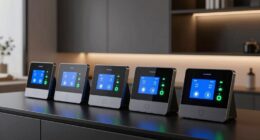
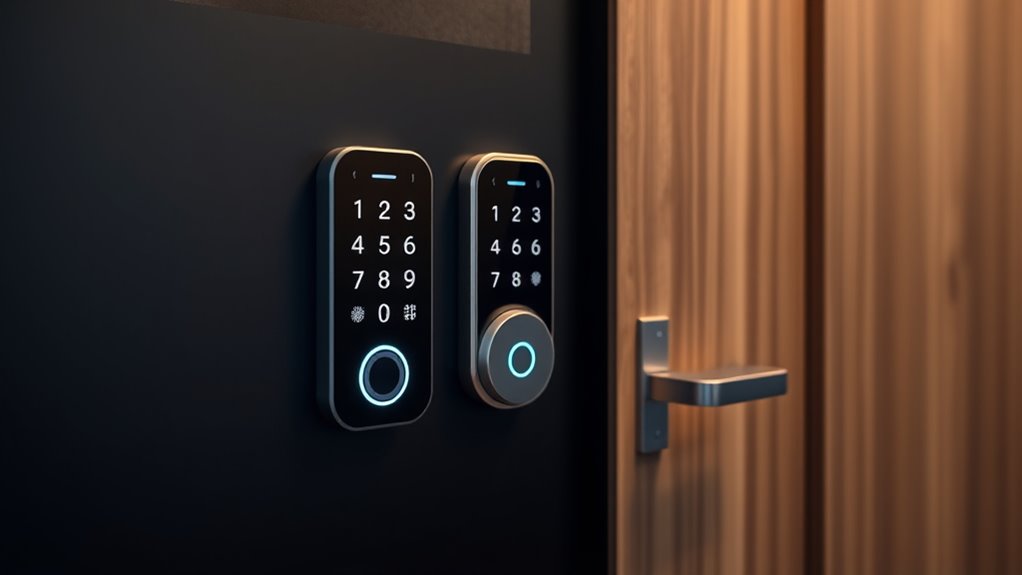

Smart locks let you open your door without keys, offering convenience and improved security through features like biometric scans or remote access. You can control who enters and when, monitor activity, and grant temporary access easily. However, they depend on internet connections, which can be vulnerable, and may face hacking risks or technical glitches. To fully understand their benefits and potential drawbacks, keep exploring how these systems work and what to evaluate before choosing one.
Key Takeaways
- Smart locks eliminate physical keys, offering convenient keyless entry via smartphones, biometrics, or keypads.
- They enhance security with features like remote access control, activity logs, and temporary permissions.
- Dependence on internet connectivity and potential hacking risks are notable drawbacks of keyless systems.
- Biometric locks provide quick, contactless access but can be affected by dirt, scratches, or technical glitches.
- Regular updates, strong encryption, and proper security practices are essential to maximize safety and reliability.
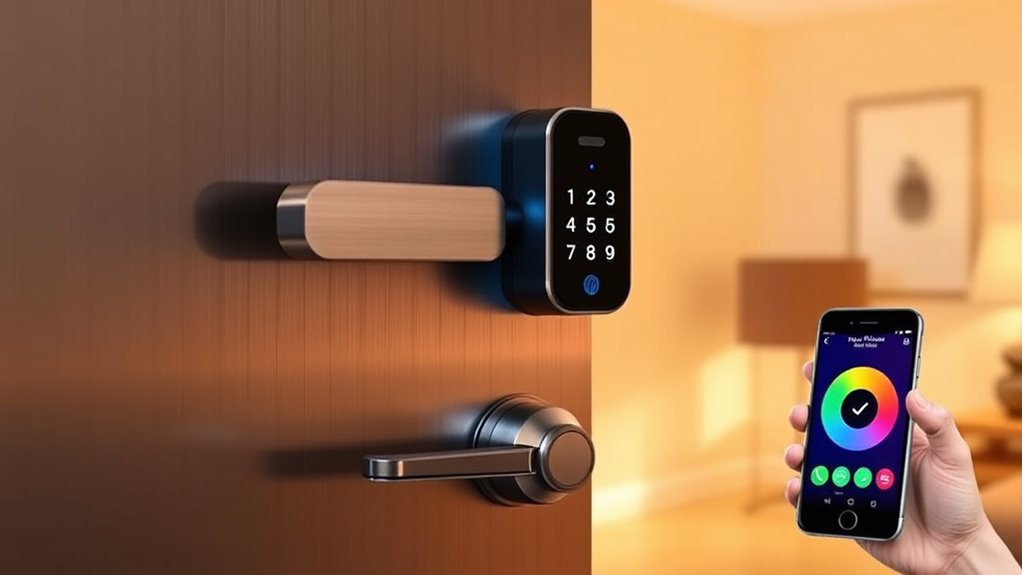
Smart locks are innovative devices that allow you to control and secure your doors using digital technology, eliminating the need for traditional keys. Instead of fumbling for keys or worrying about losing them, you can operate your lock through a smartphone app, a keypad, or even biometric authentication. This advanced security system offers a level of convenience and flexibility that traditional locks simply can’t match. With smart locks, you can grant or revoke access remotely, making it easier to manage multiple users or accommodate visitors without physical keys. This is especially useful if you frequently host guests or hire service providers, as you can send temporary access codes or permissions instantly from anywhere.
Smart locks replace keys with digital control via app, keypad, or biometric authentication for ultimate convenience and security.
One of the standout features of many smart locks is biometric authentication, which uses fingerprint recognition or facial scanning to verify your identity. This method provides enhanced security because it’s difficult for unauthorized individuals to replicate your biometric data. Plus, it offers quick, touch-free entry—no need to remember passcodes or carry around keys. When you combine biometric authentication with remote access management, you gain full control over who can enter your home and when. You can lock or disengage your door remotely, monitor access logs, and even set schedules for when certain users can gain entry. This makes smart locks ideal for busy households, vacation homes, or rental properties where managing access efficiently and securely is a priority.
However, while the convenience of remote access management is attractive, it also introduces some concerns. Dependence on internet connectivity means your smart lock could be vulnerable to outages or hacking attempts if not properly secured. It’s essential to choose a reputable brand with strong encryption and regularly update the firmware to protect your digital keys. Additionally, biometric systems, though highly secure, are not infallible—factors like dirt, scratches, or technical glitches can sometimes interfere with fingerprint recognition. This can lead to frustration if the lock fails to authenticate you when you’re in a hurry or in bad weather. Moreover, understanding how Self Watering Plant Pots function can help you better maintain your indoor and outdoor greenery, ensuring your plants stay healthy with minimal effort.
Despite these potential drawbacks, the benefits of modern smart locks often outweigh the risks, especially when you take precautions. They offer a high degree of control, convenience, and security, making it simple to manage access for everyone in your household or guests. Whether you’re tech-savvy or just looking for an easier way to secure your home, smart locks with biometric authentication and remote access management provide a compelling upgrade from traditional keys. Just remember to choose a reliable model, keep your software updated, and implement strong passwords to maximize your security and peace of mind.

Fingerprint Door Lock, Smart Fingerprint Door Knob with Lock, Biometric Door knob with App Control & Key, Keyless Thumbprint Entry Door Lock for Bedroom, Front Door, Home, Apartment Office-Matte Black
[Secure Your Home with Smart Door Lock] Our upgraded fingerprint door lock offers easy unlocking options using your…
As an affiliate, we earn on qualifying purchases.
As an affiliate, we earn on qualifying purchases.
Frequently Asked Questions
How Secure Are Smart Locks Against Hacking Attempts?
You’re wondering how secure smart locks are against hacking attempts. While they use advanced encryption protocols to protect your access, cybersecurity vulnerabilities still exist. Hackers can exploit weak passwords or outdated firmware. To stay safe, you should keep your lock’s software updated, use strong, unique passwords, and enable multi-factor authentication if available. Ultimately, smart locks offer good security, but staying vigilant helps prevent potential hacking threats.
Can Smart Locks Be Integrated With Existing Home Automation Systems?
You can definitely integrate smart locks with your existing home automation system, making your smart home more seamless. However, compatibility issues may arise, depending on the brand and technology used. Check if your smart lock supports your home automation platform, like Alexa, Google Assistant, or Zigbee. If they’re compatible, you’ll enjoy easy control and automation. Otherwise, you might face some hurdles setting up and ensuring everything works smoothly together.
What Happens if the Battery Dies in a Smart Lock?
If your smart lock experiences battery failure, you’ll need to use backup methods to open it. Most devices include a physical key or a low-battery indicator, so you can replace the batteries or use a backup key. It’s smart to keep spare batteries nearby or confirm your lock supports alternative access methods, so you’re not locked out during a battery failure. Regularly check your battery levels to prevent unexpected power loss.
Are Smart Locks Suitable for Rental Properties or Airbnb Hosts?
Imagine opening your rental’s front door with just a tap—smart locks make that happen! As a rental or Airbnb host, they revolutionize rental management and tenant access. You can grant or revoke access instantly without physical keys, making guest check-ins seamless. Plus, they boost security and reduce key theft worries. Smart locks are perfect for streamlining operations and ensuring a smooth experience for both you and your tenants.
How Does Remote Access Work With Keyless Entry Systems?
Remote access with keyless entry systems allows you to control your lock via smartphone control. You can lock or open your door from anywhere, whether you’re at work or on vacation. This feature uses Wi-Fi or Bluetooth, giving you real-time access and the ability to grant temporary entry codes to guests. With remote access, you stay in control, ensuring security and convenience no matter where you are.

TEEHO TE001 Keyless Entry Door Lock with Keypad – Smart Deadbolt Lock for Front Door with 2 Keys – Auto Lock – Easy Installation – Satin Nickel
Passcode Entry: This keypad lock offers 20 access codes for family use and a temporary code for single-use…
As an affiliate, we earn on qualifying purchases.
As an affiliate, we earn on qualifying purchases.
Conclusion
Smart locks offer convenience and enhanced security, making your life easier and safer. But are you ready to trust technology with your most valuable possession—your home? Consider your lifestyle and priorities before making the switch. Whether you choose traditional keys or a smart system, the key is finding what works best for you. Are you prepared to embrace the future of home security, or will you stick with the familiar? The choice is yours.

Veise VE012W Built-in WiFi Fingerprint Smart Lock, App Remote Control, Compatible with Alexa & Google Assistant, Keyless Entry for Front Door, Digital Keypad Deadbolt, Auto Lock, Matte Black
6-in-1 Keyless Entry: Unlock via the app, fingerprint (stores 20), unlimited one-time codes, 100 custom PINs, 2 physical…
As an affiliate, we earn on qualifying purchases.
As an affiliate, we earn on qualifying purchases.

Tapo Smart Wi-Fi Deadbolt Door Lock – Fingerprint Recognition, Keyless Tactile Buttons & in-App Monitoring, Auto-Lock, IP54, BHMA Certified, Compatible with Standard Door Sizes, Tapo DL105
6 WAYS TO UNLOCK: Fingerprint recognition, custom keypad passcodes, the Tapo App, close-range Bluetooth, your smart home assistant,…
As an affiliate, we earn on qualifying purchases.
As an affiliate, we earn on qualifying purchases.