


Before your long trip, review your home security by locking doors and windows, installing or updating smart locks and cameras, and informing trusted neighbors for monitoring. Set timers for lights and pause mail to make your home less attractive to burglars. Secure digital accounts with two-factor authentication, update passwords, and disable social media sharing of travel plans. Pack essentials, keep emergency contacts handy, and verify your devices are charged. Continue exploring the best ways to keep everything safe during your trip.
Key Takeaways
- Secure all entry points, including locks, cameras, and smart devices, and inform trusted neighbors for monitoring.
- Enable two-factor authentication and update passwords on all online accounts before departure.
- Unplug unnecessary electronics, set timers for lights, and disable automatic mail or package deliveries.
- Prepare and carry digital and physical copies of travel insurance, emergency contacts, and important documents.
- Research and implement new safety technology tools to enhance home security and personal safety during the trip.
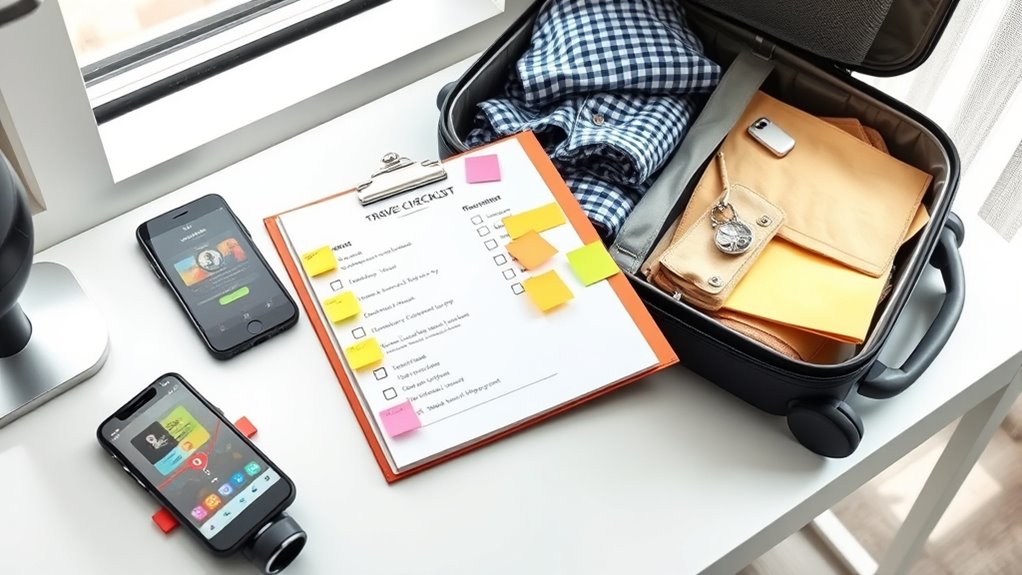
Planning a long trip can be exciting, but it’s also essential to prioritize your security to avoid unnecessary stress. Before you pack your bags and set off, taking steps to ensure your home safety is crucial. Start by securing all entry points—double-check that doors and windows are locked, and consider installing smart locks or security cameras if you haven’t already. Inform a trusted neighbor or friend about your travel plans so they can keep an eye on your property and alert you to any suspicious activity. It’s wise to pause your mail delivery or ask someone to collect your mail and packages, preventing signs of an empty home. Additionally, unplug unnecessary electronics to prevent electrical issues and reduce energy consumption. Leaving lights on timers can give the impression someone is home, deterring potential burglars.
Alongside home safety, securing comprehensive travel insurance is a vital part of your pre-trip checklist. Travel insurance can cover unexpected medical expenses, trip cancellations, lost luggage, or emergency evacuations, giving you peace of mind throughout your journey. Compare policies carefully to find one that aligns with your trip’s specifics, including your destination, activities, and health needs. Make sure your insurance covers any pre-existing conditions and check the claim process so you’re prepared for any eventuality. Carry digital and physical copies of your insurance details, along with emergency contacts, and keep them accessible during your trip.
Creating a smart security checklist also involves preparing your digital life. Enable two-factor authentication on your accounts, update passwords, and consider using a password manager. Be cautious when sharing your travel plans on social media—posting in real-time can alert potential thieves that your home is unoccupied. Notify your bank about your travel dates to avoid account freezes or suspicious activity alerts, and set up alerts for large transactions or withdrawals. Carry a portable charger for your devices and ensure your phone’s security settings are enabled, like a password or biometric lock, so your data stays protected if your device is lost or stolen. Research safety technology advancements to stay informed about new tools that can enhance your security.
Finally, before leaving, make a list of emergency contacts, including local authorities, your country’s embassy, and trusted friends or family members. Packing a basic first aid kit and keeping important documents in a safe, accessible place also contributes to your overall security. Taking these proactive steps before your trip minimizes risks, allowing you to focus on enjoying your adventure with confidence.

Blink Outdoor 4 – Wireless smart security camera, two-year battery life, 1080p HD day and infrared night live view, two-way talk. Sync Module Core included – 3 camera system
Outdoor 4 is our most affordable wireless smart security camera yet, offering up to two-year battery life for…
As an affiliate, we earn on qualifying purchases.
As an affiliate, we earn on qualifying purchases.
Frequently Asked Questions
How Early Should I Start My Security Preparations Before a Trip?
You should start your security preparations at least a week before your trip. Begin by gathering packing essentials and organizing your travel documents to avoid last-minute stress. Check your passport, visas, and any necessary IDs early, and make certain your valuables are secure. This gives you ample time to address any issues, update documents if needed, and double-check your security measures, helping you travel confidently and stress-free.
Do I Need Special Insurance for Security Issues During Travel?
You don’t always need special insurance for security issues during travel, but it’s wise to take into account it. Did you know that 1 in 10 travelers face security-related incidents abroad? Your regular insurance coverage might not cover theft, loss, or political unrest, so look into travel safety insurance to protect against these risks. It offers peace of mind, especially in unfamiliar environments, ensuring you’re financially protected during unexpected security challenges.
What Are Common Security Mistakes Travelers Make?
You often make security mistakes like neglecting travel gadget safety and skipping packing security tips. Always keep your gadgets password-protected and avoid flashing expensive items in public. Don’t leave valuables unattended or hidden improperly in your luggage. Stay alert to your surroundings, especially when handling money or electronics. Following packing security tips and being cautious with your devices helps you avoid common errors, ensuring a safer and more secure trip.
How Can I Check if My Home Is Secure While Away?
Think of your home as a treasure chest, and your home security as the lock that keeps it safe. Before you leave, check all doors and windows, ensuring they’re locked tight. Use timers for lights to mimic occupancy and consider a security system or cameras for added protection. These steps boost your travel safety, giving you peace of mind knowing your home is secure while you’re away, just like guarding precious treasure.
Are There Specific Security Apps Recommended for Travelers?
You should consider using trusted travel apps and security software to stay connected and protected while away. Apps like Life360, which offers real-time location sharing, or Find My iPhone, help you monitor your devices and loved ones. Security software like Norton Mobile Security or McAfee Mobile Security can safeguard your data from theft or hacking. These tools give you peace of mind, ensuring your safety and security during your trip.
smart locks for doors
As an affiliate, we earn on qualifying purchases.
As an affiliate, we earn on qualifying purchases.
Conclusion
Now that you’ve checked everything off your smart security list, you’re almost ready to go. But before you leave, ask yourself—did you forget that one essential step? Something that could change your entire trip’s security? Double-check, stay alert, and trust your instincts. Because sometimes, the smallest oversight can turn an exciting adventure into a nightmare. Are you truly prepared? Only time will tell. Safe travels—your journey awaits, but stay vigilant.
portable phone charger
As an affiliate, we earn on qualifying purchases.
As an affiliate, we earn on qualifying purchases.
home security alarm system
As an affiliate, we earn on qualifying purchases.
As an affiliate, we earn on qualifying purchases.