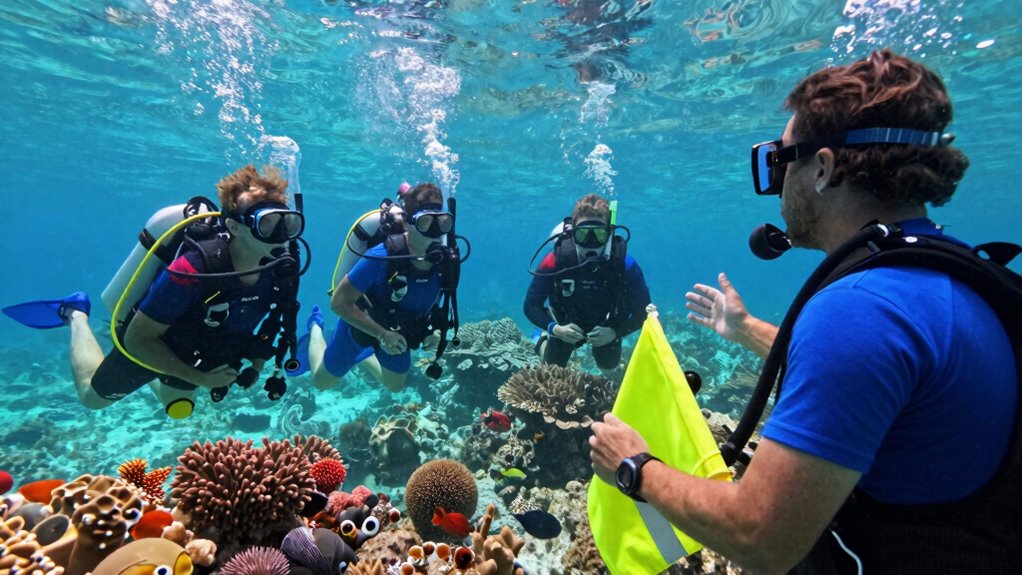

Before any snorkeling excursion, you must pay close attention to the safety briefing. It guides you on how to properly use your gear, recognize emergency signals, and stay with your group. Respecting marine life and understanding potential risks are also emphasized to keep you safe and protect the environment. Ignoring these guidelines can lead to accidents or harm. To ensure a smooth, enjoyable experience, it’s essential to follow all safety instructions carefully. Keep going to learn more about how to stay safe underwater.
Key Takeaways
- Always listen carefully to the safety briefing as it outlines essential procedures for a safe snorkeling experience.
- Ensure your gear fits properly and functions correctly before entering the water to prevent accidents.
- Respect marine life by observing from a distance and avoiding contact to protect both yourself and the environment.
- Stay close to your group, follow communication signals, and inform guides of any issues promptly.
- Learn the emergency signals and procedures to respond calmly and effectively in case of distress or emergencies.
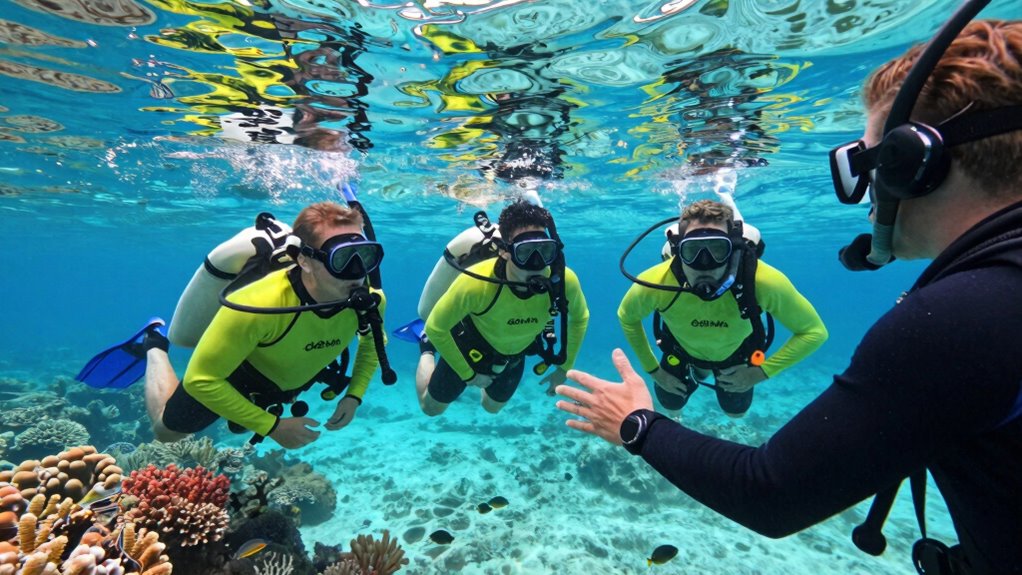
Have you ever wondered what it’s like to explore vibrant underwater worlds without diving deep? Snorkeling lets you glide just below the surface, giving you a front-row seat to marine life in their natural habitat. Before you jump in, though, it’s crucial to pay close attention to the safety briefing provided by your guide. This isn’t just a quick overview—it’s your roadmap to a safe, enjoyable experience. One of the most critical parts of the briefing involves understanding how to use your snorkeling gear properly. Your mask, fins, and snorkel are your tools for exploration, and knowing how to operate them ensures you won’t waste precious time or put yourself at risk.
Your guide will likely emphasize the importance of checking your snorkeling gear before entering the water. Make sure your mask fits snugly but comfortably, creating a good seal to prevent water from seeping in. Test your snorkel to ensure it’s functioning correctly, with a dry-top valve if possible, to prevent water from entering when you breathe. Properly fitting fins are equally important—they help you move smoothly through the water without fatigue. Your guide might also remind you to replace or adjust your gear if it feels uncomfortable or leaks during the briefing. Remember, your gear is your lifeline in the water, so take the time to guarantee it’s in top shape.
Next, the safety briefing will cover how to handle marine life respectfully. It’s tempting to reach out and touch colorful fish or coral, but this can be harmful to both you and the environment. Your guide will instruct you to observe marine creatures without disturbing them, maintaining a safe distance at all times. This not only protects the delicate ecosystem but also keeps you safe from potential stings or bites.
Another crucial aspect of the safety briefing involves understanding the importance of staying with the group. Even if you’re a confident swimmer, it’s easy to drift away or get distracted by the stunning scenery. Your guide will highlight the need to stay close, follow signals, and communicate clearly. They might also review what to do if you encounter trouble—such as signals to indicate distress or exhaustion, and how to signal for help. Recognizing the significance of contrast ratio can also help you appreciate how the clarity and sharpness of your underwater view are maintained during the excursion.
snorkeling gear set with mask fins snorkel
As an affiliate, we earn on qualifying purchases.
As an affiliate, we earn on qualifying purchases.
Frequently Asked Questions
What Should I Do if I Feel Anxious Underwater?
If you feel anxious underwater, focus on your breath control to stay calm. Take slow, deep breaths, inhaling through your nose and exhaling through your mouth. Use calming techniques like counting your breaths or visualizing a peaceful scene. Remember, it’s okay to pause, float on your back, or signal for help if needed. Staying relaxed helps you enjoy the experience and guarantees your safety underwater.
Are There Age Restrictions for Snorkeling Excursions?
Think of snorkeling as a gentle dance with the ocean, and age restrictions are like the choreography ensuring everyone stays safe. Most tours require children to be at least 8 or 10 years old, depending on the operator. When you choose a tour, look for those that promote marine conservation and eco-friendly practices, so you protect our vibrant underwater world while enjoying your adventure. Always check specific age policies before booking.
What Equipment Is Provided and What Should I Bring?
On your snorkeling excursion, the provider usually supplies snorkeling gear like masks, fins, and snorkels, along with essential safety equipment such as life jackets. You should bring a waterproof camera, sunscreen, a hat, and a towel for comfort. It’s also wise to wear a rash guard for sun protection. Always double-check what’s included beforehand and pack extra if you plan to stay out longer.
How Do I Identify and Handle Marine Life Encounters?
Imagine your snorkeling trip as a dance with marine life—respectful steps prevent surprises. To identify and handle encounters, stay calm, observe from a distance, and avoid sudden movements. Use marine life awareness to recognize species and their behaviors. If you spot something unexpected, gently back away to prevent an incident. Remember, encounter prevention is key—respect their space, and they’ll usually keep theirs.
What Are the Best Conditions for Safe Snorkeling?
You should snorkel in calm marine weather with clear water and minimal currents for safety. Check the weather forecast before heading out, as rough seas or strong waves can be dangerous. Follow proper snorkeling etiquette by avoiding touching marine life and staying close to your group. These conditions guarantee a safer, more enjoyable experience, helping you stay alert and respectful of the environment while minimizing risks.
dry-top snorkel for safety
As an affiliate, we earn on qualifying purchases.
As an affiliate, we earn on qualifying purchases.
Conclusion
Remember, a quick, quality safety briefing boosts your boating brain and buoyancy. Don’t disregard or delay it—dive into details, don your gear, and stay alert. By embracing this essential element, you guarantee your snorkeling adventure remains safe, sensational, and stress-free. So, stay savvy, listen closely, and let safety steer your sea safari smoothly. After all, securing safety starts with a simple, swift, and sincere safety session—seal your snorkeling experience with confidence!
marine life observation snorkeling gear
As an affiliate, we earn on qualifying purchases.
As an affiliate, we earn on qualifying purchases.
snorkeling safety equipment
As an affiliate, we earn on qualifying purchases.
As an affiliate, we earn on qualifying purchases.