
TL;DR

Get travel and outdoor gear delivered free with Prime
- Fast, free delivery on millions of items
- Prime Video, Amazon Music and more included
- Member-only deals all year
South Korea was Russia’s second-largest supplier of petroleum products by the end of summer, according to figures cited by The Guardian. It reported 14 voyages carrying 176,000 tons of fuel in July and August, with three of seven tankers under British and EU sanctions. The fuel’s owners and sellers remain unclear.
South Korea became Russia’s second-largest petroleum products supplier by the end of summer, and some shipments travelled on tankers under British and European Union sanctions, The Guardian reported. The reported trade matters because it adds to Russia’s fuel imports during a period of pressure on its oil refining industry, while raising questions about enforcement of sanctions and Seoul’s policy toward Moscow.
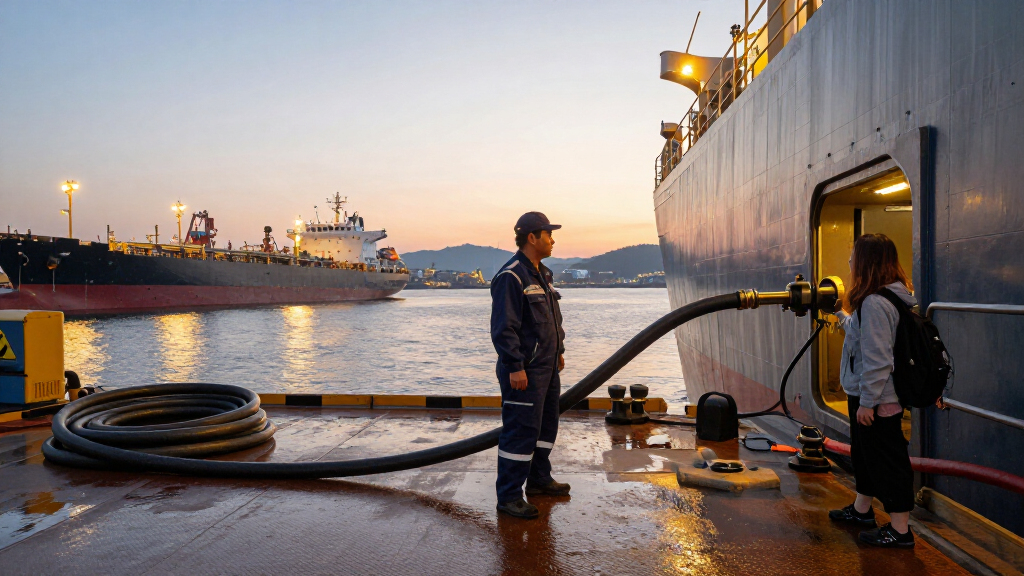
The Guardian counted 14 voyages from South Korean ports to Russia’s Far East in July and August. The ships carried about 176,000 tons of fuel, mostly diesel. Seven tankers made the trips; three were subject to British and EU sanctions, according to the report.
One vessel, the Chongchon, did not call at a South Korean port. The Guardian reported that its cargo was transferred at sea from another ship, a practice that can obscure where fuel originated. In at least two other cases, sanctioned tankers that loaded in South Korea reportedly listed Japan as their destination before sailing instead to Vladivostok.
Russia imported 368,000 tons of petroleum products by sea in August, of which South Korea supplied 112,000 tons, according to figures cited by The Guardian. Only India supplied more that month. The report said it remained unclear who owned and sold the fuel.
Fuel Flows Test Sanctions Enforcement
The reported shipments point to a gap between sanctions imposed by the UK and EU on specific vessels and the broader movement of fuel into Russia. If sanctioned tankers were used on these routes, the voyages could complicate efforts by Western governments to restrict Russia’s access to trade and revenue. The report does not establish that South Korea itself violated sanctions.
The timing adds to the significance. The source report describes a crisis in Russia linked to Ukrainian strikes on oil refineries, which may increase the value of imported fuel. The Guardian said the trade could make Seoul a “weak link” in Western pressure on Moscow; that is the newspaper’s assessment, rather than an established finding about the impact of these shipments.
For South Korea, the story highlights the challenge of balancing support for Ukraine with relations with Russia. Seoul has provided Ukraine with humanitarian aid and non-lethal equipment, while only partially joining Western sanctions, mainly through restrictions on industrial equipment and high-tech goods, according to The Guardian.
Products Worth Considering

DJI Osmo Mobile 7P with Mic Mini TX (Infinity Black) Gimbal Stabilizer

DJI Osmo Mobile 8 3-Axis Gimbal Stabilizer for Phones

Amazon Kindle Paperwhite (2024), 16GB, 7-inch Display, Black
As an affiliate, we earn on qualifying purchases.
Seoul’s Balancing Act With Moscow
South Korea has supported Ukraine since Russia’s full-scale invasion began, including through humanitarian assistance and non-lethal military equipment such as body armor and demining vehicles, The Guardian reported. Its sanctions participation has been more limited than that of some Western governments and has focused mainly on export controls.
The fuel report also appeared amid a diplomatic dispute between Seoul and Kyiv. At the UN General Assembly in late September, Ukrainian President Volodymyr Zelensky said Ukraine had transferred two North Korean soldiers captured in early 2025 to South Korea. Seoul objected that he had disclosed a transfer that both sides had agreed to keep secret and sought an official apology.
South Korean Foreign Minister Cho Hyun said he had received an apology from Ukrainian Foreign Minister Andrii Sybiha, but described it as below the level Seoul expected. Cho said South Korea intended to take “firm measures,” according to the source report. The available information does not establish a link between that dispute and the fuel shipments.
““South Korea supports, and is actively taking part in, international efforts to help end the war in Ukraine and bring about a peaceful recovery.””
— South Korea’s Foreign Ministry
Cargo Ownership Remains Unknown
The available reporting does not identify who owned or sold the fuel. It also does not give enough detail to establish who arranged the at-sea transfer involving the Chongchon, or whether the listed destinations for the other tankers were knowingly false.
The reported voyages and tonnage are attributed to The Guardian; the supplied material does not include underlying shipping records or an independent verification of those figures. South Korea’s Foreign Ministry did not address the specific allegations, and no response from the fuel sellers or tanker operators is included. It is also unclear whether the trade has continued beyond August.
Scrutiny Of Routes And Policy
Further reporting or statements from South Korean officials, shipping companies, fuel sellers and the governments that sanctioned the tankers could clarify how the shipments were arranged and who was responsible. Details about vessel ownership, cargo documentation and the at-sea transfer would help establish whether sanctions rules were breached.
For now, the figures cover July and August, and the source material gives no subsequent shipment totals or announced enforcement action. Seoul’s response to questions about the trade, as well as any changes to its sanctions or export-control policy, remains to be seen.
Key Questions
How much fuel did South Korea reportedly send to Russia?
The Guardian reported 176,000 tons over 14 voyages in July and August. It also reported that South Korea supplied 112,000 tons of the 368,000 tons of petroleum products Russia imported by sea in August.
Were all the tankers under sanctions?
No. The report said three of the seven tankers used on the routes were under British and EU sanctions.
Who owned or sold the fuel?
The source report said the fuel’s owners and sellers were unclear. It did not identify them.
Has South Korea responded to the specific shipment allegations?
South Korea’s Foreign Ministry declined to comment on the shipments or sanctioned tankers. It issued a general statement supporting international efforts to end the war in Ukraine and bring about a peaceful recovery.
Source: rss