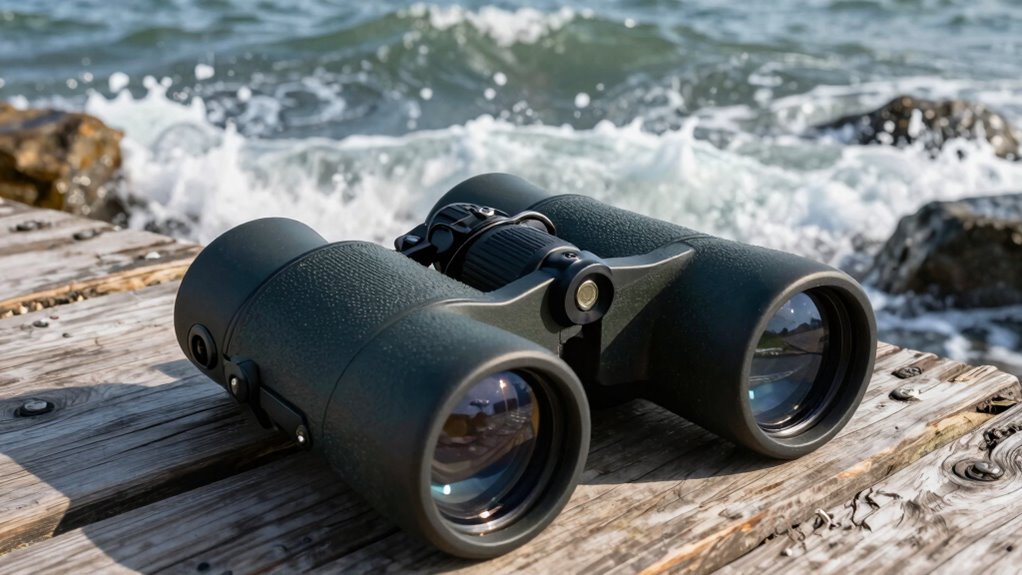
When using stabilized binoculars in rough water, you’ll notice how much steadier and clearer the images appear, even during turbulence. Their core technology detects tiny movements and rapidly adjusts internal lenses to counteract camera shake. This active motion correction reduces the shaky, blurred views caused by boat motion or waves. As a result, you see distant objects sharply and comfortably. To discover more about how these advanced features keep your view steady, keep exploring.

Get travel and outdoor gear delivered free — and shop member deals
- Fast, free delivery on millions of items
- Access to Prime Big Deal Days deals on October 6–7
- Prime Video, Amazon Music and more included
Key Takeaways
- Stabilized binoculars use gyroscopic sensors and moving lenses to counteract hand and environmental movements.
- They actively analyze vibrations to adjust the view, reducing shakiness caused by rough water.
- In turbulent conditions, stabilization ensures clearer, sharper images of distant objects or scenery.
- They minimize eye strain and fatigue during prolonged use in unstable environments.
- Overall, stabilization transforms shaky images into steady views, enhancing observation quality in rough water conditions.
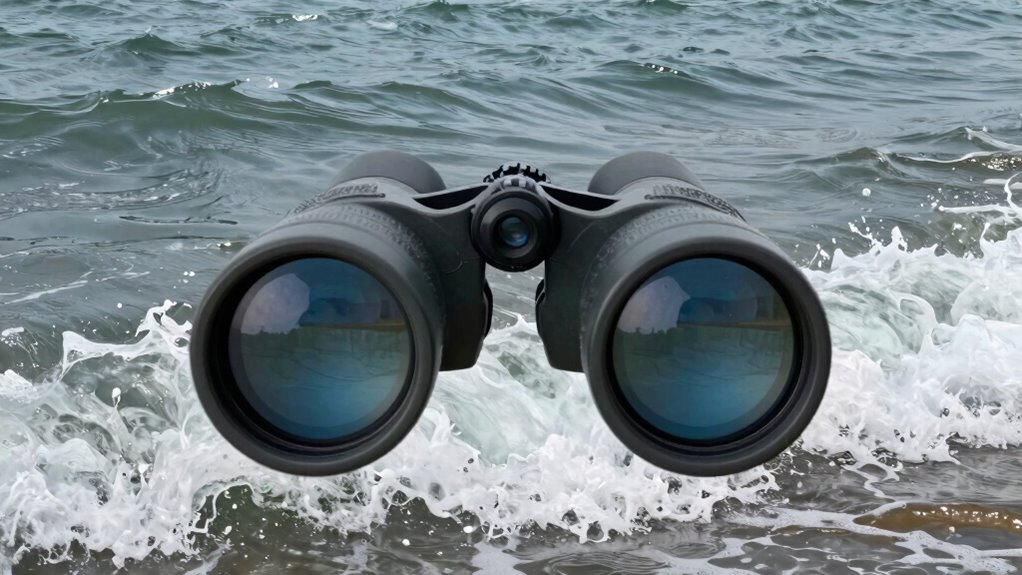
Have you ever wondered how binoculars manage to produce steady, clear images even when your hands are shaky? The secret lies in advanced technology like optical stabilization and motion correction. When you’re on a boat or near choppy water, these features make a huge difference, allowing you to observe with clarity despite the movement. Without optical stabilization, your view would be constantly blurred or jittery, making it difficult to focus on distant objects. But with stabilized binoculars, the internal mechanisms work tirelessly to counteract your hand movements, providing a smooth, steady image.
Optical stabilization is the core technology that helps achieve this stability. It involves tiny, sophisticated components—like gyroscopic sensors and moving lenses—that detect even the slightest hand tremors. As soon as a shake is sensed, the system adjusts the position of internal lenses or prisms to cancel out the movement. Think of it as the binoculars’ way of “steadying” your view, much like how image stabilization works in cameras. This constant motion correction ensures that what you see stays crisp and focused, even when the water underneath is rough or the boat is rocking. Optical stabilization techniques are continually refined to improve performance in challenging environments. Additionally, ongoing research into advanced stabilization methods continues to push the boundaries of what these devices can achieve in turbulent conditions.
Optical stabilization uses gyroscopic sensors and moving lenses to keep images steady and in focus.
Motion correction plays a crucial role in maintaining your visual experience. It’s not just about stabilizing the image; it’s about actively predicting and compensating for your movements in real-time. This technology constantly analyzes the vibrations and adjusts accordingly, so your view remains stable without any lag or delay. When you’re scanning a distant shoreline or trying to spot marine life amid splashes and waves, motion correction ensures that your binoculars adapt swiftly to every shift. The result is a seamless, jitter-free image that lets you focus on what matters—your observation, not your shaky hands.
In rougher water, these features become even more critical. The more unstable your environment, the more your binoculars need to work hard to keep images clear. Optical stabilization and motion correction work together to dampen the effects of boat motion, wind, and water turbulence. As a user, you benefit from sharper images and less eye strain, making your viewing experience more enjoyable and less frustrating. Whether you’re spotting distant birds, watching marine activity, or simply enjoying the scenery, the stabilized binoculars deliver a steadiness that enhances every moment. When you’re navigating choppy waters, these technological advances truly make a difference, transforming shaky, blurry views into clear, stable images. Understanding optical stabilization helps explain how these binoculars perform so effectively in challenging conditions.
stabilized binoculars for rough water
As an affiliate, we earn on qualifying purchases.
As an affiliate, we earn on qualifying purchases.
Frequently Asked Questions
How Do Stabilized Binoculars Work in Rough Water Conditions?
Stabilized binoculars work in rough water conditions by utilizing image stabilization technology, which reduces the impact of shaking. You’ll notice this through a built-in gimbal mechanism that counteracts movement, keeping the image steady. As you hold the binoculars, the gimbal actively adjusts, minimizing vibrations and allowing you to see clearly even on a choppy boat or turbulent water. This makes your viewing experience smoother and more comfortable.
What Features Differentiate Stabilized Binoculars From Regular Ones?
Imagine upgrading your view with stabilized binoculars—these are distinguished by their superior image quality, ensuring sharper, clearer visuals even in choppy waters. They’re often a bit heavier and bulkier than regular binoculars due to their advanced stabilization technology, which can influence portability. Unlike standard models, stabilized binoculars actively counteract hand shake, providing a steadier, more comfortable viewing experience, especially in unstable conditions.
Are Stabilized Binoculars Suitable for Wildlife Observation?
Yes, stabilized binoculars are great for wildlife observation, especially when bird watching or marine navigation. Their stabilization feature reduces hand shake, giving you a clear, steady view even in rough conditions. This makes it easier to track fast-moving birds or navigate choppy waters confidently. You’ll enjoy sharper images and improved focus, making your outdoor adventures more enjoyable and less frustrating, whether you’re observing wildlife or sailing through turbulent waters.
How Much Do Stabilized Binoculars Typically Cost?
Stabilized binoculars usually cost between $500 and $2,500, depending on features. Think of them as the luxury cars of optics—high-end quality that offers excellent image clarity. You’ll find that models with superior image quality and longer battery life tend to be pricier. While the initial investment is significant, their ability to steady images in rough water makes them worth considering if you need reliable, crisp views in challenging conditions.
Can Stabilized Binoculars Be Used Underwater?
Stabilized binoculars generally aren’t designed for underwater use, as they lack waterproof seals and specialized lenses. If you want to improve underwater visibility and aid marine orientation, look for waterproof, underwater binoculars or underwater monoculars specifically built for diving or aquatic environments. These are designed to withstand water pressure and prevent fogging, ensuring clear vision while exploring underwater or guiding in marine settings.
Conclusion
Just as Odysseus relied on his cunning to navigate treacherous waters, understanding the stabilized binocular difference helps you see through rougher conditions with clarity. When water gets choppy, your perception might falter, but knowing how stabilization works keeps your vision steady—like a lighthouse guiding sailors to safety. Embrace this knowledge, and you’ll sail through turbulent waters with confidence, turning treacherous seas into smooth sailing, much like a seasoned captain steering through stormy nights.
Halloween Picks
halloween
As an affiliate, we earn on qualifying purchases.