


To stay healthy in crowded spaces, make hand hygiene a priority by washing your hands often with soap for at least 20 seconds or using sanitizer with at least 60% alcohol when soap isn’t available. Wear a well-fitting mask to block respiratory droplets, handle it carefully, and avoid touching your face. Maintaining these habits along with physical distancing helps protect you and others, and if you keep exploring, you’ll find more tips to stay safe.
Key Takeaways
- Practice frequent hand hygiene with soap and water or alcohol-based sanitizer.
- Wear well-fitting masks that cover your nose and mouth properly.
- Maintain physical distance from others whenever possible.
- Avoid touching your face, eyes, nose, or mouth to prevent germ entry.
- Carry disinfectant wipes or tissues to clean surfaces and hands when needed.
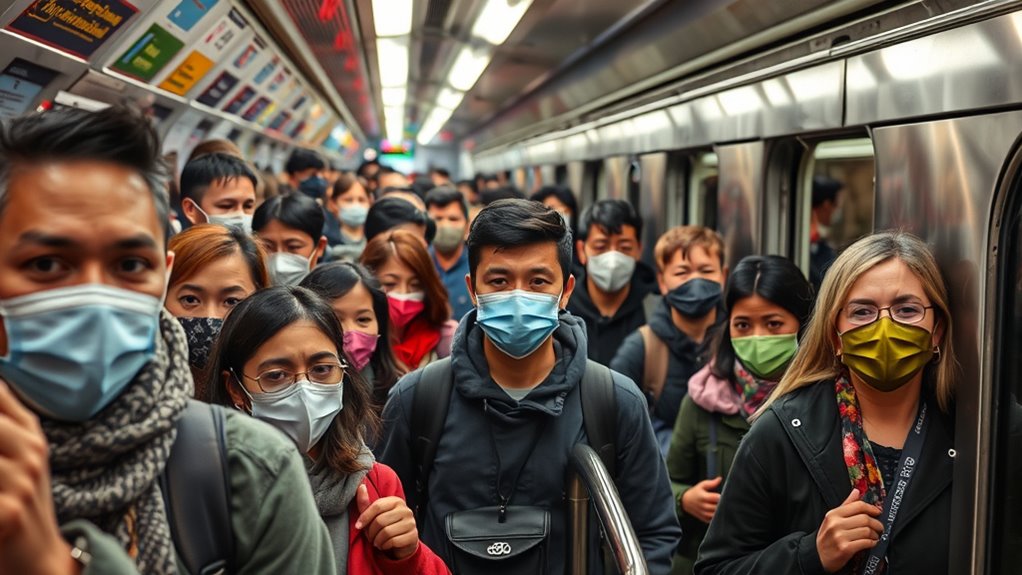
In crowded spaces, staying healthy requires more than just good luck; it demands intentional actions to reduce your risk of illness. The dense environment increases the likelihood of coming into contact with germs, making it essential to prioritize simple yet effective habits. Two of the most impactful measures you can take are practicing good hand hygiene and mask wearing. These practices help block the transmission of viruses and bacteria, especially when physical distancing isn’t always possible.
Your hands are one of the primary ways germs spread. Touching surfaces like railings, door handles, or shared equipment exposes you to countless microorganisms. To minimize this risk, make it a habit to wash your hands thoroughly with soap and water for at least 20 seconds whenever you can. If soap and water aren’t available, use an alcohol-based hand sanitizer containing at least 60% alcohol. Keep hand sanitizer in your bag or pocket so you can apply it frequently, especially after touching surfaces or before eating. Avoid touching your face, particularly your eyes, nose, and mouth, as this is a common way germs enter your body.
Wash hands thoroughly or use sanitizer; avoid touching your face to prevent germ spread.
Mask wearing is another vital step in crowded environments. Masks act as a barrier that reduces the spread of respiratory droplets when you speak, cough, or breathe. Wearing a mask not only protects you but also helps shield others, especially those who may be more vulnerable. Choose a well-fitting mask that covers your nose and mouth completely, and ensure it’s made of multiple layers of fabric or a certified medical-grade material. Properly placing and adjusting your mask every time you wear it ensures maximum effectiveness. Remember to handle your mask by the ear loops or ties, avoiding touching the front surface, which could be contaminated. Additionally, understanding the effectiveness of different mask types can help you select the best protection for your situation.
Combine these practices with other precautions like maintaining physical distance when possible and avoiding touching shared objects. Be mindful of your surroundings and stay aware of crowded areas to plan your movements accordingly. Carry tissues or disinfectant wipes to clean surfaces or your hands if needed. Staying vigilant about these habits creates a layered defense against illness, making crowded spaces safer for everyone. By integrating diligent hand hygiene and consistent mask wearing into your routine, you considerably lower your chances of getting sick and contribute to a healthier environment for those around you.

Germ-X Advanced Hand Sanitizer, 34 Fl Oz (1 Liter), Less Drying Moisturizing Clear Gel, No Rinse Formula, Large Family Size Pump Bottle
Seasonal Change Essential: Keep your hands germ-free this cough and cold season with Germ-X hand sanitizer. When used…
As an affiliate, we earn on qualifying purchases.
As an affiliate, we earn on qualifying purchases.
Frequently Asked Questions
How Can I Boost My Immune System Before Crowded Events?
To boost your immune system before crowded events, focus on immune boosting foods like citrus fruits, garlic, and yogurt. Maintain a regular exercise routine, even if it’s just brisk walking or stretching, to enhance your immunity. Get plenty of sleep and stay hydrated. Reducing stress through mindfulness or deep breathing also helps. These steps strengthen your defenses, making you less susceptible to illnesses during busy gatherings.
Are There Specific Masks More Effective for Crowded Spaces?
You should choose masks with high filtration efficiency, like N95 or KN95 masks, for crowded spaces. These mask types are designed to filter out at least 95% of airborne particles, offering better protection than cloth or surgical masks. Make certain a proper fit, covering your nose and mouth snugly, to maximize effectiveness. Investing in a high-quality mask with proven filtration efficiency helps keep you safer in crowded environments.
What Are the Best Hand Hygiene Practices in Public Settings?
To maintain refined health habits, prioritize proper handwashing with soap and water for at least 20 seconds, especially after touching shared surfaces. When soap isn’t available, use hand sanitizer containing at least 60% alcohol. Avoid touching your face and routinely sanitize your hands, particularly after contact with high-touch areas. These practices help reduce germs and keep you healthier amidst busy environments.
How Does Ventilation Impact Disease Transmission in Crowded Areas?
Improved ventilation reduces disease transmission in crowded areas by increasing airflow efficiency, which disperses airborne pathogens quickly. You should guarantee spaces have proper air filtration systems that trap viruses and bacteria, further lowering infection risks. Good ventilation practices include opening windows, using exhaust fans, and maintaining HVAC systems. By prioritizing airflow and filtration, you help create safer environments, decreasing the likelihood of airborne illnesses spreading among people.
Can Certain Foods Help Prevent Illness in Crowded Environments?
Certain foods can boost your immunity in crowded environments. Superfoods like berries, nuts, and leafy greens are rich in antioxidants and vitamins, helping your body fight off illnesses. Herbal supplements such as echinacea or elderberry may also strengthen your immune response. While they aren’t foolproof defenses, incorporating these into your diet can support your overall health and reduce your risk of catching colds or infections in busy settings.

ATZNZIK 18 Pack Reusable Cloth Face Masks Washable Cotton Face Mask Adjustable Breathable Fabric Mask for Men Women
PACKAGE: 18 pcs cotton mask for adults, meet your differet daily needs! 9 colors, each color for 2…
As an affiliate, we earn on qualifying purchases.
As an affiliate, we earn on qualifying purchases.
Conclusion
As you navigate bustling crowds, remember to stay vigilant. Picture the sea of faces around you, each a potential source of germs. Keep your hands clean, your distance maintained, and your mask ready. By doing so, you create a shield around yourself, like an invisible bubble, protecting you from unseen threats. Stay alert and proactive, turning crowded spaces into safe zones. Your health depends on the choices you make amidst the chaos.

Amazon Basics Disinfecting Wipes, Lemon & Fresh Scent, Thick, Sanitizes/Cleans/Disinfects/Deodorizes, 340 Count (4 Packs of 85)
Includes two 85-count canisters of Lemon Scent & two 85-count canisters of Fresh Scent for 340 wipes in…
As an affiliate, we earn on qualifying purchases.
As an affiliate, we earn on qualifying purchases.

Purell Advanced Hand Sanitizer Refreshing Gel, Clean Scent, 2 fl oz Travel Size Flip Cap Bottle (Pack of 6) – 3155-04-EC
Show you care about well-being with PURELL Advanced Hand Sanitizer Refreshing Gel
As an affiliate, we earn on qualifying purchases.
As an affiliate, we earn on qualifying purchases.