
Current approaches to sustainability at sea focus on protecting marine biodiversity through establishing protected areas and enforcing sustainable fishing limits. Eco-friendly technologies like cleaner fuels, solar and wind energy, and electric propulsion help reduce environmental impacts. Governments and organizations adopt policies that promote responsible practices and technological innovations. Advanced monitoring tools such as satellite tracking and AI enable better ecosystem management and illegal activity detection. Exploring these efforts reveals how the maritime industry aims to balance growth with ocean health preservation.
Key Takeaways
- Establishment of marine protected areas to conserve habitats and biodiversity.
- Adoption of eco-friendly vessel technologies like cleaner fuels and renewable energy systems.
- Implementation of sustainable fishing quotas and measures to minimize bycatch and habitat damage.
- Use of advanced monitoring tools such as satellites and AI for real-time ecosystem assessment and illegal activity detection.
- Industry-wide policy shifts promoting environmentally responsible practices and balancing economic growth with ocean health.
Sustainability initiatives at sea are transforming the way we approach maritime industries and ocean conservation. As someone invested in protecting our oceans, you’ll notice that innovative strategies are shaping a future where economic growth aligns with environmental health. Central to these efforts are marine conservation initiatives that aim to preserve biodiversity, restore ecosystems, and prevent overfishing. Governments, organizations, and companies are increasingly adopting policies and practices that prioritize the health of marine environments. This means establishing marine protected areas, enforcing sustainable fishing quotas, and reducing bycatch, all of which help maintain the delicate balance of ocean life. Such measures are essential because they directly combat the threats of overexploitation and habitat destruction, ensuring that marine species thrive for generations to come.
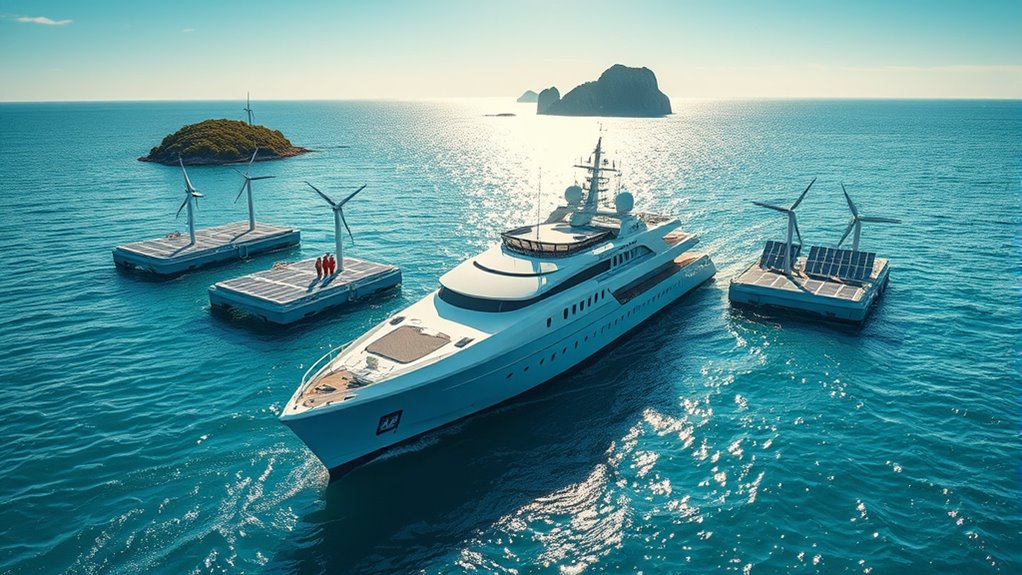
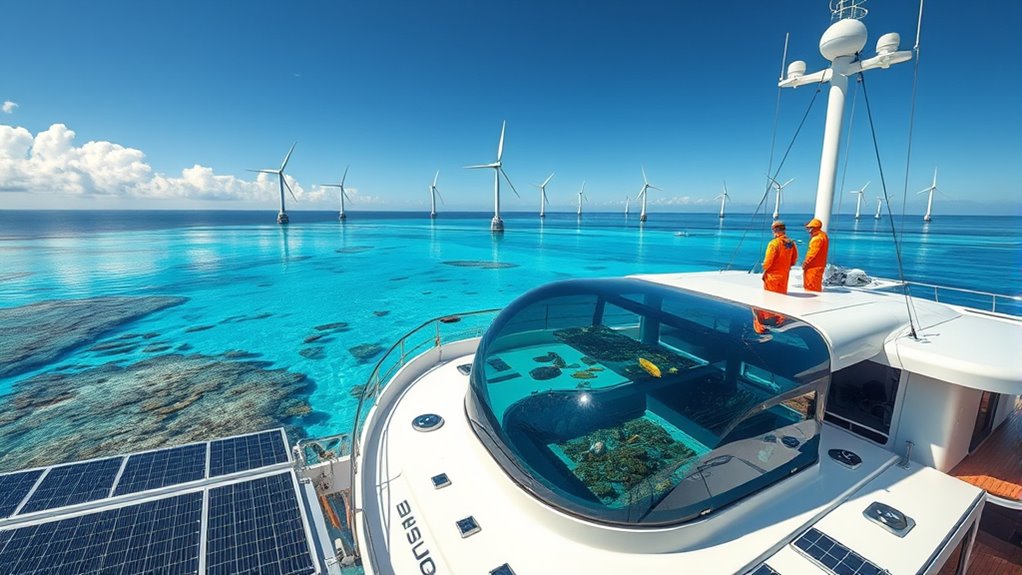
Alongside marine conservation, eco-friendly technologies are playing a critical role in advancing sustainability at sea. You’ll find that new innovations are designed to minimize environmental impact while maintaining operational efficiency. For instance, cleaner fuels like LNG and biofuels are replacing traditional heavy oils, cutting down greenhouse gas emissions from ships. Solar and wind energy systems are increasingly integrated into vessel designs, reducing reliance on fossil fuels and lowering carbon footprints. Electric propulsion systems are also gaining traction, especially for smaller vessels or port operations, further decreasing pollution. These eco-friendly technologies not only help reduce the maritime industry’s carbon footprint but also serve as examples of how technological progress can align with environmental responsibility. By adopting such innovations, shipping companies demonstrate their commitment to sustainable growth and ocean health. Additionally, high-efficiency propulsion systems are being developed to further optimize fuel consumption and reduce emissions, highlighting ongoing advancements in sustainable maritime technology.
Furthermore, the integration of data-driven solutions enhances marine conservation efforts. You’ll see how sensors, satellite tracking, and artificial intelligence are used to monitor marine ecosystems in real time. These tools provide critical insights into ocean conditions, illegal fishing activities, and the health of coral reefs, allowing for more targeted and effective conservation actions. They also help optimize routes for ships to reduce fuel consumption and emissions, contributing to cleaner seas. The combination of marine conservation principles and eco-friendly technologies creates a more sustainable maritime industry, where economic needs are balanced with environmental stewardship.

2 Pack Warning Property Protected By A U.S. Marine 12 inch by 8 inch Metal Tin Sign
🔥➀【MATERIAL】Tin and metal. Color: as shown.
As an affiliate, we earn on qualifying purchases.
As an affiliate, we earn on qualifying purchases.
Frequently Asked Questions
What Are the Main Challenges in Implementing Maritime Sustainability Initiatives?
You face challenges in implementing maritime sustainability initiatives, such as steering complex maritime policies that vary globally. Limited ocean literacy among stakeholders can hinder understanding and support for sustainable practices. Additionally, coordinating efforts across nations and industries often proves difficult, delaying progress. Overcoming these obstacles requires clearer policies and increased ocean literacy to foster collaboration, ensuring sustainability initiatives are effectively adopted and maintained at sea.
How Do International Regulations Influence Sea-Based Sustainability Efforts?
International regulations notably shape your sea-based sustainability efforts by setting mandatory standards through maritime law and international treaties. These frameworks compel you to follow specific environmental protocols, reduce pollution, and protect marine life. They also facilitate cooperation among nations, ensuring collective action. By aligning your practices with these regulations, you not only stay compliant but also contribute to global sustainability goals, fostering responsible maritime operations worldwide.
What Role Do Technological Innovations Play in Marine Conservation?
Technological innovations play a vital role in marine conservation by enabling more effective monitoring and protection. You can leverage marine drone technology to survey vast areas quickly and gather real-time data. Underwater sensor networks help track ocean health, detect threats like pollution or illegal fishing, and inform decision-making. These tools make conservation efforts more precise and proactive, empowering you to safeguard marine ecosystems efficiently and sustainably.
How Are Local Communities Involved in Maritime Sustainability Projects?
You get involved in maritime sustainability projects through community engagement, where local residents actively participate in decision-making and conservation efforts. You help preserve cultural heritage by integrating traditional knowledge into marine management. Your participation guarantees that local customs and sustainable practices coexist, fostering a sense of ownership. This collaborative approach strengthens the community’s commitment to protecting marine environments while maintaining their cultural identity.
What Funding Sources Support Sea Sustainability Programs Worldwide?
You can find support for sea sustainability programs through various funding sources like marine grants and ocean funding. Governments, international organizations, and environmental foundations often provide these funds to promote sustainable practices. You should explore opportunities from agencies such as the Global Environment Facility and the National Oceanic and Atmospheric Administration. Securing marine grants and ocean funding helps implement projects that protect marine ecosystems and foster sustainable use of ocean resources.

Cloud Fire LED Anchor Light for Boat Yacht, Magnetic Solar Powered Navigation Lamp, IP65 Waterproof & Dustproof, Strobe Warning Light, PC Material,4 Modes (Flashing, Strobe, Steady,Rotation), White
4 Modes for Versatile Use: Choose from flashing, strobe、Rotation, or steady light modes to suit your specific needs….
As an affiliate, we earn on qualifying purchases.
As an affiliate, we earn on qualifying purchases.
Conclusion
While ongoing sustainability initiatives aim to protect our oceans, the threat of overfishing and pollution persists. You can choose to support responsible practices and embrace change, knowing your actions matter. Yet, ignoring these efforts risks losing vibrant marine life and fragile ecosystems forever. The choice is yours: be part of the solution or stand by as the seas we cherish face irreversible damage. Your commitment can turn the tide toward a healthier, sustainable future.

Electric Propulsion for Boats
Used Book in Good Condition
As an affiliate, we earn on qualifying purchases.
As an affiliate, we earn on qualifying purchases.

ZOLEO Satellite Communicator – Two-Way Global SMS Text Messenger & Email, Emergency SOS Alerting, Check-in & GPS Location – Android iOS Smartphone Accessory
Global satellite messaging: Stay connected beyond cell coverage, use ZOLEO with your smartphone to transmit text messages and…
As an affiliate, we earn on qualifying purchases.
As an affiliate, we earn on qualifying purchases.