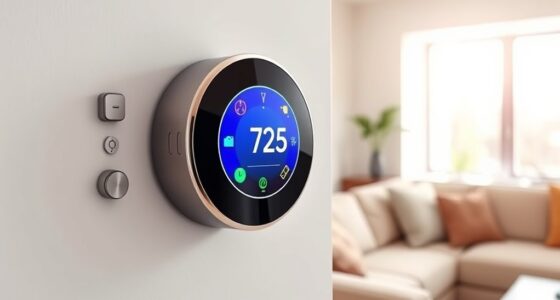
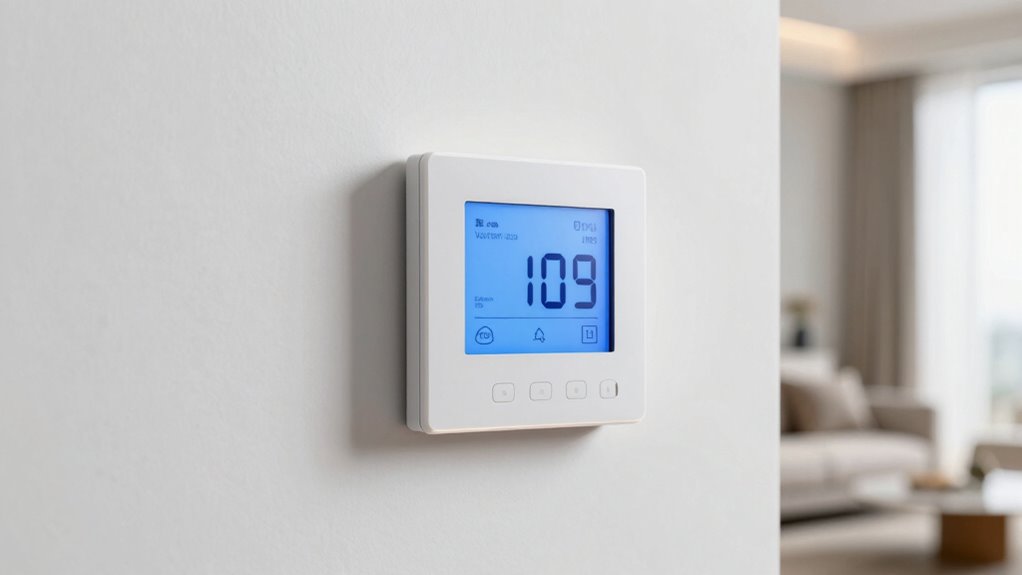

To save energy during your vacation, set your thermostat to a comfortable yet efficient temperature—around 78°F in summer and 65°F in winter—when you’re away. Using a programmable thermostat makes it easy to lower or raise the temperature automatically before you leave and when you return. This helps prevent unnecessary energy use, reduces utility bills, and keeps your home climate-controlled. Keep exploring to discover smart tips for optimizing your thermostat settings further.
Key Takeaways
- Set your thermostat to a higher or lower temperature based on whether you want to save on cooling or heating during your absence.
- Use a programmable or smart thermostat to automatically adjust settings before you leave and upon your return.
- Maintain a minimum temperature (around 55°F/13°C) in winter to prevent freezing, and limit cooling in summer to save energy.
- Leverage remote access to fine-tune your settings if your plans change unexpectedly during your trip.
- Combine vacation mode with home upgrades like better insulation for maximum energy savings and comfort.
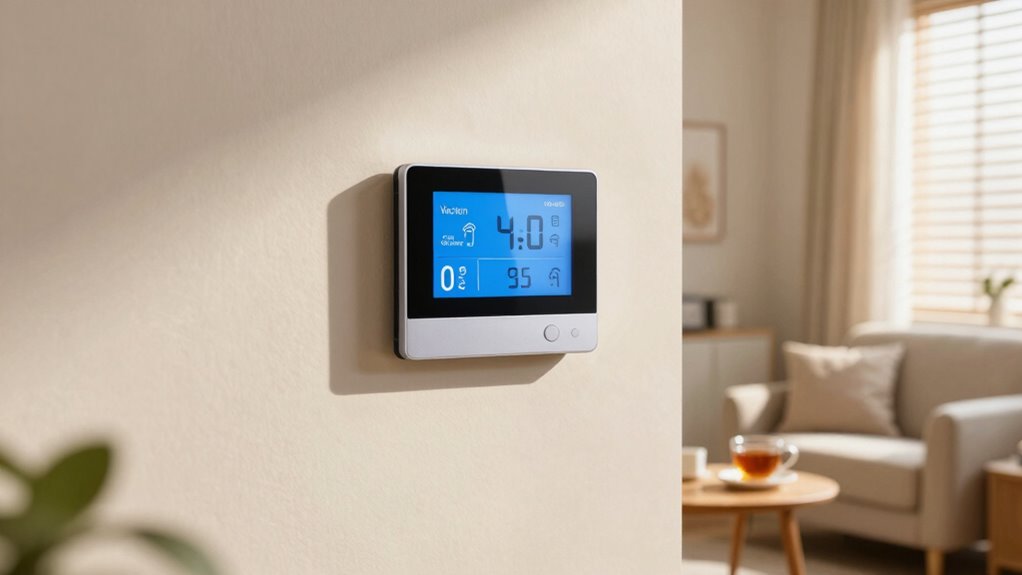
When planning a vacation, adjusting your thermostat’s settings can help save energy and reduce costs while you’re away. This is especially true if you’ve invested in energy-efficient upgrades or have a programmable thermostat. These devices and improvements make it easier to optimize your home’s temperature without sacrificing comfort when you return. By setting your thermostat to a higher or lower temperature during your absence, you prevent your HVAC system from working unnecessarily, which can substantially cut down on energy consumption and utility bills.
Programmable thermostats are particularly advantageous because they allow you to automate temperature adjustments. Instead of manually changing settings before and after your trip, you can set a schedule that aligns with your departure and return dates. For example, you might program the thermostat to increase the temperature a few hours before you leave, then hold it at an energy-saving level while you’re gone. When you get back, you can have it gradually return to your preferred comfort setting. This automation not only simplifies the process but guarantees you’re never wasting energy by forgetting to manually adjust the thermostat.
Automate temperature changes with a schedule to save energy during your trip and return home comfortably.
Energy-efficient upgrades also play a vital role in maximizing savings during your vacation. Installing a modern, programmable thermostat is just one step; upgrading insulation, sealing leaks, and choosing energy-efficient HVAC units make your entire system operate more effectively. These improvements help maintain a consistent indoor temperature with less effort, further reducing energy use when you’re away. Combining these upgrades with a smart thermostat ensures you’re taking full advantage of modern technology to optimize comfort and efficiency. Additionally, smart home integration allows for remote control and monitoring, enhancing convenience and energy management.
The benefits of a programmable thermostat extend beyond vacation times. Even when you’re home, you can set it to operate at lower or higher temperatures during times when you’re typically away or asleep, saving money year-round. This control allows you to avoid unnecessary energy use during unoccupied hours. Plus, many smart thermostats can be controlled remotely via apps, giving you the flexibility to adjust your home’s temperature if your plans change unexpectedly.
programmable thermostat for vacation
As an affiliate, we earn on qualifying purchases.
As an affiliate, we earn on qualifying purchases.
Frequently Asked Questions
How Do I Set My Thermostat Vacation Schedule Remotely?
To set your thermostat vacation schedule remotely, use your thermostat’s remote access feature via its app or a compatible scheduling app. Log in to the app from your smartphone or tablet, then navigate to the scheduling or vacation mode settings. Adjust the temperature and duration to save energy while you’re away. Confirm and save your changes, so your system maintains the ideal temperature during your vacation effortlessly.
Can Vacation Settings Prevent My Pipes From Freezing?
Think of your thermostat as a warm blanket for your pipes. Vacation settings can help prevent your pipes from freezing by maintaining a consistent, safe temperature, acting as a shield against frost. You should set your thermostat to at least 55°F during your absence for effective pipe protection and frost prevention. This way, your pipes stay cozy and safe, avoiding costly bursts or damage.
Are There Smart Thermostat Options for Automatic Vacation Adjustments?
Yes, many smart thermostats automatically adjust your home’s temperature during vacations to optimize energy efficiency. You can set it to lower or raise temperatures when you’re away, and some models even learn your habits for smarter adjustments. With a smart home system, you gain peace of mind, knowing your energy use is efficient without sacrificing comfort. These features help save money while maintaining a comfortable environment when you’re not home.
How Long Can I Leave My Thermostat on Vacation Mode Safely?
You can safely leave your thermostat on vacation mode for up to two weeks, but it’s wise to think about HVAC maintenance and proper thermostat calibration. If you’re away longer, set it to a more energy-efficient temperature to prevent issues. Regularly check your system before extended absences, ensuring everything runs smoothly. This way, you enjoy savings without risking comfort or system health, making your vacation worry-free.
Will Using Vacation Mode Affect My Energy Bills Immediately?
Using vacation mode can lower your energy bills right away by reducing heating or cooling when you’re away. It’s an energy-efficient upgrade that saves you money without sacrificing comfort upon return. To maximize savings, follow thermostat maintenance tips like cleaning filters and checking settings. Keep in mind, the savings depend on how long you’re away and how well your system is maintained, so optimize your vacation mode for best results.
smart thermostat remote control
As an affiliate, we earn on qualifying purchases.
As an affiliate, we earn on qualifying purchases.
Conclusion
So, while setting your thermostat to vacation mode might seem like a smart way to save energy, don’t forget—you’re fundamentally telling your home to relax and chill out without you. Ironically, this “energy-saving” trick often leads to more energy use when you return to heat or cool a cold or hot house. Sometimes, the best way to save energy is simply maintaining a consistent, moderate temperature—less hassle and more savings than you’d think.
energy-efficient thermostat
As an affiliate, we earn on qualifying purchases.
As an affiliate, we earn on qualifying purchases.
Wi-Fi enabled smart thermostat
As an affiliate, we earn on qualifying purchases.
As an affiliate, we earn on qualifying purchases.