

You often realize too late that relying solely on translation devices isn’t enough, especially with cultural nuances, idioms, or social cues. These tools can produce awkward or inaccurate translations, leaving you misunderstood or even offending locals. Overestimating their capabilities can cause missed chances for genuine connections. Recognizing these limitations early on helps you adapt your approach, blending technology with cultural awareness. If you keep exploring, you’ll discover how to navigate conversations more confidently and respectfully.

Get travel and outdoor gear delivered free with Prime
- Fast, free delivery on millions of items
- Prime Video, Amazon Music and more included
- Member-only deals all year
Key Takeaways
- Travelers often realize too late that translation devices can’t capture cultural nuances or unspoken social norms.
- Relying solely on devices may lead to misunderstandings of humor, gestures, and context.
- Preparing key phrases and cultural knowledge beforehand improves communication accuracy and social appropriateness.
- Testing and familiarizing with the device before travel helps avoid inaccuracies during important conversations.
- Combining device use with genuine cultural understanding fosters more meaningful and respectful interactions.
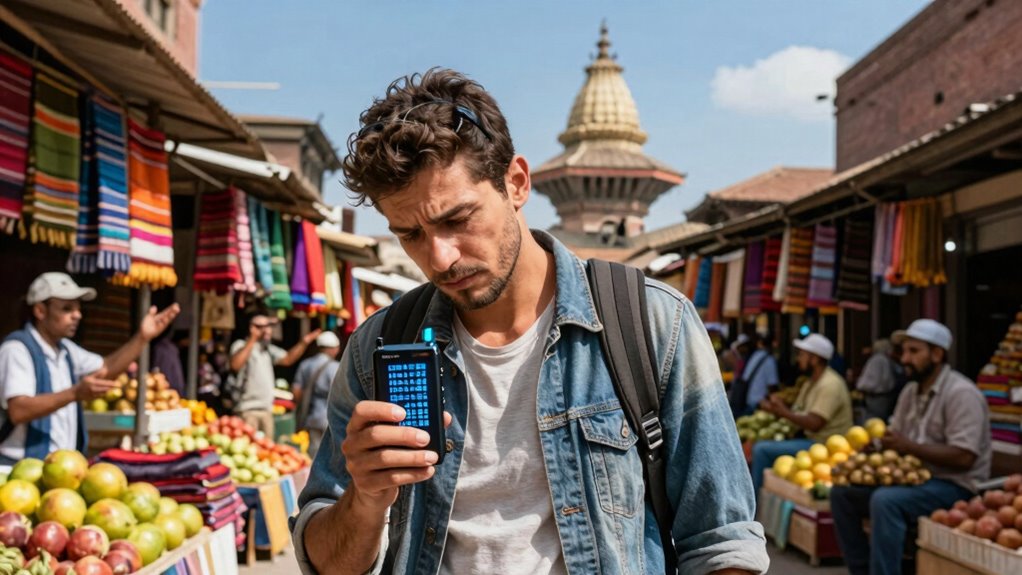
Many travelers only realize too late that their translation devices could have prevented misunderstandings and awkward moments abroad. It’s tempting to rely on technology to bridge language gaps, but these devices aren’t foolproof. They often overlook the subtlety of cultural nuances that shape how messages are received and understood. Without recognizing these nuances, you risk misinterpreting social cues, humor, or context, which can lead to uncomfortable situations or even offend locals. While your device might translate words accurately, it doesn’t grasp the underlying cultural significance behind phrases or gestures. That’s where many travelers stumble, assuming a literal translation will suffice, unaware of how much meaning is lost in translation.
You also need to be aware of device limitations. Translation gadgets work well for straightforward conversations, but they often struggle with idioms, slang, or regional dialects. They may produce awkward or incorrect translations if the input isn’t clear or if the device can’t recognize certain words. Sometimes, your device might give a translation that sounds formal or robotic, creating a disconnect that makes conversations feel unnatural. This can be especially frustrating when you’re trying to build rapport or show respect in a different culture. If you don’t test or familiarize yourself with your device beforehand, you might find yourself stuck with inaccurate translations when you need them most. Understanding the limitations of translation technology can help you set realistic expectations for your communication.
Another common mistake is assuming your translation device will handle every situation seamlessly. Travelers often overlook that these devices are tools with specific strengths and weaknesses. They might excel at translating basic phrases but falter in complex conversations involving emotional expressions or cultural references. For example, a phrase that’s perfectly acceptable at home might be inappropriate or confusing in a foreign context. Many travelers only realize this when they’re in the middle of a conversation and suddenly face a communication breakdown. That’s when you learn that no device can replace genuine understanding of the local culture, which often involves unspoken rules, body language, and social expectations. Recognizing cultural norms and unspoken rules can greatly enhance your interactions and prevent misunderstandings. Additionally, being aware of how cultural context influences communication can help you navigate tricky social situations more effectively. It’s also beneficial to understand that non-verbal cues often carry as much weight as spoken words, making awareness beyond just language essential.
The key to avoiding these pitfalls is to use your translation device as a helpful supplement, not a crutch. Prepare by learning a few essential phrases and understanding cultural norms before you travel. Recognize that technology has its limits and be ready to adapt. If you’re aware of these issues in advance, you’ll be less likely to find yourself in awkward or misunderstood situations. Ultimately, the most meaningful connections happen when you combine technology with genuine effort to understand the cultural context, rather than relying solely on your device’s translation.
translation device with cultural nuance support
As an affiliate, we earn on qualifying purchases.
As an affiliate, we earn on qualifying purchases.
Frequently Asked Questions
How Do Translation Devices Handle Regional Dialects and Slang?
Translation devices often struggle with regional dialects and slang nuances because they rely on standard language datasets. You might find that slang isn’t accurately translated or that regional expressions are misunderstood. While some advanced devices incorporate updates to better handle these nuances, they still can’t fully capture the cultural essence behind regional dialects. So, it’s best to learn key phrases or ask locals to guarantee clear communication.
Are Translation Devices Effective in Noisy or Crowded Environments?
Translation devices often struggle in noisy or crowded environments, making it harder to overcome language barriers and understand cultural nuances. You might find that background noise distorts speech, leading to miscommunication. While some advanced devices improve in these settings, they still can’t fully capture tone or contextual cues. So, in busy places, you’ll need patience and perhaps alternative methods like gestures or writing to bridge cultural nuances effectively.
Can Translation Devices Understand and Translate Idiomatic Expressions Accurately?
Translation devices often struggle with idiomatic expressions because they lack understanding of cultural nuances. They tend to translate phrases literally, which can lead to misunderstandings or loss of meaning. For you, this means that while devices can be helpful, they might not always offer the contextual accuracy needed for idiomatic language. To communicate effectively, be prepared to clarify or explain idioms that the device might not interpret correctly.
What Is the Battery Life of Most Translation Devices During Long Trips?
Most translation devices offer a battery longevity of around 8 to 12 hours on a full charge, making them suitable for long trips. To maximize their use, you should focus on effective power management—like dimming screens and disabling unnecessary features. Carrying a portable charger is also a smart move, ensuring your device stays powered during extended travel days. Proper power management helps you avoid running out of battery when you need it most.
Do Translation Devices Support Offline Translation for Remote Areas?
Yes, many translation devices support offline mode, making them useful in remote areas without internet access. You should check if the device offers offline language packs for regional accuracy, especially for less common dialects. This guarantees smooth communication wherever you go. Be sure to download the necessary language files before your trip, so you’re prepared and can rely on your device when needed most.
Conclusion
Don’t wait until you’re lost in translation to grab a translation device. It’s like realizing you need an umbrella only when the rain starts pouring—too late. The right device can turn language barriers into bridges, making your travels smoother and more enjoyable. So, be proactive, pack smart, and ask the right questions early. That way, you’ll navigate foreign streets with confidence, not confusion, turning every trip into a true adventure rather than a linguistic hurdle.
Halloween Picks
halloween
As an affiliate, we earn on qualifying purchases.