
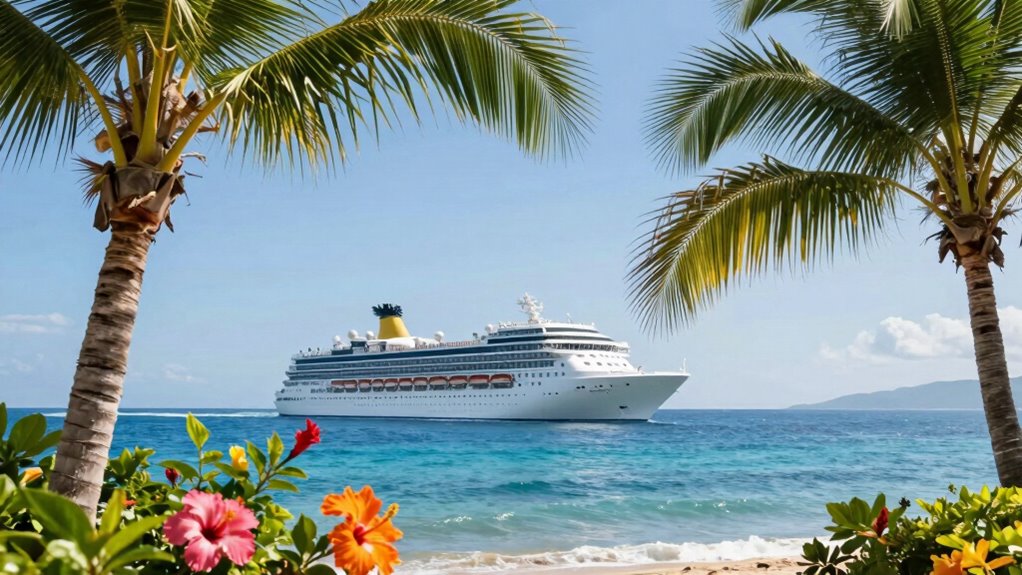

Weather headlines often exaggerate storms and rough seas to grab attention, but your cruise is usually much calmer. Advanced weather monitoring and real-time data help ships avoid the worst conditions, so you won’t feel the severity implied in headlines. Modern ships are built to handle typical weather and are constantly monitored for safety. If you want to understand how these headlines compare to what you’ll actually experience, there’s more to discover below.
Get ready for Prime Big Deal Days — try Prime free
Exclusive member deals on October 6–7, plus fast free delivery. Cancel anytime.
As an affiliate, we earn on qualifying purchases.
Key Takeaways
- Headlines often exaggerate severity to attract attention, not reflect actual conditions experienced onboard.
- Modern ships can avoid the worst effects of storms thanks to advanced weather monitoring and route adjustments.
- Tropical storms typically stay offshore or develop far from cruise routes, minimizing impact.
- Cold fronts may cause brief gusts or choppy waters, but ships are designed to handle such conditions comfortably.
- Real-time weather data and onboard technology provide more accurate, calmer conditions than sensational headlines suggest.
Weather headlines often grab your attention with dramatic forecasts, but when planning a cruise, understanding the actual weather conditions is essential for a safe and enjoyable journey. Headlines tend to focus on extreme events like tropical storms or cold fronts because they attract readership, yet they don’t always reflect what you’ll experience onboard. This disconnect can lead to unnecessary worry or misunderstandings about your trip.
Weather headlines often exaggerate, but real conditions at sea are usually calmer and more manageable.
For example, a headline may warn of an approaching tropical storm, creating a sense of impending disaster. However, these storms often develop far from popular cruise routes or stay offshore, meaning your itinerary might remain unaffected. Ships are equipped with advanced weather monitoring systems and navigational tools that allow captains to steer clear of severe weather, often avoiding the full force of tropical storms altogether. As a result, you might see storm warnings in the news, but your cruise could sail smoothly without a hint of rough seas, especially if you’re cruising during the peak of hurricane season in regions like the Caribbean or Gulf of Mexico.
Cold fronts also generate headlines that can seem alarming. These weather systems, moving from colder to warmer areas, can cause sudden changes in wind and sea conditions. While a cold front might produce choppy waters or gusty winds, it doesn’t mean you’ll be stuck in a storm. Sometimes, headlines exaggerate the impact of these fronts, which might only cause brief periods of rough weather rather than the prolonged storms headlines suggest. Cruise ships are built to handle typical weather patterns, and crew members plan routes that minimize exposure to severe conditions. So, even if a cold front passes nearby, your ship may experience only a temporary increase in swell or wind.
The reality is that weather headlines are often designed to catch attention rather than provide detailed, accurate forecasts. They highlight worst-case scenarios to drive readership or viewership, but they don’t always represent what you’ll encounter at sea. When planning your cruise, it’s more helpful to rely on official weather updates from the cruise line, meteorologists, and onboard weather monitoring. These sources give real-time insights into actual conditions, helping you understand what to expect rather than reacting to sensational headlines.
Additionally, knowing that ships utilize advanced weather monitoring systems can give you peace of mind during uncertain weather periods. These systems are critical for enhanced safety and navigation, ensuring that your journey remains comfortable and secure regardless of headlines. It’s also reassuring to remember that modern cruise ships are designed with weather-resistant features to handle a variety of conditions, further protecting passengers from the impacts of severe weather. Moreover, the ability of ships to adapt quickly to changing weather patterns is supported by ongoing advancements in marine weather forecasting, which provide highly localized and precise data. In the end, your cruise experience depends on current, localized weather conditions, not the headlines you see. While it’s wise to stay informed about tropical storms and cold fronts, remember that ships are built for safety and adaptability. Your journey will be shaped by real-time data and expert navigation, not the sensational headlines that often overstate the danger.
cruise ship weather monitoring system
As an affiliate, we earn on qualifying purchases.
As an affiliate, we earn on qualifying purchases.
Frequently Asked Questions
How Accurate Are Weather Forecasts for Specific Cruise Dates?
Weather forecasts for specific cruise dates are generally accurate within a few days, thanks to advances in weather patterns and forecast accuracy. However, they can still change due to shifting conditions, especially in unpredictable regions. You should check the forecast regularly as your cruise approaches, and be prepared for possible variations. Remember, long-term predictions are less reliable, so stay flexible and keep an eye on updated weather reports.
Can Weather Headlines Predict Sea Conditions or Just Air Temperature?
Weather headlines mainly predict air temperature, not sea conditions. They give you a general idea but don’t accurately reflect sea state or wind patterns, which influence your cruise experience. To understand sea conditions, look for detailed marine forecasts that consider wind speed, direction, and wave heights. These factors determine how rough the sea might be, helping you prepare for your cruise’s comfort and safety.
Do Weather Headlines Account for Local Microclimates on the Cruise Route?
Did you know microclimate variations can differ markedly over just a few miles? Weather headlines often don’t account for these local differences, leading to headline exaggerations. On your cruise route, specific microclimates might make the weather feel much warmer, cooler, or wetter than what headlines suggest. So, don’t rely solely on headlines; check detailed local forecasts to better anticipate what your cruise will truly feel like.
How Far in Advance Should I Check the Weather Before My Cruise?
You should check the weather forecast about a week before your cruise, as seasonal variations can impact conditions. While forecast reliability improves closer to your departure date, it’s wise to stay updated regularly. Keep in mind, weather can change quickly, so monitoring the forecast a few days prior helps you prepare for any surprises. This way, you’ll be better equipped for your cruise, regardless of unpredictable microclimates or shifting weather patterns.
Are There Tools to Get Real-Time Weather Updates During the Cruise?
Yes, you can use a weather app for live updates during your cruise. Many apps offer real-time weather information, so you stay informed about changing conditions. Download a reliable weather app before your trip, and keep it handy onboard. These tools provide live updates on wind, rain, or storms, helping you plan daily activities better and ensuring your cruise remains enjoyable and safe regardless of any unexpected weather shifts.
Conclusion
So, don’t let bold headlines paint a stormy picture in your mind. Remember, weather forecasts are like whispers in a crowded room—sometimes they’re clear, sometimes a little fuzzy. Your cruise experience will be a unique story, shaped by the skies above but also by your moments on deck, the breeze in your hair, and the sun’s warm embrace. Trust the journey, and let the weather surprise you like a hidden treasure waiting to be discovered.
NFL season / tailgating Picks
team gear
As an affiliate, we earn on qualifying purchases.