

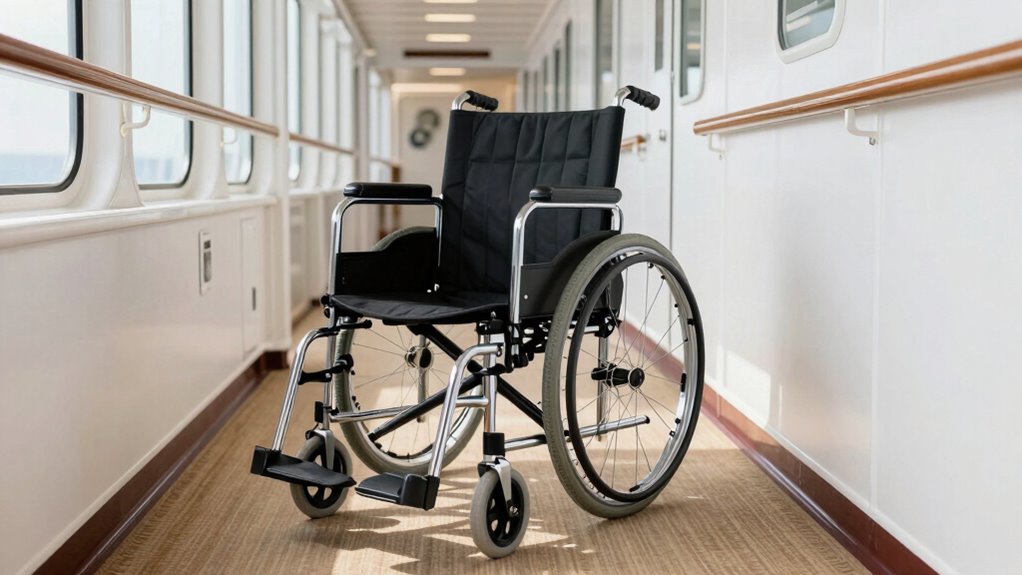
Finding your way through narrow corridors on a cruise ship with a wheelchair is often manageable thanks to thoughtful design features. Wider doorways, ramps, and strategic elevator placement help you pass through tight spaces more easily. Crew members are available to offer assistance when needed, and planning ahead guarantees you know where accessible routes are. If you want to discover more tips on how to make your journey smoother, keep exploring the options available onboard.
Key Takeaways
- Wider doorways and ramps improve wheelchair navigation through narrow corridors on modern cruise ships.
- Elevators are strategically located to bypass tight or difficult-to-access areas.
- Crew assistance is available to help maneuver wheelchairs in confined spaces.
- Planning ahead and consulting ship layout enhances smooth movement through narrow passages.
- Accessible features like lifts and spacious pathways facilitate easier movement in tight corridor areas.
Ever wondered how accessible cruising really is for wheelchair users? The good news is that many modern cruise ships are designed with accessibility in mind, but steering through narrow corridors can still present challenges. Luckily, cruise lines have made significant strides in ensuring that wheelchair users can enjoy a seamless experience, especially when it comes to accessible dining and onboard entertainment. Knowing what to expect can help you make the most of your trip without feeling limited by the ship’s layout. One key aspect is understanding the ship’s layout and the accessibility features available throughout the vessel.
When it comes to accessible dining, cruise ships typically offer a variety of options that accommodate different needs. Many restaurants feature wide, barrier-free entrances and spacious tables, making it easier for wheelchairs to fit comfortably. Some ships even have dedicated accessible dining areas, where you don’t have to worry about maneuvering through crowded spaces. The staff is usually well-trained to assist with special requests, whether it’s bringing your meal to your table or helping you navigate to the buffet. It’s a good idea to inform the cruise line in advance about your needs so they can make arrangements, ensuring you don’t face any hurdles when choosing where to dine.
Onboard entertainment is also designed to be inclusive, with many venues offering accessible seating and assistive listening devices. Theaters and show lounges often have designated wheelchair spaces that provide clear sightlines and easy access, so you can enjoy performances without worrying about squeezing into tight spots. Some ships go even further by providing captioning or sign language interpretation for main shows, making entertainment more enjoyable for everyone. Orientation around entertainment venues is usually straightforward, but it’s wise to check the ship’s layout beforehand or ask crew members for assistance if needed. Many ships also offer accessible recreational activities, from pools with lifts to gaming areas designed to accommodate wheelchairs.
Many ships offer accessible seating, assistive listening, captioning, and recreational activities for inclusive onboard entertainment.
While narrow corridors can sometimes make it tricky to move around freely, cruise ships are continually improving their design to reduce these issues. Features like wider doorways, ramp access, and strategically placed elevators help you reach your destinations more easily. With a little planning and the right information, you can access all the onboard amenities comfortably. Most importantly, cruise staff are generally attentive and enthusiastic to help, so don’t hesitate to ask for assistance if you encounter any obstacles. Overall, cruising can be a wonderfully accessible experience, provided you stay informed and communicate your needs. With thoughtful planning, accessible dining and onboard entertainment can be yours to enjoy just as fully as anyone else.

JAPBOR 5PCS Cruise Door Magnet, Sea Navigation Refrigerator Car Ship Magnetic Decal, Happy Cruising Magnets Door Decoration, Wheel Recliner Anchor Lifebuoy Fridge Stickers for Carnival Party
Surprising Quantities and Sizes – You will receive 5 different styles of cruise door magnet decorations. Sufficient quantity…
As an affiliate, we earn on qualifying purchases.
As an affiliate, we earn on qualifying purchases.
Frequently Asked Questions
Are There Specific Wheelchair Models Designed for Cruise Ship Corridors?
Yes, there are specialized wheelchair designs tailored for narrow cruise ship corridors. These narrow corridor solutions are more compact, allowing you to navigate tight spaces comfortably. Look for models with slim profiles, tight turning radii, and lightweight frames to make your journey smoother. By choosing wheelchairs designed specifically for limited spaces, you can enjoy your cruise without worry, ensuring easy movement through even the narrowest passageways onboard.
How Do Cruise Lines Handle Emergency Evacuations With Wheelchair Users?
In an emergency, cruise lines prioritize your safety by implementing detailed evacuation planning and clear emergency procedures. They train staff extensively, ensuring swift, coordinated responses for wheelchair users, often with specialized evacuation chairs and designated assistance teams. You’re guided through specific routes, and crew members are ready to act immediately. This meticulous planning aims to make sure you’re evacuated quickly and safely, no matter how tight the corridors or how high the seas.
Can I Bring My Own Wheelchair or Must I Use the Ship’s?
You can usually bring your own wheelchair on a cruise, but check the ship’s personal wheelchair policies first. Many cruise lines allow personal wheelchairs, but some may have size or mobility restrictions. If you prefer, you might be able to rent a custom wheelchair through the cruise line’s custom wheelchair rentals program for added comfort. Always verify ahead of time to guarantee your needs are met and your mobility remains smooth throughout your trip.
Are There Any Restrictions on Wheelchair Size or Weight on Cruise Ships?
Yes, there are restrictions on wheelchair size and weight on cruise ships. You should check with your cruise line ahead of time to confirm your wheelchair fits cabin accessibility standards and can navigate narrow corridors comfortably. Also, verify if your wheelchair is appropriate for port excursions, especially if you’re planning outdoor activities. This way, you avoid surprises and ensure smooth access throughout your trip.
How Accessible Are Onboard Activities for Travelers in Wheelchairs?
You’ll find many onboard activities accessible for travelers in wheelchairs, including accessible dining options and entertainment venues. Cruise ships are designed with ramps, elevators, and wide pathways to guarantee smooth navigation. You can enjoy shows, casinos, and even fitness classes without worry. Just check with the cruise line beforehand for specific accommodations, so you can fully enjoy all the onboard entertainment and dining experiences comfortably and independently.

MAASTERS Wheelchair Ramp 12 Feet – Aluminum Long Portable Ramp – Loading Capacity 600 lbs – Portable 12 Foot Wheelchair Ramp with 2 Extra Support Leg
FOLDABLE & PORTABLE – This 12 feet wheelchair ramp breaks down into 2 pieces and has carrying handles…
As an affiliate, we earn on qualifying purchases.
As an affiliate, we earn on qualifying purchases.
Conclusion
Now that you know what works best in narrow cruise corridors, are you ready to enjoy your voyage with confidence? With the right wheelchair, careful planning, and awareness of cruise ship layouts, you can navigate comfortably and independently. Don’t let tight spaces hold you back—embrace the adventure that awaits. After all, isn’t the journey about exploring new horizons and creating unforgettable memories? Pack your spirit of adventure and set sail with ease!
accessible cruise ship elevators
As an affiliate, we earn on qualifying purchases.
As an affiliate, we earn on qualifying purchases.

Sound Amplifier, Wall Microphone High Strength Voice Listen Detector Audio Ear Listening Device for Pipe Water Oil Leakage Through Wall Door Voice Tool
[Clear Sound] Voice listening detector has excellent sound clarity and can be used anywhere, even indoors or in…
As an affiliate, we earn on qualifying purchases.
As an affiliate, we earn on qualifying purchases.