
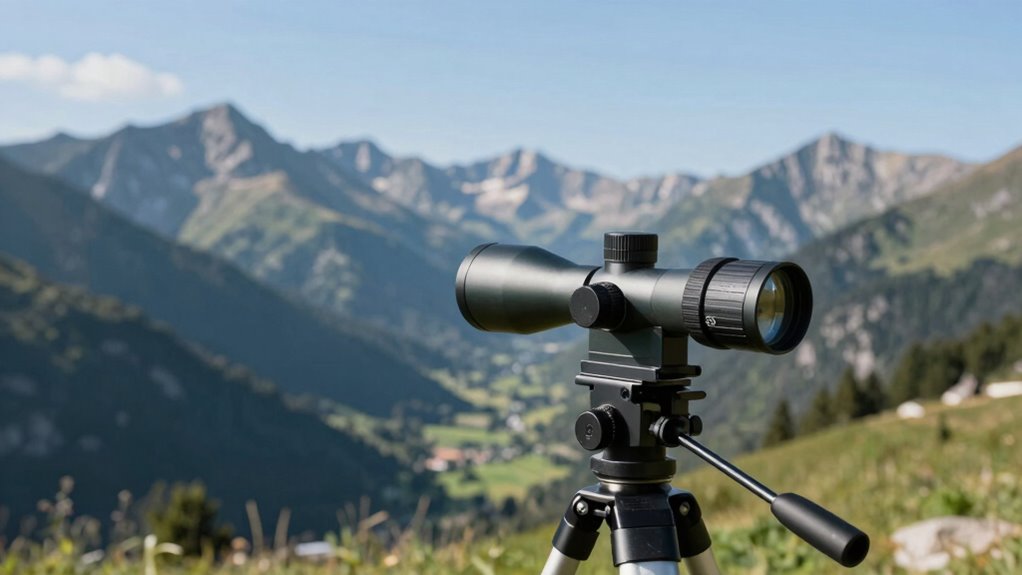

Spotting scopes work best on clear, stable days because their high magnification and optical clarity rely on good visibility and steady conditions. Bright, sunny weather enhances image sharpness and detail, while fog or rain can cause distortion or dull images. When conditions are stable, you get the most out of your scope’s capabilities for scenic views and wildlife observations. Want to discover more tips to optimize your outdoor viewing? Keep going to learn additional insights.

Get travel and outdoor gear delivered free — and shop member deals
- Fast, free delivery on millions of items
- Access to Prime Big Deal Days deals on October 6–7
- Prime Video, Amazon Music and more included
Key Takeaways
- Bright, clear days provide optimal light for high-quality magnification and clarity.
- Weather conditions like fog, rain, or haze diminish image sharpness and detail.
- Stable atmospheric conditions prevent image distortion caused by turbulence.
- Poor visibility days limit the scope’s ability to reveal distant landscape details.
- Planning around favorable weather maximizes the scope’s performance and viewing experience.
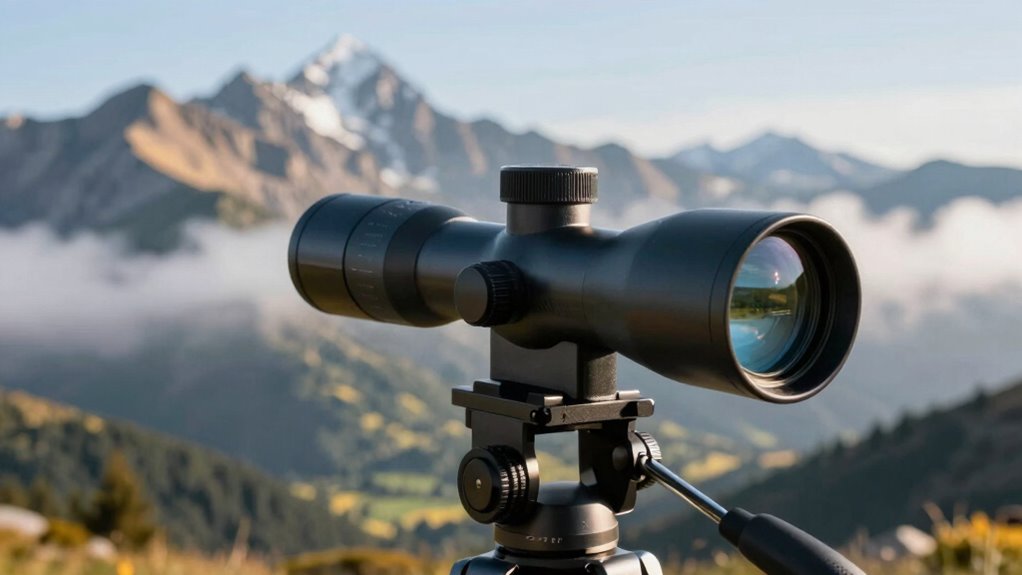
When planning a scenic day outdoors, having the right spotting scope can make all the difference in fully appreciating breathtaking views. Whether you’re gazing across rolling hills, distant mountain peaks, or lush forests, a quality spotting scope helps you see details that would otherwise remain hidden. It’s especially useful when engaging in wildlife observation, where clarity and magnification are essential for spotting animals in their natural habitat. With a spotting scope, you can observe deer grazing, elk rutting, or even elusive predators from a safe distance without disturbing them. This makes your outdoor experience richer and more immersive, giving you a clearer connection to nature.
However, not all scenic days call for the same equipment, and spotting scopes work best under certain conditions. Bright, clear days with good visibility are ideal because the scope’s optical quality really shines when light is abundant. On foggy, rainy, or overly hazy days, the images can become dull or distorted, diminishing the viewing experience. That’s why these scopes excel on days when the weather is stable and visibility is high, allowing you to take full advantage of their powerful lenses and high-definition optics. Additionally, understanding weather conditions can help you plan your trips more effectively, ensuring you choose days when your scope will perform optimally.
Birdwatching techniques are also essential to maximize your experience when using a spotting scope. When you’re focused on birdwatching, you need a scope that offers sharp images and a stable, tripod-mounted platform. This stability is key for spotting small, fast-moving birds, and for identifying species based on subtle markings or behaviors. By mastering birdwatching techniques like scanning for movement, focusing precisely, and adjusting your position for the best light, you enhance what your scope can reveal. A good spotting scope combined with these techniques turns a simple day of observing into an educational and awe-inspiring adventure. Furthermore, knowledge of optical quality and how it impacts clarity can guide you in selecting the best equipment for different conditions.
If your scenic day involves quick stops or dense terrain, a lightweight binocular might serve better, but for hours of distant observation with high detail, a spotting scope remains invaluable for detailed viewing.
high magnification spotting scope for wildlife
As an affiliate, we earn on qualifying purchases.
As an affiliate, we earn on qualifying purchases.
Frequently Asked Questions
How Do Weather Conditions Affect Spotting Scope Performance?
Weather conditions profoundly impact your spotting scope’s performance. Cloud cover can obscure your view, making it harder to see distant details clearly. Temperature fluctuations cause air currents that create distortion and reduce image clarity. When the sky is clear and temperatures are stable, your scope performs at its best, providing sharp, detailed views. Conversely, cloudy or rapidly changing weather diminishes visibility, making these days less suitable for spotting with your scope.
What Is the Optimal Magnification for Scenic Viewing?
The ideal magnification for scenic viewing usually falls within a range of 20x to 60x, depending on your scope and conditions. This range provides a good balance between detail and stability, ensuring clear images. Higher magnifications may offer more detail but can compromise image clarity if the weather is unstable or the scope isn’t steady. Stick within this range for the best scenic experience, and always consider your environment.
Are Spotting Scopes Suitable for Night-Time Wildlife Observation?
Spotting scopes aren’t ideal for nighttime wildlife observation because they lack night vision capabilities, and darkness makes wildlife tracking challenging. You might feel like a superhero with incredible vision, but without proper night vision equipment, spotting scopes won’t help much after sunset. For effective night-time wildlife tracking, consider using specialized night vision or thermal scopes, which are designed to see in low light and reveal elusive nocturnal creatures.
How Portable Are Spotting Scopes for Outdoor Adventures?
Spotting scopes are quite portable for outdoor adventures, especially when you choose a lightweight design. You’ll find that their tripod stability is essential for clear views, so consider a sturdy, easy-to-carry tripod. Their ocular clarity guarantees sharp, detailed images even on the go, making them perfect for scenic days or wildlife watching. With a bit of planning, you can enjoy high-quality viewing without feeling weighed down.
What Maintenance Is Required to Keep a Spotting Scope in Top Condition?
To keep your spotting scope in top condition, regularly clean the lens with a soft, lens-safe cloth to prevent dust and smudges. Use lens cleaning solution sparingly and avoid harsh materials. Store it in a dry, padded case, and follow storage precautions to guard it from moisture, extreme temperatures, and impacts. Proper maintenance ensures clear optics and prolongs the lifespan of your scope, making your outdoor adventures more enjoyable.
Conclusion
Spotting scopes truly shine on clear, scenic days, much like a lighthouse guiding ships through calm waters. When the weather’s perfect, they reveal breathtaking details and distant wonders, making your experience unforgettable. But on cloudy or foggy days, their sharpness fades, much like a painting lost in the mist. So, plan your scenic adventures when the sky is bright and clear, and your spotting scope will be your trusty window to nature’s finest moments.
Halloween Picks
halloween
As an affiliate, we earn on qualifying purchases.