


Cruise pricing can feel random because it changes based on demand windows and customer booking patterns you’re not aware of. Prices usually start high with early bookings and drop as departure nears, especially in the last 60-90 days. Many travelers wait for last-minute deals or book early to secure preferences, which influences costs. When you understand these patterns, you can time your bookings better. Stay tuned, as you’ll discover how to use this knowledge to your advantage.

Get travel and outdoor gear delivered free with Prime
- Fast, free delivery on millions of items
- Prime Video, Amazon Music and more included
- Member-only deals all year
Key Takeaways
- Prices fluctuate based on customer booking patterns and demand cycles, making them seem unpredictable initially.
- Early bookings are higher to secure revenue, while last-minute deals appear closer to departure, creating perceived randomness.
- Cruise lines adjust prices strategically during demand lulls or peaks to fill cabins and meet revenue goals.
- Recognizing demand windows reveals predictable pricing trends rather than random fluctuations.
- Understanding customer behavior and booking timing transforms perceived randomness into a strategic advantage.
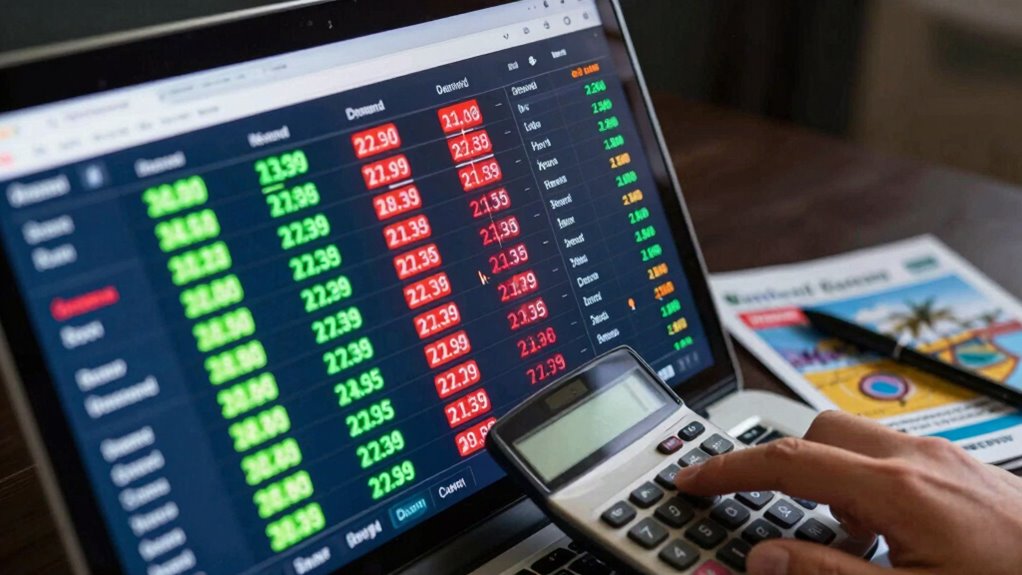
Understanding how cruise pricing fluctuates throughout the booking timeline can help you secure the best deals. Cruise prices don’t change randomly; they follow specific patterns driven by demand windows and customer booking patterns. Recognizing these fluctuations makes the process less confusing and helps you plan your booking strategically. Instead of feeling overwhelmed by sudden price drops or spikes, you’ll see that prices tend to rise and fall based on predictable trends tied to how many people are booking and when.
Pricing fluctuations are largely influenced by the timing of bookings. Early on, prices are usually higher because the cruise line wants to secure some revenue upfront and gauge initial demand. As the departure date approaches, prices often drop because the cruise line aims to fill remaining cabins. This creates a window where last-minute deals become more common, especially within the 60 to 90 days before departure. Knowing this, you can time your booking to take advantage of these lower prices, avoiding the stress of overpaying early or missing out on discounts. Additionally, cruise lines may adjust prices based on customer behavior, which further emphasizes the importance of understanding demand cycles. Recognizing the role of demand windows can help you better anticipate pricing trends and avoid impulsive decisions.
Booking early can be costly, but last-minute deals within 60-90 days before departure often offer the best prices.
Customer booking patterns play a crucial role in these fluctuations. Many travelers tend to book early to secure their preferred stateroom or itinerary, creating an initial surge of bookings that can keep prices high. As the departure date nears, late bookers often wait for last-minute deals, leading to a second wave of bookings that push prices down. This pattern means that if you’re flexible with your travel plans, waiting until the last few months can sometimes save you money. Conversely, if you have a specific cruise in mind, booking early might guarantee better cabin choices, even if prices are initially higher. Recognizing how booking trends influence pricing can give you an edge in planning your reservation.
Furthermore, understanding the demand cycles and how they relate to customer behavior can help you identify the optimal times to book. Knowing when these demand windows open and close helps you avoid the feeling that cruise pricing is entirely random. Instead, you’ll see that prices follow a predictable pattern influenced by customer booking patterns and the cruise line’s own revenue goals. For example, cruise lines may release promotions during specific periods when they notice a lull in bookings or try to stimulate demand by lowering prices at certain times. Being aware of these cycles allows you to plan your booking around the times when prices are likely to be at their lowest.
Additionally, understanding that demand windows are based on customer behavior can help you anticipate when price drops are likely to occur. In essence, understanding demand windows transforms what feels like a guessing game into a strategic process. By paying attention to pricing fluctuations and customer booking patterns, you’ll be better positioned to snag the best deals. Instead of reacting impulsively to price changes, you’ll be able to anticipate them, making your cruise planning more confident and cost-effective.
As an affiliate, we earn on qualifying purchases.
Frequently Asked Questions
How Do Cruise Companies Set Their Initial Prices?
Cruise companies set their initial prices using strategic pricing strategies grounded in revenue management. They analyze demand patterns, seasonality, and booking windows to determine the most favorable starting price. By forecasting how many cabins they’ll sell at different price points, they can adjust initial fares to maximize revenue while attracting early bookings. This dynamic approach helps them balance supply and demand, making initial prices more predictable and aligned with market conditions.
Can Demand Windows Change for the Same Cruise Route?
Demand windows are like changing tides, so yes, they can shift for the same cruise route. Pricing fluctuations happen because demand cycles vary based on seasons, holidays, or special events. If more travelers book early or last-minute, the demand window moves, affecting prices. So, what you see as a fixed route can experience different demand patterns, making cruise prices feel unpredictable until you recognize these cycles.
What Factors Influence Sudden Price Drops?
Sudden price drops are mainly influenced by seasonal fluctuations and competitor strategies. During off-peak times, demand drops, prompting cruise lines to lower prices to fill cabins. Additionally, if competitors reduce their fares or launch promotional offers, cruise lines often respond with discounts to stay competitive. These factors create unpredictable pricing, but understanding demand windows helps you anticipate when prices might drop, so you can book at better rates.
Are Last-Minute Deals Truly Cheaper?
Last-minute deals can be cheaper, but it’s a bit of a gamble. Pricing psychology and traveler behavior influence these discounts, making them attractive for spontaneous planners. Sometimes, cruise lines lower prices to fill unsold cabins close to departure, but other times, prices might rise if demand spikes. So, while last-minute deals often save money, you need to weigh the risk and act quickly to snag the best offer.
How Do Special Events Impact Cruise Demand?
Special events like seasonal shifts and local festivals considerably impact cruise demand. During these times, demand spikes as travelers want to experience unique celebrations or holidays, causing prices to rise. Conversely, demand drops when events are less popular, leading to lower prices. You’ll notice these fluctuations if you plan your cruise around specific festivals or seasons, helping you find better deals and avoid peak pricing periods.
Conclusion
Think of cruise pricing like a dance, where each step is dictated by the rhythm of demand windows. When you learn the moves—knowing when to step in or hold back—you can glide through the process with confidence. Once you understand these patterns, pricing stops feeling like a random toss of the dice. Instead, it becomes a predictable dance, guiding you toward smarter bookings and better deals every time you set sail.
Halloween Picks
halloween
As an affiliate, we earn on qualifying purchases.