
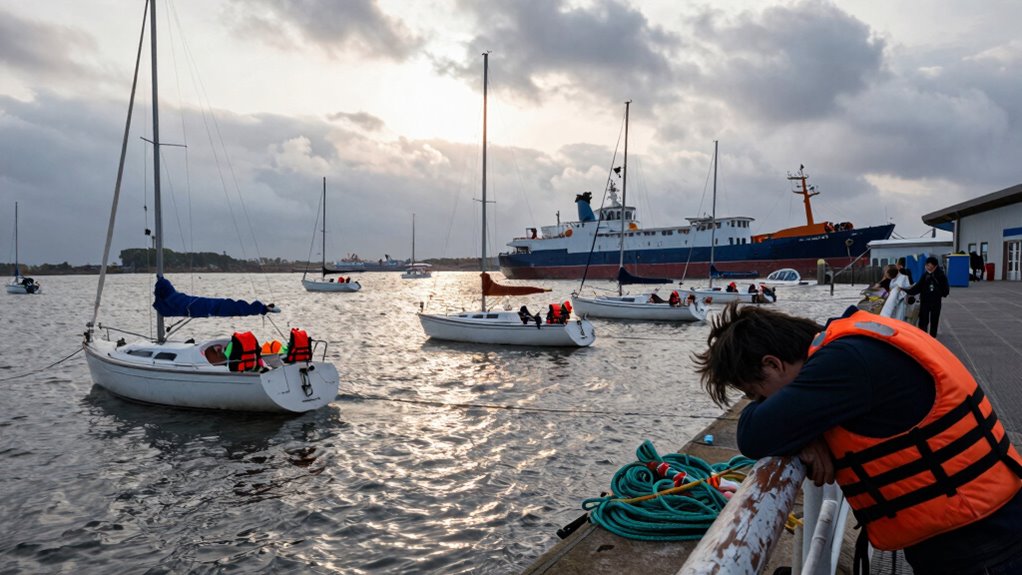

Port-hopping can leave you feeling more exhausted than relaxed because constantly moving between ports disrupts your sleep and routine, making it hard to settle into a peaceful rhythm. The sensory overload from busy markets and new environments can overwhelm your senses, while activities like exploring and sampling food drain your energy. If you keep going, you’ll discover simple ways to restore your well-being and find more peace during your travels.

Get travel and outdoor gear delivered free with Prime
- Fast, free delivery on millions of items
- Prime Video, Amazon Music and more included
- Member-only deals all year
Key Takeaways
- Frequent environment changes disrupt sleep patterns and routines, leading to fatigue rather than relaxation.
- Active exploration and sensory overload drain energy, making rest feel elusive.
- Constant travel and new customs increase mental and physical exhaustion.
- Overcommitment to activities reduces time for restorative rest and reflection.
- The cumulative effect of jet lag, overstimulation, and rushing hampers genuine relaxation.

In a world filled with constant digital noise, finding true rest can feel like an ongoing challenge. When you’re port-hopping, chasing new destinations, it’s easy to think that each new port will bring relaxation and rejuvenation. But instead, you often find yourself more exhausted than refreshed. The whirlwind pace, packed schedules, and relentless pursuit of new experiences can easily turn your trip into a series of fleeting moments rather than genuine rest. You might believe that immersing yourself in different cultures through cultural immersion or sampling local cuisine will help you unwind, but the reality is often the opposite. These activities demand energy, curiosity, and mental engagement, leaving little room for true relaxation.
As you move from port to port, your body struggles to adapt to changing environments, time zones, and routines. The constant travel disrupts your sleep patterns, making it difficult to truly rest. Instead of sinking into a peaceful rhythm, you’re constantly adjusting—trying to catch up on sleep, manage jet lag, and stay alert enough to enjoy the next adventure. While exploring local cuisine and cultural traditions can be enriching, they often come at the expense of your energy reserves. You might spend hours navigating busy markets or sampling unfamiliar dishes that excite your palate but leave your digestion and energy levels taxed. The cultural immersion you seek often involves active participation—walking countless miles, learning new customs, or engaging with locals—which can be stimulating rather than calming. Prioritizing self-care practices can help mitigate some of these effects and support your well-being during travel. Recognizing the importance of restorative activities such as meditation or quiet reflection can further contribute to your ability to recover and recharge.
Furthermore, the social and sensory overload during port-hopping can overwhelm your senses, making it hard to find moments of peace. Instead of feeling relaxed, you may end up feeling overstimulated, tired, and mentally drained. The desire to maximize every experience makes it tempting to squeeze in as much as possible, but that often backfires, leaving you exhausted instead of refreshed. Restful travel requires a balance between activity and downtime—something that’s hard to achieve when your itinerary is packed with ports and excursions. So, even if you’re eager to explore cultural nuances or indulge in local flavors, remember that true rest comes from slowing down, not rushing through. Allow yourself time to breathe, reflect, and recover, rather than viewing port-hopping as a race to see everything at once. Additionally, maintaining awareness of travel fatigue can help you better recognize when your body needs a break and prioritize self-care amidst your adventures. Recognizing the importance of sustainable living practices can also help you create more mindful and restorative travel experiences. Incorporating relaxation techniques such as deep breathing or gentle stretching during stops can further enhance your sense of well-being and help balance your travel energy. Being mindful of your energy levels can help you avoid burnout and make the most of your journey without sacrificing your well-being.
As an affiliate, we earn on qualifying purchases.
Frequently Asked Questions
How Does Port-Hopping Impact Long-Term Travel Fatigue?
Port-hopping can increase your long-term travel fatigue by causing sleep disruption and heightening itinerary stress. Constantly adjusting to new environments disrupts your sleep patterns, leaving you tired and less refreshed. The rush to keep up with tight schedules adds to mental exhaustion, making it harder to recover. Over time, these factors mount, leaving you feeling drained and less able to fully enjoy your journeys, despite the excitement of exploring new places.
Can Port-Hopping Affect Mental Health Differently Than Stationary Vacations?
Yes, port-hopping can affect your mental health differently than stationary vacations. Constantly adjusting to new environments increases mental exhaustion and emotional strain, as you’re always adapting to unfamiliar surroundings. This nonstop change can make it harder to relax and recharge, leading to feelings of stress or overwhelm. Unlike a stationary trip, port-hopping challenges your emotional resilience, making it essential to prioritize self-care and downtime during your travels.
What Are Common Logistical Challenges Faced During Port-Hopping?
During port-hopping, you often face logistical challenges like coordinating itinerary planning and transportation logistics. You might struggle with timely ship arrivals and departures, which can disrupt your schedule. Steering through different ports’ transportation options or delays can add stress. Also, managing luggage and ensuring you have enough time for sightseeing without feeling rushed can be tricky. These hurdles make it essential to plan carefully and stay flexible throughout your trip.
How Does Port-Hopping Influence Local Cultural Experiences?
Port-hopping influences your local cultural experiences by limiting opportunities for true cultural immersion. When you rush from port to port, you often miss meaningful local interactions, which are essential for understanding and appreciating a destination’s culture. The quick stops can make your experience feel superficial, preventing you from connecting deeply with local traditions, food, and people. To enhance your cultural encounters, slow down and spend more time engaging with local communities.
Are Certain Destinations Better Suited for Port-Hopping Trips?
Certain destinations are better suited for port-hopping trips, especially those offering diverse attractions and easy travel connections. A recent study shows that travelers who visit multiple ports in a region experience 30% more cultural encounters. With greater destination variety and travel flexibility, port-hopping can be exciting and dynamic. Choose areas with short distances between ports and well-organized transport options to maximize your experience and minimize travel fatigue.
Conclusion
Port-hopping may seem like a thrilling dance across the seas, but it often leaves you more fatigued than restful. The constant shifts, like a restless tide, can wear down your sense of calm, turning what should be a rejuvenating journey into a series of fleeting moments. Remember, sometimes the most peaceful port isn’t the one with the brightest lights, but the quiet harbor where you can truly drop anchor and breathe.
Columbus Day / Indigenous Peoples' Day Picks
long weekend sales
As an affiliate, we earn on qualifying purchases.