Even during relaxing cruises, your body is still overwhelmed by dehydration, poor sleep, and mental stress from exploring unfamiliar ports and busy schedules. Small cabins and disrupted routines make it hard to rest properly, while salty foods and alcohol worsen dehydration. This combination drains your energy and impacts your mood long after the trip ends. To understand how to recover faster, keep going—you’ll find helpful tips that make all the difference.

Get travel and outdoor gear delivered free with Prime
- Fast, free delivery on millions of items
- Prime Video, Amazon Music and more included
- Member-only deals all year
Key Takeaways
- Dehydration from salty foods, alcohol, and dry cabin air depletes energy levels and causes fatigue.
- Poor sleep quality due to unfamiliar, noisy cabins disrupts rest and delays recovery.
- Mental stress from port activities and travel logistics exhaust emotional reserves.
- Routine changes, like late nights and lively entertainment, disturb sleep and circadian rhythms.
- The combined effects of dehydration, sleep deprivation, and mental fatigue prolong tiredness after the trip.

Even when a cruise is marketed as a relaxing getaway, many travelers return feeling unexpectedly exhausted. The truth is, what seems like leisure can often hide a whirlwind of physical strain, leading to post-cruise fatigue that catches you off guard. One big reason is travel dehydration. When you’re on the move—whether exploring ports or rushing through airport terminals—you often forget to drink enough water. Cruises, especially, can contribute to dehydration because of salty foods, alcohol consumption, and dry cabin air. Dehydration saps your energy, leaves your skin feeling dull, and can cause headaches, making you feel more drained than you anticipated once the trip ends.
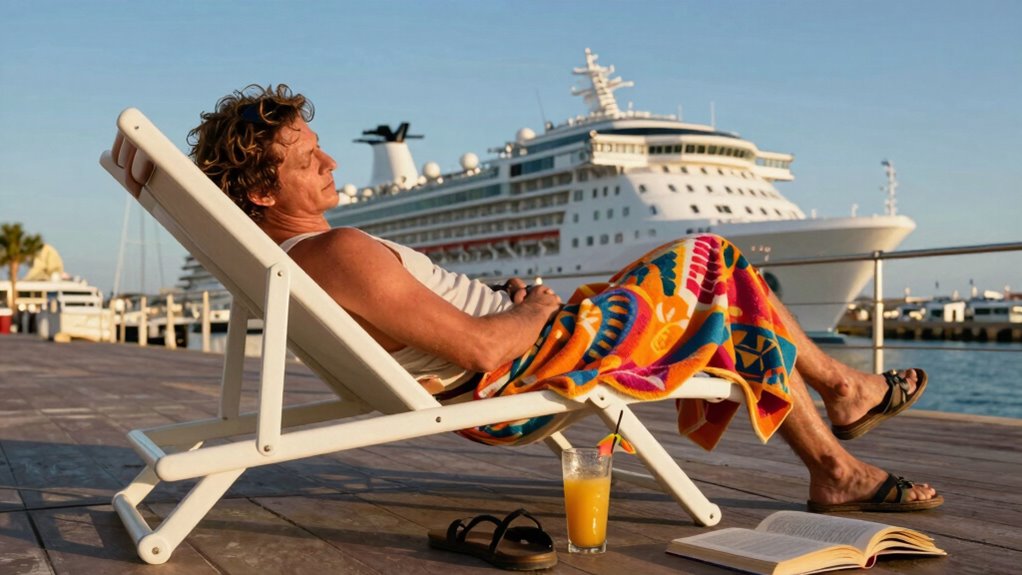
Travel dehydration and salty foods drain your energy and leave you feeling more exhausted after your cruise.
Another significant factor is cabin sleep deprivation. Cruise cabins are usually compact and may not offer the best sleep environment. You might find yourself tossing and turning because of unfamiliar noises, a different bed setup, or uncomfortable pillows. Plus, the constant activity and excitement during the day often mean you stay up later than usual or skip your usual sleep routines. This disrupts your circadian rhythm, leaving you less rested when the trip concludes. When you finally get home, your body is already behind on rest, compounding your fatigue. Recognizing the importance of quality sleep during travel can help mitigate some of these effects. Additionally, poor air quality in enclosed spaces like cabins can contribute to fatigue, especially if ventilation is inadequate.
It’s not just the physical aspects that drain you. The mental and emotional toll of travel, even if enjoyable, can also be exhausting. Managing unfamiliar ports, dealing with delays, or managing the logistics of shore excursions can add stress. This mental fatigue, combined with physical tiredness, makes you feel more worn out than you expected. The constant stimulation and packed schedules can leave you feeling emotionally drained, which often manifests as overall exhaustion once you’re back home.
Furthermore, the shift from the cruise’s structured schedule to your regular routine can be a shock. Your body has adapted to the cruise’s rhythm—late dinners, lively entertainment, and unpredictable sleep patterns—and suddenly, you’re expected to revert to a calmer, more routine life. That adjustment can take a toll, heightening your sense of fatigue. Additionally, the effects of travel dehydration can linger even after you return, prolonging your recovery process. Prioritizing proper hydration and air quality can help your body recover more efficiently.
In essence, even when you set out expecting a relaxing experience, the combined effects of travel dehydration, cabin sleep deprivation, mental exhaustion, and routine disruption contribute to post-cruise fatigue. Recognizing these factors helps you prepare better—staying hydrated, prioritizing rest, and easing back into your routine—to recover more quickly and truly enjoy the relaxing moments you seek on your trips.
As an affiliate, we earn on qualifying purchases.
Frequently Asked Questions
Can Dehydration From Cruises Cause Ongoing Fatigue?
Yes, dehydration from cruises can cause ongoing fatigue. When you don’t follow a proper hydration strategy, you lose essential fluids and electrolytes, leading to tiredness and low energy. Even after the trip, your body might still be recovering from this imbalance. To combat this, focus on rehydrating with water and electrolyte-rich drinks, helping restore your electrolyte balance and improve your energy levels faster.
How Does Disrupted Sleep During Cruises Affect Energy Levels?
Ever feel like your energy’s been drained by a silent thief? Sleep deprivation and rest disruption during cruises can leave you feeling exhausted long after disembarking. When your sleep cycles are thrown off, your body struggles to recover, causing lingering fatigue. This disrupted rest hampers your body’s ability to repair and rejuvenate, making you feel more tired than you expected. Prioritize good sleep habits to restore your energy post-cruise.
Do Dietary Changes on Cruises Impact Post-Trip Tiredness?
Yes, dietary habits and nutritional adjustments on cruises can contribute to post-trip tiredness. When you indulge in rich, high-calorie foods or inconsistent eating patterns, your body struggles to recover and regain energy afterward. These dietary changes can lead to digestive issues, blood sugar fluctuations, and dehydration, all of which drain your energy. To minimize fatigue, try to maintain balanced nutrition and stay hydrated during your trip.
Is Post-Cruise Fatigue Linked to Travel Stress?
Yes, post-cruise fatigue is linked to travel stress. When you experience travel anxiety, your body stays in a heightened stress mode, making recovery harder. The cabin environment can also contribute—poor air quality or uncomfortable conditions add to your exhaustion. Even after the trip, your mind and body need time to unwind from the accumulated stress, which explains why you often feel tired despite a relaxing cruise.
Can Pre-Existing Health Conditions Influence Recovery After Cruises?
Yes, pre-existing health conditions, like chronic illness, can influence your recovery after cruises. Your immune response may be compromised or overtaxed, making it harder to bounce back from travel fatigue. If you have health issues, you might experience prolonged fatigue or other symptoms because your body takes longer to recover. It’s essential to listen to your body and consult your doctor to develop a plan tailored to your health needs.
Conclusion
Even after a relaxing cruise, your body can feel like a tired old ship drifting in the harbor. It’s your mind and muscles catching up from the whirlwind of activities, altered sleep, and new environments. Think of post-cruise fatigue as a gentle tide, slowly bringing you back to shore. So, give yourself time to rest and reset—your body’s just weathering the storm before it sails smoothly again.
Halloween Picks
halloween
As an affiliate, we earn on qualifying purchases.