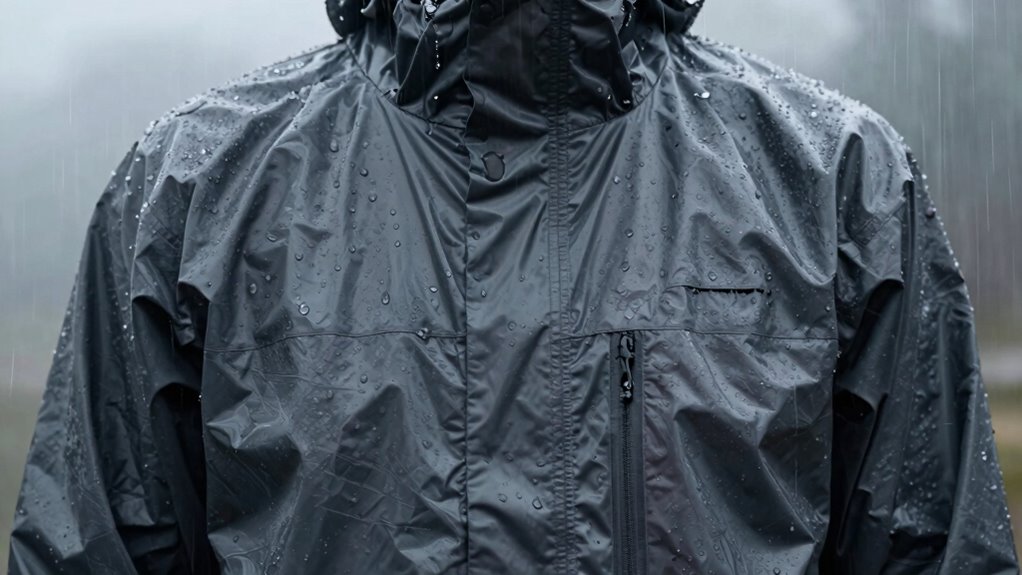

If you ignore breathability in your rain jacket, it quickly traps sweat and moisture inside, making you feel clammy and uncomfortable. Without proper ventilation, heat builds up, which can lead to chafing and skin irritation. Even waterproof membranes can become ineffective if they’re not paired with breathable fabrics or ventilation features. This causes your jacket to act more like a seal than a shield. Keep going to find out how to prevent this common issue.

Get travel and outdoor gear delivered free with Prime
- Fast, free delivery on millions of items
- Prime Video, Amazon Music and more included
- Member-only deals all year
Key Takeaways
- Trapped sweat causes clamminess and discomfort, reducing overall comfort during rainy activities.
- Lack of ventilation leads to heat buildup, making the jacket feel hot and stuffy.
- Moisture inside the jacket increases the risk of chafing and skin irritation.
- Without breathable features, the jacket acts as a moisture barrier, trapping internal humidity.
- Poor moisture management diminishes performance and discourages proper use in active conditions.
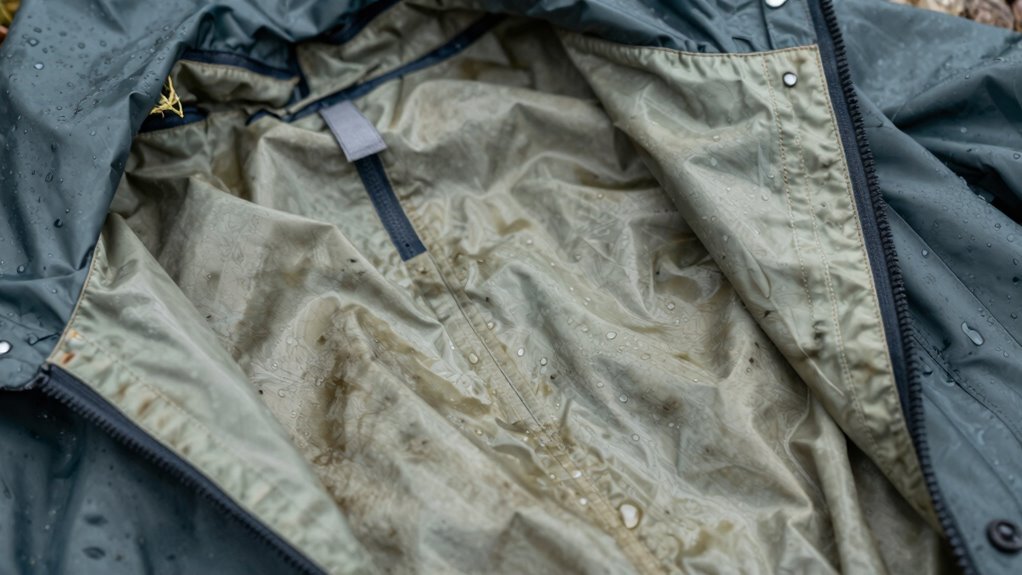
When choosing a rain jacket, understanding breathability is essential to stay comfortable during wet weather. If you overlook this feature, you’ll likely find yourself soaked in sweat even when the rain has stopped. Breathability primarily depends on how well the jacket’s fabric manages moisture, and this is where waterproof membranes and fabric ventilation come into play. Waterproof membranes are designed to block water from entering the jacket while allowing vapor to escape. However, if these membranes are not paired with proper fabric ventilation, the jacket can trap sweat inside, causing you to feel clammy and uncomfortable.
Proper ventilation is key to staying dry and comfortable in a waterproof rain jacket.
Many rain jackets rely on waterproof membranes like Gore-Tex or eVent, which are highly effective at keeping water out. But these membranes alone aren’t enough. They need to be integrated with breathable fabrics that promote airflow. When fabric ventilation isn’t prioritized, the moisture generated by your body has nowhere to go. As a result, sweat accumulates, and the jacket becomes a barrier rather than a shield. This not only leads to discomfort but also increases the risk of chafing and skin irritation. It’s a common mistake to focus solely on waterproofing and ignore how the jacket handles internal moisture.
Breathability isn’t just about letting moisture escape but also about how well the jacket’s design facilitates airflow. Venting features like underarm zippers, mesh linings, or adjustable vents allow you to regulate temperature and moisture build-up. Without these, even the best waterproof membranes can cause you to overheat and sweat excessively. When fabric ventilation is insufficient, the jacket acts more like a seal than a breathable layer, trapping heat and humidity close to your skin. This can be especially problematic during high-energy activities like hiking or cycling, where your body generates a lot of heat. Additionally, proper fabric management plays a crucial role in maintaining comfort and preventing moisture buildup. Incorporating advanced textile technologies designed for breathability can also make a significant difference in high-intensity conditions. Furthermore, effective ventilation is essential for balancing waterproofing with airflow, ensuring the jacket performs well during vigorous activity. Moreover, selecting jackets with ventilation features designed for active use can significantly enhance overall comfort during strenuous activities.
In essence, a rain jacket’s failure to breathe properly results from neglecting how waterproof membranes interact with fabric ventilation. You might think a jacket is effective because it keeps water out, but if it doesn’t allow moisture to escape, you’ll end up wetter inside than outside. To truly stay comfortable in wet conditions, you need a balance between waterproofing and breathability. Look for jackets that combine high-quality waterproof membranes with thoughtful ventilation features. Only then can you enjoy protection from rain without sacrificing comfort, ensuring you stay dry, cool, and focused on your activities. Ignoring these aspects is a quick way to have a rain jacket that fails when you need it most.
breathable waterproof rain jacket
As an affiliate, we earn on qualifying purchases.
As an affiliate, we earn on qualifying purchases.
Frequently Asked Questions
How Often Should I Replace My Rain Jacket for Better Breathability?
You should replace your rain jacket every 2 to 3 years to maintain fabric durability and guarantee comfort enhancement. Over time, the breathable membranes can break down, reducing airflow and causing discomfort. If you notice persistent moisture buildup, unpleasant odors, or visible wear, it’s time for a new jacket. Regularly inspecting your jacket helps you catch signs of wear early, keeping you dry and comfortable during wet conditions.
Do All Waterproof Fabrics Have the Same Breathability Levels?
Not all waterproof fabrics have the same breathability levels. Fabric technology varies, affecting how well a jacket can wick away sweat and moisture. Breathability testing helps establish this, with some fabrics offering higher airflow and moisture management than others. When choosing a rain jacket, look for those with proven breathability ratings. This guarantees you stay dry from the outside and comfortable from the inside, especially during intense activities.
Can Layering Affect the Breathability of My Rain Jacket?
Layering is like building a fortress; it can either strengthen or weaken breathability. When you add fabric insulation or extra outer shell layers, you might trap heat and sweat, reducing airflow. If your rain jacket’s outer shell materials aren’t breathable, layering can worsen moisture build-up inside. To stay dry and comfortable, choose lightweight, breathable layers and avoid over-layering, ensuring your jacket’s breathability isn’t compromised.
What Environmental Factors Impact Rain Jacket Breathability?
Environmental factors like humidity, temperature, and rain intensity directly impact your rain jacket’s breathability. High humidity and heavy rain reduce vapor transfer, trapping sweat inside. Low air permeability in the fabric can hinder airflow, making it harder for vapor to escape. When these factors combine, your jacket’s ability to keep you dry and comfortable diminishes, causing discomfort and potential moisture buildup. Always consider environmental conditions to choose a suitable, breathable rain jacket.
Are There Specific Activities That Require More Breathable Rain Jackets?
They say “it’s better to be safe than sorry,” especially when choosing your rain gear. For activities like hiking and cycling, you need more breathable rain jackets to stay comfortable and dry. Hiking gear and cycling apparel that prioritize breathability help wick away sweat and keep you focused on your adventure. Ignoring this can lead to discomfort and overheating, making your outdoor experience less enjoyable. Always opt for breathable options to stay fresh.
Conclusion
Ignoring breathability in rain jackets can lead to discomfort and moisture buildup, making outdoor activities less enjoyable. Nearly 60% of outdoor enthusiasts report feeling sweaty or clammy when wearing non-breathable jackets, highlighting the importance of proper ventilation. By choosing a jacket with good breathability, you stay dry inside and out, ensuring comfort and performance. Don’t let neglecting this feature turn a rainy day into an uncomfortable experience—invest in gear that works with you, not against you.
Fall Picks
fall essentials
As an affiliate, we earn on qualifying purchases.