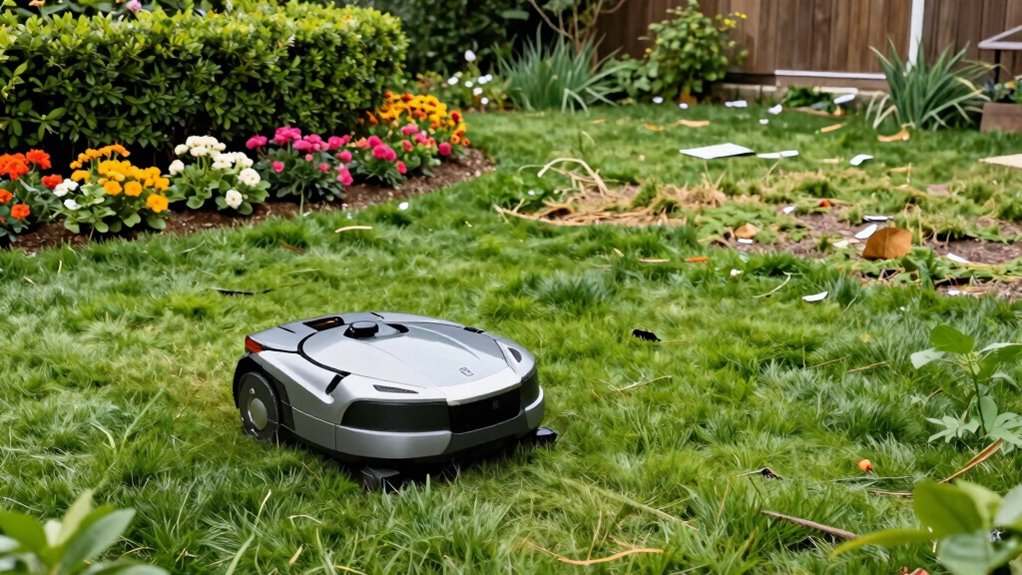

Robotic mowers work best on small, flat, and open yards where navigation is simple and coverage is easy. They struggle with larger, more complex shapes, steep slopes, or uneven terrain, which can hinder their efficiency. Battery life and terrain adaptability also impact performance, especially in challenging landscapes. If you want to know how to optimize your yard’s specific conditions, keep exploring the details below.

Get travel and outdoor gear delivered free with Prime
- Fast, free delivery on millions of items
- Prime Video, Amazon Music and more included
- Member-only deals all year
Key Takeaways
- Robotic mowers excel on small, flat, and simple lawns but struggle with complex shapes and uneven terrain.
- Adequate battery capacity is crucial for large or intricate yards to ensure complete coverage.
- Noise levels are less disruptive in quiet, residential areas, enhancing suitability for certain environments.
- Advanced navigation features improve performance on complex or challenging landscapes.
- Properly matching mower capabilities to yard size and terrain maximizes efficiency and effectiveness.
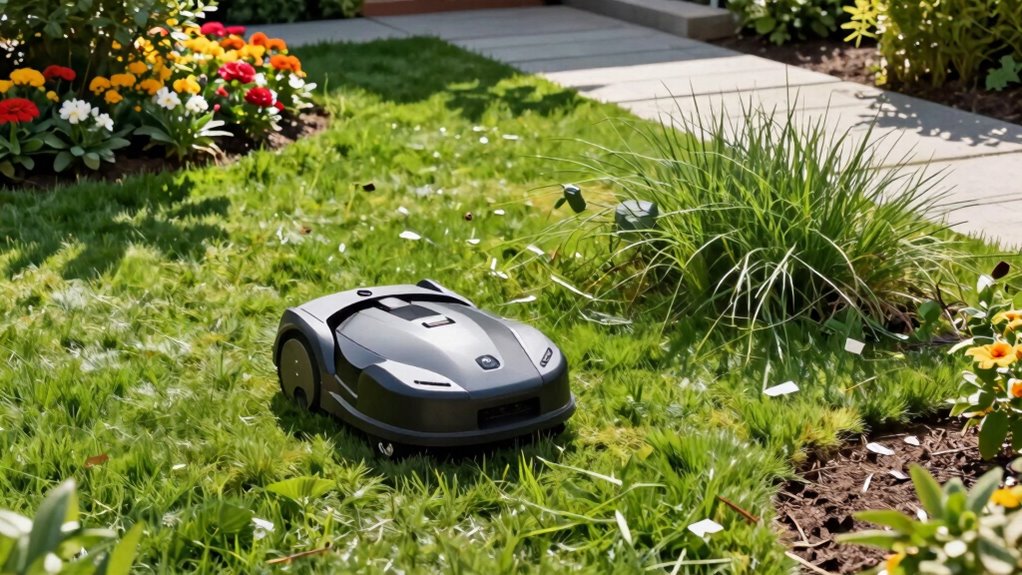
Robotic mowers have revolutionized lawn care, but their effectiveness depends heavily on the yard’s size, shape, and terrain. If your lawn is small and simple, these devices can be a game changer, saving you time and effort. However, for larger or more complex yards, their performance can vary. One essential factor to evaluate is battery longevity. A model with a short-lasting battery might need frequent recharging, which interrupts mowing cycles and can leave your lawn uneven. On the other hand, a mower with a longer-lasting battery can cover more ground without needing constant recharges, making it more suitable for bigger yards. You’ll want to check the battery capacity and cycle time before purchasing to guarantee it aligns with your lawn’s size. Battery capacity is crucial for ensuring your robotic mower can handle your yard’s specific requirements.
Battery life is key; longer-lasting batteries suit larger yards for seamless, efficient mowing.
Noise levels also play a significant role in determining whether a robotic mower is a good fit for your yard. These devices are generally quieter than traditional gas-powered mowers, but some models are still noticeable, especially if you have close neighbors. If your yard is situated near homes or shared spaces, a quieter mower can minimize disturbances. Conversely, if noise isn’t a concern and your yard is large enough to require multiple passes, you might not notice the difference. Remember, consistent operation without disturbing your peace or your neighbors is a key advantage of robotic mowers. Additionally, considering the environmental impact of different mower types can help you choose a more sustainable option.
The shape and terrain of your yard also influence their success. A straightforward, flat, and open lawn allows for easy navigation, making it ideal for robotic mowers. Complex shapes with many corners or narrow sections can challenge the mower’s navigation capabilities, leading to missed patches or inefficient coverage. Hilly or uneven terrain can also limit their effectiveness, as some models struggle with steep inclines or rough ground. If your yard has these features, look for a robotic mower specifically designed for tough terrains. Additionally, some models are equipped with sensors and adaptability features that enhance their performance on challenging landscapes. Furthermore, selecting a mower with advanced navigation can significantly improve coverage in complex yards.
Considering battery technology advancements can also help you choose a model that stays efficient over time. Ultimately, the decision hinges on matching the mower’s capabilities with your yard’s characteristics. If you have a small, flat, and open lawn, a model with strong battery longevity and low noise levels will serve you well. For larger, more complex yards, you’ll need a higher-capacity battery and possibly a more rugged design. By contemplating these factors, you’ll better determine whether a robotic mower is the right fit and guarantee it performs at its best, giving you a well-manicured lawn without the hassle.
robotic lawn mower for small flat yards
As an affiliate, we earn on qualifying purchases.
As an affiliate, we earn on qualifying purchases.
Frequently Asked Questions
How Long Do Robotic Mowers Typically Last Before Replacement?
Robotic mowers typically last around 3 to 8 years before needing replacement. Battery longevity plays a key role, often lasting 2 to 3 years before performance declines, but many models have replaceable batteries. Warranty coverage varies, usually offering 1 to 3 years, which can help protect your investment. Proper maintenance and choosing a reputable brand can extend your mower’s lifespan, ensuring you get the most out of your purchase.
Are Robotic Mowers Suitable for Uneven or Hilly Terrains?
Robotic mowers can handle uneven or hilly terrains surprisingly well, but only if they’re designed for it. With advanced terrain adaptation and slope navigation, these machines conquer steep inclines and rugged ground like mountain goats. However, if you choose a model lacking these features, it’s like trying to climb Everest with flip-flops. So, pick a mower with strong slope navigation to keep your yard perfectly manicured, no matter the terrain.
Can Robotic Mowers Handle Extremely Dense or Thick Grass?
Robotic mowers can handle dense or thick grass, but their effectiveness depends on grass density and terrain adaptability. If your lawn has extremely dense or tall grass, a robotic mower might struggle or require more frequent runs. Additionally, if your terrain is uneven or hilly, not all models are built for such conditions. Choose a mower with high terrain adaptability and suitable cutting power to guarantee efficient performance on thick grass.
Do Robotic Mowers Require Special Maintenance or Repairs?
Robotic mowers do require some special maintenance and repairs. You should regularly check and replace the blades to guarantee a clean cut and prevent strain on the motor. Also, keep an eye on battery longevity by charging it properly and replacing it when it starts to decline. Routine cleaning and software updates help keep your mower running smoothly. Addressing these needs will extend your mower’s life and maintain its efficiency.
How Do Robotic Mowers Perform in Very Hot or Cold Climates?
Robotic mowers handle hot and cold climates differently. In extreme temperatures, climate challenges can affect their seasonal performance, causing issues like battery efficiency drops or motor strain. During hot summers, they might overheat if not properly ventilated, while cold winters can slow battery life and cutting power. To guarantee peak performance year-round, you should monitor weather conditions and adjust your mower’s usage accordingly, especially in areas with harsh seasonal changes.
Conclusion
Imagine a small, beautifully maintained lawn where a robotic mower thrives, effortlessly keeping the grass perfect. But in a yard with uneven terrain or thick weeds, it struggles and stalls. Take Sarah’s yard, for example—her mower kept missing patches until she addressed the terrain and weeds. Knowing your yard’s unique features helps you decide if a robotic mower will be your best helper or a frustrating failure. Choose wisely for a lush, hassle-free lawn.
Halloween Picks
halloween
As an affiliate, we earn on qualifying purchases.