
Ships change homeports mainly to gain regulatory benefits, lower costs, and better infrastructure. Cruise lines move vessels to countries with lenient rules, tax advantages, or upgraded ports to boost profitability and operational flexibility. Upgrades like deeper berths and improved passenger facilities also attract ships to new locations. These strategic moves help cruise companies enhance efficiency and stay competitive. If you keep exploring, you’ll uncover more about the key factors driving these homeport shifts.

Get travel and outdoor gear delivered free with Prime
- Fast, free delivery on millions of items
- Prime Video, Amazon Music and more included
- Member-only deals all year
Key Takeaways
- Ships often change homeports to benefit from more lenient regulations and reduce operational costs.
- Upgraded port infrastructure attracts cruise lines seeking larger ships and more passenger facilities.
- Regulatory advantages in certain countries enable cruise lines to maximize profitability and flexibility.
- Incentive programs offered by ports make some locations more attractive as new homeports.
- Strategic port shifts support cruise line efforts to enhance operational efficiency and expand itineraries.
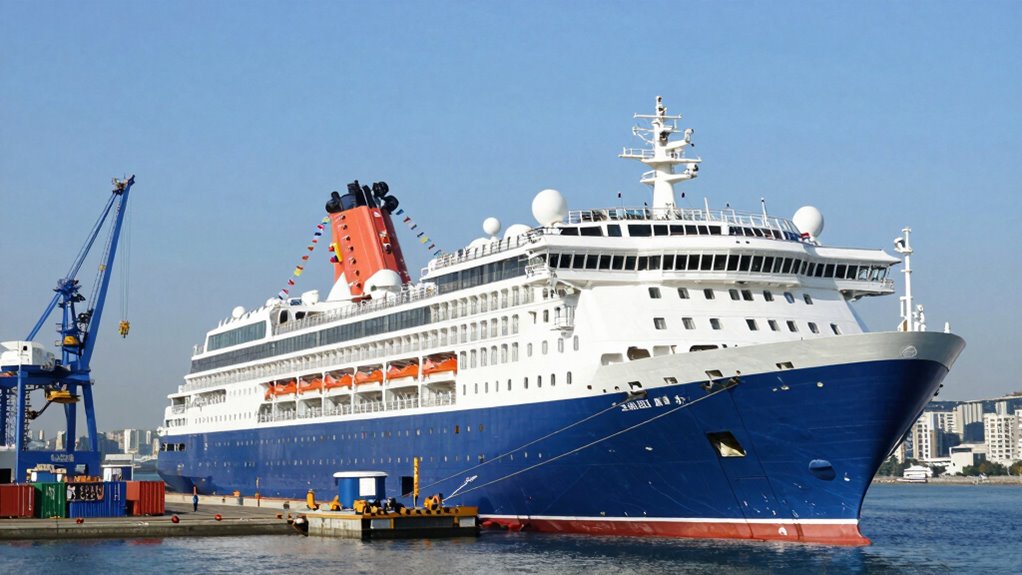
Have you ever wondered why cruise ships switch their homeports so often? It’s not just a matter of convenience or seasonality; a lot of it comes down to maritime regulations and port infrastructure. These factors play a vital role in determining where a ship is based at any given time, and understanding them reveals the strategic considerations behind these moves.
Maritime regulations are central to why ships change homeports. Different countries and regions have their own rules governing ship registration, safety standards, and environmental compliance. Sometimes, a cruise line might decide to register a ship in a different country—known as “flagging out”—to benefit from more lenient regulations or lower taxes. When a ship’s registration changes, it often leads to a change in its homeport as well. For example, a vessel registered in a country with strict safety or environmental standards might be reassigned to a port in a different jurisdiction that offers more favorable regulations or incentives. This process guarantees the cruise line stays compliant while maximizing profitability and operational flexibility.
Ship registration changes often lead to new homeports, driven by regulatory benefits and operational flexibility.
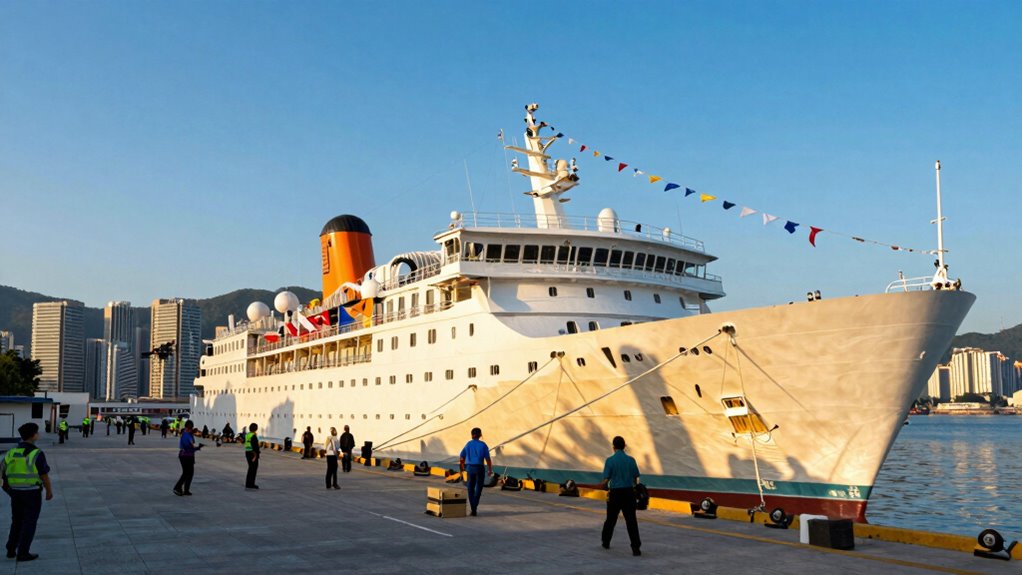
Port infrastructure also greatly influences these decisions. Not all ports are equally equipped to handle the size and requirements of modern cruise ships. Some ports have expanded terminals, better docking facilities, and more efficient procedures, making them more attractive as homeports. If a cruise line plans to operate larger ships or increase voyage frequency, they need ports that can support these ambitions. Upgrades in port infrastructure—such as deeper berths, improved passenger facilities, or streamlined customs processes—can make a port more appealing as a homeport. Conversely, if a port’s infrastructure becomes outdated or unable to accommodate larger ships, cruise lines might move their homeport operations elsewhere. Port infrastructure can also influence the overall cost and feasibility of operating from a particular port, affecting long-term strategic planning. Additionally, maritime regulations can influence port choices, especially when regulatory standards impact ship registration and compliance requirements. Moreover, the availability of economic incentives can make certain ports more competitive and attractive for cruise lines seeking cost-effective operations. In some cases, ports actively pursue incentive programs to attract cruise lines and boost local tourism economies.
Frequently Asked Questions
How Do Ships Decide Which Homeport to Switch To?
Ships decide which homeport to switch to based on factors like port infrastructure and passenger demand. If a port offers better facilities, easier access, and efficient turnaround times, ships are more likely to relocate there. Additionally, higher passenger demand in a region can attract ships to change homeports, maximizing bookings and profitability. These strategic decisions help cruise lines optimize operations and enhance guest experiences.
What Are the Economic Impacts of Changing a Ship’s Homeport?
Changing a ship’s homeport can supercharge local economies, turning small ports into bustling hubs overnight. You’ll see massive boosts in port infrastructure investments, creating jobs and attracting more cruise lines. The local economic benefits ripple outward, filling hotels, restaurants, and shops with enthusiastic travelers. This shift can transform a sleepy seaside town into a thriving cruise destination, fueling economic growth far beyond the dock.
How Does a Homeport Change Affect Crew Assignments?
Changing a ship’s homeport impacts crew assignments by prompting adjustments in crew scheduling and affecting crew morale. You might see crew members transferred or reassigned to new roles, which can disrupt routines and cause uncertainty. This shift can challenge morale, but it also offers opportunities for career growth and new experiences. Ultimately, it requires careful management to guarantee crew members stay motivated and schedules remain efficient during the changeover.
Are There Legal or Regulatory Challenges in Changing Homeports?
Changing homeports brings legal and regulatory challenges, as you must navigate tax implications and environmental regulations. You’ll need to guarantee compliance with different countries’ laws, which can vary greatly, affecting taxes and emissions standards. This juxtaposition of business strategy and legal hurdles requires thorough planning. You must work closely with authorities to meet all requirements, preventing penalties and facilitating smooth shifts for ships and crew.
How Often Do Cruise Ships Typically Change Their Homeports?
You’ll find that cruise ships usually change their homeports every one to three years, depending on maritime logistics and passenger demographics. These shifts help cruise lines optimize routes, target new markets, and adapt to seasonal demand. By analyzing passenger demographics, they determine where to position ships for maximum appeal. Changes are carefully planned around port agreements, regulatory factors, and logistical considerations, ensuring smooth movements that benefit both the cruise line and travelers.
Conclusion
As you imagine the gleam of a ship’s hull against a vibrant sunset, remember that changing homeports isn’t just about logistics—it’s about new horizons waiting to be explored. Each switch paints a fresh chapter on the ocean’s vast canvas, inviting you to glide through shimmering waters and discover uncharted adventures. So, next time a ship shifts its harbor, picture yourself aboard, charting a course toward endless possibilities beneath the endless sky.
Fall Picks
fall essentials
As an affiliate, we earn on qualifying purchases.