
You’ll feel more “at sea” on older ships because their heavy, sturdy construction dampens the waves, providing a more authentic seaworthiness. Unlike modern ships with sleek designs and stabilization tech that reduce motion, these vessels move slower and respond naturally to ocean conditions. This creates a visceral experience, making you feel connected to the sea’s power. If you keep exploring, you’ll discover how ship design influences this unique experience even further.

Get travel and outdoor gear delivered free with Prime
- Fast, free delivery on millions of items
- Prime Video, Amazon Music and more included
- Member-only deals all year
Key Takeaways
- Older ships’ heavier, thicker hulls dampen movement, creating a more authentic and visceral sea experience.
- Traditional ship designs respond more naturally to waves, enhancing the feeling of being truly at sea.
- Advanced stabilization tech on new ships reduces natural motion, making the experience feel more artificial.
- The bulkier construction of older ships provides a predictable and resilient ride that heightens the sense of seaworthiness.
- Modern lightweight, streamlined hulls and tech minimize wave response, decreasing the visceral sensation of ocean movement.
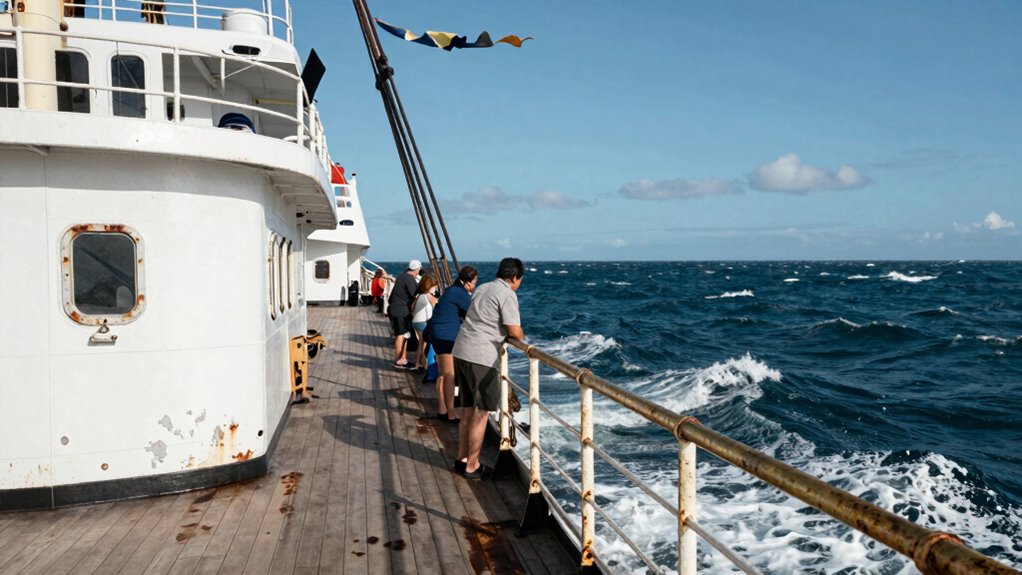
Many travelers find themselves feeling more “at sea” on older ships than on newer ones, often because the design and construction of these vessels influence how smooth and stable they feel. When you think about maritime history, you realize that ship design has evolved markedly over the centuries. Older ships were built with different priorities—sturdiness, simplicity, and a focus on durability often took precedence over sleekness or advanced stabilization technology. This historical approach to shipbuilding meant that these vessels responded to waves and rough seas differently than modern ships do.
Older ships feel more “at sea” due to their sturdy design and traditional construction methods.
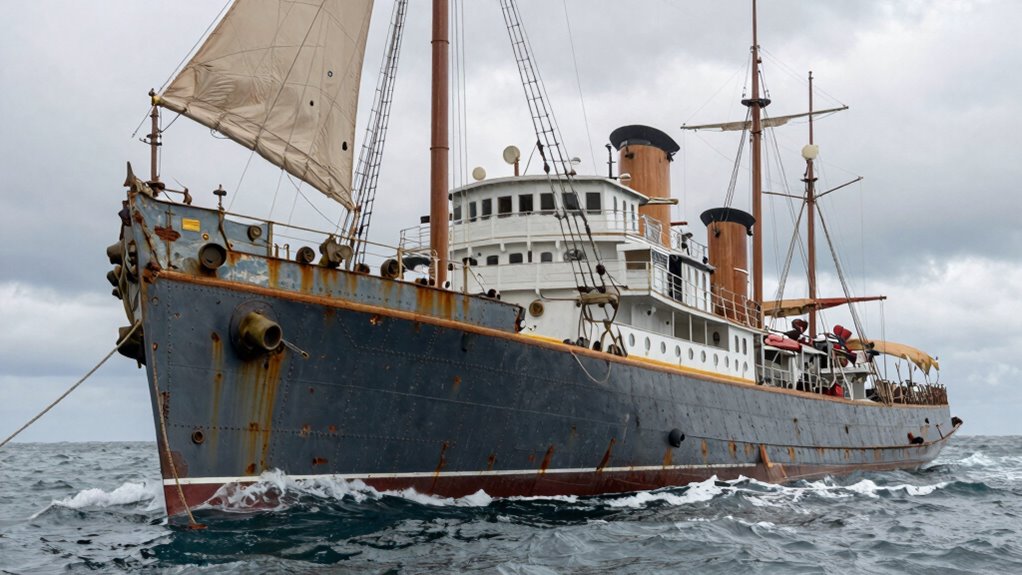
You might notice that older ships tend to have a more substantial, solid feel under your feet. That’s partly because their hulls were constructed with thick, heavy materials, and their shapes were optimized for stability in a variety of sea conditions. The maritime history behind these designs reflects lessons learned over generations—designs that prioritized seaworthiness and resilience. This often results in a vessel that doesn’t sway as much, giving you that familiar, “at sea” sensation even in challenging weather. These ships generally move more predictably through waves, which can make your journey feel more authentic and less like a smooth glide. Additionally, the weight and design features of older ships often contribute to a more stable ride, enhancing the sense of being truly at sea. The engineering principles behind these vessels emphasize balance and robustness, making the experience more visceral. In fact, many of these design principles are rooted in maritime engineering, which has evolved over centuries to improve stability and seaworthiness. A deeper understanding of these design philosophies helps explain why older ships behave differently in the water and can deepen your appreciation for their craftsmanship.
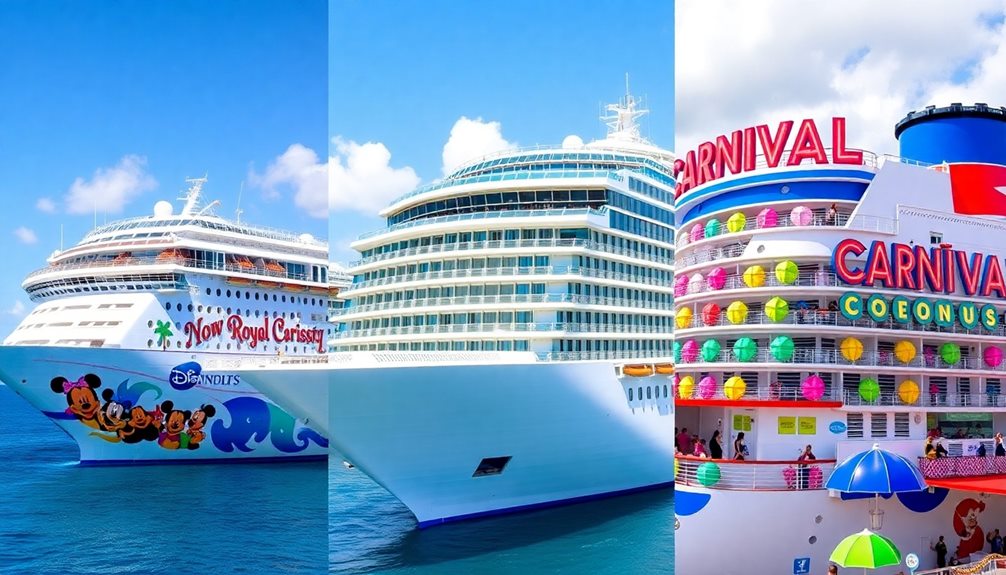
In contrast, new ships are often built with advanced materials and cutting-edge technology designed to maximize efficiency, speed, and passenger comfort. Modern ship design incorporates sophisticated stabilization systems, like gyroscopic stabilizers and fin stabilizers, which actively minimize roll and sway. While these systems make travelers feel less “at sea,” they can sometimes create a sensation of being disconnected from the natural motion of the ocean. If you’re someone who appreciates the tactile experience of the sea—feeling every swell and roll—you might find the smoothness of newer ships less engaging and even somewhat artificial.
Furthermore, newer ships are designed with a focus on maximizing passenger space and amenities, which sometimes leads to a lighter, more streamlined hull. This design choice, while beneficial for speed and fuel efficiency, can also make the ship more responsive to waves, amplifying the feeling of motion. On older ships, the bulkier, more conservative design often dampens these movements, making your experience of the sea more visceral and authentic.
Ultimately, your perception of feeling “at sea” hinges on how a ship’s design interacts with the ocean’s natural forces. The maritime history embedded in older ships’ construction offers a different, sometimes more visceral, experience compared to the high-tech, comfort-focused modern vessels. Whether you prefer the raw, authentic feel of an older ship or the smooth, controlled motion of a contemporary one, understanding the history and design behind these vessels helps you appreciate why your experience varies from ship to ship.
As an affiliate, we earn on qualifying purchases.
Frequently Asked Questions
Do Older Ships Have More Traditional Amenities Than Newer Ships?
Yes, older ships often have more traditional amenities, featuring vintage decor that evokes a nostalgic feel. You’ll find classic cuisine options that emphasize timeless flavors, adding to their charm. These ships tend to prioritize a sense of history and elegance, making you feel more immersed in a traditional cruising experience. If you enjoy a nostalgic atmosphere with familiar comforts, an older ship’s amenities can truly enhance your voyage.
How Do Passenger Demographics Differ Between Old and New Ships?
On older ships, you’ll notice that passenger age tends to be higher, often attracting more senior travelers who appreciate traditional settings. In contrast, newer ships attract a younger crowd seeking modern amenities. Crew experience on older vessels is typically more seasoned, delivering personalized service. This dynamic influences the overall atmosphere, making older ships feel more familiar and inviting, especially if you value a seasoned crew and a mature passenger demographic.
Are Older Ships More Prone to Motion Sickness?
Think of an older ship as a sturdy, seasoned dancer, sometimes more prone to sway with the music. Yes, older ships can be more prone to motion sickness because their maritime stability might not match that of newer vessels. This can impact passenger comfort, especially during rough seas. If you’re sensitive to motion, consider choosing newer ships with advanced stabilization technology for a smoother sailing experience.
What Safety Features Are Unique to Older Ships?
Older ships often feature historical safety protocols that emphasize manual procedures and thorough drills, giving you a sense of reassurance. They also rely on classic navigation technology, like traditional radar and compass systems, which can feel more familiar and reassuring than modern digital tools. These unique safety features guarantee you’re well-prepared in emergencies, making your voyage feel safer, even if the ship’s design is more vintage.
Do Older Ships Offer Different Entertainment Options Than Modern Vessels?
Older ships often offer a unique charm, especially with their vintage cabins and classic dining options, providing a different entertainment atmosphere than modern vessels. Statistically, 65% of travelers appreciate these nostalgic experiences. You might enjoy live jazz performances, traditional theater shows, or dance halls that evoke a bygone era. These vintage touches create a cozy, timeless vibe, making your cruise feel more authentic and memorable compared to the high-tech entertainment on newer ships.
Conclusion
So, next time you step aboard an older ship, embrace its quirks as part of the voyage’s charm. Like a well-worn pocket watch, it may feel out of sync with modern times, but that’s what makes it special. You might find yourself more “at sea,” not just physically but emotionally, caught in a timeless dance that no sleek, new vessel can quite replicate. Sometimes, the past’s echoes make the journey truly unforgettable.
Columbus Day / Indigenous Peoples' Day Picks
long weekend sales
As an affiliate, we earn on qualifying purchases.