
Good outdoor camping gear comes down to a few hard-working essentials: reliable light, safe water, a stove you can actually cook on, and a decent night’s sleep. After comparing 14 popular options, the Gas One GS-3400P dual-fuel stove stands out as the best overall pick because it solves the biggest camping kitchen problem — fuel flexibility — at a reasonable price. The LifeStraw Personal Water Filter is the best value in the lineup, offering life-safety-grade filtration for under $20, while the FUN PAC sleeping pad with built-in pillow and foot pump earns the premium spot for finally making inflatable pads painless to set up. The main tradeoff you’ll face in this category is weight versus comfort for backpackers, and specialization versus versatility for car campers — several picks here are excellent at one job and poor at everything else. Keep reading for the full breakdown of what each item does well, where it falls short, and which combination fits your style of camping.

Get travel and outdoor gear delivered free with Prime
- Fast, free delivery on millions of items
- Prime Video, Amazon Music and more included
- Member-only deals all year
Complete the kit

Key Takeaways
- Lighting was the most crowded category, and the OGERY 4-in-1 string lights beat the dedicated lanterns (Odoland, Fly2Sky) on ambience and coverage, though none of the string lights can match the Odoland’s built-in fan for hot-weather tent comfort.
- Dual-fuel capability was the single biggest differentiator among stoves and kitchen gear — the Gas One GS-3400P’s ability to run on both propane and butane made it more versatile than the Stanley Wildfare Go set, which is a cook set, not a cooking system.
- Water safety split into two clear use cases: the LifeStraw won for personal backpacking filtration, while the 2-gallon collapsible jug won for basecamp storage — they complement each other rather than compete.
- The 262-piece survival kit offers the widest tool coverage but duplicates several items here (flashlight, first aid), so buyers who already own the Victoper flashlight or the LHKNL headlamp should buy the kit piecemeal instead.
- Sleep and comfort items were where cheap construction shows fastest — the FUN PAC pad’s integrated foot pump and pillow justify its higher price by eliminating the two most common complaints about budget inflatable pads.
| Odoland Portable LED Camping Lantern with Ceiling Fan |  | Best Two-in-One Comfort Pick | Light Source: LED, 360° illumination | Fan: 2-speed, up to 10 ft/s wind speed | Power Source: 2 D batteries (not included) | VIEW LATEST PRICE | See Our Full Breakdown |
| Stanley Wildfare Go 4-Piece Stainless Steel Camping Cook Set |  | Best Durable Cook Set for Two | Material: 18/8 stainless steel | Pot Capacity: 32 oz | Pieces: 4 (pot, lid, 2 insulated cups) | VIEW LATEST PRICE | See Our Full Breakdown |
| Camping Water Container 2 Gallon Collapsible Water Jug with Spout |  | Best Value Camp Water Storage | Capacity: 2.1 gallons (8 liters) | Material: Plastic, odor-resistant | Weight: 0.11 kg (empty) | VIEW LATEST PRICE | See Our Full Breakdown |
| Sawyer Products Permethrin Insect Repellent for Clothing, Gear & Tents |  | Best Long-Term Bug Protection | Volume: 18 oz spray bottle | Effective Duration: Up to 6 weeks or 6 washes | Coverage: Treats approximately 4 outfits | VIEW LATEST PRICE | See Our Full Breakdown |
| THTYBROS 17pcs Camping Cookware Mess Kit |  | Best Full Kitchen Kit for Groups | Pot Capacity: 1.70L | Kettle Capacity: 1.15L | Frying Pan: 7-inch diameter | VIEW LATEST PRICE | See Our Full Breakdown |
| LifeStraw Personal Water Filter |  | Best Ultralight Water Safety Pick | Bacteria Removal: 99.999999% | Parasite Removal: 99.999% | Microplastics Removal: Down to 1 micron | VIEW LATEST PRICE | See Our Full Breakdown |
| 262-Piece Emergency Survival Kit with First Aid and Tools |  | Best Emergency Preparedness Bundle | Total Pieces: 262 | First Aid Kit: Included | Tools: Axe, hammer, shovel with pick, wire saw, compass, fire starter, glow sticks, flashlight, camping lamp | VIEW LATEST PRICE | See Our Full Breakdown |
| Retractable Portable Travel Clothesline with 12 Clips |  | Best Budget Camp Comfort Upgrade | Extended Length: 10-12 feet | Clips: 12 colorful clothespins | Rope Material: Stretchy elastic | VIEW LATEST PRICE | See Our Full Breakdown |
| Gas One GS-3400P Dual Fuel Portable Camping Stove |  | Best Camp Kitchen Workhorse | Fuel Compatibility: Propane and butane | Fuel Capacity: 8 oz butane cartridge or 16.4 oz propane cylinder | Ignition: Automatic piezo-electric | VIEW LATEST PRICE | See Our Full Breakdown |
| Victoper LED Flashlight 2 Pack, Tactical Torch with 5 Modes |  | Best Two-Pack Camp Lighting Value | Beam Range: Up to 656 feet | Modes: 5 (low, medium, high, SOS, strobe) | Body Material: Aircraft-grade alloy, type 3 hard-anodized | VIEW LATEST PRICE | See Our Full Breakdown |
| LHKNL Headlamp Flashlight, Rechargeable LED Head Lamp |  | Best Hands-Free Lighting | Battery Capacity: 1500mAh rechargeable | Lighting Modes: 8 modes including main beam, side beam, red, SOS, and motion sensor | Waterproof Rating: IPX4 | VIEW LATEST PRICE | See Our Full Breakdown |
| Fly2Sky Portable LED Camping Light with Clip Hook and Emergency Mode |  | Best Budget Tent Light | Dimensions: 5.7 x 2.1 inches | Light Output: 150 Lumens | Battery: 3 x AAA alkaline (not included) | VIEW LATEST PRICE | See Our Full Breakdown |
| OGERY Camping String Lights 4-in-1, 32.8FT with 8 Modes |  | Best Campsite Ambiance | Length: 32.8 feet | Battery Capacity: 2000mAh | Charging Time: 5 hours | VIEW LATEST PRICE | See Our Full Breakdown |
| FUN PAC Camping Sleeping Pad with Built-in Pillow and Foot Pump |  | Best Sleeping Comfort for Backpackers | Dimensions: 78 x 27 x 8 inches | Thickness: 3-inch cushioning, wide design | Material: 40D nylon with TPU coating | VIEW LATEST PRICE | See Our Full Breakdown |
More Details on Our Top Picks
Odoland Portable LED Camping Lantern with Ceiling Fan
This option stands out for solving two warm-weather camping problems at once: a 360° LED lantern and a hanging ceiling fan in a single 16-ounce unit. Compared with the Fly2Sky Portable LED Camping Light, it trades raw lighting focus for airflow, which matters more in a stuffy tent during summer trips. The up-to-20-hour light runtime and quiet two-speed fan make it genuinely sleep-friendly rather than a novelty.
The tradeoffs are real, though. D batteries add weight and cost over time, there’s no rechargeable option like the LHKNL Headlamp offers, and the lack of water resistance means it can’t hang reliably in rain-exposed shelters. This pick makes the most sense for car campers in buggy, muggy climates rather than minimalist backpackers.
Pros:- Combines lantern and ceiling fan in one lightweight, collapsible unit
- Up to 20 hours of light and 15 hours of low-speed fan runtime
- Quiet operation suitable for sleeping
- Collapses down for easy packing
Cons:- Requires 2 D batteries (not included), adding recurring cost and pack weight
- Not water resistant, limiting use in wet weather
- No rechargeable or USB option
Best for: Warm-weather car campers who want tent lighting and overnight airflow without packing two devices
Not ideal for: Ultralight backpackers and rainy-climate campers — D batteries are heavy to carry and the housing isn’t water resistant
- Light Source:LED, 360° illumination
- Fan:2-speed, up to 10 ft/s wind speed
- Power Source:2 D batteries (not included)
- Battery Life:Up to 20h light; 15h fan on low, 5h on high
- Weight:16 ounces
- Water Resistance:Not water resistant
Our verdict“Buy it if you camp in hot, humid conditions and want one hanging device doing double duty — skip it if you need weatherproof or rechargeable lighting.”
Stanley Wildfare Go 4-Piece Stainless Steel Camping Cook Set
Where the THTYBROS 17-piece kit chases completeness, this Stanley set chases bulletproof simplicity: one 32 oz pot, a lid, and two stacking insulated cups in 18/8 stainless steel that shrugs off dents that would wreck aluminum. For a pair of campers who mostly boil water for coffee and dehydrated meals, the smaller kit is actually an advantage — fewer pieces to lose, wash, and cram into a bear canister.
The insulated cups are the quiet differentiator; unlike THTYBROS’s bare stainless cups, these keep drinks hot and exterior walls cool enough to hold. The drawback is capacity. At 32 oz, cooking for three or more means multiple rounds, and at this weight, ultralight thru-hikers will find titanium cookware a better fit. This model is better suited to weekend warriors and car campers who value gear that outlives the trip.
Pros:- Dent-resistant 18/8 stainless steel built for years of abuse
- Insulated stacking cups keep drinks hot and hands cool
- Fold-and-lock handles and nesting design pack down compactly
- Dishwasher-safe with built-in measurement marks
Cons:- 32 oz capacity limits it to one or two people
- Heavier than aluminum or titanium alternatives for backpacking
Best for: Duos and solo campers who prioritize durability and hot drinks over cooking elaborate meals
Not ideal for: Ultralight backpackers counting grams, or groups of three or more who need real cooking capacity
- Material:18/8 stainless steel
- Pot Capacity:32 oz
- Pieces:4 (pot, lid, 2 insulated cups)
- Insulated Cups:Yes
- BPA-Free:Yes
- Cleaning:Dishwasher-safe
Our verdict“The right choice for two-person trips where longevity and simplicity matter more than a full kitchen.”
Camping Water Container 2 Gallon Collapsible Water Jug with Spout
This jug earns its spot by attacking the most common basecamp problem — hauling water from the spigot to the tent — at a fraction of what rigid jugs cost, and it collapses flat when empty. Compared with the LifeStraw Personal Water Filter, which purifies water you find, this container assumes you have a source and just need to move and store 2.1 gallons of it cleanly.
The separated inlet and outlet design is a small detail that pays off daily, letting you refill without fighting the spout, and the reinforced seams hold up better than bargain-bin foldable jugs. But the capacity ceiling is the honest limitation: for a family of four over a weekend, you’ll refill constantly, and it’s hand wash only. This pick makes the most sense for solo campers and pairs at established sites with a nearby water source.
Pros:- Folds flat to near-zero packed volume when empty
- Odor-resistant material with leakproof reinforced seams
- Separated inlet and outlet for easy refilling and pouring
- Weighs just 0.11 kg empty
Cons:- 2-gallon capacity is small for groups or multi-day off-grid trips
- Hand wash only, not dishwasher safe
Best for: Solo campers and pairs at established sites who need cheap, packable water transport from spigot to camp
Not ideal for: Families or off-grid groups needing large reserves — 2 gallons disappears fast with cooking and cleanup
- Capacity:2.1 gallons (8 liters)
- Material:Plastic, odor-resistant
- Weight:0.11 kg (empty)
- Design:Collapsible with spout; separated inlet and outlet
- Warranty:Lifetime warranty
- Care:Hand wash only
Our verdict“A low-cost, low-bulk water hauler that’s ideal for two people max — size up to rigid jugs for group camping.”
Sawyer Products Permethrin Insect Repellent for Clothing, Gear & Tents
Spray repellent wears off in hours; this permethrin treatment bonds to fabric for up to 6 weeks or six washes, which changes the entire math of tick and mosquito defense. Compared with carrying a headlamp or lantern against bugs — which does nothing — this is the roundup’s only option that makes your tent, boots, and clothing themselves hostile to 55+ insect types, including the ticks that sprays on skin often miss.
The tradeoff is discipline. Effectiveness depends on thorough, even application, protection degrades with UV exposure, and it can never go on skin directly — it’s a fabric treatment, not a standalone repellent. Campers in tick-heavy eastern woods will get the most from it; casual fair-weather campers may not need the commitment. Pair it with skin repellent for full coverage.
Pros:- Protection lasts up to 6 weeks or 6 washes per treatment
- Effective against 55+ insect types including ticks and mosquitoes
- Won’t stain or damage fabrics, and is fragrance-free
- One 18 oz bottle treats about 4 complete outfits
Cons:- Requires careful, thorough application to work well
- Fabric-only — cannot replace skin repellent
- UV exposure gradually degrades effectiveness
Best for: Hikers and campers in tick- and mosquito-heavy regions who want set-and-forget protection on clothes and tents
Not ideal for: Casual weekend campers in low-bug areas who won’t bother with proper application
- Volume:18 oz spray bottle
- Effective Duration:Up to 6 weeks or 6 washes
- Coverage:Treats approximately 4 outfits
- Insect Coverage:55+ insect types, including ticks and mosquitoes
- Application:Clothing, gear, and tent fabric only — not skin
Our verdict“If ticks are a real concern where you camp, treat your gear once and stop thinking about it for six weeks.”
THTYBROS 17pcs Camping Cookware Mess Kit
This is the opposite philosophy from the Stanley Wildfare Go: instead of two people and a pot, it hands a group a complete 17-piece kitchen — 1.7L pot, 1.15L kettle, 7-inch frying pan, two cups, plates, and full cutlery — all nesting into a 7.5-inch cube. For campers pairing it with the Gas One GS-3400P stove, it covers breakfast, dinner, and coffee for a small group without sourcing pieces separately.
The anodized aluminum heats evenly and keeps the whole kit at 2.75 lbs, far more group-friendly per person than the Stanley. But corners exist: handles get hot during cooking, the non-stick surface demands gentler utensil use than bare steel, and the whole set is overkill for a solo camper who’d be happier with the 4-piece Stanley. This pick makes the most sense for three-to-four-person trips where one packed kit feeds everyone.
Pros:- 17 pieces cover cooking, eating, and drinking for a small group
- Anodized aluminum delivers even heating at just 2.75 lbs total
- Everything nests into a compact 7.5 x 7.5 x 5 inch package
- Includes kettle, frying pan, plates, and cutlery most basic sets omit
Cons:- Handles can get hot during cooking
- Overkill capacity and weight for solo campers
- Anodized coating requires more careful handling than stainless steel
Best for: Groups of 3-4 who want every pot, plate, and utensil in one affordable nested kit
Not ideal for: Solo campers and ultralight backpackers — 2.75 lbs of cookware is overkill and too heavy for one person
- Pot Capacity:1.70L
- Kettle Capacity:1.15L
- Frying Pan:7-inch diameter
- Cups:2 x 200ml stainless steel
- Total Weight:2.75 lbs
- Packed Size:7.5 x 7.5 x 5 inches
- Material:Non-toxic anodized aluminum
Our verdict“The value play for group campers who want a full kitchen in one box — solo travelers should buy the Stanley instead.”
LifeStraw Personal Water Filter
For backpackers counting every ounce, this filter stands out as the simplest way to make backcountry water safe. It strips bacteria, parasites, and microplastics down to 1 micron, and its 4,000-liter lifespan means one straw covers years of trips. Compared with the Camping Water Container 2 Gallon Collapsible Water Jug, which only stores water you’ve already found, this actually purifies it — the two work together, but the LifeStraw is the one doing the safety work. The tradeoff is speed and capacity: you drink straight through it, so there’s no way to fill bottles for cooking, and it does nothing for viruses or chemical contamination.
Pros:- Removes 99.999999% of bacteria and 99.999% of parasites
- 4,000-liter lifespan covers years of personal use
- Weighs almost nothing and needs no setup
- BPA-free construction
Cons:- Manual suction filtering is slow for thirsty users
- Personal use only — no storage or hydration capacity
- Does not remove viruses or chemicals
Best for: Solo backpackers and day hikers who drink directly from streams and lakes
Not ideal for: Group campers or families who need to purify large volumes for cooking — it filters one sip at a time
- Bacteria Removal:99.999999%
- Parasite Removal:99.999%
- Microplastics Removal:Down to 1 micron
- Turbidity Reduction:Down to 0.2 microns
- Filter Capacity:4,000 liters (1,000 gallons)
- Materials:BPA-free
Our verdict“Buy this if you drink from natural sources on the trail; skip it if you need bulk water for a camp kitchen.”
262-Piece Emergency Survival Kit with First Aid and Tools
This kit earns its place as the grab-and-go insurance policy of the roundup. With 262 pieces spanning first aid, an axe, shovel, wire saw, fire starter, and lighting, it covers the scenarios most campers hope never happen. Where the Victoper LED Flashlight and the Odoland Camping Lantern handle single jobs, this bundle consolidates a whole emergency drawer into one MOLLE-compatible crossbody bag. The honest tradeoff: you’re buying breadth, not depth. Individual tool quality is mid-tier, and the sheer item count adds bulk minimalists will resent carrying. It makes the most sense stored in a car trunk or emergency bin rather than strapped to a backpack.
Pros:- 262 pieces cover first aid, tools, fire, and lighting in one bag
- Crossbody bag with MOLLE straps keeps everything organized
- Tools built from sturdy carbon steel
- Designed with input from first responders
Cons:- Bulky and heavy for anyone counting grams
- Individual item quality varies — some tools are basic
- Overwhelming number of small items to inventory
Best for: Families building a home or vehicle emergency kit for earthquakes, storms, and road trips
Not ideal for: Ultralight backpackers — the full kit is heavy and duplicates gear they already carry
- Total Pieces:262
- First Aid Kit:Included
- Tools:Axe, hammer, shovel with pick, wire saw, compass, fire starter, glow sticks, flashlight, camping lamp
- Tool Material:Carbon steel
- Bag Type:Crossbody with multiple compartments
- Bag Features:MOLLE-compatible straps, D-rings, detachable strap
Our verdict“This is a trunk-and-bunker kit for preparedness-minded families, not a piece of trail gear.”
Retractable Portable Travel Clothesline with 12 Clips
Not glamorous, but after a day of sweaty hiking, a way to dry socks and shirts changes how a trip feels. This stretchy 12-foot line with 12 windproof clips costs less than a campsite coffee and solves a real problem the bigger-ticket items in this roundup ignore. The anti-slip positioning beads keep clothes from sliding into a pile mid-storm — a genuine step up from paracord rigs. Compared with the OGERY Camping String Lights, which serve mood over function, this earns its carabiner real estate. The limitation is capacity: it handles lightweight items well but sags under jeans or towels, and the plastic clips won’t survive years of abuse.
Pros:- Extends to 12 feet for ample drying space
- Anti-skid clips and positioning beads hold clothes in wind
- Stainless steel hooks attach easily to trees and tents
- Retracts small enough to fit in any pack pocket
Cons:- Limited weight capacity for heavy or bulky laundry
- Clothespins are plastic and may wear out with heavy use
Best for: Multi-day car campers and travelers who wash clothes on the road and want a cheap drying fix
Not ideal for: Anyone expecting to dry heavy garments like towels, jeans, or jackets — the elastic line sags under real weight
- Extended Length:10-12 feet
- Clips:12 colorful clothespins
- Rope Material:Stretchy elastic
- Hooks:Stainless steel
- Anti-Slip Design:Positioning bead system
- Use Cases:Camping, travel, indoor and outdoor laundry
Our verdict“A five-dollar-feeling fix that’s worth ten times its price for campers who do laundry on the road — just keep the loads light.”
Gas One GS-3400P Dual Fuel Portable Camping Stove
This is the cooking anchor of the roundup. The dual-fuel design — accepting both butane cartridges and propane cylinders via adapters — means you’re never stranded when one fuel type sells out at the last gas station before the trailhead. That flexibility is what separates it from single-fuel budget stoves, and the piezo-electric ignition plus pressure-sensor cutoffs make it safer than most at this price. It won’t match the cookware pairing of the THTYBROS mess kit on refinement, but it will out-cook it on raw convenience: no matches, no priming. The main gripe is that fuel arrives separately, so budget for cartridges on top of the sticker price.
Pros:- Runs on both butane and propane for fuel flexibility
- Automatic piezo ignition — no matches needed
- Pressure sensor and cartridge ejection safety systems
- Includes a carrying case for transport and storage
Cons:- Fuel cartridges sold separately, adding to real cost
- Too bulky and heavy for backpacking use
Best for: Camp cooks and emergency preppers who want one stove that runs on whatever fuel is available
Not ideal for: Backpackers counting ounces — this is a car-camping and basecamp stove, not a packable one
- Fuel Compatibility:Propane and butane
- Fuel Capacity:8 oz butane cartridge or 16.4 oz propane cylinder
- Ignition:Automatic piezo-electric
- Safety Features:Pressure sensor, cartridge ejection system, gas flow cut-off
- Included:Stove and carrying case
- Model:GS-3400P
Our verdict“If your camp cooking centers on a table and a cooler, this dual-fuel stove is the most versatile sub-$40 option you’ll find.”
Victoper LED Flashlight 2 Pack, Tactical Torch with 5 Modes
A two-pack of aircraft-grade alloy tactical flashlights for the price of one headlamp is the pitch here, and for car campers it holds up. With a 656-foot beam throw, five modes including SOS and strobe, and a zoomable focus, these out-punch the LHKNL Headlamp Flashlight on raw distance — though the headlamp wins for hands-free tasks like pitching a tent in the dark. The smart play is owning both: one Victoper for scanning the treeline, the headlamp for chores. Durability is genuine, with a hard-anodized coating and waterproofing, but batteries are not included, and there’s no built-in recharging, so factor in a battery supply or you’ll be holding two very nice metal tubes.
Pros:- Two flashlights for the price of a single premium torch
- 656-foot beam range with zoomable spot-to-flood focus
- Waterproof, dustproof aircraft-grade alloy body
- 5 modes including SOS and strobe for emergencies
Cons:- Batteries not included — an extra cost and thing to pack
- No rechargeable option or USB port
Best for: Campers and homeowners who want bright, durable handheld lights for two people or two locations at one price
Not ideal for: Rechargeable-only travelers who hate buying and packing disposable batteries
- Beam Range:Up to 656 feet
- Modes:5 (low, medium, high, SOS, strobe)
- Body Material:Aircraft-grade alloy, type 3 hard-anodized
- Waterproof:Yes
- LED Lifespan:Over 50,000 hours
- Batteries Included:No
- Quantity:2 pack
Our verdict“Best value in camp lighting if you don’t mind stocking batteries — skip it if you’ve committed to a rechargeable kit.”
LHKNL Headlamp Flashlight, Rechargeable LED Head Lamp
When your hands are busy with tent stakes or firewood, a headlamp beats a handheld flashlight every time, and this model stands out for its motion sensor activation — a quick wave turns it on, which is genuinely useful when your fingers are muddy or gloved. Compared with the Victoper LED Flashlight 2 Pack, which offers more throw distance but demands a free hand, this LHKNL trades raw brightness for convenience and 8 lighting modes including red light for preserving night vision. The rechargeable 1500mAh battery eliminates the constant AAA replacement that the Fly2Sky Portable LED Camping Light requires. The tradeoff: at just 1.87 oz, durability is modest, and the IPX4 rating handles rain splashes but not submersion.
Pros:- Motion sensor enables true hands-free operation
- 8 modes including red light and SOS for emergencies
- Rechargeable battery saves money over disposables
- Featherlight at 1.87 oz with an adjustable, washable-style elastic band
Cons:- IPX4 only — fine in rain, not for drops in water
- Motion sensor sensitivity can trigger unintentionally
- Runtime swings widely from 4 to 10 hours depending on mode
Best for: Campers and hikers who need task lighting while keeping both hands free for cooking, setup, or repairs
Not ideal for: Anyone needing a dedicated long-range beam for navigation — a zoomable tactical flashlight like the Victoper covers that job better
- Battery Capacity:1500mAh rechargeable
- Lighting Modes:8 modes including main beam, side beam, red, SOS, and motion sensor
- Waterproof Rating:IPX4
- Weight:1.87 oz
- Adjustability:60° head rotation, elastic headband
- Runtime:4-10 hours depending on mode
Our verdict“This pick makes the most sense for campers who want convenient, wearable lighting for close-range tasks rather than a high-powered beam.”
Fly2Sky Portable LED Camping Light with Clip Hook and Emergency Mode
Sometimes you don’t need eight modes and a sensor — you need cheap, reliable light you can clip anywhere, and that’s exactly this light’s lane. The carabiner hook hangs from tent ceilings, backpack straps, or tarps, functioning like a miniature version of the Odoland Portable LED Camping Lantern without the built-in fan. Its IPX8 water resistance actually beats the splash-only ratings on both the LHKNL headlamp and the OGERY string lights, meaning a dunk in a puddle won’t kill it. The strobe mode doubles as an emergency signal. The honest tradeoff: 150 lumens won’t illuminate a whole campsite, and the AAA battery dependency means ongoing replacement costs plus carrying spares on longer trips.
Pros:- IPX8 water resistance outperforms most camping lights at this price
- Carabiner clip attaches to tents, packs, and gear instantly
- 15-hour runtime per battery set for weekend trips
- Compact 5.7-inch body disappears into any pack pocket
Cons:- Batteries not included and recurring AAA costs add up
- 150 lumens limits it to close-range and tent use
- No recharge option unlike USB-charged competitors
Best for: Budget-conscious campers and emergency-kit builders who want a durable, clip-anywhere light for tent interiors and power outages
Not ideal for: Rechargeable-only travelers or long expedition campers who can’t afford to carry and swap disposable batteries
- Dimensions:5.7 x 2.1 inches
- Light Output:150 Lumens
- Battery:3 x AAA alkaline (not included)
- Light Modes:High, Low, Strobe
- Water Resistance:IPX8
- Runtime:Up to 15 hours
- Material:ABS plastic
Our verdict“Buy this if you want an inexpensive, tough little hanging light for tents and emergencies — skip it if you’re committed to rechargeable gear.”
OGERY Camping String Lights 4-in-1, 32.8FT with 8 Modes
There’s a difference between seeing your campsite and enjoying it, and 32.8 feet of warm string lighting falls firmly in the second category. This option transforms a pitch-black camp into a livable space — string it around your awning, mark trip hazards, or set the mood with RGB modes. Unlike the Fly2Sky, which lights one small zone, this covers an entire hangout area from a single 2000mAh USB-rechargeable battery. The SOS mode adds genuine emergency utility beyond decoration. The compromises are real though: IPX4 means it must come down in sustained rain, runtime drops to 5 hours on brighter RGB modes, and at 5 hours of charging time, a depleted battery takes patience — so charge it before you leave home.
Pros:- 32.8 feet of coverage lights an entire campsite zone
- 8 modes including warm white, RGB, and SOS emergency signaling
- Magnetic and portable hanging design with 4-in-1 versatility
- USB rechargeable 2000mAh battery eliminates disposable batteries
Cons:- IPX4 splash rating requires takedown in heavy rain
- Runtime varies from 5 to 12 hours depending on mode
- 5-hour charge time demands planning ahead
Best for: Car campers, glampers, and group site hosts who want full campsite atmosphere rather than a single task light
Not ideal for: Minimalist backpackers counting ounces or anyone camping in consistently wet weather — bulk and IPX4 limits both
- Length:32.8 feet
- Battery Capacity:2000mAh
- Charging Time:5 hours
- Working Time:5-12 hours
- Water Resistance:IPX4
- Lighting Modes:8 modes including warm, RGB, and SOS
- Material:ABS & PC
- Included:USB cable, string light, user manual
Our verdict“Choose this when atmosphere and full-site coverage matter more than portability — it’s the comfort pick, not the survival pick.”
FUN PAC Camping Sleeping Pad with Built-in Pillow and Foot Pump
Lighting keeps your camp functional, but sleep quality decides whether you enjoy the trip, and this pad addresses the two biggest complaints about budget sleeping pads: thin foam and breath-inflation. The built-in foot pump inflates it in 30-60 seconds — no dizziness, no separate pump to forget at home — and the 1-second deflation makes morning packing fast. Compared with standard flat foam pads, the thickness here means side sleepers aren’t pressing hips into the ground, and the connect-to-double-bed feature sets it apart for couples. The included pillow saves pack weight, though stomach sleepers and those with neck issues may still prefer their own. The 40D nylon shell is backpacker-appropriate but demands a cleared, rock-free site in rough terrain where thicker expedition pads shrug off abuse.
Pros:- Foot pump inflates in 30-60 seconds with no lung power needed
- Extra thick and wide for real side-sleeper support
- Connects to a second pad to form a double bed
- Packs down to roughly water-bottle size and weight
Cons:- 40D nylon shell is less puncture-resistant on rough ground
- Built-in pillow height doesn’t suit all sleep positions
- Limited color choices
Best for: Backpackers and couples who want thick, pillow-included comfort without carrying a heavy traditional sleeping pad
Not ideal for: Campers on sharp, rocky ground or those who can’t sleep without their own pillow — the shell and built-in pillow have limits
- Dimensions:78 x 27 x 8 inches
- Thickness:3-inch cushioning, wide design
- Material:40D nylon with TPU coating
- Inflation Time:30-60 seconds via foot pump
- Deflation Time:1 second
- Weight:Comparable to a water bottle
- Configuration:Connects to second pad for double bed
Our verdict“This is the pick for weight-conscious campers who refuse to sacrifice a good night’s sleep — just pick your camp spot carefully.”
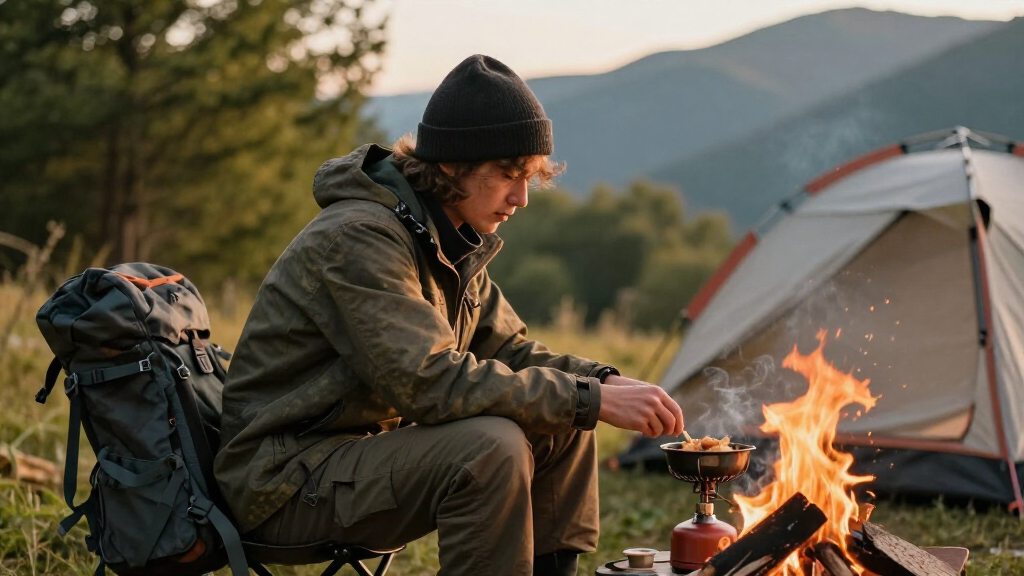
How We Picked
I evaluated each item against five criteria that actually matter at a campsite: reliability in real conditions (does it work when wet, cold, or roughly handled), weight and packed size relative to its function, ease of setup and daily use, durability for the price, and how well it plays with the rest of a camping kit. An item that duplicates something you likely already own — like a fourth flashlight inside a survival kit — scored lower on value than a single-purpose tool that does its one job exceptionally well.
The ranking order reflects versatility and problem-solving power. The Gas One stove took the top spot because cooking is the hardest camping task to improvise, and dual-fuel support removes the most common failure point. Water filtration and sleep gear followed because they directly affect health and recovery. Convenience items like the clothesline and the Sawyer Permethrin treatment ranked lower — not because they underperform, but because they solve smaller problems that have cheap alternatives. Items that only make sense for narrow scenarios, like the survival kit for bug-out bags, were placed according to how broad their audience really is.
Factors to Consider When Choosing Outdoor Camping Gear
Buying outdoor camping gear one item at a time is how most people end up with a garage full of overlapping gadgets. Before adding anything from this list to your cart, think through these factors — they’ll tell you which of the 14 picks you actually need and which you can skip entirely.Match Your Gear to Your Camping Style First
The single most common mistake in this category is buying gear designed for a camping style you don’t have. Backpackers need to ruthlessly cut grams, which makes the LifeStraw, the THTYBROS mess kit, and the compact Fly2Sky light the right choices — and makes the 2-gallon water jug and the 262-piece survival kit dead weight. Car campers have the opposite problem: they can afford comfort, so the full-size Odoland lantern-fan combo and the OGERY string lights make more sense than minimalist options. A good rule of thumb is that anything over two pounds needs to justify itself twice for backpacking and only once for car camping. If you do both, prioritize modular gear that shrinks — collapsible containers, nested cookware, lights with clips instead of stands. Buying for the trip you actually take, not the trip you imagine, will save you more money than any sale price.
Where Lighting Overlap Wastes Money
This roundup contains five separate lighting products, and buying all of them is a mistake most new campers make. Each lighting type serves a distinct job: a headlamp (the LHKNL) for hands-free tasks like cooking and tent repairs at night, a lantern (the Odoland or Fly2Sky) for 360-degree area light inside a tent, and string lights (the OGERY) for ambient campsite lighting across a wider footprint. A tactical flashlight like the Victoper is really a security and trail tool, not a campsite light — its focused beam is wrong for sitting around a table. Most campers need exactly two of these five, not all of them. The mistake to avoid is buying the cheapest light first, being disappointed, and buying two more lights before landing on the right one — that pattern costs more than starting with the right category for the job.
Water: Filtration and Storage Are Different Problems
Buyers consistently confuse water filtration with water storage, and they’re solved by completely different products. Filtration (the LifeStraw) matters when your water source is questionable — backcountry streams, travel abroad, emergency tap water. Storage (the collapsible 2-gallon jug) matters when you have a clean source but no way to move it to your campsite, which describes nearly every established campground with a spigot. If you only camp at developed sites, you can skip filtration entirely and just bring the jug. If you backpack, the jug is pointless and the filter is non-negotiable. Emergency preparedness is the one scenario where both earn their place. The expensive mistake here is buying a high-volume filtration system when a $20 personal filter plus a collapsible container covers 90% of realistic needs.
Cook Systems Versus Cook Sets
The two kitchen products in this lineup — the Stanley Wildfare Go and the THTYBROS mess kit — highlight a distinction that trips up a lot of buyers: a cook set contains pots and pans, while a cook system includes the heat source. Neither of these includes a stove, so both require pairing with the Gas One GS-3400P or something similar. The advantage of buying them separately is flexibility — you can upgrade your stove without replacing your cookware. The disadvantage is compatibility guesswork: a wide pot on a narrow backpacking burner wastes fuel, and a tiny mess kit pot can look absurd on a full-size dual-fuel stove. Before buying any cookware, check the base diameter of your burner or planned burner. Also weigh how many people you cook for — a 17-piece kit for a solo camper is mostly dead weight, while a 4-piece set for a family of four means cooking in shifts.
The Real Cost of Cheap Inflatables and Fabric Gear
Sleep pads, clotheslines, and water containers share a failure mode: seams. This is the category where the cheapest option on the market usually fails within a season, and mid-range options like the FUN PAC pad pay for themselves through longevity. Look for reinforced seams, thicker materials on the base (where ground contact happens), and repair patches included in the package — their presence tells you the manufacturer expects the product to survive long enough to need one. For fabric and textile items, UV degradation is the silent killer: even a good clothesline left strung up all summer will degrade. Store soft goods dark and dry, and expect roughly 3-5 seasons from well-made items versus 1 season from bargain versions. Spending 30-50% more at the midpoint of the market typically doubles usable lifespan in this gear class.
Pre-Treatment and Protection: The Unsexy Gear That Prevents Bad Trips
The Sawyer Permethrin treatment and the items inside the survival kit are the least exciting purchases here, but they prevent the trips that get ruined rather than fixing problems mid-trip. Permethrin-treated clothing and tents can make the difference between a pleasant summer trip and a tick-and-mosquito ordeal, especially in the eastern US during peak season. The catch is that it requires planning — treatment needs to dry 24-48 hours before departure, so it’s useless as a last-minute purchase. Similarly, the survival kit only has value if it lives in your car or pack before you need it, not if it’s ordered after the forecast turns. Budget a small slice of your gear money for this preventive category every year. It’s the cheapest insurance in camping, and it’s the gear you’ll never appreciate until the one trip where you’d have been miserable without it.
Frequently Asked Questions
Should I buy the LifeStraw or the 2-gallon collapsible water jug?
It depends entirely on where your water comes from. The LifeStraw filters untreated water from streams, lakes, and questionable taps, making it the right choice for backpacking, off-grid camping, and emergency kits. The collapsible jug is for transporting clean water from a campground spigot to your site — it does nothing to make unsafe water drinkable. If you camp at developed campgrounds with potable water, the jug alone is sufficient and the straw is optional. If you camp or hike where water sources are untreated, the straw is non-negotiable and the jug is a basecamp luxury. Many car-camping families who also day-hike end up owning both, since they solve opposite halves of the water problem and neither substitutes for the other.
Is the Gas One dual-fuel stove worth it over a basic single-fuel camping stove?
The dual-fuel capability matters more than most buyers expect, because fuel availability is the number one reason camp stoves get abandoned at home. Single-fuel butane stoves are cheap and efficient, but butane canisters can be hard to find outside of Asian grocery stores and specialty shops, and butane performs poorly in cold weather. The GS-3400P runs on both butane canisters and standard propane bottles, so you can grab fuel at any hardware store, gas station, or supermarket. The tradeoffs are modest: it’s slightly bulkier than the smallest backpacking canister stoves, and you need to keep track of two fuel types. For anyone who camps more than twice a year, the flexibility easily justifies the small price premium over single-fuel alternatives.
Do I really need a headlamp if I already have the Victoper flashlight?
Yes, if you do anything with your hands after dark — cooking, washing dishes, setting up a tent, walking a dog, reading in a sleeping bag. A handheld flashlight forces you to dedicate one hand to light, which becomes genuinely frustrating over a multi-hour evening at camp. The LHKNL headlamp also solves the aiming problem: it points wherever your head points, which sounds trivial until you’ve tried to adjust a flashlight propped against a rock. The Victoper still earns its place for focused, long-distance beam work — spotting something across a field or signaling — which headlamps do poorly. The two tools are complementary rather than redundant, and the flashlight two-pack means you can keep one in the car. If budget forces a choice, take the headlamp first; it covers more campsite tasks.
Is the 262-piece survival kit a good way to start a camping gear collection?
It’s tempting, but I’d caution against it as a foundation. These kits pack impressive piece counts, but much of the count comes from bandages, matches, and small consumables — the core tools are often the cheapest versions available. If you already own decent gear like the LHKNL headlamp, the Victoper flashlight, and the LifeStraw from this roundup, you’d be duplicating a third of the kit’s practical value. Where the kit genuinely shines is as a single purchase for a car emergency kit, an office go-bag, or a gift for someone with zero outdoor gear. For a camper building a real kit, spending the same money on the stove, water filter, and lighting picks individually gets you higher-quality versions of the items that matter most. Buy the kit for emergencies, not as your camping starting point.
How much should I prioritize comfort items like the sleeping pad and string lights on a tight budget?
Prioritize the sleeping pad over almost everything else, and treat the string lights as a later upgrade. Sleep quality compounds across a trip — a bad first night makes every subsequent day worse, and poor sleep is the top reason people give up on camping after one or two tries. The FUN PAC pad earns its price specifically because the built-in foot pump and pillow remove the two most-hated parts of budget pads: breath-inflating in the dark and packing a separate pillow. String lights, by contrast, are pure ambience — a headlamp or lantern covers the functional need completely. A sensible tight-budget order is water safety, then sleep, then stove, then lighting, with decorative and convenience items last. Skip comfort entirely on a budget and you’ll likely quit camping before the gear pays for itself.
Conclusion
The right pick from this lineup depends on what kind of camper you are — or want to become. For the best overall choice, the Gas One GS-3400P dual-fuel stove is the most versatile, problem-solving piece of outdoor camping gear here, and nearly every camper needs one. The best value goes to the LifeStraw Personal Water Filter, which delivers safety-critical filtration for under twenty dollars and belongs in every pack. For premium comfort, the FUN PAC sleeping pad with built-in pillow and foot pump justifies its price by solving the comfort problems that drive people away from camping.
Beginners should start with three items: the stove, the LHKNL headlamp, and the FUN PAC pad — that trio covers cooking, visibility, and sleep, which are the three things that make or break a first trip. Backpackers should build around the LifeStraw, the THTYBROS mess kit, and the compact Fly2Sky light, keeping weight down at every decision. Families and car campers get the most from the 2-gallon water jug, the OGERY string lights, and the Odoland lantern-fan combo for hot-weather comfort. And for emergency-preparedness buyers, the 262-piece survival kit plus the Sawyer Permethrin treatment covers the preventive side of the equation. Whatever your style, resist buying all fourteen — pick the three or four that match your actual trips, and you’ll have a kit that lasts for years.
Columbus Day / Indigenous Peoples' Day Picks
long weekend sales
As an affiliate, we earn on qualifying purchases.