
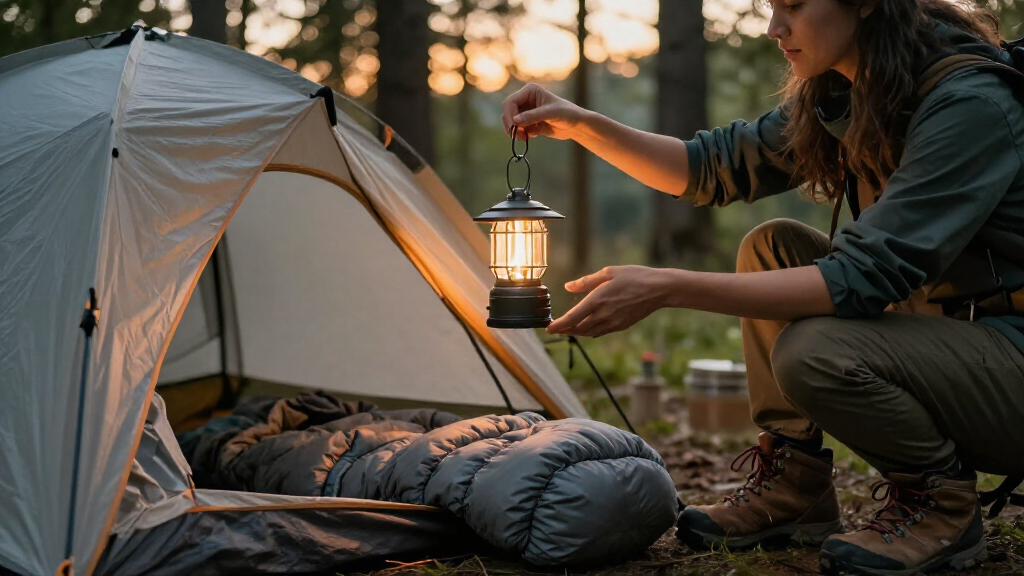

Portable camping lanterns vary most in power source, light output, and how easily they pack. My best overall pick is the Glocusent 106 LED Camping Lantern, which pairs rechargeable power with a high stated lumen output and IP68 water protection. The Consciot 1000LM is a strong battery-powered alternative for campers who want dimming, while the XTAUTO four-pack suits households that value several compact lights and solar or USB charging. The main tradeoff is between rechargeable convenience and the simplicity of replaceable batteries, with multi-packs favoring coverage over individual-lantern performance. Read on for the full breakdown, buying advice, and picks for different camping needs.

Get travel and outdoor gear delivered free with Prime
- Fast, free delivery on millions of items
- Prime Video, Amazon Music and more included
- Member-only deals all year
Complete the kit


Key Takeaways
- The Glocusent 106 LED stands out on paper for combining a stated 1200-lumen output, a 5000mAh rechargeable battery, and an IP68 rating; buyers should still check how its claimed output and runtime match their needs.
- The Consciot 1000LM offers a battery-powered alternative with dimming, useful when adjustable light matters more than USB charging.
- Rechargeable models with 5000mAh batteries can reduce disposable-battery use, but they add a charging task that matters on longer trips without reliable power.
- Multi-packs from Lepro, Lichamp, Etekcity, and other brands spread light across tents or a group, though their per-lantern features and power arrangements may differ.
- The XTAUTO four-pack and Glocusent 400H include solar charging, but solar is best treated as a backup option when daylight, placement, and charging time are uncertain.
| Energizer WeatheReady PRO-360 LED Camping Lantern |  | Best for Long Battery Runs | Maximum brightness: 500 lumens | Power: Three D batteries or three AA batteries | Runtime: Up to 150 hours on High; up to 650 hours on Low | VIEW LATEST PRICE | See Our Full Breakdown |
| Glocusent Rechargeable LED Camping Lantern with 5000mAh Battery |  | Best Feature-Rich Rechargeable | Light source: 135 LEDs | Maximum output: 1500 lumens | Beam angle: 360 degrees | VIEW LATEST PRICE | See Our Full Breakdown |
| Glocusent 106 LED Camping Lantern, 5000mAh Rechargeable, IP68 Waterproof, 1200LM |  | Best for Backpacking and Wet Conditions | Light source: 106 LEDs | Maximum brightness: 1200 lumens | Battery capacity: 5000mAh | VIEW LATEST PRICE | See Our Full Breakdown |
| Blukar 116 LED Camping Lantern Rechargeable – 7 Lighting Modes |  | Best for Adjustable Tent Lighting | Light source: 116 LEDs | Beam angle: 360 degrees | Lighting modes: Seven, including SOS and red light | VIEW LATEST PRICE | See Our Full Breakdown |
| LED Camping Lantern, Battery Operated (2-Pack) |  | Best Compact Two-Pack | Pack quantity: Two lanterns | Maximum output: 350 lumens | Brightness settings: 20%, 50%, and 100% | VIEW LATEST PRICE | See Our Full Breakdown |
| MalloMe Collapsible LED Camping Lanterns, 2-Pack |  | Best for Simple, Compact Lighting | Pack quantity: 2 lanterns | Maximum light output: 300 lumens per lantern | Beam coverage: 360 degrees | VIEW LATEST PRICE | See Our Full Breakdown |
| Consciot 1000LM Battery Powered LED Camping Lantern, 4 Light Mode, Dimmable | 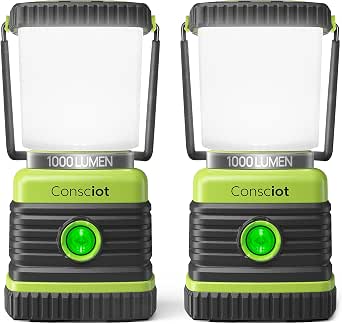 | Best for High-Output Camp Lighting | Maximum light output: 1000 lumens | Beam coverage: 360 degrees | Lighting controls: Four modes with stepless dimming | VIEW LATEST PRICE | See Our Full Breakdown |
| Eveready LED Camping Lantern X-250 (2-Pack) – Red and Black |  | Best for Long-Running Backup Light | Pack quantity: 2 lanterns | Light output: Up to 250 lumens | Beam coverage: 360 degrees | VIEW LATEST PRICE | See Our Full Breakdown |
| Etekcity LED Camping Lanterns, Battery Operated, 2-Pack |  | Best Value for Adjustable Two-Person Lighting | Pack quantity: 2 lanterns | Maximum brightness: 154 lumens per lantern | Light source: 30 LEDs per lantern | VIEW LATEST PRICE | See Our Full Breakdown |
| XTAUTO 4-Pack Collapsible Solar and USB Rechargeable LED Camping Lanterns |  | Best Multi-Lantern Rechargeable Set | Pack size: 4 lanterns | Lighting coverage: 360 degrees | Battery capacity: 1600mAh per lantern | VIEW LATEST PRICE | See Our Full Breakdown |
| COAST EAL30R 1000 Lumen Rechargeable Camping Lantern |  | Best for Flexible Power | Brightness: 1000 lumens | Light modes: Warm white, cool white, daylight white, red, red flashing | Runtime: Up to 15 hours | VIEW LATEST PRICE | See Our Full Breakdown |
| Lepro LED Camping Lanterns, 4-Pack, 3 Light Modes, Batteries Included |  | Best for Lightweight Group Kits | Pack size: 4 lanterns | Light output: 80 lumens on low; 140 lumens on high | Lighting modes: 3 | VIEW LATEST PRICE | See Our Full Breakdown |
| Lichamp LED Camping Lanterns, 4-Pack, Battery-Powered, Collapsible, Dark Gray |  | Best for Wide-Area Group Lighting | Pack size: 4 lanterns | Maximum output: 350 lumens per lantern | Lighting coverage: 360 degrees | VIEW LATEST PRICE | See Our Full Breakdown |
| 2-Pack Rechargeable Camping Lanterns with Flashlight |  | Best for Hands-Free Utility | Pack size: 2 lanterns | Lighting modes: 4, including flashlight and red strobe/SOS | Light source: COB LED | VIEW LATEST PRICE | See Our Full Breakdown |
| Glocusent 400H Rechargeable Camping Lantern with 5000mAh Battery and Solar Charging |  | Best for Long Runtime and Adjustability | Maximum light output: 1200 lumens in product specs; description lists a 15–250-lumen range | Brightness control: 5 stepless levels | Color temperatures: 3000K, 4500K, 6000K | VIEW LATEST PRICE | See Our Full Breakdown |
| portable camping lantern | Water resistance | Dimensions | Weight | Power |
|---|---|---|---|---|
| Energizer WeatheReady PRO-360 | IPX4 | 3.94 × 4.17 × 9.45 inches | — | Three D batteries or three AA batteries |
| Glocusent Rechargeable LED Cam | IP45 | — | 299 g | — |
| Glocusent 106 LED Camping Lant | IP68 | 2.2 × 2.2 × 5.6 inches | 8.5 ounces | — |
| Blukar 116 LED Camping Lantern | Not water resistant | 5.11 × 2.82 × 2.82 inches | — | — |
| LED Camping Lantern | Waterproof; specific rating not provided | 2.67 × 2.67 × 3.74 inches | 0.1 kg | Three AAA batteries per lantern; batteries not included |
| MalloMe Collapsible LED Campin | Water resistant | 3.7 x 3.4 x 3.7 inches | 5.76 ounces | 3 AAA batteries per lantern; not included |
| Consciot 1000LM Battery Powere | IPX4 | 3.54 x 3.86 x 7.28 inches | 0.99 kg | 3 D-cell alkaline batteries; not included |
| Eveready LED Camping Lantern X | IPX4 | — | 0.66 kg | — |
| Etekcity LED Camping Lanterns | Water resistant; no rating specified | — | 0.67 lb (302 g) | 3 AA batteries per lantern; 6 included |
| XTAUTO 4-Pack Collapsible Sola | Described as waterproof; no rating specified | — | — | — |
| COAST EAL30R 1000 Lumen Rechar | IP54 | 4.5 × 4.5 × 7.9 in | 10.56 oz | Built-in USB-C rechargeable battery; optional 4 AA backup |
| Lepro LED Camping Lanterns | Not water resistant | 2 × 2 × 4.13 in | 55 g per lantern with batteries | 3 AAA batteries per lantern; 12 included |
| Lichamp LED Camping Lanterns | Water resistant | — | — | 3 AA batteries per lantern; not included |
| 2-Pack Rechargeable Camping La | Water resistant; no rating specified | 3.54 × 3.54 × 7.87 in | — | Rechargeable built-in battery or 3 AA batteries per lantern |
| Glocusent 400H Rechargeable Ca | IPX5 | 3.43 × 3.43 × 7.28 in | 5.4 oz | — |
More Details on Our Top Picks
Energizer WeatheReady PRO-360 LED Camping Lantern
The Energizer WeatheReady PRO-360 is my pick for campers who want dependable, broad light without relying on a rechargeable battery. Its 500-lumen output suits a shared campsite or tent, while the low setting’s stated runtime of up to 650 hours can stretch a set of batteries through extended use. A useful distinction from the rechargeable Glocusent 106 LED is the Energizer’s option to run on either D or AA batteries, which gives buyers more flexibility when packing spares. It also has an IPX4 rating and a shatterproof lens for splashes and bumps. The tradeoff is its taller, heavier battery-based format and plastic construction; it is less appealing for a weight-conscious backpacker than the compact Glocusent. Batteries are not included, so plan to bring them.
Pros:- Up to 500 lumens of all-around illumination
- Low mode is specified for up to 650 hours
- Can use either three D batteries or three AA batteries
- IPX4 water resistance, impact resistance up to 1 meter, and a shatterproof lens
Cons:- Batteries are not included
- Larger and less pack-friendly than the rechargeable Glocusent 106 LED
- Plastic body may feel less substantial than a metal-bodied lantern
Best for: Car campers and emergency-kit owners who prioritize long low-mode runtime and want to choose between D and AA batteries
Not ideal for: Backpackers trying to minimize pack weight, or campers who want USB-C recharging and a built-in battery
- Maximum brightness:500 lumens
- Power:Three D batteries or three AA batteries
- Runtime:Up to 150 hours on High; up to 650 hours on Low
- Lighting modes:High, Low, Night Light
- Water resistance:IPX4
- Impact resistance:Up to 1 meter
- Dimensions:3.94 × 4.17 × 9.45 inches
- Material:Plastic
Our verdict“Choose the Energizer if battery flexibility and long low-mode runtime matter more to you than compact size or USB-C charging.”
Glocusent Rechargeable LED Camping Lantern with 5000mAh Battery
This Glocusent is the most versatile lighting choice in this group for campers who want to tune the light to a tent, table, or emergency situation. Its five brightness levels and warm, neutral, and cool settings give it more control than the Blukar’s warm-white-only setup, while the 360-degree beam spreads light around a shared space. The 5000mAh battery is rated for up to 200 hours on low, and the lantern can also charge a phone. For emergencies, it adds an SOS strobe and a brief 1500-lumen mode. That maximum output lasts only about four minutes, so I would treat it as a short burst, not sustained camp lighting. At 299 g, it remains fairly portable, though the more rugged, IP68-rated Glocusent 106 LED is a better fit for rough or wet conditions.
Pros:- 360-degree lighting with five brightness levels and three color temperatures
- 5000mAh battery rated for up to 200 hours on low
- Can charge a phone and includes an SOS strobe
- Compact body with a top handle and bottom hook
Cons:- 1500-lumen mode lasts only about four minutes
- Charging adapter is not included
- IP45 protection is less suited to harsh wet conditions than the Glocusent 106 LED’s IP68 rating
Best for: Campers who want rechargeable all-around light, adjustable color, and a phone-charging backup in one lantern
Not ideal for: People who need sustained maximum brightness or plan to expose a lantern to heavy water and rough handling
- Light source:135 LEDs
- Maximum output:1500 lumens
- Beam angle:360 degrees
- Battery capacity:5000mAh
- Runtime:Up to 200 hours on low; up to 12 hours at maximum brightness
- Brightness and color:Five brightness levels; 3000K warm, 4500K neutral, and 6001K cool white
- Water resistance:IP45
- Weight:299 g
- Charging:USB-C; charging time listed as 3.5 hours
Our verdict“Pick this Glocusent for adjustable rechargeable campsite lighting and emergency extras, but not for prolonged maximum output or severe-weather use.”
Glocusent 106 LED Camping Lantern, 5000mAh Rechargeable, IP68 Waterproof, 1200LM
When pack space and weather protection carry more weight than long runtimes, the Glocusent 106 LED is the standout. At 8.5 ounces and 5.6 inches tall, it is far easier to pack than the Energizer WeatheReady PRO-360, while its IP68 waterproof rating and drop resistance offer stronger protection against demanding outdoor conditions. The 360-degree light reaches up to 1200 lumens, and three color temperatures plus SOS mode make it more adaptable than the Blukar’s fixed warm-white output. Its limits are practical: the stated 80-hour runtime applies to the lowest setting, and super-bright mode lasts only three minutes. The plastic construction also keeps it from feeling especially premium. I’d choose it for a compact backpacking kit or wet-weather backup, not as a lantern to run at full power all evening.
Pros:- Compact 8.5-ounce design suited to weight-conscious packing
- IP68 waterproof rating and drop resistance
- Up to 1200 lumens with 360-degree illumination
- Three color temperatures and an SOS mode
Cons:- Up to 80 hours of runtime is specified for the lowest setting
- Super-bright mode lasts only three minutes
- Plastic construction may feel less premium than sturdier materials
Best for: Backpackers and wet-weather campers seeking a lightweight rechargeable lantern with strong water protection
Not ideal for: Campers who need sustained high output, prefer replaceable batteries, or want a larger lantern for lighting a broad campsite
- Light source:106 LEDs
- Maximum brightness:1200 lumens
- Battery capacity:5000mAh
- Maximum runtime:Up to 80 hours
- Water resistance:IP68
- Dimensions:2.2 × 2.2 × 5.6 inches
- Weight:8.5 ounces
- Color temperatures:3000K, 4000K, and 6000K
- Charging port:USB-C
Our verdict“Choose the Glocusent 106 LED when low pack weight and waterproof protection matter more than sustained peak brightness.”
Blukar 116 LED Camping Lantern Rechargeable – 7 Lighting Modes
The Blukar’s defining advantage is its fold-out design: campers can adjust its shape for wider illumination, rather than relying only on a fixed lantern body. Its 116 LEDs spread warm white light across a 360-degree beam, and seven modes give it more flexibility than the Energizer WeatheReady PRO-360’s three settings. The integrated 4800mAh battery avoids disposable cells, with listed runtime ranging from 10 to 48 hours. That makes it a practical tent or campsite lantern when the weather is dry. The key compromise is protection: unlike the IPX4-rated Energizer or IP68 Glocusent 106 LED, the Blukar is listed as not water resistant. Its battery is also non-removable, so it cannot be swapped for a fresh pack once depleted. I’d favor it for sheltered, adjustable lighting rather than exposed rainy campsites.
Pros:- Fold-out design can widen the illuminated area
- 360-degree warm-white light from 116 LEDs
- Seven lighting modes, including SOS and red light
- USB-C rechargeable 4800mAh integrated battery
Cons:- Listed as not water resistant, limiting use in rain
- Built-in battery cannot be replaced in the field
- 394 g body is heavier than the Glocusent 106 LED
Best for: Car campers who want fold-out, warm-white lighting for a tent or sheltered campsite and can recharge between trips
Not ideal for: Campers expecting rain exposure or anyone who wants a replaceable battery for longer trips away from charging
- Light source:116 LEDs
- Beam angle:360 degrees
- Lighting modes:Seven, including SOS and red light
- Battery:4800mAh integrated lithium battery
- Runtime:10–48 hours
- Charging:USB-C
- Water resistance:Not water resistant
- Dimensions:5.11 × 2.82 × 2.82 inches
- Weight and material:394 g; ABS
Our verdict“Choose the Blukar for adjustable lighting in dry, sheltered camps, but pick a water-resistant model for exposed weather.”
LED Camping Lantern, Battery Operated (2-Pack)
This two-pack suits campers who would rather spread modest light across two spots than carry one larger lantern. Each collapsible unit is small and lightweight, and three brightness settings let users conserve batteries when full output is unnecessary. Compared with the Energizer WeatheReady PRO-360, these lanterns are easier to split between a tent and cooking area, but each tops out at 350 lumens and the runtime is not specified. They use three AAA batteries apiece, which keeps the power system simple but means bringing spare cells for longer outings. The product is described as waterproof, a useful advantage over the non-water-resistant Blukar, though the available data does not give a specific rating. I’d treat these as compact personal or backup lights, not as a replacement for a brighter lantern that must illuminate a whole campsite.
Pros:- Two lanterns can light separate areas or serve as backups
- Compact, lightweight, collapsible design
- Three brightness settings from 20% to 100%
- Waterproof ABS construction is listed for outdoor use
Cons:- Each lantern requires three AAA batteries, which are not included
- Runtime is not specified, and high brightness may use batteries quickly
- 350-lumen maximum output provides less area light than the Energizer or either Glocusent
Best for: Campers who want two lightweight lanterns for separate tent, cooking, or emergency locations
Not ideal for: Groups needing strong area lighting or campers who prefer rechargeable lanterns with a stated runtime
- Pack quantity:Two lanterns
- Maximum output:350 lumens
- Brightness settings:20%, 50%, and 100%
- Power:Three AAA batteries per lantern; batteries not included
- Water resistance:Waterproof; specific rating not provided
- Material:ABS
- Dimensions:2.67 × 2.67 × 3.74 inches
- Weight:0.1 kg
- Color temperature:6500K
Our verdict“Choose this two-pack for lightweight, distributed backup lighting, not for long runtimes or bright whole-campsite illumination.”
MalloMe Collapsible LED Camping Lanterns, 2-Pack
The MalloMe two-pack suits campers who want uncomplicated area lighting without carrying a larger lantern. Each unit opens to switch on, collapses for storage, and spreads up to 300 lumens across 360 degrees—more output per lantern than the Etekcity 154-lumen pair. Its small footprint and foldaway handles make it easier to stow than the taller Consciot, though it cannot match that model’s 1000-lumen output or dimming controls. The tradeoff is battery dependence: each lantern needs three AAA batteries, and they are not included, so I’d pack spares for longer trips. Water resistance adds some flexibility around camp, but this plastic lantern is not presented as fully waterproof. It’s a practical choice for tents, short outings, and backup lighting where ease of use matters more than advanced settings.
Pros:- Two lanterns provide up to 300 lumens each with 360-degree coverage
- Collapsible body and foldaway handles pack and carry easily
- Pull-open operation is straightforward, with no mode selection required
- Water-resistant construction suits ordinary damp outdoor conditions
Cons:- Requires three AAA batteries per lantern, and none are included
- No dimming or selectable light modes are listed
- Plastic construction and water resistance offer less protection than a lantern with a defined waterproof rating
Best for: Campers who want a compact two-lantern set with simple operation for tent lighting and occasional power outages
Not ideal for: Backpackers trying to minimize carried weight and battery supplies, or anyone needing adjustable brightness or high-output campsite lighting
- Pack quantity:2 lanterns
- Maximum light output:300 lumens per lantern
- Beam coverage:360 degrees
- Light source:COB LED
- Power:3 AAA batteries per lantern; not included
- Weight:5.76 ounces
- Dimensions:3.7 x 3.4 x 3.7 inches
- Water resistance:Water resistant
Our verdict“Choose the MalloMe pair for compact, easy-to-operate camp lighting, but pick the Consciot if you need substantially more brightness and dimming.”
Consciot 1000LM Battery Powered LED Camping Lantern, 4 Light Mode, Dimmable
For a shared campsite or a large tent, the Consciot’s 1000-lumen output is the main reason to choose it. Its 360-degree illumination, four light modes, and smooth dimming give it more control than the simpler MalloMe or Eveready lanterns, which are better suited to straightforward ambient light. The IPX4 rating and anti-slip exterior add useful protection against splashes and handling, while dual hooks make hanging more flexible than a basic tabletop light. The cost of that extra output is bulk: at 0.99 kg, it is much heavier than the compact MalloMe pair and less appealing to carry far from a vehicle. It also uses three D-cell batteries, which are not included. I’d favor it for car camping and group use, not for a lightweight kit.
Pros:- Up to 1000 lumens can illuminate a broad campsite area
- Four modes and stepless dimming allow brightness adjustment
- IPX4 water resistance and anti-slip construction suit outdoor handling
- Dual hanging hooks provide flexible placement
Cons:- Nearly 1 kg makes it heavy for handheld use or long-distance carrying
- Requires three D-cell batteries, which are not included
- The listed battery life is up to 12 hours, shorter than the Eveready’s stated area-mode runtime
Best for: Car campers and families who need bright, adjustable 360-degree light for a shared cooking area or large tent
Not ideal for: Backpackers and campers who want a lightweight lantern, rechargeable power, or included batteries
- Maximum light output:1000 lumens
- Beam coverage:360 degrees
- Lighting controls:Four modes with stepless dimming
- Power:3 D-cell alkaline batteries; not included
- Battery life:Up to 12 hours
- Water resistance:IPX4
- Weight:0.99 kg
- Dimensions:3.54 x 3.86 x 7.28 inches
Our verdict“Pick the Consciot for bright, adjustable car-camping light; choose the lighter MalloMe or Etekcity pair when portability matters more.”
Eveready LED Camping Lantern X-250 (2-Pack) – Red and Black
The Eveready pair is the standout here for campers who value long stated runtime over maximum brightness. Each lantern provides up to 250 lumens of 360-degree area light and is rated for up to 100 hours in area mode, making it a useful option for extended trips or a household emergency kit. Compared with the MalloMe, it has a lower stated output but includes batteries, and its IPX4 rating is more specific than the MalloMe’s general water-resistant description. The top handle supports carrying or hanging, while the one-meter impact test offers some reassurance against drops. These are still battery-powered plastic lanterns rather than rechargeable lights, and IPX4 means splash resistance, not full waterproofing. The listed dimensions and 0.66 kg weight also make them less compact than the Etekcity collapsible pair.
Pros:- Two lanterns provide 250 lumens of 360-degree illumination each
- Rated for up to 100 hours in area mode
- Batteries are included, with ReadyFlex support for 2 AA or 4 AA alkaline batteries
- IPX4 splash resistance and one-meter impact testing add practical durability
Cons:- Uses replaceable AA batteries rather than a built-in rechargeable battery
- IPX4 protects against splashes, not immersion or heavy water exposure
- At 0.66 kg, the listed weight is less appealing for weight-conscious trips
Best for: Campers and households seeking two ready-to-use lanterns with long area-mode runtime for trips and outages
Not ideal for: Hikers who need a particularly light, compact lantern or buyers who want rechargeable power and a fully waterproof rating
- Pack quantity:2 lanterns
- Light output:Up to 250 lumens
- Beam coverage:360 degrees
- Runtime:Up to 100 hours in area mode
- Battery type:2 AA or 4 AA alkaline batteries; included
- Water resistance:IPX4
- Impact testing:Tested for drops from 1 meter
- Weight:0.66 kg
Our verdict“Choose the Eveready pair for long-running, battery-included area lighting, but take the collapsible Etekcity lanterns if pack size is the priority.”
Etekcity LED Camping Lanterns, Battery Operated, 2-Pack
The Etekcity set earns its place through simple brightness adjustment and a useful two-lantern format. Raising or lowering the collapsible body changes the light level, so there’s no separate dimmer to learn; compared with the MalloMe, it offers this adjustment and includes six AA batteries, though its maximum output is lower at 154 lumens per lantern. Each unit can run for up to 50 hours and has a small storage compartment, a handy spot for small essentials. The compact form is easier to pack than the taller, heavier Consciot, but it won’t light a broad campsite as brightly. Its water-resistant ABS construction is suitable for light exposure, yet no specific water-resistance rating is provided. This is a sensible pick for tent interiors and backup use when modest output is enough.
Pros:- Two collapsible lanterns adjust brightness by raising or lowering the body
- Six AA batteries are included
- Up to 50 hours of listed battery life
- Lightweight ABS bodies include small storage compartments
Cons:- Maximum output of 154 lumens per lantern is modest for open campsite lighting
- Requires three AA batteries per lantern, which will need replacement
- Water resistance is stated without a specific rating
Best for: Campers who want two compact lanterns with included batteries and an easy way to adjust light for tent use
Not ideal for: Groups lighting a large campsite, or buyers who need a defined waterproof rating or output comparable to the Consciot
- Pack quantity:2 lanterns
- Maximum brightness:154 lumens per lantern
- Light source:30 LEDs per lantern
- Beam coverage:360 degrees
- Power:3 AA batteries per lantern; 6 included
- Battery life:Up to 50 hours
- Weight:0.67 lb (302 g)
- Water resistance:Water resistant; no rating specified
Our verdict“Choose Etekcity for compact, adjustable tent lighting with batteries included; choose the brighter Consciot for group areas.”
XTAUTO 4-Pack Collapsible Solar and USB Rechargeable LED Camping Lanterns
The XTAUTO four-pack is the most flexible group option in this batch: each lantern collapses, provides 360-degree light, and can also serve as a flashlight. Unlike the battery-only MalloMe and Eveready sets, these units recharge by USB or solar power, reducing the need to pack replacement cells. Brightness adjusts by extending the lantern, and the built-in 1600mAh battery is rated for up to 25 hours. That combination suits camps where several people need individual lights or where backup charging options matter. The tradeoff is limited performance detail: the description gives no charging-time figures or specific waterproof rating, despite calling the lanterns waterproof. The Consciot is a stronger pick for maximum brightness, while the XTAUTO set prioritizes quantity and rechargeable convenience over a stated lumen figure.
Pros:- Four lanterns provide individual lights for a group or backup kit
- USB and solar charging offer alternatives to disposable batteries
- Collapsible design provides 360-degree lantern light and flashlight use
- Advertised battery life is up to 25 hours
Cons:- No lumen output or charging-time information is provided
- No specific waterproof rating is listed
- The stated battery life is shorter than the Eveready’s area-mode runtime
Best for: Groups and emergency-kit owners who want four collapsible lights with USB and solar charging options
Not ideal for: Campers who need a documented waterproof rating, a specified lumen output, or dependable charging-time details
- Pack size:4 lanterns
- Lighting coverage:360 degrees
- Battery capacity:1600mAh per lantern
- Charging methods:Solar and USB
- Battery life:Up to 25 hours
- Light functions:Lantern and flashlight
- Material:ABS
- Water resistance:Described as waterproof; no rating specified
Our verdict“Choose the XTAUTO set when rechargeable convenience and four separate lights matter more than documented brightness or water protection.”
COAST EAL30R 1000 Lumen Rechargeable Camping Lantern
The COAST EAL30R suits campers who want one lantern for campsite lighting and backup power, rather than a lightweight light for every pack. Its USB-C rechargeable battery can also charge a device, while four AA batteries provide an alternative when recharging is unavailable. That dual-power setup gives it a practical edge over the Lepro 4-Pack, which runs on AAA batteries but has no rechargeable option or power-bank function. Five modes, including warm, cool, daylight, and flashing red, also make the COAST more adaptable for shared camp space and emergencies.
The tradeoff is that its 10.56-ounce weight is higher than a pocket-style lantern, and AA backups are sold separately. Its IP54 rating offers protection from dust and splashing, not immersion. I’d choose it for car camping or a home emergency kit, but not for the lightest backpacking load.
Pros:- USB-C rechargeable battery can also charge other devices.
- Four AA batteries offer a backup power option.
- Five modes include warm, cool, daylight, and flashing red light.
- IP54 water and dust resistance with a rubber-overmolded body.
Cons:- AA backup batteries are sold separately.
- At 10.56 ounces, it is heavier than compact lanterns such as the Lepro units.
- IP54 protection does not make it suitable for submersion.
Best for: Car campers and emergency-kit owners who want rechargeable lighting, AA backup, and device charging in one lantern.
Not ideal for: Ultralight backpackers who prioritize minimum weight, or campers who need a lantern rated for immersion.
- Brightness:1000 lumens
- Light modes:Warm white, cool white, daylight white, red, red flashing
- Runtime:Up to 15 hours
- Power:Built-in USB-C rechargeable battery; optional 4 AA backup
- Water resistance:IP54
- Dimensions:4.5 × 4.5 × 7.9 in
- Weight:10.56 oz
- Material:Aluminum with rubber overmold
Our verdict“Choose the COAST EAL30R if flexible power and device charging matter more than keeping your pack as light as possible.”
Lepro LED Camping Lanterns, 4-Pack, 3 Light Modes, Batteries Included
The Lepro 4-Pack is a simple way to spread light across several tents or keep spare lanterns in an emergency kit. Each light weighs 55 g with batteries and uses three AAA cells; all 12 batteries are included, so the set is ready to use without a separate charging plan. Compared with the brighter Lichamp 4-Pack, the Lepro lanterns have lower output, topping out at 140 lumens, but their compact 2 × 2 × 4.13-inch form is easier to tuck into a backpack or kit.
Three lighting modes cover soft white, daylight white, and a brighter setting, with up to five hours on high or ten on low. That output is suited to tent interiors and close-range tasks, not lighting a large campsite. The main compromise is weather readiness: these plastic lanterns are not water resistant, so I’d keep them sheltered and choose another option for exposed, wet campsites.
Pros:- Four lightweight lanterns provide separate lights for tents or camp areas.
- Includes 12 AAA batteries, three for each lantern.
- Three modes include soft white, daylight white, and a brighter setting.
- Compact body and hanging hook support tent use and handheld carry.
Cons:- Not water resistant, so the lanterns need shelter from rain and splashes.
- High mode lasts up to five hours.
- Maximum output of 140 lumens is limited for lighting a large campsite.
Best for: Families or groups who want several small tent lights and value included batteries over rechargeable features.
Not ideal for: Campers expecting rain exposure or needing broad, high-output area lighting.
- Pack size:4 lanterns
- Light output:80 lumens on low; 140 lumens on high
- Lighting modes:3
- Runtime:Up to 10 hours on low; 5 hours on high
- Power:3 AAA batteries per lantern; 12 included
- Weight:55 g per lantern with batteries
- Dimensions:2 × 2 × 4.13 in
- Water resistance:Not water resistant
Our verdict“Pick the Lepro set for lightweight, ready-to-use tent lighting, but skip it if you need weather-resistant or high-output illumination.”
Lichamp LED Camping Lanterns, 4-Pack, Battery-Powered, Collapsible, Dark Gray
For groups that need several lights rather than one powerful centerpiece, the Lichamp 4-Pack offers up to 350 lumens per lantern with 360-degree coverage. Its collapsible body and foldaway handles make each light easier to carry, hang, and store than a fixed-format lantern. Compared with the smaller Lepro 4-Pack, Lichamp provides more output for shared camp spaces and lists water resistance, though it is bulkier and does not include batteries.
Each lantern runs on three AA batteries, which are not included; outfitting all four means bringing 12 cells. The stated battery life is up to 30 hours, but that figure should be weighed against the cost of carrying and replacing batteries across a set. The plastic construction and unspecified water-resistance rating suit ordinary outdoor use better than soaking conditions. I’d choose this pack for car camping or a group emergency stash, not for campers who want rechargeable convenience.
Pros:- Four lanterns provide up to 350 lumens each with 360-degree coverage.
- Collapsible bodies and foldaway handles support carrying, hanging, and storage.
- Water-resistant construction is suited to ordinary outdoor conditions.
- Stated battery life is up to 30 hours.
Cons:- Requires three AA batteries per lantern, and none are included.
- The set’s listed item weight is 1.09 kg, making it a less appealing backpacking choice.
- Water resistance is not specified with an IP rating.
Best for: Car-camping groups and households that want multiple broad-coverage lanterns and are comfortable supplying AA batteries.
Not ideal for: Backpackers seeking a light, compact kit or campers who want rechargeable lights with a clearly stated ingress rating.
- Pack size:4 lanterns
- Maximum output:350 lumens per lantern
- Lighting coverage:360 degrees
- Battery life:Up to 30 hours
- Power:3 AA batteries per lantern; not included
- Design:Collapsible with foldaway handles
- Water resistance:Water resistant
- Listed item weight:1.09 kg
Our verdict“Choose Lichamp for four broad-coverage lights around a group camp, provided you are willing to carry and supply AA batteries.”
2-Pack Rechargeable Camping Lanterns with Flashlight
This two-pack is the more work-oriented choice in this group: each collapsible lantern combines 360-degree area light with a flashlight, red strobe, and SOS mode. A magnetic base and hanging handle give it more mounting options than the foldaway handles on the Lichamp 4-Pack, especially for repairs around a vehicle or a metal camp surface. USB charging keeps routine use rechargeable, while three AA batteries can serve as an alternate power source.
The value of that flexibility comes with compromises. The product provides no specific IP rating, so “water resistant” does not say how much rain or spray it can take. AA batteries are not included, and the listed 1.5 lb weight makes the two-lantern set a heavier carry than the compact Lepro lights. I’d pick it when hands-free placement and emergency signaling matter more than low pack weight or a precise weather rating.
Pros:- Four modes include area lighting, a flashlight, red strobe, and SOS.
- USB rechargeability is complemented by an AA-battery power option.
- Magnetic base and hanging handle offer flexible hands-free placement.
- Two lanterns are supplied with USB charging cables.
Cons:- AA batteries are not included.
- No specific water-resistance rating is provided.
- Listed set weight of 1.5 lb is relatively heavy for backpacking.
Best for: Campers, van owners, and repair-kit users who need rechargeable area lighting that can attach to metal or hang overhead.
Not ideal for: Backpackers seeking a low-weight pair or campers who need a clearly rated lantern for wet conditions.
- Pack size:2 lanterns
- Lighting modes:4, including flashlight and red strobe/SOS
- Light source:COB LED
- Power:Rechargeable built-in battery or 3 AA batteries per lantern
- Charging:USB; 2 USB charging cables included
- Water resistance:Water resistant; no rating specified
- Dimensions:3.54 × 3.54 × 7.87 in
- Listed weight:1.5 lb
Our verdict“Choose this pair for magnetic mounting, flashlight use, and emergency signaling, not for the lightest or most clearly weather-rated setup.”
Glocusent 400H Rechargeable Camping Lantern with 5000mAh Battery and Solar Charging
The Glocusent 400H is the most adjustable single lantern here, combining five stepless brightness levels with three white color temperatures and a red SOS mode. Its stated up-to-120-hour runtime and 5000mAh rechargeable battery favor campers who want to stretch a charge over a long trip; the COAST EAL30R offers AA backup instead, while this Glocusent adds solar as an auxiliary charging route and can charge other devices. At 5.4 ounces, it is also lighter than the COAST.
There is a specification mismatch to keep in mind: the description gives a 15–250-lumen range, while the product specs list a 1200-lumen maximum. Solar charging is also slow at a stated 40 hours, so I’d treat it as a supplement rather than the main recharge plan. IPX5 protection and a hanging hook make it useful outdoors, but buyers who need a clear, consistent brightness figure may prefer a less ambiguous option.
Pros:- Five stepless brightness levels and three white color temperatures allow detailed light adjustment.
- Stated runtime reaches up to 120 hours.
- USB-C charging, auxiliary solar charging, and reverse charging support flexible power use.
- Weighs 5.4 ounces and has IPX5 water resistance.
Cons:- Brightness figures conflict: the description lists 15–250 lumens, while product specs state up to 1200 lumens.
- Stated solar charging time is 40 hours, making it a slow backup method.
- A 120-hour maximum runtime does not specify the brightness setting used.
Best for: Campers planning extended trips who want fine brightness control, USB-C charging, and a lightweight lantern with backup solar charging.
Not ideal for: Buyers who need a clearly consistent lumen specification or expect solar charging to replenish the battery quickly.
- Maximum light output:1200 lumens in product specs; description lists a 15–250-lumen range
- Brightness control:5 stepless levels
- Color temperatures:3000K, 4500K, 6000K
- Battery capacity:5000mAh
- Runtime:Up to 120 hours
- Charging:USB-C; solar charging as an auxiliary method
- Water resistance:IPX5
- Weight:5.4 oz
- Dimensions:3.43 × 3.43 × 7.28 in
Our verdict“Pick the Glocusent 400H for long stated runtime and adjustable light, but verify the brightness details if output level is central to your choice.”

How We Picked
I compared these portable camping lanterns by the factors that shape actual campsite decisions: stated light output and modes, power source, charging options, portability, weather protection, and whether the package offers one lantern or several. I also looked at usability details such as dimming, collapsible designs, and combined lantern-and-flashlight formats, since a light that suits a tent may not be the best choice for a shared campsite or emergency kit.
The ranking favors useful balance over a single headline feature. Rechargeable models with strong stated output and meaningful weather protection rank well for all-around use, while battery-powered options earn attention for simple operation and multi-packs for broader coverage. Solar charging is treated as an added option rather than a guarantee of dependable power. Product specifications can vary by listing or model revision, so I recommend checking the exact package contents and stated runtime before buying.
Factors to Consider When Choosing Portable Camping Lanterns
Choosing a lantern is less about chasing the highest lumen figure and more about matching light, power, and pack size to your trip. I would start with where the lantern will sit, how long it needs to run, and whether you can recharge or replace its batteries.
Match Brightness to the Space You Need to Light
A lantern used inside a small tent does not need the same output as one lighting a cooking area or shared campsite. High lumen claims can help with broad illumination, but they do not tell you how evenly light spreads or how comfortable it feels at close range. A dimming setting lets you use a brighter level for camp tasks and a lower one for reading or settling in. If a lantern has only a few fixed modes, check whether those modes suit both close-up and area lighting. Avoid choosing by maximum output alone: it may bring shorter runtime or glare that makes the lantern less pleasant inside a tent.
Choose a Power Source That Fits Your Trip Length
Rechargeable lanterns suit trips where you can top up from a power bank, vehicle, or campsite outlet, while replaceable-battery models can be easier to keep running away from charging access. The tradeoff is preparation: rechargeable lights need to leave home charged, and battery-powered lights need spare cells packed in the right size. Solar charging can add flexibility, but it depends on daylight and panel placement, so I would not plan around it as the only source for an essential light. For trips lasting several nights, consider how many hours you expect to use the lantern and whether you can recharge it between days. A backup headlamp or small flashlight can cover the gap if the main lantern runs out.
Read Weather Ratings in Context
A waterproof or water-resistance rating can matter at a damp campsite, but it does not make every lantern suitable for every storm or type of exposure. An IP rating is more informative than a vague claim, and a higher rating can be useful when rain or splashes are likely. Still, the charging port, battery compartment, and seals need to be handled as the manufacturer directs. For dry-weather car camping, rugged water protection may be less useful than a simpler design or a multi-pack. If you camp in wet conditions, check the exact rating and avoid assuming that a lantern can be submerged just because it is described as waterproof.
Decide Between One Strong Light and Several Smaller Ones
A single lantern can simplify charging and give you one dependable source for a cooking area, but a multi-pack lets people place light where they need it without carrying a lantern from place to place. Packs are especially handy for family trips, tent interiors, and emergency supplies kept in different rooms or bags. The tradeoff is that quantity does not necessarily mean equal performance: check each unit’s power source, output, controls, and whether batteries are included. Smaller lights can also be easier to distribute, though they may not illuminate a large shared area as well as a higher-output model. Think about the number of people and separate spaces before paying for extras.
Prioritize Packability Without Sacrificing Ease of Use
Collapsible lanterns can take up less room in a crowded pack, while a more traditional shape may be easier to grab, hang, or place on a table. Compactness is useful only if the controls remain easy to find and the lantern feels stable where you plan to use it. Check whether the design includes a handle or hanging point if you want light overhead rather than on the ground. For car camping, a slightly larger lantern may be a worthwhile trade for simpler handling or higher output. For backpacking, weight and packed dimensions deserve more attention than features that require a fixed campsite setup.
Treat Flashlight and Solar Features as Supporting Tools
A lantern with a built-in flashlight can cover two tasks, but the combined design may not replace a dedicated headlamp when you need both hands free. Solar charging is also useful as a supplement, yet it is affected by shade, weather, season, and the time available to recharge. Before paying for either feature, ask how often you would use it and whether it solves a problem your main lantern cannot. Multi-mode designs can be handy, but more settings may also mean more button presses when you want light quickly. Simple controls and a dependable main power source usually matter more than a long feature list.
Frequently Asked Questions
Should I choose a rechargeable camping lantern or one that uses disposable batteries?
Choose rechargeable if you can charge before the trip or bring a power bank, and you want to reduce the need to pack spare cells. A battery-powered lantern is a practical fit when you may be away from outlets for several days and can carry replacement batteries. Compare runtime at the brightness level you plan to use, not just the maximum-output figure. For longer trips, a backup light can matter more than the power source of your main lantern. If you are unsure, the best choice is the one whose power supply you can reliably replenish on your usual trips.
Is a lantern rated at 1000 lumens too bright for a tent?
Not necessarily, but maximum brightness can feel harsh in a small tent, especially when the light is close to eye level. A dimmable model gives you more control than one that only switches between fixed modes. Consider whether the lantern spreads light evenly and whether you can hang or position it away from sleeping areas. For cooking and group use, a high-output setting can be useful; for reading or winding down, lower output is usually more comfortable. Check the stated modes and controls before treating a lumen number as a measure of everyday comfort.
Can I rely on solar charging as the only way to power a camping lantern?
I would treat built-in solar charging as a backup rather than the only power plan for a trip. Charging depends on sun exposure, weather, season, and whether the panel can sit in a useful position for long enough. Shade around a campsite can limit the benefit even on a clear day. A model that also charges by USB or accepts replaceable batteries gives you more ways to restore power. If the lantern is essential for safety or nighttime camp tasks, bring a dependable primary charging method or a separate backup light.
Are multi-pack lanterns a better choice for family camping?
They can be, particularly when several people need light in separate tents, around a cooking area, or inside a vehicle. A pack may offer better coverage than moving one lantern from place to place, but the included units are not automatically as bright or feature-rich as a single larger lantern. Check whether batteries are included, how each light is powered, and whether every unit has the modes you need. For a small group sharing one campsite area, one stronger lantern plus personal headlamps may be more practical. Choose based on how many separate spaces need light, not the pack count alone.
What does an IP68 rating mean for a camping lantern, and can I use it in heavy rain?
An IP68 rating indicates a high level of dust protection and water-ingress protection under specified test conditions, but the exact conditions depend on the manufacturer’s rating details. It should not be read as permission to expose every part of the lantern to any type of water indefinitely. Check the product instructions for limits on immersion, port covers, and use while charging. Heavy rain can also affect where you place a lantern and whether its controls or power connections stay protected. If you expect wet weather, confirm the rating on the exact model listing and store the lantern in a dry, accessible place when it is not in use.
Conclusion
For the broadest mix of rechargeable power, stated output, and water protection, I would start with the Glocusent 106 LED as the best overall pick. The best value depends on what you need more: the Consciot 1000LM suits buyers who want battery power and dimming, while multi-packs such as the Etekcity or Lepro options make sense when several areas need light. For a premium-style feature set, the COAST EAL30R is the rechargeable single-lantern option to compare, while the Glocusent 400H is a better fit for buyers who want solar charging as an added option. Beginners may prefer a straightforward battery-powered lantern or multi-pack with simple modes; campers facing wet conditions should give the Glocusent 106 LED’s stated IP68 rating closer attention. Choose by trip length, charging access, and how many spaces you need to light rather than by lumen claims alone.