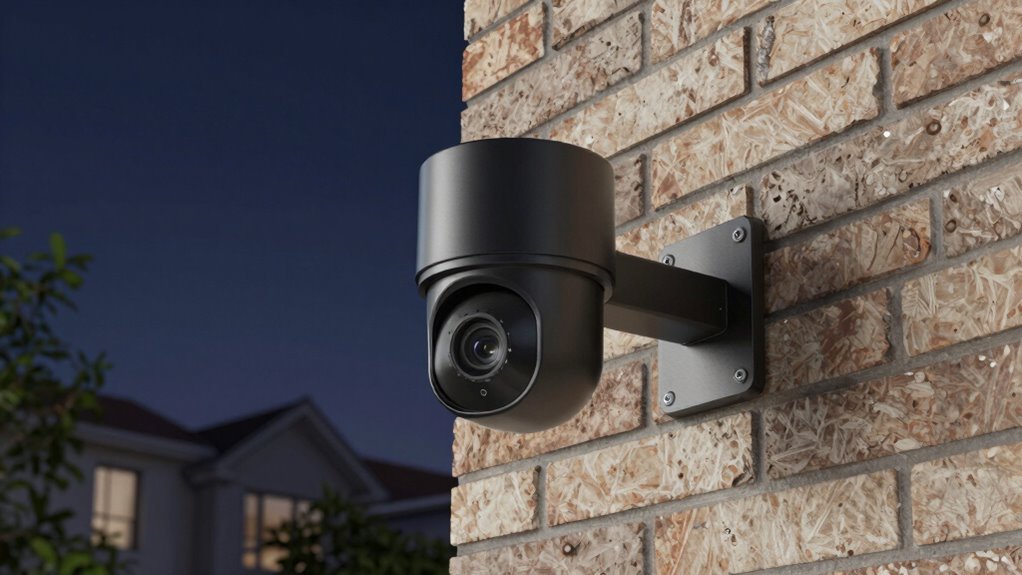

To stop false motion alerts, position your floodlight camera at a slight downward angle focused on key entry points, avoiding trees, bushes, or reflective surfaces that can cause shadows or glare. Keep it away from moving objects like passing animals or swaying branches. Proper height and clear line of sight help the camera distinguish between actual activity and environmental triggers. With correct setup, you’ll reduce false alarms and improve detection accuracy—there’s more to optimize for even better results.

Get travel and outdoor gear delivered free — and shop member deals
- Fast, free delivery on millions of items
- Access to Prime Big Deal Days deals on October 6–7
- Prime Video, Amazon Music and more included
Key Takeaways
- Angle the camera downward to focus on key areas and reduce triggers from moving objects like trees or passing animals.
- Avoid pointing the camera directly at reflective surfaces or areas with frequent shadows to prevent false alerts.
- Position the camera at an optimal height to clearly capture entry points without environmental interference.
- Ensure the camera’s field of view excludes moving foliage or objects prone to environmental motion.
- Adjust the camera angle to minimize reflections, glare, and environmental triggers that can cause false alarms.
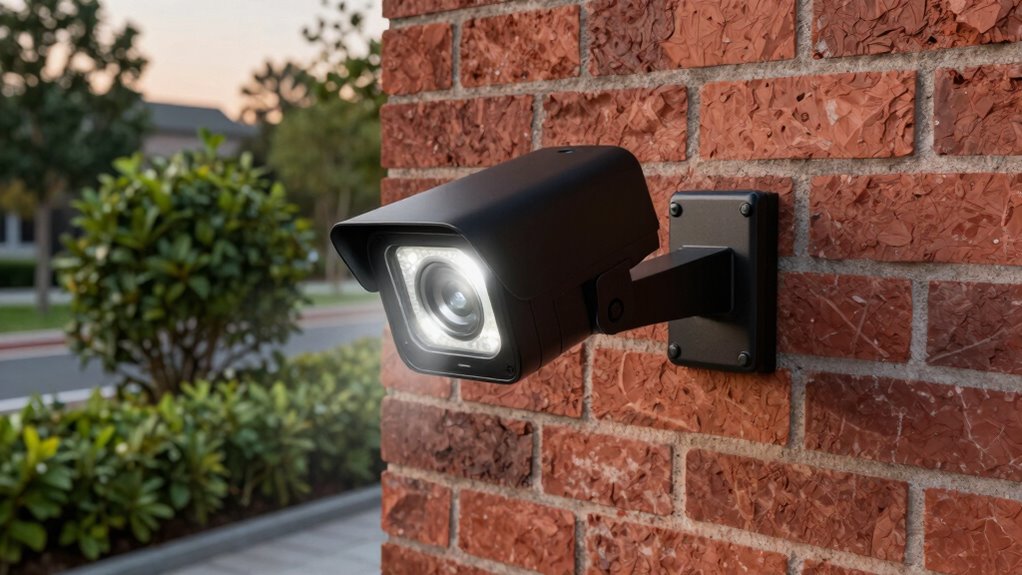
False motion alerts can be be a frustrating nuisance, but adjusting your floodlight camera angle can considerably reduce them. The key lies in proper lighting optimization and camera positioning, which work together to guarantee your camera detects only genuine motion. When your floodlight camera is set up correctly, it minimizes false alarms caused by moving shadows, branches, or animals, saving you time and reducing unnecessary notifications.
Proper setup reduces false alarms by optimizing lighting and camera angles for accurate motion detection.
First, focus on lighting optimization. Bright, uneven lighting can cause your camera to mistake shadows or reflections for movement. To mitigate this, position your floodlights so they illuminate the area evenly, reducing harsh shadows. Avoid placing lights directly behind trees or near reflective surfaces that can cause flickering or glare. Proper lighting not only clarifies what the camera sees but also helps it distinguish between actual motion and harmless environmental changes. When the light is consistent, your camera can better recognize movement that warrants your attention and ignore minor, irrelevant motions. Additionally, understanding how proper lighting influences camera recognition can dramatically improve detection accuracy. Ensuring adequate illumination is also essential because poor lighting conditions can increase false alerts.
Camera positioning is equally vital. You want to angle the camera in a way that minimizes the likelihood of capturing moving branches, swaying trees, or passing animals. Typically, angling the camera downward and toward the area you want to monitor helps focus detection on the intended zone. Avoid pointing the camera directly at areas prone to movement, such as trees or bushes, as this increases false alerts. Instead, aim your camera slightly away from these objects, so it captures only the key entry points or activity zones. Keep in mind that a good rule of thumb is to position the camera at a height where it can clearly see the area without being too close to objects that could move in the wind. Proper camera placement can significantly reduce false alarms caused by environmental factors. Correct placement also helps in minimizing the impact of changing shadows and reflections that often trigger false alerts. Being mindful of environmental factors during setup can further improve your camera’s accuracy and reduce false triggers.
Floodlight camera angle adjustment
As an affiliate, we earn on qualifying purchases.
As an affiliate, we earn on qualifying purchases.
Frequently Asked Questions
Can Adjusting the Camera Angle Affect Night Vision Performance?
Adjusting the camera angle can affect night vision performance because it influences infrared sensitivity and night vision calibration. When you change the angle, the camera might not detect infrared light as effectively, reducing visibility in low light. To optimize night vision, guarantee the camera is properly calibrated and positioned to maximize infrared sensitivity. Proper alignment helps improve clarity and prevents issues like blurry or dark images during nighttime surveillance.
What Are Common Signs of a Faulty Floodlight Camera?
Did you know that nearly 30% of camera malfunctions are due to simple issues? If your floodlight camera isn’t alerting properly or detects false alarms, it might be faulty. Signs include inconsistent motion detection sensitivity, blurry images, or unresponsive camera lens. Regular camera lens maintenance can prevent these problems. If these signs persist, consider testing the sensor or replacing the unit to guarantee reliable security.
How Often Should I Recalibrate the Camera Angle?
You should recalibrate your floodlight camera’s angle adjustment every 3 to 6 months to guarantee peak motion detection and security. Regular camera calibration helps maintain accurate alerts and prevents false alarms caused by misaligned angles. When recalibrating, adjust the camera angle so it covers high-traffic areas without blind spots. Consistent angle adjustments keep your camera functioning correctly and provide reliable security coverage over time.
Does Weather Impact the Effectiveness of the Floodlight Camera?
Ever wondered if weather impact could cause false alerts? Weather conditions like rain, snow, or fog can affect your floodlight camera’s detection accuracy, leading to false alerts. Harsh weather may obscure the camera’s view or trigger its motion sensors unnecessarily. To minimize this, make sure your camera is properly calibrated and protected from the elements. Regularly check and clean the lens for peak performance, regardless of weather changes.
Are There Recommended Tools for Precise Camera Angle Adjustments?
For precise camera angle adjustments, use tools like a tripod or a mounting bracket with adjustable joints. These tools help you achieve accurate camera mounting and facilitate easy angle calibration. A level or a bubble spirit level can also verify your camera is perfectly aligned horizontally and vertically. By using these tools, you can fine-tune the camera’s position, reducing false motion alerts caused by incorrect angles and guaranteeing maximum coverage.
Conclusion
By adjusting your floodlight camera angle, you can drastically reduce false motion alerts—think of it as setting a modern-day sentinel to watch only what’s important, rather than a nosy neighbor peeking over the fence. Remember, a well-positioned camera is like a finely tuned siren, alerting you to genuine threats without the nuisance of false alarms. So, take control and aim it wisely; before you know it, your security setup will be as reliable as your trusty old rotary phone.
Evergreen bestsellers Picks
bestsellers
As an affiliate, we earn on qualifying purchases.