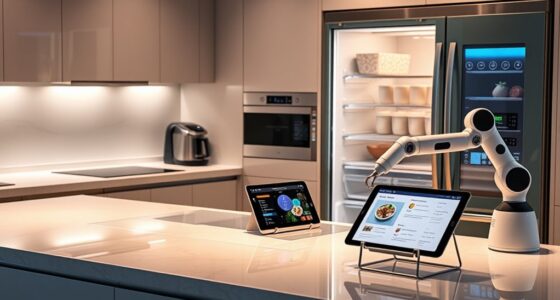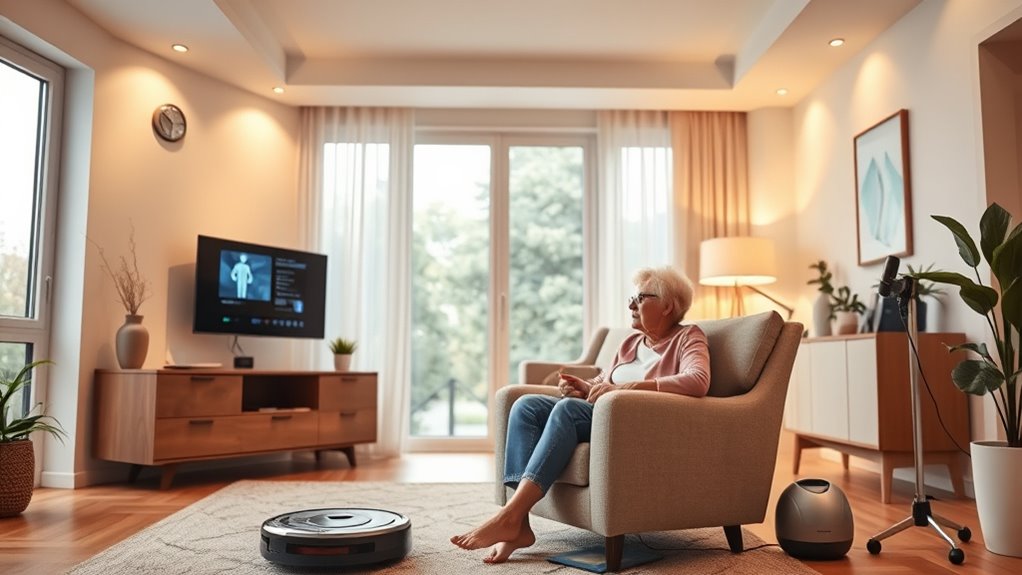

Smart home technology can make aging in place safer by providing devices that monitor movement, prevent falls, and offer quick emergency assistance. Voice-activated assistants and smart lighting help you navigate easily, while sensor-based systems keep track of your safety and health. With privacy and security in mind, these tools support independence without intruding on your privacy. If you continue exploring, you’ll discover how to create a comfortable, secure home tailored to your needs.
Key Takeaways
- Smart devices like automatic lighting and fall detection systems enhance safety and reduce accident risks for seniors aging in place.
- Voice assistants and remote management tools support independence by providing reminders and easy control over home functions.
- Integrating technology allows continuous monitoring and emergency alerts while respecting privacy through secure data practices.
- User-friendly systems enable seniors and caregivers to manage devices effortlessly, promoting comfort and ongoing independence.
- Thoughtful implementation of smart home solutions creates a secure, supportive environment that empowers seniors to age safely at home.

As the population ages, more families are turning to smart home technology to guarantee their elderly loved ones stay safe, comfortable, and independent. One of the most helpful aspects of this technology is the use of assistive devices, which can markedly improve daily living. These devices include smart lighting that adjusts automatically, voice-activated assistants that help with reminders or calling for help, and sensor-based systems that monitor movement and detect falls. With these tools, your loved ones can navigate their homes more easily, reducing the risk of accidents and ensuring they get help promptly if needed. Assistive devices can also support medication management, reminding seniors to take their pills on time, and providing alerts if something seems amiss. The convenience and safety these devices offer make aging in place not only possible but more comfortable and secure. Additionally, understanding the legal guidelines for privacy and data protection is crucial when implementing these systems to ensure your loved ones’ information remains secure.
However, integrating smart home technology isn’t without concerns, particularly around privacy. As these devices collect data about daily routines, movements, and even health information, privacy concerns naturally arise. You might worry about who can access this data and how it’s protected. It’s essential to choose reputable smart home systems with strong security measures, such as encryption and user controls over data sharing. Educating your loved ones about the importance of privacy settings can also help ensure their information is protected. Transparency about what data is collected and how it’s used is key to building trust in these technologies. While the benefits of assistive devices are clear, addressing privacy concerns upfront guarantees that your loved ones feel safe and comfortable with their new setup.
Furthermore, you should consider how these devices are integrated into everyday life. Opt for systems that are user-friendly and require minimal maintenance. Many smart devices now come with remote management options, allowing you or caregivers to oversee the system and make adjustments as needed. This can provide peace of mind, knowing that help is just a tap or voice command away, even if you’re not physically present. Remember, the goal is to enhance independence without compromising security or privacy. As you explore different options, prioritize those that balance technological support with respect for your loved one’s privacy and autonomy.
Ultimately, smart home technology, when thoughtfully implemented, can transform aging-in-place into a safer, more manageable experience. It empowers your loved ones to maintain independence while giving you the reassurance that they’re protected. By choosing assistive devices carefully and addressing privacy concerns proactively, you can create a home environment that supports aging gracefully and securely.
smart fall detection system for elderly
As an affiliate, we earn on qualifying purchases.
As an affiliate, we earn on qualifying purchases.
Frequently Asked Questions
How Affordable Are Smart Home Systems for Elderly Care?
You might wonder how affordable smart home systems are for elderly care. The cost comparison varies depending on features and device brands, making affordability factors key. Basic setups are often budget-friendly, while advanced systems cost more. To find the best fit, consider your needs and budget. Many companies offer financing or discounts, helping you access technology that makes aging-in-place safer without overspending.
Can Smart Home Devices Be Customized for Individual Needs?
Ever wondered if smart home devices can truly meet your unique needs? Absolutely! Many devices come with personalization options and device adaptability, allowing you to tailor features like alerts, voice commands, and automation to your lifestyle. This customization guarantees you get the most out of your technology, making your home safer and more comfortable. So yes, smart home devices can be customized precisely for what matters most to you.
What Are the Privacy Concerns With Monitoring Technology?
You might worry about privacy concerns when using monitoring technology, especially related to data privacy and surveillance ethics. While these devices keep you safe and help loved ones, they collect personal information that could be misused or accessed without permission. It’s essential to understand how your data is stored and shared, and to choose systems that prioritize your privacy, ensuring you feel secure while maintaining your independence.
How Easy Is It for Seniors to Operate Smart Home Devices?
You might wonder how easy it is for seniors to operate smart home devices. With a user-friendly interface and voice command features, these devices are designed to be intuitive and accessible. You can control lights, thermostats, or even ask questions with simple voice commands, making daily tasks easier. This way, seniors can confidently manage their environment, fostering independence while reducing frustration or confusion.
What Emergency Support Options Are Integrated With Smart Home Systems?
Think of your support network as a safety net woven with emergency response features. Smart home systems integrate emergency support options like automated alerts, two-way communication, and direct connections to emergency services. When you press an emergency button or if sensors detect a fall, these systems instantly notify responders, ensuring help arrives swiftly. This seamless emergency response enhances independence while providing reassurance that support is always just a tap away.
voice-activated assistant for seniors
As an affiliate, we earn on qualifying purchases.
As an affiliate, we earn on qualifying purchases.
Conclusion
By embracing smart home technology, you can make aging-in-place safer and more comfortable. Some worry it’s too complicated or expensive, but many solutions are user-friendly and affordable, designed to fit your needs. With a little setup, you’ll enjoy greater independence and peace of mind, knowing help is just a button away. Don’t let concerns hold you back—technology can truly enhance your quality of life at home.
automatic smart lighting for elderly safety
As an affiliate, we earn on qualifying purchases.
As an affiliate, we earn on qualifying purchases.
senior medication reminder device
As an affiliate, we earn on qualifying purchases.
As an affiliate, we earn on qualifying purchases.