
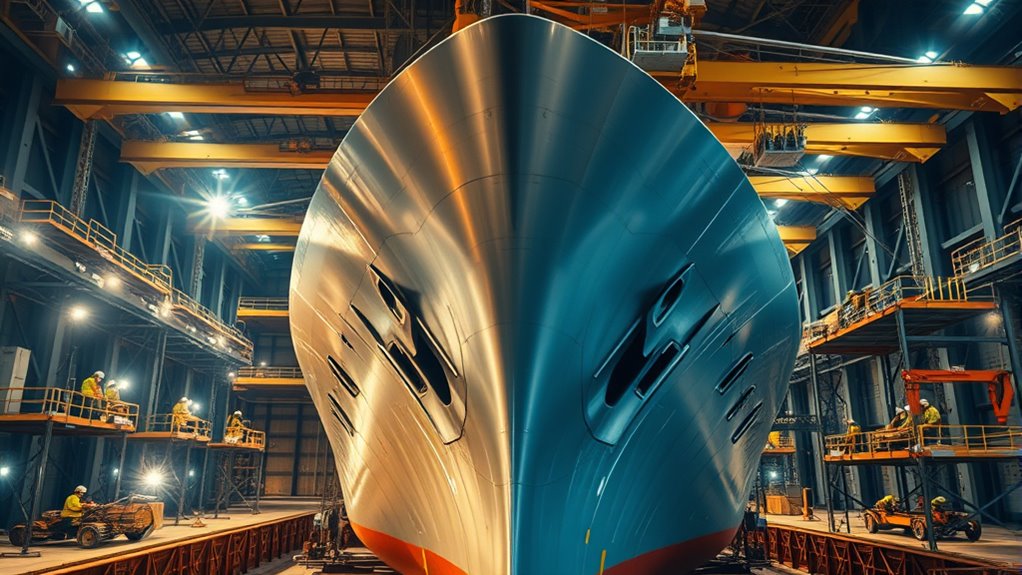

When you schedule a dry dock, your ship is taken out of the water and moved into a specialized basin or dry dock. This allows you to examine, repair, and upgrade hulls, engines, and systems safely. During refurbishments, you can remove marine growth, apply coatings, or install new equipment to improve efficiency and safety. Continuing with this process helps guarantee your vessel stays compliant, operational, and ready for future voyages.
Key Takeaways
- Ships are moved into a dry dock, which is then sealed and drained to expose the hull and underwater components.
- Once dry, technicians inspect, clean, and repair the hull, including removing marine growth and applying protective coatings.
- Upgrades to systems like propulsion, navigation, or refrigeration can be integrated during the dry dock process.
- After repairs and upgrades, the dry dock is flooded, and the vessel is carefully floated out for testing and commissioning.
- Regular refurbishments ensure safety, compliance, and efficiency, preventing costly failures and extending the vessel’s lifespan.
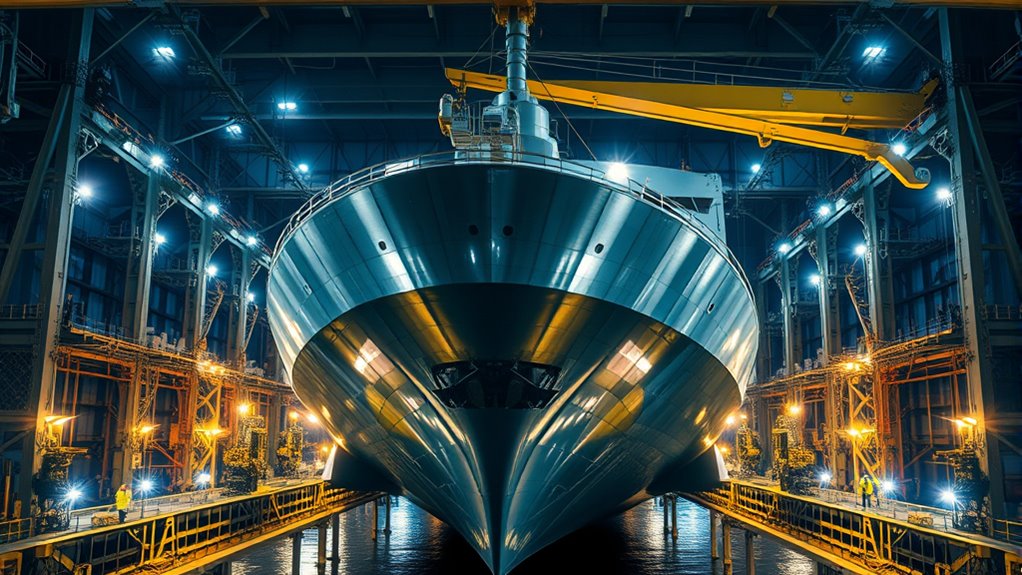
Refurbishments and dry docks are indispensable for maintaining the safety, efficiency, and longevity of ships. When you consider the importance of ship maintenance, it’s clear that regular dry docking plays a critical role in keeping vessels seaworthy. During dry dock procedures, your ship is lifted out of the water, allowing technicians to access its hull and underwater components directly. This process isn’t just about repairs; it’s about inspecting, cleaning, and upgrading essential parts to prevent future issues. By doing so, you reduce the risk of corrosion, damage, and operational failures that could compromise safety or lead to costly breakdowns. Proper ship maintenance through dry docks ensures that your vessel remains compliant with maritime regulations, which often mandate periodic inspections and repairs. Regular dry docking also facilitates the application of protective coatings, which are crucial for preventing corrosion and extending the lifespan of hull materials.
Regular dry docks ensure vessel safety, compliance, and longevity through essential inspections, repairs, and upgrades.
Beyond safety, dry docking substantially impacts the environmental footprint of your ship. Over time, marine growth like algae and barnacles accumulates on the hull, increasing drag and fuel consumption. This not only raises operational costs but also escalates your vessel’s environmental impact by boosting greenhouse gas emissions. Regular dry docks allow you to remove these organisms and apply anti-fouling coatings, which are designed to minimize future buildup. This process helps your ship operate more efficiently, reducing fuel use and emissions. Additionally, inspections help identify and repair any leaks or structural weaknesses that could cause pollution or environmental hazards. By maintaining your ship properly, you’re actively reducing the ecological footprint of your maritime operations.
During a dry dock, you’ll find that the process involves more than just fixing existing problems. It’s an opportunity to upgrade systems, install new technology, and improve overall performance. Modern materials and techniques can be incorporated to enhance fuel efficiency and lower emissions further. For example, new hull coatings can decrease water resistance, and updated propulsion systems can make your vessel more eco-friendly. These improvements not only extend the lifespan of your ship but also demonstrate your commitment to sustainable shipping practices. Additionally, understanding the Refrigeration Cycle helps in ensuring that cooling and climate control systems onboard operate efficiently, contributing to overall vessel performance.
In essence, dry docks are essential for proactive maintenance, helping you avoid unexpected failures and costly repairs at sea. They serve as a thorough check-up for your vessel, ensuring it remains safe, environmentally compliant, and operationally efficient. By prioritizing regular refurbishments and dry dockings, you’re investing in your ship’s future—saving money, reducing environmental impact, and ensuring smooth sailing for years to come.
As an affiliate, we earn on qualifying purchases.
Frequently Asked Questions
How Long Does a Typical Refurbishment Process Take?
A typical refurbishment process usually takes anywhere from a few weeks to several months, depending on the ship’s size and complexity. You’ll want to take into account shipyard technology and thorough refurbishment planning to streamline the process. By coordinating these elements, you can reduce downtime and ensure efficient repairs. Keep in mind that detailed planning and advanced tech are key to completing refurbishments on time without sacrificing quality.
What Safety Measures Are in Place During Dry Dock Operations?
You’re safe because strict safety protocols are in place during dry dock operations, like harnesses, safety nets, and protective gear. Emergency procedures are drilled regularly, ensuring everyone knows exactly what to do if something goes wrong—like a shipwreck of chaos. Supervisors closely monitor the work, and safety signs keep hazards clear, making sure you stay protected while the team works meticulously to prevent accidents.
Can Ships Undergo Refurbishments While Still in Service?
Yes, ships can undergo refurbishments while still in service, especially with proper planning. You’ll find that ship design allows for modular upgrades, minimizing downtime. Crew training is essential to safely perform these refurbishments without disrupting operations. By coordinating repairs during scheduled port calls or dry dock periods, you guarantee your vessel remains operational and efficient, all while integrating necessary upgrades seamlessly into its ongoing service life.
What Are the Environmental Impacts of Dry Docking?
Think of dry docking as the ship’s silent guardian, but it’s not without impact. You might cause marine pollution through debris or chemicals, and ballast water management becomes essential to prevent invasive species from hitching a ride. These environmental concerns highlight the need for strict regulations and eco-friendly practices during dry dockings, ensuring your vessel’s renewal doesn’t come at the ocean’s expense.
How Are Parts Selected and Replaced During Refurbishments?
During refurbishments, you select parts based on thorough component inspection, identifying worn or damaged items. You then choose suitable marine coatings to protect new components from corrosion. This process guarantees compatibility and durability. You replace parts systematically, often upgrading to advanced materials. By carefully inspecting and selecting each component, you optimize the vessel’s performance, longevity, and safety, ensuring it’s well-maintained for future operations.
Conclusion
Refurbishments and dry docks keep ships in top shape, ensuring safety and efficiency. Did you know that a dry dock can take just a few days to complete a major overhaul? By understanding how these processes work, you realize their vital role in maritime operations. Regular maintenance not only extends a vessel’s lifespan but also saves money in the long run. So, next time you see a ship in dry dock, remember it’s all about keeping the sea safe and smooth.