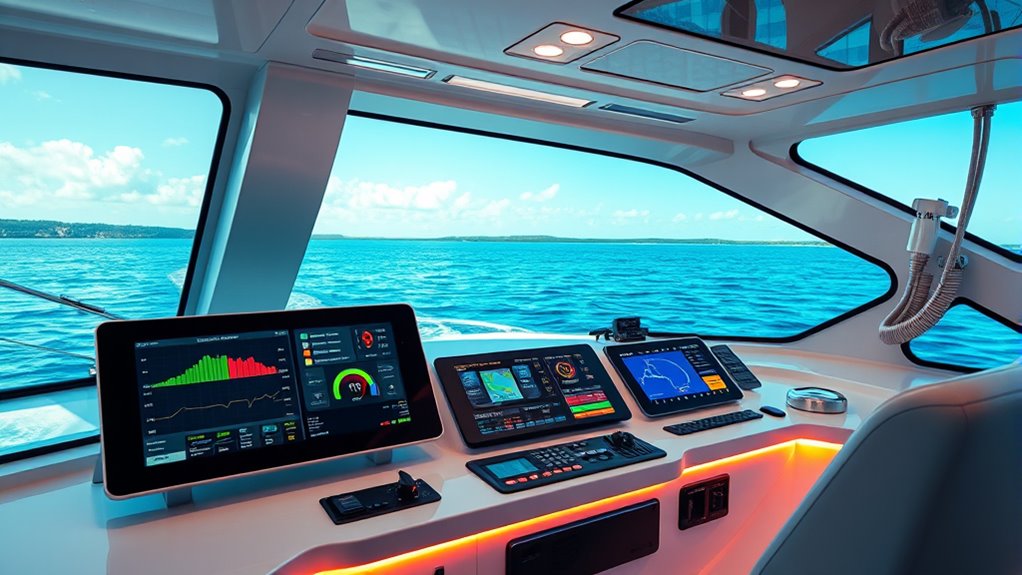

To effectively monitor leaks and utilities while you cruise, regularly check your plumbing, fuel lines, and electrical systems for signs of leaks, corrosion, or moisture. Use smart monitoring tools that provide real-time alerts for water, fuel, and power issues, so you can respond quickly before costly damage occurs. Keep an eye on battery health and solar panel performance, cleaning and inspecting them routinely. Staying proactive guarantees your vessel stays safe and efficient—if you maintain these steps, you’ll discover more ways to optimize your vessel’s maintenance.
Key Takeaways
- Install smart leak detection systems for real-time alerts on water, fuel, and utility leaks.
- Regularly inspect hoses, fittings, and batteries to identify early signs of leaks or damage.
- Use monitoring tools to track voltage, temperature, and system performance for efficient utility management.
- Clean solar panels regularly to maximize energy absorption and prevent system overload.
- Conduct routine checks of plumbing and utility connections to catch and fix leaks before they cause major issues.
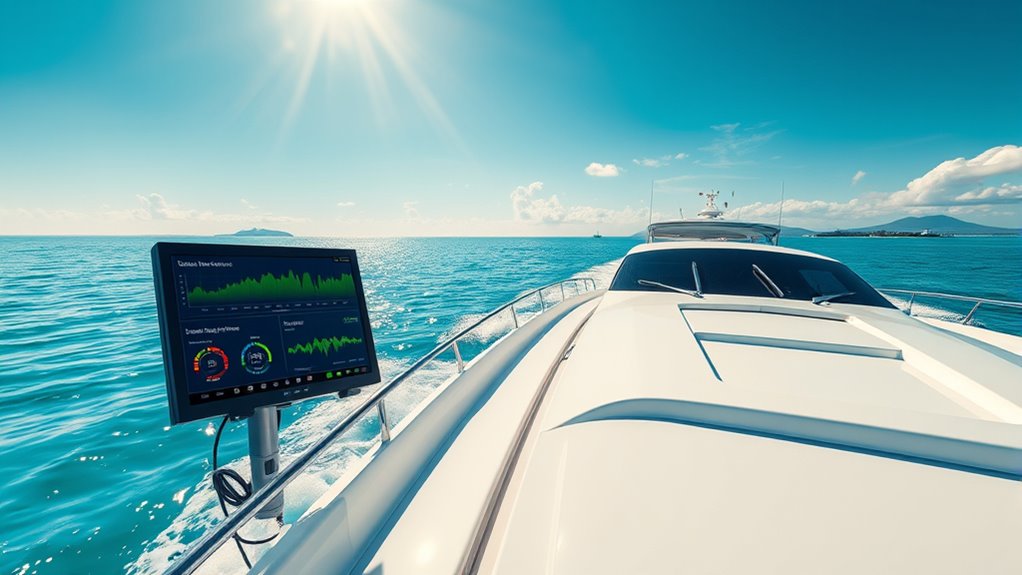
When you’re cruising, it’s easy to overlook small leaks and utility issues that can lead to costly damage or wasted resources. Staying vigilant is essential to avoid surprises that can disrupt your journey or drain your budget. One vital aspect is regularly checking your solar panel maintenance to guarantee your energy system operates efficiently. Clean the panels to maximize sunlight absorption, and inspect for debris, dirt, or damage that could impair performance. Proper solar panel upkeep helps you harness maximum power, keeping your batteries charged without overtaxing your system. Alongside this, battery health monitoring becomes indispensable, as batteries are the backbone of your power storage. Use monitoring tools to track voltage, temperature, and charge cycles. If you notice irregularities, such as rapid voltage drops or overheating, address them immediately—ignoring these signs can shorten your batteries’ lifespan or cause complete failure. Maintaining ideal battery health ensures reliable energy storage, so your systems run smoothly even on cloudy days or during extended cruises.
While focusing on energy systems, don’t forget to keep an eye on plumbing and fluid leaks. Small drips from hoses or fittings might seem insignificant but can quickly escalate into major repairs if left unchecked. Regularly inspect all visible pipes, valves, and fittings, looking for signs of corrosion, cracks, or moisture. Address leaks promptly by tightening fittings or replacing damaged components. It’s also wise to keep a routine of checking your water and fuel lines, especially after rough seas or long voyages, as vibrations can loosen fittings over time. Catching leaks early not only prevents water damage or fuel wastage but also maintains your vessel’s safety and operational efficiency.
Additionally, understanding how to detect leaks early can save you significant time and money by preventing larger issues before they develop. In addition to physical inspections, invest in smart monitoring systems that can alert you to issues in real-time. These systems can track water levels, detect leaks, and monitor your power systems’ performance remotely. Having instant alerts means you can respond quickly, avoiding costly repairs or resource waste. Remember, proactive maintenance saves money and reduces stress, giving you peace of mind as you cruise. By integrating routine checks of your solar panels, battery health monitoring, and leak detection, you stay ahead of potential problems. This all-encompassing approach ensures your vessel remains in top shape, letting you focus on enjoying your journey without unexpected interruptions. Staying attentive to these details isn’t just about maintenance; it’s about safeguarding your adventure and making every mile count.
smart leak detection system for boats
As an affiliate, we earn on qualifying purchases.
As an affiliate, we earn on qualifying purchases.
Frequently Asked Questions
What Tools Are Best for Detecting Monitor Leaks?
You should use electronic leak detection tools like ultrasonic sensors or gas leak detectors, which are highly effective. Make certain proper sensor calibration for accurate results. These leak detection methods quickly identify even small leaks, saving you time and resources. Regularly checking your equipment with these tools helps prevent costly water or utility damage, especially when monitoring systems while you cruise. Trust these methods to keep your utilities leak-free and functioning smoothly.
How Often Should Utility Checks Be Performed During a Cruise?
Did you know that regular utility checks can reduce leaks by up to 30%? You should perform maintenance routines daily during your cruise, especially if you’re managing a large vessel. Incorporate crew training into your schedule so everyone’s prepared to spot issues early. This proactive approach helps catch leaks quickly, saving water and money. Consistent checks guarantee smooth sailing and efficient utility management throughout your voyage.
What Are Common Signs of Monitor Leaks in Utility Systems?
You’ll notice common signs of monitor leaks, like unexpected drops in pressure or unusual sensor readings. If you see fluctuating levels or alarms, it could indicate a leak. Regular sensor calibration helps detect leaks early, preventing major issues. Stay vigilant by checking for dampness or corrosion around utility connections. Promptly addressing these signs guarantees leak prevention and keeps your system running smoothly during your cruise.
Can Monitor Leaks Cause Long-Term Damage if Unnoticed?
Ignoring monitor leaks can cause long-term damage, like a slow leak that erodes a foundation over time. If you don’t oversee equipment regularly, small leaks might go unnoticed, leading to costly repairs later. Leak prevention relies on vigilant monitoring to catch issues early. Without this, small leaks can escalate, damaging your system and increasing maintenance costs. Stay proactive to protect your investment and ensure system longevity.
Are There Automated Systems to Monitor Leaks Remotely?
Yes, there are automated systems that monitor leaks remotely. You can use remote sensor integration to connect leak detection sensors with your smartphone or home automation system. Leak detection apps help you receive instant alerts if a leak is detected, allowing you to act quickly. These systems provide continuous monitoring, giving you peace of mind whether you’re at home or away, and help prevent long-term damage caused by unnoticed leaks.
marine battery monitor
As an affiliate, we earn on qualifying purchases.
As an affiliate, we earn on qualifying purchases.
Conclusion
So, next time you hit the road, remember that keeping an eye on leaks and utilities isn’t just about saving money—it’s about peace of mind. Think of it as your RV’s secret superpower, helping you catch problems early. Some say it’s like having a sixth sense for trouble, and honestly, they might be onto something. Stay vigilant, trust your instincts, and your adventures will stay smooth and worry-free. Happy cruising!
solar panel cleaning kit for boats
As an affiliate, we earn on qualifying purchases.
As an affiliate, we earn on qualifying purchases.
boat plumbing inspection tools
As an affiliate, we earn on qualifying purchases.
As an affiliate, we earn on qualifying purchases.