
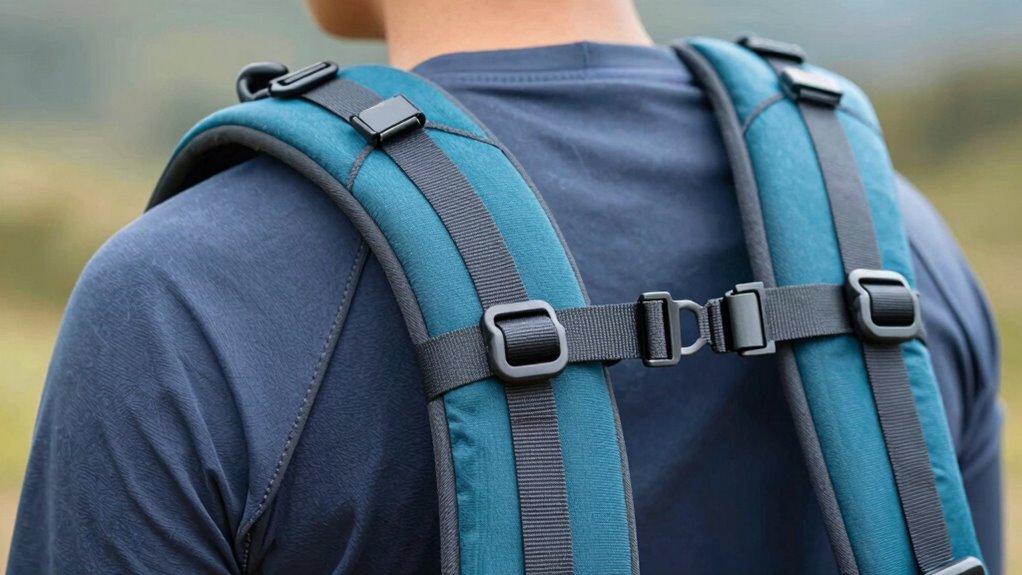

To stop shoulder pain, start by loosening the straps before putting on your travel backpack. Slide the shoulder straps to fit snugly against your back without being tight, and position the top of the pack just below your shoulders. Tighten straps gradually to distribute weight evenly and avoid pressure points. Adding and adjusting the sternum and waist straps further stabilizes the load, reducing strain. Keep exploring to discover how these tips can make your travels more comfortable.

Get travel and outdoor gear delivered free with Prime
- Fast, free delivery on millions of items
- Prime Video, Amazon Music and more included
- Member-only deals all year
Key Takeaways
- Loosen straps before putting on the backpack to ensure proper initial fit.
- Adjust shoulder straps so they are snug against your back without causing tightness or discomfort.
- Position the backpack’s top just below your shoulders for optimal weight distribution.
- Gradually tighten straps to achieve even pressure on both shoulders, avoiding strain.
- Use additional stabilization features like the sternum and waist straps to reduce shoulder load and enhance comfort.
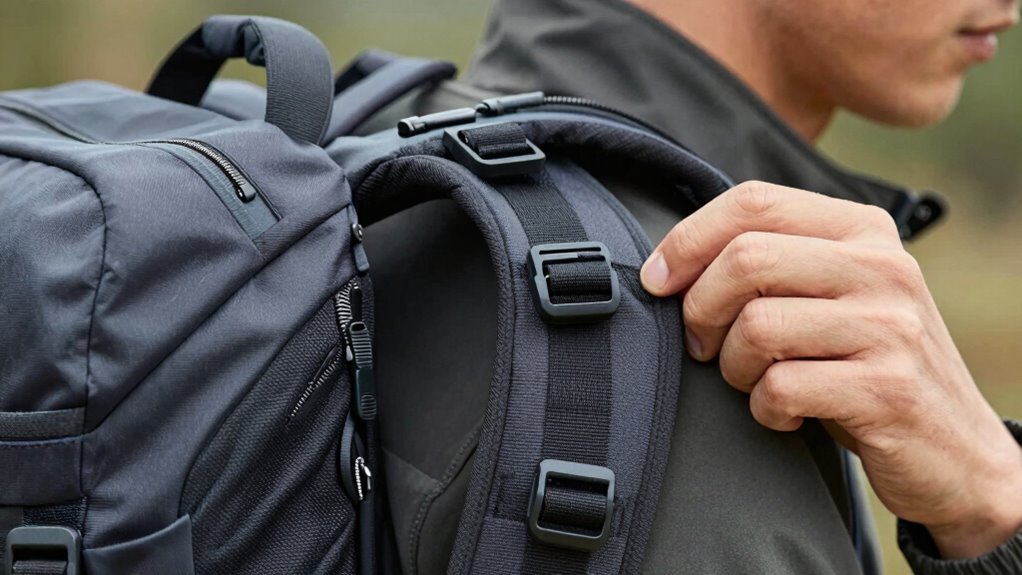
Travel Backpacks
Are you looking for a backpack that can keep up with your adventures? If so, understanding how to adjust your straps properly is vital to prevent shoulder pain and make your travels more comfortable. The right strap adjustment ensures that your backpack distributes weight evenly, reducing strain on your shoulders and back. But before diving into strap tweaks, it’s essential to consider the backpack’s materials. High-quality backpack materials like durable nylon or polyester can withstand the rigors of travel, resist water, and maintain their shape over time. A sturdy material also means your pack will last longer, providing consistent support for your packing tips and gear. When choosing a backpack, look for reinforced stitching and quality zippers, which complement good strap adjustments and overall comfort.
Once you’ve selected a backpack with reliable materials, focus on packing smart. Effective packing tips include placing heavier items close to your back and centered between your shoulders. This keeps the load balanced and prevents your pack from pulling backward, which can cause shoulder pain. Use compartments and packing cubes to organize your gear efficiently, so you don’t have to constantly readjust your load. Proper packing helps maintain a stable center of gravity, making strap adjustments more effective and comfortable. Additionally, choosing ergonomic designs can further enhance comfort and reduce fatigue during extended wear.
Adjusting your backpack straps is simple but powerful. Start by loosening the straps before putting on the pack, then slide the shoulder straps up or down so that the pack sits snugly against your back. The straps shouldn’t be so tight that they cut into your shoulders, nor so loose that the pack shifts with every movement. The ideal fit is when the top of the pack rests just below your shoulders, and the bottom sits comfortably around your lower back. Tighten the straps gradually, ensuring even pressure on both shoulders. Use the sternum strap across your chest to stabilize the load and prevent the straps from slipping, especially during active movements. If your backpack has a waist belt, adjust it to sit comfortably on your hips, helping transfer some weight from your shoulders to your hips.
adjustable travel backpack straps
As an affiliate, we earn on qualifying purchases.
As an affiliate, we earn on qualifying purchases.
Frequently Asked Questions
How Often Should I Adjust My Backpack Straps During Travel?
You should adjust your backpack straps as needed, ideally every time you notice discomfort or after changing your load. The strap material, like padded or adjustable nylon, influences how often you’ll tweak them. Regular adjustments help maintain proper weight distribution and prevent shoulder pain. Don’t wait until discomfort worsens—make small tweaks frequently during your travel to stay comfortable and avoid strain.
Can Strap Adjustments Prevent Long-Term Shoulder Injuries?
Think of strap tension as the delicate dance that keeps your shoulders in perfect harmony. When you adjust your straps for proper shoulder alignment, you prevent unnecessary strain and long-term injuries. Proper strap tension acts like a guiding hand, ensuring your backpack moves with you, not against you. Consistent adjustments maintain this balance, safeguarding your shoulders from future pain and injury, so you can travel confidently and comfortably.
Are There Specific Strap Types Best for Different Body Types?
Yes, certain strap types work better for different body types. You should look for ergonomic strap designs that contour to your shoulders and padded strap options for extra comfort. If you have narrow shoulders, opt for adjustable straps that can be customized for a secure fit. For broader shoulders, wider straps distribute weight evenly, reducing strain. Choosing the right strap type helps prevent discomfort and long-term shoulder issues.
How Do I Know if My Backpack Straps Are Properly Fitted?
You’ll know your backpack straps are properly fitted if the strap padding feels comfortable and evenly supports your shoulders. Adjust the strap positioning so they sit snug without digging in or slipping off. Make sure the straps aren’t too tight or loose, and the padding distributes weight evenly. Test the fit by walking around—if you feel balanced and free of shoulder pain, you’ve got it right.
What Materials Are Best for Adjustable Backpack Straps?
For adjustable backpack straps, look for materials with good strap padding and buckle durability. Padded straps provide comfort and reduce shoulder strain, especially during long hikes or travel. Choose straps made from sturdy nylon or polyester, which resist wear and tear. Durable metal or high-quality plastic buckles ensure secure adjustments and longevity. Prioritize these materials to keep your backpack comfortable and reliable, even on tough adventures.
Conclusion
Proper strap adjustment can make all the difference on your travels. Imagine carrying a heavy backpack all day, only to feel shoulder pain afterward—that’s avoidable. For example, Jane adjusted her straps correctly, and her trip to Europe was comfortable from start to finish. By taking a moment to find the perfect fit, you’ll prevent discomfort and enjoy your adventures more fully. So, tweak those straps and travel pain-free!
Halloween Picks
halloween
As an affiliate, we earn on qualifying purchases.