
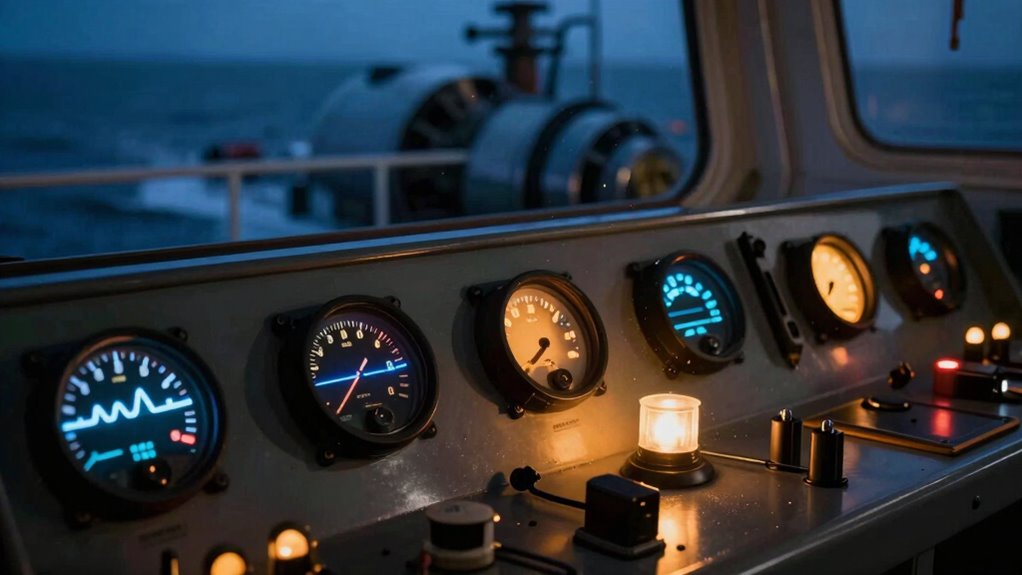

The onboard noise pattern disrupting your sleep involves rhythmic engine cycles that create predictable hums, combined with irregular creaks and thuds from structural vibrations. These sounds follow specific patterns, making it hard for your brain to ignore them, which prevents you from reaching deep sleep stages. Continuous noise activates your stress response, keeping you alert. Understanding these patterns can help you find ways to better manage your sleep environment and improve rest at sea. More details are just ahead.
Key Takeaways
- Rhythmic engine cycles create predictable hums that can disrupt deep sleep stages.
- Irregular creaks and thuds from structural vibrations generate persistent background noise.
- Repetitive and unpredictable sounds activate the stress response, hindering restful sleep.
- Sound patterns echo through hull and cabins, making noise difficult to ignore.
- Understanding these patterns allows for strategic noise mitigation and improved sleep management.
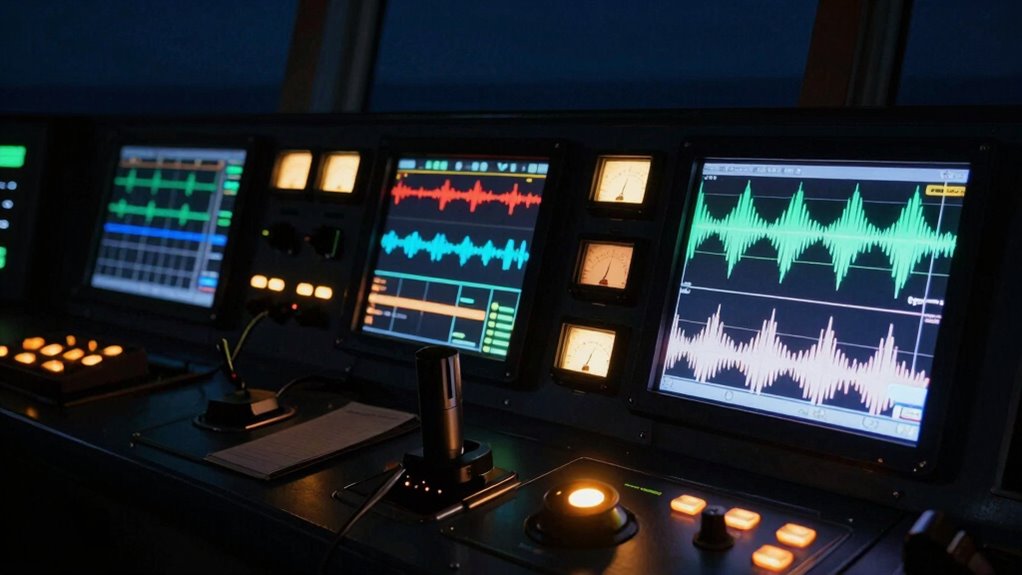
If you’ve ever struggled to sleep on a ship, you’re not alone. The constant hum of engines, creaking metal, and distant horns can make restful sleep feel impossible. This persistent noise isn’t just an annoyance; it’s rooted in the science of marine acoustics, which studies how sound travels underwater and through ship structures. These sounds create a pattern that can markedly disrupt your sleep, making you feel tired and groggy during the day. Understanding this onboard noise pattern helps explain why sleep disruption is so common at sea, and it can guide you to find better ways to rest despite the noise.
Marine acoustics reveals that ships produce a complex sound environment, with certain frequencies and rhythms dominating the onboard soundscape. These sounds often follow a predictable pattern, influenced by engine cycles, machinery operation, and vibrations. For example, engines tend to cycle on and off, producing a rhythmic pattern of loud hums followed by quieter periods. Additionally, structural noises—like metal expanding and contracting with temperature changes—generate irregular, but consistent, creaks and thuds. These sounds echo through the ship’s hull and cabins, creating a background noise that’s difficult to ignore. This pattern of onboard noise leads directly to sleep disruption. When your brain is exposed to repetitive or unpredictable sounds, it struggles to shift into deep sleep stages. Instead, you remain in lighter sleep or wakefulness, constantly alert to the sounds around you. The brain perceives these noises as potential threats, activating your stress response and preventing restful sleep. Over time, this can cause fatigue, reduced cognitive function, and a weakened immune system—especially if the pattern persists night after night. Recognizing the specific sound patterns associated with marine acoustics can help you better anticipate and adapt to the onboard environment. These patterns are often predictable, which means that with awareness, you may be able to develop strategies to mitigate their impact. In addition, understanding the mechanics of marine acoustics can assist in designing better soundproofing solutions and sleep environments on ships. Recognizing the mechanics of marine acoustics helps you realize that your sleep difficulties aren’t simply about noise itself, but about how that noise follows predictable patterns that your brain can’t filter out. The rhythmic engine cycles and structural creaks become ingrained in your subconscious, making it harder to relax. To combat this, many seafarers use earplugs, white noise machines, or sleep masks to drown out or mask the disruptive sounds. Recognizing the patterns of onboard noise can also help you plan sleep schedules around quieter periods, if possible. Ultimately, knowing about marine acoustics and the specific noise patterns that cause sleep disruption empowers you to take steps toward better rest at sea. While the environment may never be completely silent, small adjustments can make a noteworthy difference in achieving more restful sleep despite the persistent, patterned sounds around you.
ship noise cancelling sleep mask
As an affiliate, we earn on qualifying purchases.
As an affiliate, we earn on qualifying purchases.
Frequently Asked Questions
How Can Crew Members Personally Reduce Noise Disruptions?
To reduce noise disruptions, you can practice personal noise mitigation by using earplugs or noise-canceling headphones during sleep. Establish sleep-friendly routines, like maintaining a consistent bedtime and avoiding screens before sleep. Keep your cabin door closed and choose a quiet sleeping area if possible. These steps help create a peaceful environment, making it easier to rest despite onboard noise, ensuring you stay refreshed for your duties.
Are There Specific Ship Types More Prone to Noisy Environments?
Yes, certain ship types tend to be noisier due to their design and ship acoustics. Cargo ships and ferries often have less cabin insulation, making them more prone to noise disruptions. Passenger ships, especially cruise liners, usually invest in better soundproofing to improve sleep quality. If you’re on a noisier vessel, consider choosing cabins located away from engine rooms or machinery spaces to minimize disturbances.
What Technological Solutions Exist to Monitor Onboard Noise Levels?
You’d think ships would come with a silent mode, right? Luckily, soundproofing innovations and acoustic monitoring tech now exist to save your sleep. Acoustic sensors continuously track noise levels, alerting crew to disturbances. Soundproofing solutions, from advanced insulation to noise-canceling barriers, help create calmer cabins. These technologies work together to monitor and reduce onboard noise, ensuring you get better rest—even amid the chaos of sea travel.
How Does Weather Impact Onboard Noise Patterns?
Weather impacts onboard noise patterns profoundly, especially through wind turbulence and engine vibrations. When wind turbulence increases, it causes unpredictable rattling and banging sounds, making sleep difficult. Similarly, rough seas can amplify engine vibrations as the vessel battles the storm, resulting in louder, inconsistent noise levels. You’ll notice these sounds fluctuate with weather changes, disrupting your sleep and making it harder to rest peacefully on board.
Can Ship Design Changes Improve Sleep Quality Significantly?
Yes, ship design changes can profoundly improve your sleep quality. By incorporating effective acoustic insulation and advanced soundproofing materials, designers can reduce onboard noise levels. These modifications minimize engine and machinery sounds, creating a quieter environment. You’ll notice better rest, less fatigue, and overall improved well-being. Investing in soundproofing solutions makes a real difference, helping you sleep more peacefully despite the bustling ship environment.
Conclusion
Understanding the noise patterns at sea is like tuning into a relentless symphony, making restful sleep feel out of reach. Once you recognize these sounds, you can better prepare and create a peaceful sanctuary amid the chaos. Remember, just as a lighthouse guides ships safely through storms, awareness of onboard noise helps you navigate toward restful nights. Don’t let the relentless noise be the anchor that sinks your sleep—take steps to quiet the storm and find your calm.