


For most travelers, I’d choose the Olympus OM-D E-M10 Mark IV as the best overall compact mirrorless camera for travel: its small Micro Four Thirds system and included zoom make it a balanced everyday kit. The Sony a6400 is a stronger fit if autofocus and a larger APS-C sensor matter more than simplicity, while the Panasonic LUMIX G100 is a compact choice for travelers who also make video. The central tradeoff is carrying a smaller, lighter kit versus gaining larger-sensor image quality, broader lens options, or more capable video tools. Two listings are bundles or repeats rather than distinct camera bodies, so I separate the camera’s merits from the extras. Read on for the full comparison and guidance on matching a camera to your travel style.

Get travel and outdoor gear delivered free with Prime
- Fast, free delivery on millions of items
- Prime Video, Amazon Music and more included
- Member-only deals all year
Complete the kit



Key Takeaways
- The E-M10 Mark IV is the most balanced travel pick: its compact body and 14-42mm EZ kit lens favor a light, everyday setup, while the Micro Four Thirds system keeps lens choices distinct from APS-C and full-frame options.
- The Sony a6400 prioritizes autofocus and APS-C flexibility: it suits travelers who photograph moving subjects, but its kit setup is less focused on the smallest possible overall system.
- The Canon EOS RP offers a full-frame route, not the lightest one: its 24-105mm kit lens gives broad framing flexibility, though the body-and-lens combination can be a less compact travel companion.
- The Nikon Z 30, Sony ZV-E10, and Panasonic G100 lean toward video: choose among them based on your preferred system and shooting needs rather than assuming all travel video features are interchangeable.
- The two 4K digital camera listings and repeated R100 listings are not equivalent alternatives: assess the named camera body, lens, and actual kit contents instead of treating accessory bundles or headline megapixels as proof of better travel performance.
| Canon EOS R100 Mirrorless Camera with RF-S 18-45mm f/4.5-6.3 IS STM Lens | 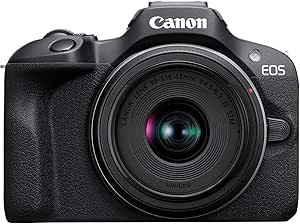 | Best Value for Simple Travel Stills | Sensor: 24.1MP APS-C CMOS | Processor: DIGIC 8 | Included lens: RF-S 18–45mm f/4.5–6.3 IS STM | VIEW ON AMAZON | See Our Full Breakdown |
| Olympus OM-D E-M10 Mark IV Silver Mirrorless Camera with 14-42mm EZ Lens, 20MP, 4K Video, Wi-Fi & Bluetooth |  | Best for Steady Handheld Travel Photos | Sensor: 20MP Micro Four Thirds CMOS | Image stabilization: 5-axis sensor-shift | Included lens: 14–42mm EZ, f/3.5–5.6 | VIEW ON AMAZON | See Our Full Breakdown |
| Nikon Z 30 Mirrorless Camera with NIKKOR Z DX 16-50mm Zoom Lens |  | Best for Travel Vlogging | Sensor: 20.9MP APS-C CMOS | Included lens: NIKKOR Z DX 16–50mm f/3.5–6.3 VR | Video: 4K | VIEW ON AMAZON | See Our Full Breakdown |
| Sony ZV-E10 APS-C Mirrorless Camera with 16–50mm Lens |  | Best for Travel Content Creators | Sensor: 24.2MP APS-C Exmor CMOS | Processor: BIONZ X | Included lens: Sony E-mount 16–50mm | VIEW ON AMAZON | See Our Full Breakdown |
| Sony Alpha a6400 APS-C Mirrorless Camera with 16–50mm Lens, Black | 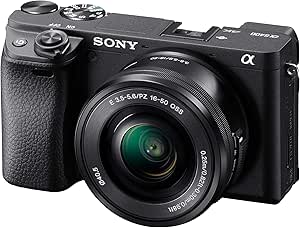 | Best for Viewfinder-Led Travel Photography | Sensor: APS-C CMOS, 20.1MP | Included lens: 16–50mm | Lens mount: Sony E | VIEW ON AMAZON | See Our Full Breakdown |
| 4K Digital Camera for Photography, 64MP Autofocus WiFi Vlogging Camera for YouTube, 3” Flip Screen, 16X Zoom, 32GB Card, Flash |  | Best for Casual Selfies and Vlogging | Photo resolution: 64MP | Video resolution: 4K | Zoom: 16X digital zoom | VIEW ON AMAZON | See Our Full Breakdown |
| 4K Digital Camera for Photography and Vlogging, 56MP Autofocus, 16X Zoom, 3″ Flip Screen, Includes 32GB Card |  | Best Simple Camera for First-Time Creators | Photo resolution: 56MP | Video: 4K at 30FPS | Zoom: 16X digital zoom | VIEW ON AMAZON | See Our Full Breakdown |
| Canon EOS RP Full-Frame Mirrorless Camera with RF 24-105mm Lens Kit |  | Best Full-Frame Travel Zoom Kit | Camera format: Full-frame mirrorless | Included lens: RF 24-105mm F4-7.1 IS STM | Image stabilization: Up to 5 stops | VIEW ON AMAZON | See Our Full Breakdown |
| Panasonic LUMIX G100 4K Mirrorless Camera with 12-32mm Lens |  | Best for Travel Video and Audio | Sensor: Micro Four Thirds | Video resolution: 4K | Included lens: 12-32mm | VIEW ON AMAZON | See Our Full Breakdown |
| Canon EOS R100 Mirrorless Camera with RF-S 18-45mm f/4.5-6.3 IS STM Lens |  | Best Entry-Level Interchangeable-Lens Kit | Sensor: 24.1MP APS-C CMOS | Processor: DIGIC 8 | Included lens: RF-S 18-45mm f/4.5-6.3 IS STM | VIEW ON AMAZON | See Our Full Breakdown |
| Canon EOS R100 Mirrorless Camera with RF-S18-45mm F4.5-6.3 IS STM Lens Kit, 24.1 Megapixel CMOS Sensor, 4K Video, RF Mount, 64GB Memory Card & Shoulder Bag |  | Best Travel Kit for First-Time Mirrorless Buyers | Sensor: 24.1MP APS-C CMOS | Included lens: RF-S 18–45mm f/4.5–6.3 IS STM | Video: 4K at 24 fps; Full HD at 60 fps; HD at 120 fps | VIEW ON AMAZON | See Our Full Breakdown |
| compact mirrorless camera for travel | Included lens | Video | Sensor | Connectivity |
|---|---|---|---|---|
| Canon EOS R100 Mirrorless Came | RF-S 18–45mm f/4.5–6.3 IS STM | 4K up to 24 fps | 24.1MP APS-C CMOS | Bluetooth, Wi-Fi, USB, HDMI |
| Olympus OM-D E-M10 Mark IV Sil | 14–42mm EZ, f/3.5–5.6 | 4K DCI 2160p | 20MP Micro Four Thirds CMOS | Bluetooth, Wi-Fi, Micro HDMI, Micro USB |
| Nikon Z 30 Mirrorless Camera w | NIKKOR Z DX 16–50mm f/3.5–6.3 VR | 4K | 20.9MP APS-C CMOS | Bluetooth, HDMI, USB-C, Wi-Fi |
| Sony ZV-E10 APS-C Mirrorless C | Sony E-mount 16–50mm | 4K up to 30p listed; product details also list 1080p maximum | 24.2MP APS-C Exmor CMOS | — |
| Sony Alpha a6400 APS-C Mirrorl | 16–50mm | 4K UHD, 3840 × 2160 | APS-C CMOS, 20.1MP | Wi-Fi, USB, Micro-HDMI |
| 4K Digital Camera for Photogra | — | — | — | Wi-Fi, USB-C |
| 4K Digital Camera for Photogra | — | 4K at 30FPS | — | — |
| Canon EOS RP Full-Frame Mirror | RF 24-105mm F4-7.1 IS STM | 4K UHD 2160p | — | — |
| Panasonic LUMIX G100 4K Mirror | 12-32mm | — | Micro Four Thirds | Webcam, Wi-Fi, Bluetooth |
| Canon EOS R100 Mirrorless Came | RF-S 18-45mm f/4.5-6.3 IS STM | 4K 24p; Full HD 60p | 24.1MP APS-C CMOS | — |
| Canon EOS R100 Mirrorless Came | RF-S 18–45mm f/4.5–6.3 IS STM | 4K at 24 fps; Full HD at 60 fps; HD at 120 fps | 24.1MP APS-C CMOS | — |
More Details on Our Top Picks
Canon EOS R100 Mirrorless Camera with RF-S 18-45mm f/4.5-6.3 IS STM Lens
The EOS R100 is a straightforward travel choice for buyers who want an APS-C sensor and a stabilized everyday zoom without a vlogging-first design. Its 24.1MP resolution gives room to crop vacation photos, while face and eye detection can help keep people and animals in focus. Compared with the Olympus OM-D E-M10 Mark IV, the Canon has a larger sensor, but the Olympus adds 5-axis in-body stabilization and a tilting touchscreen—handy when shooting at awkward angles. The R100’s included 18–45mm lens keeps the kit versatile, though its variable f/4.5–6.3 aperture is less suited to dim interiors. Its fixed screen also limits selfie and low-angle framing, and 4K is restricted to 24 fps with a central-area crop. I’d choose it for uncomplicated still photography, not creator-focused video.
Pros:- 24.1MP APS-C sensor supports detailed stills and cropping.
- Included 18–45mm lens covers common travel subjects and has optical stabilization.
- Face and eye detection can help with people-focused snapshots.
- Bluetooth and Wi-Fi support wireless connectivity.
Cons:- Fixed LCD cannot tilt for high, low, or self-facing compositions.
- 4K recording is limited to 24 fps and uses a central sensor area.
- The kit lens’s f/4.5–6.3 aperture is restrictive in low light.
Best for: Travelers moving up from a phone who want a compact APS-C camera, an included stabilized zoom, and simple controls for everyday photos.
Not ideal for: Vloggers and travelers who often frame themselves or shoot from low angles; the fixed screen and cropped 4K footage are limiting.
- Sensor:24.1MP APS-C CMOS
- Processor:DIGIC 8
- Included lens:RF-S 18–45mm f/4.5–6.3 IS STM
- Video:4K up to 24 fps
- Continuous shooting:Up to 6.5 fps
- Display:3-inch fixed LCD
- Connectivity:Bluetooth, Wi-Fi, USB, HDMI
Our verdict“Choose the EOS R100 for an accessible APS-C travel kit centered on still photos, but pick the Olympus E-M10 Mark IV if screen flexibility and in-body stabilization matter more.”
Olympus OM-D E-M10 Mark IV Silver Mirrorless Camera with 14-42mm EZ Lens, 20MP, 4K Video, Wi-Fi & Bluetooth
The OM-D E-M10 Mark IV is the strongest fit here for travelers who expect to shoot handheld and value a small, flexible camera body. Its 5-axis sensor-shift stabilization can reduce blur from camera movement, a practical advantage for evening streets and indoor scenes where a tripod is inconvenient. The tilting touchscreen is also more adaptable than the fixed display on the Canon EOS R100, while the Olympus records 4K without the R100’s stated 24-fps limit. Its 20MP Micro Four Thirds sensor is smaller than the Canon’s APS-C sensor, however, and the kit lens’s f/3.5–5.6 range is not especially bright. I’d favor this model for varied still-photo outings, but less so for long recording days: the listed battery-life concern and lack of a built-in flash may call for extra planning.
Pros:- 5-axis in-body stabilization helps steady handheld shots.
- Tilting touchscreen makes low-angle framing and self-facing compositions easier.
- Compact Micro Four Thirds format suits a travel kit.
- Records 4K video.
Cons:- 20MP Micro Four Thirds sensor is smaller than the APS-C sensors in the Canon EOS R100 and Sony ZV-E10.
- The included 14–42mm lens has a relatively slow f/3.5–5.6 maximum aperture.
- No built-in flash, and battery life may limit extended shooting sessions.
Best for: Travel photographers who shoot handheld in changing light and want in-body stabilization plus a tilting touchscreen in an ultracompact kit.
Not ideal for: Buyers prioritizing the larger APS-C sensor or frequent low-light shooting with a bright lens; the Micro Four Thirds sensor and kit lens aperture are less suited to that use.
- Sensor:20MP Micro Four Thirds CMOS
- Image stabilization:5-axis sensor-shift
- Included lens:14–42mm EZ, f/3.5–5.6
- Video:4K DCI 2160p
- Shutter speed range:60 seconds to 1/16,000 second
- Display:3-inch tilting LCD
- Connectivity:Bluetooth, Wi-Fi, Micro HDMI, Micro USB
Our verdict“Pick the E-M10 Mark IV if stabilization and a tilting screen are your travel priorities, while the Canon EOS R100 is a better match if you want a larger sensor.”
Nikon Z 30 Mirrorless Camera with NIKKOR Z DX 16-50mm Zoom Lens
The Nikon Z 30 makes the most sense for travelers who want to record themselves as often as they photograph scenery. Its flip-out touchscreen keeps framing visible when the camera faces the user, and eye detection for people and pets helps maintain focus during casual walk-and-talk clips. The 16–50mm lens includes optical stabilization, giving handheld footage a useful assist. Compared with the Sony Alpha a6400, the Z 30 is more clearly built around creator-friendly framing and USB-C webcam use, while the Sony includes an electronic viewfinder for bright outdoor still shooting. The Nikon has no viewfinder, and its variable f/3.5–6.3 lens can struggle as light fades. I’d rank it ahead of stills-first options for video-led trips, but buyers who rarely film themselves can get more photo-oriented handling elsewhere.
Pros:- Flip-out touchscreen supports self-recording and flexible framing.
- Eye detection tracks people and pets.
- Included 16–50mm lens has optical image stabilization.
- USB-C webcam use and HDMI streaming add recording flexibility.
Cons:- No electronic viewfinder for composing stills in bright outdoor conditions.
- The included lens has a variable f/3.5–6.3 maximum aperture.
- Its video-oriented design may be less appealing to travelers focused mainly on still photography.
Best for: Travel vloggers and family creators who want a flip-out screen, eye-detection autofocus, and a stabilized kit zoom.
Not ideal for: Travel photographers who rely on an eye-level viewfinder in bright sun or want a lens that stays bright across its zoom range.
- Sensor:20.9MP APS-C CMOS
- Included lens:NIKKOR Z DX 16–50mm f/3.5–6.3 VR
- Video:4K
- Autofocus:Eye detection for people and pets
- Continuous shooting:Up to 11 fps
- Display:3-inch flip-out LCD touchscreen
- Connectivity:Bluetooth, HDMI, USB-C, Wi-Fi
Our verdict“Choose the Z 30 for a travel kit built around vlogging and self-framing; choose the Sony a6400 if an electronic viewfinder matters more.”
Sony ZV-E10 APS-C Mirrorless Camera with 16–50mm Lens
The Sony ZV-E10 is aimed at travelers who put polished video and flexible creator tools ahead of eye-level stills composition. Its 24.2MP APS-C sensor and 4K footage oversampled from 6K are appealing for clips that need detail, while the articulating LCD helps with self-recording and awkward angles. Sony’s E-mount also gives buyers a broad path to different lenses beyond the included 16–50mm zoom. Compared with the Nikon Z 30, it offers the same creator-friendly flip-out approach and a higher stated still resolution, but neither provides a viewfinder. There is a specification caveat: the product details list 4K up to 30p while also listing 1080p as the maximum resolution, so buyers should verify the exact recording configuration. The body is also heavier than the Nikon’s listed weight, and the kit lens is not bright.
Pros:- 24.2MP APS-C sensor supports detailed stills.
- 4K is described as oversampled from 6K for detailed video.
- Articulating LCD supports self-facing and off-angle framing.
- Sony E-mount allows expansion beyond the included zoom.
Cons:- No viewfinder, which can make outdoor still composition less convenient.
- Product details conflict, listing 4K up to 30p but also 1080p as the maximum video resolution.
- The 16–50mm kit lens has a variable f/3.5–5.6 maximum aperture.
Best for: Travel creators who want an articulating screen, interchangeable E-mount lenses, and detailed 4K footage in a compact APS-C system.
Not ideal for: Still photographers who want a built-in viewfinder, or buyers who need unambiguous video specifications before choosing a camera.
- Sensor:24.2MP APS-C Exmor CMOS
- Processor:BIONZ X
- Included lens:Sony E-mount 16–50mm
- Video:4K up to 30p listed; product details also list 1080p maximum
- Autofocus:425-point Fast Hybrid AF with Real-Time Eye AF and tracking
- Display:3-inch articulating LCD, 921,600 dots
- Weight:16 oz
Our verdict“Choose the ZV-E10 for a travel content kit with a flexible screen and an expandable lens system, provided its listed video specifications match your needs.”
Sony Alpha a6400 APS-C Mirrorless Camera with 16–50mm Lens, Black
The Sony Alpha a6400 is the most stills-oriented choice among the Sony options here for travelers who prefer composing through a viewfinder rather than holding a camera at arm’s length. Its 425 phase-detection autofocus points and up-to-11-fps shooting suit moving subjects, while the 16–50mm lens gives a practical starting range for everyday travel scenes. Compared with the Sony ZV-E10, the a6400 trades the ZV-E10’s articulating display and creator emphasis for a more traditional photography setup; the ZV-E10’s screen is more useful for self-recording. The a6400 still offers 4K video, but its screen only tilts and is not listed as touch-enabled. Its 20.1MP resolution is lower than the R100’s 24.1MP and ZV-E10’s 24.2MP, and the included lens remains a modest-aperture travel zoom.
Pros:- Electronic viewfinder supports eye-level framing outdoors.
- 425 phase-detection autofocus points support subject tracking.
- Continuous shooting reaches up to 11 fps.
- Includes a versatile 16–50mm lens and records 4K UHD video.
Cons:- The 3-inch LCD tilts but is not listed as touch-enabled or fully articulating.
- 20.1MP resolution is lower than the Canon EOS R100 and Sony ZV-E10 listings.
- The included lens has a modest maximum aperture for dim travel scenes.
Best for: Travel photographers who want an electronic viewfinder, fast continuous shooting, and a compact Sony E-mount kit for stills and occasional 4K video.
Not ideal for: Vloggers who need a fully articulating screen, or travelers who want the highest stated still resolution among these APS-C options.
- Sensor:APS-C CMOS, 20.1MP
- Included lens:16–50mm
- Lens mount:Sony E
- Video:4K UHD, 3840 × 2160
- Autofocus:Hybrid phase and contrast detection; 425 phase-detection points
- Continuous shooting:Up to 11 fps
- Display:3-inch tilting LCD
- Connectivity:Wi-Fi, USB, Micro-HDMI
Our verdict“Pick the a6400 if you want a compact travel camera with a viewfinder and fast autofocus, but choose the ZV-E10 for easier self-recording.”
4K Digital Camera for Photography, 64MP Autofocus WiFi Vlogging Camera for YouTube, 3” Flip Screen, 16X Zoom, 32GB Card, Flash
This compact digital camera is the most casual, creator-focused option here: its 180° flip screen, Wi-Fi, and built-in beauty modes make framing selfies and quick travel clips straightforward. The 64MP photo specification is higher on paper than the 56MP model from Product 7, but neither camera offers optical zoom; their 16X zoom is digital, so distant subjects may lose detail. Compared with the Canon EOS R100, this is a simpler all-in-one choice rather than a mirrorless system with an interchangeable lens and electronic viewfinder. The included 32GB card and USB-C connection make it ready for basic sharing, though the listing gives no battery-life details or ruggedness information. I’d choose it for informal vlogging, not as my main camera for varied travel photography.
Pros:- 180° flip screen helps with selfie framing and solo vlogging.
- Records 4K video and lists 64MP photo resolution.
- Wi-Fi and USB-C provide options for transferring files.
- Includes a 32GB micro SD card and built-in filters and beauty mode.
Cons:- 16X zoom is digital, not optical, which can reduce detail when zooming in.
- The listing provides no battery-life information.
- No waterproofing or rugged construction is specified.
Best for: Travelers who mainly want an easy selfie and vlogging camera with a flip screen, built-in creative effects, and included storage.
Not ideal for: Buyers seeking interchangeable lenses, optical zoom, verified battery endurance, or a camera suited to demanding outdoor conditions.
- Photo resolution:64MP
- Video resolution:4K
- Zoom:16X digital zoom
- Screen:3-inch, 180° flip screen
- Included storage:32GB micro SD card
- Connectivity:Wi-Fi, USB-C
Our verdict“Choose this for casual travel selfies and vlogs, but pick the Canon EOS R100 if you want a genuine interchangeable-lens camera.”
4K Digital Camera for Photography and Vlogging, 56MP Autofocus, 16X Zoom, 3″ Flip Screen, Includes 32GB Card
The standout here is ease of operation: a 360° mode dial and 180° screen make it approachable for travelers who want to switch quickly between casual photos and self-facing video. Its 4K recording is specified at 30FPS, and the camera can also function as a webcam, giving it a practical role beyond vacation snapshots. Compared with the 64MP digital camera in this roundup, it lists fewer photo megapixels but adds a stated frame rate and webcam mode. Neither is a substitute for the Canon EOS R100 when lens choice and a viewfinder matter; this model’s 16X zoom is digital, and the listing does not specify battery life. I’d favor it over the 64MP option if a clear control layout and webcam use matter more than the larger megapixel figure.
Pros:- 360° mode dial offers a straightforward way to switch shooting modes.
- Records 4K video at a specified 30FPS.
- 180° flip screen supports selfies and self-recording.
- Includes a 32GB card and supports webcam use and USB transfer.
Cons:- 16X zoom is digital rather than optical.
- Battery life is not specified.
- Its beginner-oriented feature set is less flexible than a mirrorless camera system.
Best for: First-time travel vloggers who want simple controls, a flip screen, 4K at 30FPS, and occasional webcam use.
Not ideal for: Travel photographers who need optical reach, interchangeable lenses, an electronic viewfinder, or known battery endurance.
- Photo resolution:56MP
- Video:4K at 30FPS
- Zoom:16X digital zoom
- Screen:3-inch, 180° flip screen
- Included memory:32GB card
- Connectivity and use:USB transfer, webcam mode
- Product support:3 years
Our verdict“Pick this for uncomplicated vlogging and webcam use, while the Canon EOS R100 is a better fit for buyers building a travel photography kit.”
Canon EOS RP Full-Frame Mirrorless Camera with RF 24-105mm Lens Kit
The EOS RP is the full-frame choice in this group, and its bundled RF 24-105mm lens covers wide scenes through short telephoto without requiring a lens change for every stop. Optical stabilization rated up to five stops can help steady handheld shots, a useful advantage over the digital zoom compact cameras in this batch. Compared with the Canon EOS R100, the RP’s full-frame format and broader bundled zoom range make it a more ambitious travel kit, though the R100 has a specified APS-C sensor and simpler entry-level positioning. The tradeoff is the lens’s F4-7.1 aperture: it gathers less light toward the long end, so dim interiors and evening scenes may call for slower shutter speeds or higher sensitivity. It records 4K UHD, but the supplied details do not describe a flip screen or battery endurance.
Pros:- Full-frame mirrorless format paired with a versatile 24-105mm zoom.
- Lens image stabilization is rated up to five stops.
- 4K UHD video recording is supported.
- Close-focus capability includes standard and macro magnification specifications.
Cons:- The F4-7.1 lens aperture can limit low-light flexibility, especially at the long end.
- The kit’s zoom lens adds more bulk than a compact fixed-lens travel camera.
- The supplied product data does not specify battery life or a flip screen.
Best for: Travelers who want a full-frame mirrorless body with one stabilized zoom covering landscapes, street scenes, and moderate telephoto subjects.
Not ideal for: Pack-light travelers prioritizing a small lens footprint, frequent low-light shooting, or a clearly specified selfie-friendly screen.
- Camera format:Full-frame mirrorless
- Included lens:RF 24-105mm F4-7.1 IS STM
- Image stabilization:Up to 5 stops
- Video:4K UHD 2160p
- Maximum magnification:0.4x standard; 0.5x macro
- Minimum focusing distance:0.66 ft standard; 0.43 ft macro
Our verdict“Choose the EOS RP if full-frame image-making and a broad stabilized zoom matter more than keeping your travel kit especially small.”
Panasonic LUMIX G100 4K Mirrorless Camera with 12-32mm Lens
The G100 gives travel video a specific advantage: its tracking audio microphone is designed to keep the speaker’s voice prominent as they move, reducing the need to carry a separate microphone for basic creator work. Its 12-32mm kit lens keeps the setup compact, while Micro Four Thirds compatibility leaves room to add lenses later. Compared with the Canon EOS RP, this is a smaller-sensor system with a shorter bundled zoom range, but the G100’s audio tools and stated 5-axis hybrid stabilization make its creator-focused case clearer. The supplied information does not list a built-in viewfinder, which can make bright outdoor framing less convenient, and battery life may be limited on long shooting days. I’d pick it over the simple digital cameras when interchangeable lenses and more controlled video capture matter.
Pros:- Built-in microphone with tracking audio supports clearer on-camera speech.
- 5-axis hybrid image stabilization is specified.
- 12-32mm kit lens provides a compact starting setup.
- Compatible with Micro Four Thirds lenses and offers Wi-Fi, Bluetooth, and webcam connectivity.
Cons:- The included 12-32mm lens offers a limited range without an additional lens.
- No built-in viewfinder is specified in the product data.
- Battery life may be limited for extended shooting.
Best for: Travel creators who record spoken video, want built-in audio tracking, and value the option to expand with Micro Four Thirds lenses.
Not ideal for: Photographers who rely on a built-in viewfinder, need a long lens range straight out of the box, or shoot video for extended stretches without spare batteries.
- Sensor:Micro Four Thirds
- Video resolution:4K
- Included lens:12-32mm
- Image stabilization:5-Axis Hybrid I.S.
- Microphone:Built-in microphone with tracking audio
- Connectivity:Webcam, Wi-Fi, Bluetooth
Our verdict“Choose the G100 for travel videos where voice capture and a compact expandable system matter more than a built-in viewfinder or a longer kit zoom.”
Canon EOS R100 Mirrorless Camera with RF-S 18-45mm f/4.5-6.3 IS STM Lens
The EOS R100 is the clearest starter mirrorless kit here: its 24.1MP APS-C sensor, electronic viewfinder, and included stabilized 18-45mm lens give new photographers a conventional camera setup without the digital-only zoom of the two casual vlogging cameras. Dual Pixel autofocus and a 6.5 fps burst rate help with moving people and everyday travel moments. Compared with the Canon EOS RP, the R100 is positioned for simpler entry into interchangeable-lens photography rather than full-frame shooting with a longer 24-105mm zoom. Its compact kit lens helps keep the bag manageable, but the F4.5-6.3 aperture can constrain low-light shooting, and the body has no in-body stabilization. The listed 4K mode is 24p with a crop, so this is a stronger first photo camera than a wide-angle travel video choice.
Pros:- 24.1MP APS-C sensor provides an interchangeable-lens starting point.
- Dual Pixel CMOS AF supports focusing on moving subjects.
- Included RF-S 18-45mm lens has image stabilization.
- Electronic viewfinder helps with composing in bright sunlight.
Cons:- 4K recording is limited to 24p and has a crop factor.
- The lens’s F4.5-6.3 aperture can limit low-light shooting.
- No in-body image stabilization.
Best for: Beginners who want a compact APS-C mirrorless kit, an electronic viewfinder, and autofocus for family, street, and everyday travel photos.
Not ideal for: Travel videographers who need uncropped wide-angle 4K, in-body stabilization, or strong low-light performance from the bundled lens.
- Sensor:24.1MP APS-C CMOS
- Processor:DIGIC 8
- Included lens:RF-S 18-45mm f/4.5-6.3 IS STM
- Video:4K 24p; Full HD 60p
- Autofocus:Dual Pixel CMOS AF
- Continuous shooting:6.5 fps
- Viewfinder and screen:2.36m-dot OLED EVF; 3-inch 1.04m-dot LCD
- Connectivity and storage:Wi-Fi, Bluetooth; SD card slot
Our verdict“Pick the R100 as a beginner’s travel photography kit with a viewfinder, but favor the G100 for creator-focused video features.”
Canon EOS R100 Mirrorless Camera with RF-S18-45mm F4.5-6.3 IS STM Lens Kit, 24.1 Megapixel CMOS Sensor, 4K Video, RF Mount, 64GB Memory Card & Shoulder Bag
The EOS R100 kit is a practical entry point for travelers who want a camera-and-lens setup without piecing together accessories. Its 24.1MP APS-C sensor offers room for cropping vacation photos, while the included 18–45mm zoom covers everyday scenes from street views to portraits. A 64GB card and shoulder bag also make it more ready to pack than a camera-only purchase. Compared with the Olympus OM-D E-M10 Mark IV, the R100 supplies a slightly higher-resolution sensor, but Olympus offers in-body image stabilization that can help when shooting handheld. The Canon’s kit lens has a modest f/4.5–6.3 aperture, so dim interiors and evening scenes are a weaker fit. Its autofocus detection is useful for casual travel subjects, though the entry-level feature set is less suited to demanding action or advanced video work.
Pros:- Compact, lightweight body is easier to carry on day trips than a larger camera setup.
- 24.1MP APS-C sensor captures detailed images with flexibility for cropping.
- 18–45mm zoom covers common travel photo situations without changing lenses.
- Included 64GB SD card and shoulder bag reduce the need to source basic accessories separately.
Cons:- The kit lens’s f/4.5–6.3 aperture limits light gathering in dark rooms and at night.
- No in-body image stabilization is listed, unlike the Olympus OM-D E-M10 Mark IV.
- Entry-level autofocus and 4K at 24 fps may not satisfy action-focused or advanced video users.
Best for: First-time mirrorless buyers who want a lightweight APS-C camera, a general-purpose zoom, and basic carry accessories in one travel-ready kit.
Not ideal for: Travelers who frequently shoot dim interiors, need stronger handheld stabilization, or expect advanced autofocus and video controls.
- Sensor:24.1MP APS-C CMOS
- Included lens:RF-S 18–45mm f/4.5–6.3 IS STM
- Video:4K at 24 fps; Full HD at 60 fps; HD at 120 fps
- Autofocus:Dual Pixel CMOS AF with face, eye, animal, and vehicle detection
- Continuous shooting:Up to 6.5 fps
- Processor:DIGIC 8
- Mount:Canon RF mount
- Included accessories:64GB SD card and shoulder bag
Our verdict“Choose the R100 kit if you want an approachable APS-C travel camera with a useful starter zoom and carry accessories, but look elsewhere for better low-light support or stabilization.”
How We Picked
I ranked these options around the realities of travel: how manageable the camera and included lens are to carry, how useful the kit is for varied scenes, and whether the controls and features suit a traveler who may have limited time to set up a shot. I also weighed sensor format, autofocus and video orientation, lens-system flexibility, and the practical value of the listed kit. A smaller camera body does not automatically mean a lighter complete setup, so lens size and the ability to cover common travel subjects mattered too.
The order favors balanced, recognizable mirrorless systems with a clear travel use case. The E-M10 Mark IV leads for its compact kit balance; the Sony a6400 and video-oriented models rank for more specific strengths. The full-frame EOS RP trades portability for a larger sensor and a broad kit zoom. The two generic 4K camera listings rank below the established interchangeable-lens options because their listing details provide less clarity about system expansion and travel versatility. Duplicate R100 listings are treated as the same camera rather than separate performance choices; the bundle version only changes the included accessories.
| compact mirrorless camera for travel | Connectivity |
|---|---|
| Canon EOS R100 Mirrorless Came | Bluetooth, Wi-Fi, USB, HDMI |
| Olympus OM-D E-M10 Mark IV Sil | Bluetooth, Wi-Fi, Micro HDMI, Micro USB |
| Nikon Z 30 Mirrorless Camera w | Bluetooth, HDMI, USB-C, Wi-Fi |
| Sony ZV-E10 APS-C Mirrorless C | — |
| Sony Alpha a6400 APS-C Mirrorl | Wi-Fi, USB, Micro-HDMI |
| 4K Digital Camera for Photogra | Wi-Fi, USB-C |
| 4K Digital Camera for Photogra | — |
| Canon EOS RP Full-Frame Mirror | — |
| Panasonic LUMIX G100 4K Mirror | Webcam, Wi-Fi, Bluetooth |
| Canon EOS R100 Mirrorless Came | — |
| Canon EOS R100 Mirrorless Came | — |
Factors to Consider When Choosing Compact Mirrorless Camera For Travel
For travel, I would judge the complete camera kit rather than the body name or a single headline specification. These factors help separate a camera that will actually leave the hotel with you from one that looks appealing on a product page but adds weight, complexity, or extra purchases.
Compare the Whole Kit, Not Just the Camera Body
A compact body can become bulky once a long zoom, spare batteries, and a bag are added. Check the dimensions and weight of the body with the lens you expect to use most, then think about whether you would carry it all day. A short kit zoom is convenient for streets and landscapes, but may not reach distant details or gather much light at the long end. A larger all-in-one lens can reduce lens changes while adding bulk. The common mistake is choosing by body size alone and discovering that the everyday lens defines the real travel footprint. If you are willing to carry one extra lens, compare the total kit against a single-zoom setup before deciding.
Choose Sensor Size for Your Subjects and Carrying Limits
Sensor format shapes more than image quality: it affects the lenses available, the camera system’s overall size, and how much flexibility you have in low light or background blur. Full-frame cameras can appeal for demanding image quality, but a compact body does not make a full-frame lens kit compact by default. APS-C often provides a practical balance for travelers who want interchangeable lenses without moving to a larger system. Micro Four Thirds can make a smaller kit easier to build, especially when portability takes priority. Avoid treating megapixel counts as a shortcut for choosing between formats; handling, lens selection, and the scenes you photograph matter more. Match the sensor to the complete system you are prepared to carry.
Think About the Lens Range Your Trip Requires
A kit zoom usually covers common travel scenes, but no single lens is perfect for architecture, street portraits, wildlife, and indoor dinners. Before buying, list the subjects you are most likely to photograph and check whether the supplied lens reaches the needed wide or telephoto view. A wide setting helps with interiors and landscapes; extra reach can help when you cannot get closer to a subject. Buying a body with a broad lens system can be useful only if you are willing to add lenses later. Frequent lens changes also expose gear to dust and interrupt candid moments. For a one-lens trip, accept a compromise deliberately rather than expecting a kit zoom to cover every situation.
Separate Still-Photo Needs From Video Needs
Flip screens, microphone options, and video features matter most if you plan to record yourself or make travel clips, but they do not automatically make a camera better for still photography. Decide whether you need handheld footage, talking-to-camera framing, or only occasional clips, since each puts different demands on stabilization, audio, and controls. A camera designed around vlogging may offer a more convenient screen arrangement while giving less priority to the still-photo workflow you want. Check how you will hold and monitor the camera before choosing based on a video resolution label. Also account for batteries, microphones, and other accessories, which can increase both setup time and luggage. Pick the camera that fits the content you will actually make, not a hypothetical future project.
Prioritize Controls You Can Use Quickly
Travel photos often happen before there is time to study a menu: a changing sunset, a moving child, or a brief street scene can reward quick access to exposure and focus controls. Beginners may prefer clear automatic modes and a grip that feels secure, while experienced photographers may value direct control and customizable buttons. An unfamiliar menu can slow you down even when the camera has capable specifications. If possible, try the grip and viewfinder, or at least inspect how the camera is operated before committing. A screen that flips is useful for self-recording, but it is not a substitute for a comfortable still-photo shooting position. Choose the interface that lets you make the adjustments you expect to use.
Account for the Cost of Building and Maintaining a System
The camera body is only the starting point for an interchangeable-lens system. Check the availability and size of lenses you might want, along with batteries, charging options, and a protective case that suit your route. A bundle with a memory card or shoulder bag can be convenient, but those extras do not improve the camera’s sensor or lens performance; verify what is included and whether it fits your needs. A less expensive body may lead to extra spending if the kit lens cannot cover your usual subjects. Conversely, paying more for a feature you rarely use adds weight and complexity without much travel benefit. Compare likely total kit and replacement needs, not just the initial box contents.
Frequently Asked Questions
Is the Olympus E-M10 Mark IV a better travel choice than the Sony a6400?
I would choose the E-M10 Mark IV when a compact everyday kit matters more than having an APS-C system, especially for general sightseeing and casual photography. The a6400 makes more sense if autofocus and access to Sony APS-C lenses are higher priorities. Both choices involve a system decision, not just a body comparison: the lenses you may add can change the weight and capability of either kit. Think about whether your trip centers on walking light or capturing fast-moving subjects. If you expect to expand your kit, compare the specific lenses you would actually buy before choosing a mount.
Should I choose the Canon EOS RP if I want the best image quality for travel?
The EOS RP is the full-frame option in this group, and its larger sensor may appeal if you value low-light flexibility or background separation. That does not make it the automatic travel choice: the included 24-105mm lens affects the size and weight of the complete kit. A smaller APS-C or Micro Four Thirds setup may be easier to carry for long days and more likely to come along. Consider how often you shoot in challenging light and whether you are comfortable carrying the full-frame kit. If portability is your main goal, compare complete body-and-lens combinations rather than sensor size alone.
Are the two 4K digital cameras good alternatives to the mirrorless models?
They may suit someone seeking a simple, self-contained camera, but their listings do not describe the same interchangeable-lens system choices offered by the named mirrorless models. Headline megapixels and 4K labels alone do not tell you how the camera will handle focus, changing light, or a range of travel scenes. I would verify the exact model, lens or zoom details, battery arrangements, and file-transfer workflow before treating either as a direct substitute. For a trip where you want to build a lens system over time, the established mirrorless options are the clearer fit. If you want a simple point-and-shoot-style device, make sure its limitations match your expectations.
Does the Canon EOS R100 bundle with a card and bag offer a different camera from the other R100 listings?
The listings describe the same EOS R100 body and a similar RF-S 18-45mm kit lens, so the camera itself should not be treated as a separate model. The bundle adds listed accessories such as a memory card and shoulder bag, which may be handy if you need those items. Check the exact package contents and accessory specifications, since extras do not change the body’s imaging features or travel handling. The duplicate R100 entry is also the same camera and lens combination rather than another independent option. Compare the complete box contents against what you already own before choosing a listing.
What should I prioritize if I want one camera for both travel photos and vlogging?
Start by deciding how you will record yourself: a flip screen can help with framing, while microphone support and comfortable handheld operation matter for usable sound and footage. Then check that the camera still suits your photography needs, including the lens range and controls you want for quick stills. The Nikon Z 30, Sony ZV-E10, and Panasonic G100 are the video-oriented choices here, but they differ by camera system and kit lens. A vlogging-friendly screen alone is not enough if you need a particular lens ecosystem or a small all-day setup. Choose based on your actual recording style, and include audio accessories and spare power in your travel-kit plan.
Conclusion
Best overall: I’d pick the Olympus OM-D E-M10 Mark IV for a compact, balanced travel kit. Best value: the Canon EOS R100 is the straightforward entry into an interchangeable-lens system, while its duplicate listings should be compared by bundle contents rather than camera performance. Best premium: choose the Canon EOS RP if full-frame capability and its broad kit zoom matter more than carrying the smallest setup. Best for beginners: the R100 is a sensible starting point for someone who wants a simple kit and room to learn; the E-M10 Mark IV is another strong choice when portability is the leading concern. Best for specific needs: I’d shortlist the Sony a6400 for autofocus-focused photography and the Z 30, ZV-E10, or G100 for video-oriented travel. Match the final choice to the lens and accessories you will carry, since that complete kit—not the body alone—determines how travel-friendly it feels.