

For deep sky imaging, cooled CMOS astro cameras offer the ideal combination of sensitivity, low noise, and affordability. The ZWO ASI183MC Pro stands out as the best overall choice due to its high-resolution sensor and reliable performance. The SVBONY SV405CC offers excellent value for those on a budget, while the SVBONY SV550 provides a powerful kit for serious astrophotographers. Buyers face tradeoffs between sensor size, cooling capacity, and price—higher-end models often deliver better image quality but come with a higher cost. Continue reading for a detailed comparison of these options to find the best fit for your deep sky imaging needs.

Get travel and outdoor gear delivered free with Prime
- Fast, free delivery on millions of items
- Prime Video, Amazon Music and more included
- Member-only deals all year
Complete the kit



Key Takeaways
- Sensor size and resolution significantly influence image detail and field of view, with larger sensors like APS-C offering more expansive coverage.
- Cooling capacity directly affects noise reduction; more advanced cooling systems enable longer exposures and clearer images.
- Price varies widely; while premium models deliver superior performance, budget options like the SVBONY SV405CC still produce quality results for beginners.
- Compatibility and software support are essential; ensure the camera integrates smoothly with your existing astrophotography setup.
- Build quality and reliability impact long-term use; investing in well-constructed models reduces maintenance and troubleshooting.
| SVBONY SC571CC Telescope Camera with Filters for Astrophotography | 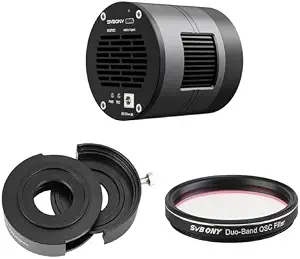 | Best Overall for High-Resolution Deep Sky Imaging | Sensor: IMX571 APS-C BSI CMOS | Resolution: 26MP | Sensor Size: 23.4×15.7mm | VIEW ON AMAZON | See Our Full Breakdown |
| SVBONY SV405CC Telescope Camera, 11.7 MP CMOS Color Astronomy Camera with UV IR Cut Filter |  | Best for High-Detail Color Deep Sky Imaging | Sensor: IMX294 CMOS | Resolution: 11.7 MP | Sensor Format: 4/3 | VIEW ON AMAZON | See Our Full Breakdown |
| SVBONY SC571CC Telescope Camera with SV241 Pro Power Management Box for Astrophotography |  | Best for Integrated Power and Remote Control in Deep Sky Imaging | Sensor: IMX571 APS-C BSI CMOS | Resolution: 26MP | Sensor Size: 23.4×15.7mm | VIEW ON AMAZON | See Our Full Breakdown |
| ZWO ASI183MC Pro 20.18 MP CMOS Color Astronomy Camera |  | Best for High-Resolution, Versatile Deep Sky Imaging | Resolution: 5496×3672 (20.1 MP) | Pixel Size: 2.4 microns | Cooling: TEC cooling, -40 to -45°C below ambient | VIEW ON AMAZON | See Our Full Breakdown |
| SVBONY SV550 80mm Triplet Apochromatic Deep Sky Telescope Kit with Cooled Astrophotography Camera and Accessories |  | Best for Beginners and Intermediate Deep Sky Enthusiasts | Telescope Diameter: 80mm | Optics Type: Triplet Apochromatic | Focal Length: 480mm (F6) | VIEW ON AMAZON | See Our Full Breakdown |
| SVBONY SV405CC Astrophotography Camera, Cooled Telescope Eyepiece IMX294 |  | Best Overall for Versatile Deep Sky Imaging | Sensor: Back-illuminated IMX294 | Sensor Size: 4/3″ | Pixel Size: 4.63μm | VIEW ON AMAZON | See Our Full Breakdown |
| SVBONY SC571CC Cooled Color Astronomy Camera, IMX571 CMOS APS-C Sensor |  | Best for High-Resolution Deep Sky Imaging | Sensor: IMX571 CMOS APS-C | Resolution: 26MP | Sensor Size: 23.4×15.7mm | VIEW ON AMAZON | See Our Full Breakdown |
| SVBONY Astrophotography Camera SC571CC with 2″ UV IR Cut Filter |  | Best for High-Contrast Deep Sky and Color Imaging | Sensor: IMX571 APS-C BSI | Resolution: 26MP | Sensor Size: 23.4×15.7mm | VIEW ON AMAZON | See Our Full Breakdown |
| SVBONY Astrophotography Accessories Kit with SC571CC Cooled Camera and Power Hub |  | Best for Complete Deep Sky Imaging Setup | Sensor: IMX571 APS-C BSI | Resolution: 26MP | Sensor Size: 23.4×15.7mm | VIEW ON AMAZON | See Our Full Breakdown |
| SVBONY SV605CC Cooled Astrophotography Camera, 9MP IMX533 USB3.0 CMOS Color Astronomy Camera with SV240 2″ Multi-Narrowband Galaxy Nebula Filter |  | Best for Urban Deep Sky Imaging in Narrowband | Sensor Type: CMOS | Resolution: 3.01 MP | Sensor Size: 1-inch | VIEW ON AMAZON | See Our Full Breakdown |
| cooled cmos astro cameras for deep sky imaging | Resolution | Sensor | Pixel Size | Cooling |
|---|---|---|---|---|
| SVBONY SC571CC Telescope Camer | 26MP | IMX571 APS-C BSI CMOS | 3.76 µm | Dual-stage TEC cooling, -35°C below ambient |
| SVBONY SV405CC Telescope Camer | 11.7 MP | IMX294 CMOS | — | — |
| SVBONY SC571CC Telescope Camer | 26MP | IMX571 APS-C BSI CMOS | 3.76 µm | Dual-stage TEC, -35°C below ambient |
| ZWO ASI183MC Pro 20.18 MP CMOS | 5496×3672 (20.1 MP) | — | 2.4 microns | TEC cooling, -40 to -45°C below ambient |
| SVBONY SV550 80mm Triplet Apoc | — | IMX294 CMOS | — | — |
| SVBONY SV405CC Astrophotograph | 4144×2822 | Back-illuminated IMX294 | 4.63μm | Two-stage TEC, reduces to 30°C below ambient |
| SVBONY SC571CC Cooled Color As | 26MP | IMX571 CMOS APS-C | 3.76 µm | Dual-stage TEC, -35°C below ambient |
| SVBONY Astrophotography Camera | 26MP | IMX571 APS-C BSI | 3.76 µm | Dual-stage TEC, -35°C below ambient |
| SVBONY Astrophotography Access | 26MP | IMX571 APS-C BSI | 3.76 µm | Dual-stage TEC, -35°C below ambient |
| SVBONY SV605CC Cooled Astropho | 3.01 MP | — | 3.76μm | TEC, 30°C below ambient |
More Details on Our Top Picks
SVBONY SC571CC Telescope Camera with Filters for Astrophotography
The SVBONY SC571CC stands out for its high-resolution 26MP APS-C sensor, which delivers exceptional detail in deep-sky images. Its dual-stage TEC cooling effectively reduces sensor noise during long exposures, making it comparable to premium options like the ZWO ASI183MC Pro but at a more affordable price point. The integrated dew heater adds convenience, though the camera’s larger size and weight can complicate mounting and setup, especially for those with smaller rigs. Its compatibility with various filters and accessories enhances versatility, but a steeper learning curve may challenge beginners. Overall, this camera provides a powerful combination of resolution and noise reduction for serious astrophotographers willing to manage its complexity.
Pros:- High-resolution 26MP sensor captures fine details in deep-sky objects
- Effective dual-stage TEC cooling reduces thermal noise for clearer long exposures
- Integrated dew heater prevents moisture buildup on the front window
Cons:- Setup can be complex and intimidating for newcomers
- Heavier and bulkier than smaller astro cameras, requiring sturdy mounts
Best for: Advanced amateur astrophotographers seeking high-resolution, detailed images of deep-sky objects
Not ideal for: Beginners or those with limited mounting space, due to its weight and setup complexity
- Sensor:IMX571 APS-C BSI CMOS
- Resolution:26MP
- Sensor Size:23.4×15.7mm
- Pixel Size:3.76 µm
- Cooling:Dual-stage TEC cooling, -35°C below ambient
- Features:Front-window heater, compatibility with multiple filters and accessories
Our verdict“This camera is ideal for experienced deep-sky imagers prioritizing resolution and noise control over simplicity.”
SVBONY SV405CC Telescope Camera, 11.7 MP CMOS Color Astronomy Camera with UV IR Cut Filter
The SV405CC excels in capturing vibrant, detailed images of nebulae, galaxies, and star clusters thanks to its 11.7 MP IMX294 sensor and high-quality UV/IR cut filter. Its USB 3.0 interface enables fast data transfer, making it suitable for capturing high-resolution images at a respectable frame rate. Compared to the higher-resolution SC571CC, it offers more manageable file sizes and easier handling, but at the cost of slightly less overall detail. This model is better suited to those who prioritize color accuracy and ease of use, although beginners might find the initial setup challenging. In short, the SV405CC balances image quality and user-friendliness for dedicated deep-sky imaging.
Pros:- High-resolution 11.7 MP sensor provides detailed color images
- Cooled design reduces noise during long exposures
- Fast USB 3.0 transfer speeds facilitate quick imaging sessions
Cons:- Requires compatible telescope and accessories for optimal use
- Setup complexity may challenge newcomers unfamiliar with astrophotography equipment
Best for: Intermediate astrophotographers focusing on detailed, colorful deep-sky images with manageable setup
Not ideal for: Complete beginners or those requiring ultra-high resolution for planetary imaging, due to its moderate pixel count
- Sensor:IMX294 CMOS
- Resolution:11.7 MP
- Sensor Format:4/3
- Frame Rate:up to 19 fps in raw8 mode
- Interface:USB 3.0
- Filter:UV/IR Cut
Our verdict“This camera offers a strong balance of detail and ease of use for enthusiasts seeking rich color deep-sky images.”
SVBONY SC571CC Telescope Camera with SV241 Pro Power Management Box for Astrophotography
The SVBONY SC571CC bundle combines a high-resolution 26MP APS-C sensor with the convenience of the SV241 Pro Power Management Box. This setup simplifies managing multiple devices by offering consolidated connections and remote operation, making it suitable for complex astrophotography rigs. Its dual-stage TEC cooling ensures low-noise imaging akin to standalone high-end cameras, while the power management adds safety and stability, especially during long sessions. Compared to standalone cameras like the ZWO ASI183MC Pro, this bundle streamlines equipment control, but the additional components increase setup complexity and require careful handling. This pick makes the most sense for dedicated deep-sky imagers who value integrated solutions and robust equipment management.
Pros:- High-resolution 26MP sensor captures detailed deep-sky images
- Effective dual-stage TEC cooling reduces thermal noise
- SV241 Pro Power Management enhances equipment safety and control
Cons:- System is more complex to set up and operate
- Cannot hot-swap connections; must power down before unplugging
Best for: Experienced astrophotographers with multi-device setups needing integrated power and remote control
Not ideal for: Beginners or those with simple setups, due to its complexity and need for careful handling
- Sensor:IMX571 APS-C BSI CMOS
- Resolution:26MP
- Sensor Size:23.4×15.7mm
- Pixel Size:3.76 µm
- Cooling:Dual-stage TEC, -35°C below ambient
- Compatibility:APO, Newtonian, RC, catadioptric scopes
Our verdict“This bundle provides a comprehensive, integrated solution for experienced imagers seeking convenience and stability in deep-sky imaging.”
ZWO ASI183MC Pro 20.18 MP CMOS Color Astronomy Camera
The ASI183MC Pro offers a high-resolution 20.1 MP CMOS sensor that excels at capturing intricate details of deep-sky objects, the Moon, and the Sun. Its TEC cooling system significantly lowers sensor temperature by up to 45°C, reducing noise comparable to more expensive cameras. The camera’s fast USB 3.0 transfer speeds enable rapid data collection, making it suitable for both long exposures and live viewing. Compared with the SVBONY models, it provides greater flexibility with compatibility across operating systems and a broader range of accessories. However, it demands a dedicated 12V power supply and additional filters for solar imaging. This camera makes the most sense for those needing high resolution in a compact, adaptable package, especially if they already have a compatible mount and software environment.
Pros:- High-resolution 20.1 MP sensor captures fine details
- TEC cooling reduces thermal noise effectively
- Fast USB 3.0 transfer speeds facilitate efficient imaging
Cons:- Requires separate 12V power supply (not included)
- Additional filters needed for solar imaging, increasing setup complexity
Best for: Intermediate to advanced deep-sky imagers wanting high resolution and fast data transfer
Not ideal for: Beginners or planetary imagers focused solely on quick, simple captures, due to setup complexity
- Resolution:5496×3672 (20.1 MP)
- Pixel Size:2.4 microns
- Cooling:TEC cooling, -40 to -45°C below ambient
- Frame Rate:Up to 19 fps
- Connectivity:USB 3.0
- Power:12V@3A (not included)
Our verdict“This camera is well-suited for users seeking high-res, versatile deep-sky imaging with fast data handling capabilities.”
SVBONY SV550 80mm Triplet Apochromatic Deep Sky Telescope Kit with Cooled Astrophotography Camera and Accessories
This telescope kit offers a complete package for capturing sharp, contrast-rich deep-sky images. Its 80mm triplet apochromatic optics minimize chromatic aberration, producing crisp images even in light-polluted environments. The included SV405CC cooled camera with a 4/3 sensor captures detailed images at a high frame rate, suitable for stacking and processing. The kit’s filters and accessories enable versatile imaging, but the setup can be somewhat heavy and complex for newcomers, who might prefer more simplified configurations. Compared to standalone cameras, this kit provides a more integrated approach, ideal for those ready to build a complete system without sourcing individual components. It’s a great choice for hobbyists looking for an all-in-one deep-sky imaging solution.
Pros:- High-quality triplet apochromatic optics for sharp images
- Cooled camera with high frame rate enhances deep-sky detail
- Includes specialized filters for nebulae and galaxy imaging
Cons:- Assembly and setup require some experience
- Heavy equipment may demand sturdy mounting solutions
Best for: Amateur astronomers seeking a comprehensive deep-sky imaging package with quality optics and camera
Not ideal for: Total beginners or those with limited space and experience, due to its weight and setup complexity
- Telescope Diameter:80mm
- Optics Type:Triplet Apochromatic
- Focal Length:480mm (F6)
- Camera Model:SV405CC
- Sensor:IMX294 CMOS
- Filter Type:Dual-Band Nebula Filter
Our verdict“This kit offers a well-rounded, beginner-friendly package for those ready to explore serious deep-sky astrophotography.”
SVBONY SV405CC Astrophotography Camera, Cooled Telescope Eyepiece IMX294
The SVBONY SV405CC stands out for its high-sensitivity IMX294 sensor, making it a strong choice for capturing detailed deep-sky images with minimal noise. Compared to the SV605CC, it offers a smaller sensor size but benefits from a more compact form factor. Its two-stage TEC cooling effectively reduces sensor temperature to 30°C below ambient, which is essential for long exposures, though this cooling system adds to the camera’s size and weight. The USB 3.0 interface ensures rapid data transfer, vital for high-resolution imaging sessions. This camera is ideal for intermediate users seeking flexibility and excellent performance across multiple platforms, but it requires compatible software to unlock full features. Its main tradeoff is the need for software compatibility and the added bulk from cooling hardware. Overall, the SV405CC offers a balanced mix of sensitivity, cooling, and software compatibility suited for dedicated deep sky imaging.
Pros:- High-sensitivity IMX294 sensor captures faint deep-sky details
- Effective cooling reduces thermal noise during long exposures
- Fast USB 3.0 data transfer ensures smooth imaging
Cons:- Requires compatible software for full functionality
- Cooling system increases device size and weight
Best for: Amateur astronomers looking for a versatile, high-sensitivity camera compatible with various software and platforms.
Not ideal for: Beginners who lack experience configuring astrophotography software or managing larger equipment due to its setup complexity.
- Sensor:Back-illuminated IMX294
- Sensor Size:4/3″
- Pixel Size:4.63μm
- Resolution:4144×2822
- Cooling:Two-stage TEC, reduces to 30°C below ambient
- Interface:USB 3.0
Our verdict“This camera suits dedicated astrophotographers seeking high sensitivity and strong software compatibility, provided they are comfortable with setup complexity.”
SVBONY SC571CC Cooled Color Astronomy Camera, IMX571 CMOS APS-C Sensor
The SVBONY SC571CC excels with its 26MP IMX571 APS-C sensor, making it well-suited for capturing intricate details of nebulae and galaxies, especially when compared to the lower-resolution SV605CC. Its dual-stage TEC cooling down to -35°C reduces thermal noise even during extended exposures, a critical factor for deep-sky work. The built-in front-window heater prevents dew formation, maximizing uptime in varying conditions. Its reliable USB 3.0 connection and 512 MB buffer memory contribute to steady data flow, minimizing dropped frames. This model is best for experienced astrophotographers prioritizing high resolution and long exposure stability, but the advanced features may involve a steep learning curve. Its main tradeoff involves higher complexity and cost, which might be daunting for newcomers. Overall, the SC571CC offers excellent detail and noise reduction, making it a top pick for serious deep sky imaging.
Pros:- High-resolution 26MP sensor captures fine deep-sky details
- Dual-stage TEC cooling effectively reduces noise
- Built-in dew prevention heater extends imaging sessions
Cons:- Requires a more complex setup process
- Higher price point compared to simpler models
Best for: Experienced deep sky imagers demanding high resolution and reliable long-exposure operation.
Not ideal for: Beginners or users with limited technical knowledge, due to its complex setup and advanced features.
- Sensor:IMX571 CMOS APS-C
- Resolution:26MP
- Sensor Size:23.4×15.7mm
- Pixel Size:3.76 µm
- Cooling:Dual-stage TEC, -35°C below ambient
- Features:Front-window heater
Our verdict“Ideal for experienced astrophotographers seeking high-resolution, noise-free images of faint deep-sky objects with dependable cooling features.”
SVBONY Astrophotography Camera SC571CC with 2″ UV IR Cut Filter
The SVBONY SC571CC with 2″ UV IR Cut Filter enhances deep-sky imaging with its high-res 26MP sensor and a specialized filter that blocks UV and IR light, which can cause color distortions. Compared to the SV405CC, this model’s larger APS-C sensor and additional optical filtering deliver more detailed and color-accurate images, especially in urban environments with light pollution. Its dual-stage TEC cooling maintains low noise levels during long exposures, while the front-window heater prevents dew buildup. Though setup can be complex, the filter improves contrast and color fidelity significantly, making it the go-to choice for high-contrast deep sky projects. The main drawback involves higher cost and the need for some technical skill to optimize the filter and cooling system. Overall, this camera is ideal for astrophotographers prioritizing image quality and color accuracy in challenging conditions.
Pros:- High-res 26MP sensor captures detailed, colorful images
- UV IR cut filter improves contrast and color fidelity
- Effective cooling reduces thermal noise for long exposures
Cons:- Complex setup with filter and cooling management
- Higher price than basic models
Best for: Advanced users seeking detailed, high-contrast color images of deep-sky objects, especially in light-polluted areas.
Not ideal for: Beginners or casual observers who prefer simpler, plug-and-play options without complex filter management.
- Sensor:IMX571 APS-C BSI
- Resolution:26MP
- Sensor Size:23.4×15.7mm
- Pixel Size:3.76 µm
- Cooling:Dual-stage TEC, -35°C below ambient
- Filter:2″ UV IR Cut
Our verdict“This camera is suited for experienced astrophotographers who need high-contrast, color-accurate images in challenging environments.”
SVBONY Astrophotography Accessories Kit with SC571CC Cooled Camera and Power Hub
This kit pairing the SC571CC camera with the SV241 power hub provides a comprehensive solution for serious deep sky imaging, combining high-resolution imaging with streamlined power management. The SC571CC offers detailed 26MP images with dual-stage TEC cooling, comparable to standalone models but enhanced through the included power hub that simplifies outdoor setup. Its versatility across various telescope types makes it suitable for dedicated astrophotographers who want an all-in-one package. The power hub’s multiple ports facilitate simultaneous power and data connections, reducing clutter and setup time. The main tradeoff is the need for careful handling of multiple interfaces and a higher overall cost. Still, this kit delivers a high-performance, ready-to-go deep sky imaging station, especially for those seeking convenience without sacrificing resolution or noise reduction.
Pros:- High-resolution 26MP sensor captures fine deep-sky details
- Dual-stage TEC cooling reduces noise effectively
- Integrated power hub simplifies outdoor setup and cabling
Cons:- Requires careful handling of multiple connections
- Limited to 12V/10A power specifications
Best for: Professional or advanced amateurs looking for an all-in-one deep sky imaging package with reliable power management.
Not ideal for: Beginners or users with limited technical skills who may find the comprehensive setup overwhelming.
- Sensor:IMX571 APS-C BSI
- Resolution:26MP
- Sensor Size:23.4×15.7mm
- Pixel Size:3.76 µm
- Cooling:Dual-stage TEC, -35°C below ambient
- Compatibility:APO, Newtonian, RC, catadioptric scopes
Our verdict“This kit is best for experienced users wanting a complete, high-performance deep sky imaging system with simplified power management.”
SVBONY SV605CC Cooled Astrophotography Camera, 9MP IMX533 USB3.0 CMOS Color Astronomy Camera with SV240 2″ Multi-Narrowband Galaxy Nebula Filter
The SVBONY SV605CC offers a compact yet capable solution for urban astrophotographers, featuring a 9MP IMX533 sensor optimized for deep sky objects in light-polluted environments. Its TEC cooling system drops the sensor temperature to 30°C below ambient, effectively reducing noise for clearer images in less-than-ideal conditions. The included SV240 multi-narrowband filter enhances faint nebulae and galaxies by blocking broadband light pollution, making it a strong choice for city-based imaging. Compared to larger sensor cameras, the 1-inch sensor limits the field of view but allows for easier handling and faster focusing. The main tradeoff involves the limited water resistance and the need for manual focus adjustments, which can be challenging in dark or windy conditions. Overall, this camera excels in lightweight, urban deep sky imaging with enhanced narrowband capabilities.
Pros:- Cooled sensor reduces noise for urban imaging
- Multi-narrowband filter boosts contrast for faint objects
- Lightweight and portable for field use
Cons:- Limited water resistance, not suitable in rain
- Requires manual focus adjustment and setup knowledge
Best for: Urban astrophotographers needing a compact, low-noise, narrowband imaging solution for faint nebulae and galaxies.
Not ideal for: Deep sky imagers seeking wide-field views or those in remote dark-sky sites, due to its small sensor size and limited weather resistance.
- Sensor Type:CMOS
- Resolution:3.01 MP
- Sensor Size:1-inch
- Pixel Size:3.76μm
- Cooling:TEC, 30°C below ambient
- Filter:SV240 multi-narrowband
Our verdict“This camera is perfect for urban astrophotographers targeting nebulae and galaxies with narrowband filters, despite its limited weather resistance.”

How We Picked
Our evaluation focused on performance, usability, and value, emphasizing how well each camera supports deep sky imaging. Key criteria included sensor size, resolution, cooling efficiency, and low-light sensitivity. We also considered build quality, ease of setup, and software compatibility, since these factors influence user experience and long-term reliability. The ranking reflects a balance between high-end capabilities and affordability, ensuring options suitable for different skill levels and budgets. Ultimately, the selected cameras stand out for their ability to deliver high-quality astrophotos while maintaining practical usability.
| cooled cmos astro cameras for deep sky imaging | Sensor | Cooling |
|---|---|---|
| SVBONY SC571CC Telescope Camer | IMX571 APS-C BSI CMOS | Dual-stage TEC cooling, -35°C below ambient |
| SVBONY SV405CC Telescope Camer | IMX294 CMOS | — |
| SVBONY SC571CC Telescope Camer | IMX571 APS-C BSI CMOS | Dual-stage TEC, -35°C below ambient |
| ZWO ASI183MC Pro 20.18 MP CMOS | — | TEC cooling, -40 to -45°C below ambient |
| SVBONY SV550 80mm Triplet Apoc | IMX294 CMOS | — |
| SVBONY SV405CC Astrophotograph | Back-illuminated IMX294 | Two-stage TEC, reduces to 30°C below ambient |
| SVBONY SC571CC Cooled Color As | IMX571 CMOS APS-C | Dual-stage TEC, -35°C below ambient |
| SVBONY Astrophotography Camera | IMX571 APS-C BSI | Dual-stage TEC, -35°C below ambient |
| SVBONY Astrophotography Access | IMX571 APS-C BSI | Dual-stage TEC, -35°C below ambient |
| SVBONY SV605CC Cooled Astropho | — | TEC, 30°C below ambient |
Factors to Consider When Choosing Cooled Cmos Astro Cameras For Deep Sky Imaging
Choosing the right cooled CMOS astro camera involves understanding several critical factors that impact image quality, usability, and value. Beyond specifications, consider how each feature aligns with your specific deep sky targets, observing conditions, and experience level. Making informed decisions helps avoid common pitfalls like overpaying for unnecessary features or selecting incompatible equipment. Here are key considerations to guide your purchase.Sensor Size and Resolution
Sensor size determines your camera’s field of view and how much sky you can capture in a single frame. Larger sensors, like APS-C, are preferable for wide-field imaging of nebulae and galaxies, offering more expansive coverage. Resolution impacts image detail; higher MP counts reveal finer structures but may require more processing power and storage. Balancing sensor size and resolution based on your typical targets helps ensure your camera complements your telescope and observing goals.
Cooling Capacity and Noise Reduction
Effective cooling minimizes thermal noise, which is crucial for long exposures needed in deep sky imaging. Higher cooling capacities enable sustained low temperatures, resulting in cleaner images and better signal-to-noise ratios. However, more advanced cooling often increases cost and complexity. Consider your typical exposure lengths and budget; a modest cooling system might suffice for beginners, while experienced astrophotographers may benefit from higher cooling capabilities for capturing faint details.
Price and Value
While high-end models offer superior performance, they also come with a higher price tag. Budget options like the SVBONY SV405CC can produce impressive results for entry-level or casual astrophotographers, especially when paired with good processing techniques. Conversely, investing in a more expensive camera may provide longevity, better sensitivity, and expanded features for serious imaging. Weigh your budget against your goals to determine the best value proposition.
Compatibility and Software Support
Ensure your selected camera integrates well with your existing equipment and software ecosystem. Compatibility with popular astro imaging software and drivers simplifies setup and operation. Some cameras offer extensive software support and remote control features, which can streamline imaging sessions. Confirm that your telescope and mount are compatible, and consider the availability of firmware updates and customer support when choosing a model.
Build Quality and Long-Term Reliability
A well-constructed camera with durable materials reduces the likelihood of hardware failures and maintenance issues. Reliable cooling systems, sturdy connectors, and quality sensors contribute to consistent performance over years of use. Investing in reputable brands and models with positive user feedback can save time and money in the long run, especially if you plan to pursue advanced astrophotography or night after night imaging sessions.
Frequently Asked Questions
Can I use a cooled CMOS astro camera with a DSLR or mirrorless camera?
While both types can be used for astrophotography, cooled CMOS cameras are specifically designed to handle long exposures and low-light conditions better than typical DSLR or mirrorless cameras. They offer superior noise reduction and sensor control, making them more suitable for deep sky imaging. However, they often require a dedicated mount and specialized software. For casual or wide-field imaging, DSLRs can still produce good results, but for detailed deep sky work, a cooled CMOS camera provides a significant advantage.
Is higher resolution always better for deep sky imaging?
Higher resolution sensors capture more detail, which is beneficial for revealing faint structures in nebulae and galaxies. However, they also generate larger files and may demand more processing power. Additionally, if your mount and tracking are not precise, the benefits of high resolution can be diminished by star trailing or image distortions. For most deep sky astrophotographers, a balance between resolution and sensor size tailored to their equipment and targets offers the best results.
How important is sensor size when choosing a cooled CMOS camera?
Sensor size plays a vital role in determining your camera’s field of view and how much sky you can capture per exposure. Larger sensors are generally better for wide-field astrophotography, but they may require more precise tracking and higher-end mounts. Smaller sensors can be easier to manage and often cost less, making them suitable for beginners or targeted imaging of smaller objects. The choice depends on your specific targets and the telescope setup you use.
What are common cooling options, and how do I decide which one to choose?
Cooling options vary from basic thermoelectric systems to more advanced multi-stage cooling setups. Higher cooling capacities allow lower sensor temperatures, reducing thermal noise significantly. If you plan to image faint objects over long exposures, investing in a camera with robust cooling is worthwhile. For shorter exposures or casual imaging, moderate cooling might suffice. Consider your typical imaging sessions, budget, and whether additional cooling accessories are compatible with your setup.
Should I prioritize sensor resolution or cooling capacity?
Both features are important but serve different purposes. High resolution enhances detail, while strong cooling reduces noise. For deep sky imaging, cooling often has a more immediate impact on image quality, especially in low-light conditions. If your budget allows, choose a camera that balances both, but if you need to prioritize, focus on cooling capacity first for cleaner, more usable images, then consider resolution based on your targets and processing capacity.
Conclusion
For most deep sky imagers, the ZWO ASI183MC Pro offers the best overall blend of resolution, cooling, and ease of use, making it ideal for enthusiasts and semi-professionals. Beginners or those on a tighter budget should consider the SVBONY SV405CC for its affordability and solid performance. Serious astrophotographers aiming for maximum detail and low noise might find the SVBONY SV550 or premium options more suitable, despite the higher price. Ultimately, your choice depends on your experience level, target objects, and budget, but this guide helps clarify the key factors to consider.
Halloween Picks
halloween
As an affiliate, we earn on qualifying purchases.