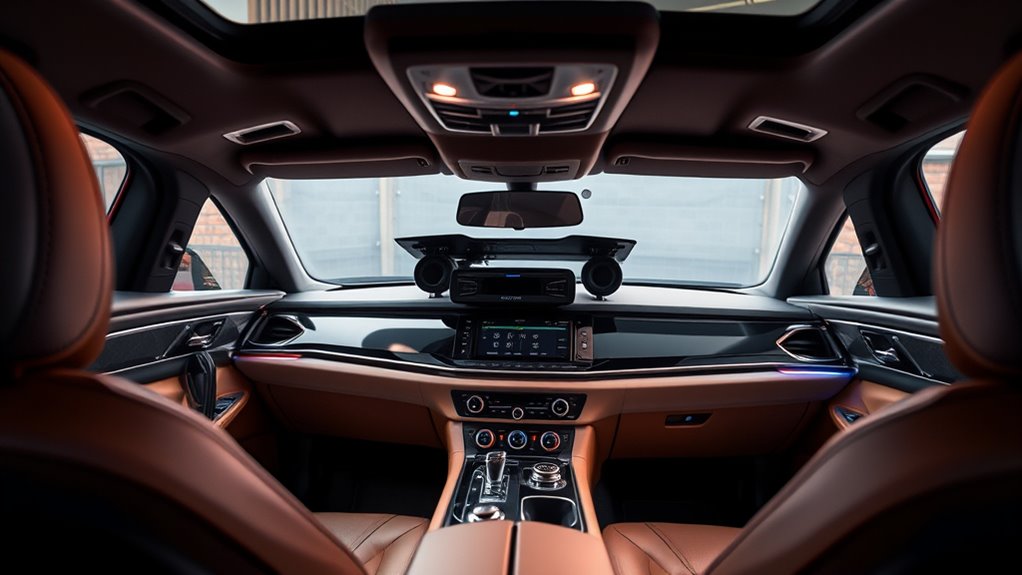

High-end car audio systems can mean a polished speaker upgrade, a DSP-driven factory integration, or a full setup with amplification and subwoofers. My best overall pick is the Alpine OPTIM8 Car Audio Bundle, which pairs system tuning with speakers and bass rather than focusing on one component. The Focal PS 165 F3E Flax EVO stands out for a more speaker-focused upgrade, while the Sony Mobile ES XAV-9500ES is a strong choice when a premium touchscreen receiver is the priority. The main tradeoffs are integration complexity, installation demands, and whether your budget is better spent on speakers, bass, or signal processing. Read on for the full breakdown and advice on matching a system to your car and listening priorities.

Get travel and outdoor gear delivered free with Prime
- Fast, free delivery on millions of items
- Prime Video, Amazon Music and more included
- Member-only deals all year
Complete the kit



Key Takeaways
- Complete bundles reduce guesswork: Alpine’s OPTIM8 and the JBL Legend 700 combine several system elements, while component kits such as the Focal PS 165 F3E require buyers to plan for amplification and bass separately.
- DSP is a major dividing line: The ARC Audio Blackbird and Banda X8AiR focus on processing and integration, making them better suited to builds where tuning and factory-system compatibility matter.
- Speaker upgrades and full systems solve different problems: Focal and CT Sounds kits prioritize the front stage; Rockville and Skar packages put more emphasis on subwoofer output.
- Large-screen receivers are not speaker systems: Sony’s XAV-9500ES and Kenwood’s DMX1058XR upgrade the source and interface, but buyers may still need speakers, amplification, and a subwoofer.
- Bundle completeness brings fit and tuning tradeoffs: A package with many matched components can simplify planning, but vehicle space, wiring, and installer setup still determine whether the system performs as intended.
| 8.6K3 8000 Series 6.5″ 3-Way Component Speaker System |  | Best for Detailed Three-Way Front Stages | Configuration: 3-way component speaker system | Mid-woofer size: 6.5 inches | Midrange size: 3 inches | VIEW ON AMAZON | See Our Full Breakdown |
| Focal Access 165A1 6.5″ 120 Watts 2-Way Car Audio Component Speaker Kit |  | Best for Easier Two-Way System Upgrades | Configuration: 2-way component kit | Woofer size: 6.5 inches | Power handling: 120 W RMS / 240 W peak | VIEW ON AMAZON | See Our Full Breakdown |
| ARC Audio Blackbird 75w X 8 Compact Performance OEM Integration DSP Amplifier |  | Best for Advanced DSP Tuning | Amplifier channels: 8 | DSP channels: 12 | RCA outputs: 4, up to 8 V each | VIEW ON AMAZON | See Our Full Breakdown |
| CT Sounds Meso 6.5-Inch 3-Way Component Car Speaker Set |  | Best for High-Power Three-Way Speakers | Configuration: 3-way component set | Woofer size: 6.5 inches | Midrange size: 3.5 inches | VIEW ON AMAZON | See Our Full Breakdown |
| Rockville DK58 Dual 8-Inch Loaded Car Subwoofer Enclosure with dB11 Amplifier |  | Best Complete Compact-Bass Package | Subwoofer configuration: Dual 8-inch | Subwoofer RMS power: 400 W | Amplifier RMS power: 350 W at 2 ohms | VIEW ON AMAZON | See Our Full Breakdown |
| Sony Mobile ES 10.1″ (25.7cm) High-Resolution Digital Media Receiver – XAV-9500ES |  | Best for High-Resolution Source Playback | Display: 10.1-inch capacitive touchscreen, 1280 × 720 | Chassis: Single-DIN | Audio formats: WAV, FLAC, ALAC, and DSD playback via PCM conversion | VIEW ON AMAZON | See Our Full Breakdown |
| Alpine OPTIM8 Car Audio Bundle with DSP Amplifier, Subwoofer, and Speakers |  | Best Integrated System Upgrade | DSP amplifier: Alpine PXE-C80-88 OPTIM8, 8-channel | Subwoofer: Alpine SS-SB10, single 10-inch shallow preloaded enclosure | Coaxial speakers: Alpine R2-S69, 6×9-inch pair | VIEW ON AMAZON | See Our Full Breakdown |
| Skar Audio Triple 8-Inch SDR Series Subwoofer Bass Package with Loaded Enclosure and Amplifier |  | Best for Dedicated Bass Output | Subwoofer configuration: Three 8-inch SDR Series subwoofers | Enclosure: Vented, loaded enclosure | Peak power: 2,100 watts | VIEW ON AMAZON | See Our Full Breakdown |
| Kenwood Excelon Reference DMX1058XR 10.1” HD Touchscreen Car Stereo with Wireless Apple CarPlay and Android Auto |  | Best for Wireless Smartphone Integration | Display: 10.1-inch HD floating touchscreen, 1280 × 720 | Wireless phone integration: Apple CarPlay and Android Auto | Connectivity: Bluetooth, Wi-Fi, USB, HDMI, and optical | VIEW ON AMAZON | See Our Full Breakdown |
| Focal PS 165 F3E Flax EVO 6.5” 3-Way Component Kit, RMS 80W, Max 160W |  | Best Premium Component Speaker Upgrade | Speaker size: 6.5 inches | Configuration: 3-way component kit | RMS power: 80W | VIEW ON AMAZON | See Our Full Breakdown |
| Alpine Status HDZ-653S 6.5-Inch 3-Way Speakers and S-A32F 4-Channel Amplifier Bundle |  | Best for Custom-Fit Speaker Upgrades | Speaker size: 6.5 inches | Speaker configuration: 3-way | Tweeter: 1-inch slim-fit | VIEW ON AMAZON | See Our Full Breakdown |
| Banda Audiopart X8AiR DSP Car Audio Processor |  | Best for Advanced System Tuning | Channels: 8 | Inputs: 4 | Outputs: 8 | VIEW ON AMAZON | See Our Full Breakdown |
| Alpine OPTIM8 8-Channel Hi-Res DSP Amplifier, Dual 10-Inch Subwoofer Enclosures, and Dual 6×9-Inch Component Speaker Sets |  | Best Complete Hi-Res System Bundle | Bundle contents: PXE-C80-88 amplifier, 2 SS-SB10 subwoofer enclosures, 2 S2-S69C component speaker sets | Amplifier channels: 8 | Amplifier power: 50 W x 6 + 150 W x 2 at 4Ω; 50 W x 6 + 300 W x 2 at 2Ω | VIEW ON AMAZON | See Our Full Breakdown |
| JBL Legend 700 Car Audio Bundle with 5-Channel Amplifier, Speakers, and 10-Inch Subwoofer |  | Best for Connected, All-in-One Upgrades | Stereo: JBL Legend 700, 7-inch double-DIN receiver | Stereo connectivity: Wireless Apple CarPlay, Android Auto, Bluetooth 5.0, USB, auxiliary, AM/FM, DAB/DAB+ | Amplifier: JBL CLUB-A5055, 5-channel | VIEW ON AMAZON | See Our Full Breakdown |
More Details on Our Top Picks
8.6K3 8000 Series 6.5″ 3-Way Component Speaker System
The 8.6K3 earns its place for buyers who want separate drivers handling bass, midrange, and treble rather than asking a two-way set to cover the full range. Its 6.5-inch mid-woofer, dedicated 3-inch midrange, and 1.1-inch soft-dome tweeter offer a more specialized layout than the Focal Access 165A1, which pairs a woofer and tweeter. That division can help give vocals and instruments their own space, but it also makes installation and system matching more involved. The product data does not give power handling, sensitivity, impedance, or mounting dimensions, so I would confirm compatibility with the seller and installer before buying. CNC-machined components and the stated Italian engineering are appealing, though they do not replace missing fit and performance specifications.
Pros:- Three dedicated driver types divide bass, midrange, and treble duties
- A 3-inch cone midrange is designed for detailed vocal and instrument reproduction
- Soft-dome tweeter is intended to deliver smoother, broadly dispersed highs
- CNC-machined structural and motor components are specified
Cons:- Power handling, impedance, sensitivity, and frequency response are not provided
- Mounting dimensions and included installation hardware are not specified
- More involved to integrate than the two-way Focal Access 165A1
Best for: Listeners building a carefully matched front stage who want dedicated midrange reproduction and can verify fit and amplifier compatibility before installation
Not ideal for: Buyers seeking a straightforward, fully specified replacement kit; the listing omits key electrical and mounting details, and a three-way layout may demand more installation planning
- Configuration:3-way component speaker system
- Mid-woofer size:6.5 inches
- Midrange size:3 inches
- Tweeter size:1.1 inches
- Tweeter type:Soft dome with neodymium magnet
- Mid-woofer cone:Non-pressed paper
- Construction:CNC-machined motor and structural components
Our verdict“Choose the 8.6K3 if a dedicated midrange is your priority and you can confirm system compatibility before purchase.”
Focal Access 165A1 6.5″ 120 Watts 2-Way Car Audio Component Speaker Kit
The Focal Access 165A1 is the more approachable speaker upgrade in this group: it supplies the core parts for a two-way component installation, including external crossovers and grilles. Its 92 dB sensitivity gives a compatible head unit or amplifier a relatively efficient load to work with, while a three-position tweeter level helps tailor treble to the cabin. Compared with the 8.6K3 and CT Sounds Meso three-way sets, it has fewer drivers and a simpler layout, so it is a better fit when installation space and tuning complexity matter more than a dedicated midrange. Its 120-watt RMS rating supports a range of systems, but buyers should plan for sound treatment and secure mounting; the listing also notes that added amplification may be needed for stronger output.
Pros:- Kit includes two woofers, two tweeters, external crossovers, and grilles
- 92 dB sensitivity can make the set easier to drive than less-sensitive alternatives
- Three-position crossover adjustment allows tweeter-level tailoring
- Humidity-resistant components and butyl-rubber surrounds suit automotive use
Cons:- Two-way design lacks the dedicated midrange driver found in the 8.6K3 and CT Sounds Meso
- May need an added amplifier to reach its full output potential
- Requires adequate mounting depth and secure installation
Best for: Drivers replacing factory front speakers who want a complete two-way component kit, adjustable tweeter level, and published fit and electrical specifications
Not ideal for: Listeners aiming for a high-output three-way front stage or buyers who cannot accommodate the listed 2-5/8-inch mounting depth
- Configuration:2-way component kit
- Woofer size:6.5 inches
- Power handling:120 W RMS / 240 W peak
- Impedance:4 ohms
- Frequency response:60–20,000 Hz
- Sensitivity:92 dB
- Mounting depth:2-5/8 inches
- Crossover:External, with 3-position level adjustment
Our verdict“Pick the Focal Access 165A1 for a specified, complete two-way upgrade when ease of integration matters more than three-way driver separation.”
ARC Audio Blackbird 75w X 8 Compact Performance OEM Integration DSP Amplifier
The ARC Audio Blackbird is the system-control choice, not a plug-and-play speaker package. Its compact OEM-location chassis combines eight 75-watt amplifier channels with a 12-channel Pro-Series DSP, letting a system designer shape speaker outputs and feed additional amplifiers through four high-voltage RCA outputs. The 192 kHz, 32-bit processing and extensive equalization give experienced installers fine control over a complex cabin response—capabilities that a passive set such as the Focal Access 165A1 cannot provide on its own. That flexibility comes with a steep setup burden: tuning knowledge, installation labor, and compatible speakers are all part of the build. The listing supplies no dimensions, input details, or channel-by-channel power conditions, so those need verification before treating its compact chassis as a guaranteed fit.
Pros:- Eight 75-watt amplifier channels combine amplification and signal processing
- 12-channel DSP provides outputs for expanded system layouts
- Four DSP-controlled RCA outputs are specified for up to 8 V each
- High-resolution processing and extensive EQ adjustments support detailed tuning
Cons:- Advanced setup requires tuning skill or professional installation
- Does not include speakers or a subwoofer, unlike bundled systems
- Dimensions and detailed input and power conditions are not supplied
Best for: Experienced car-audio builders and installers integrating factory systems with multiple amplified speaker channels and detailed DSP tuning
Not ideal for: First-time upgrader seeking a simple speaker replacement or an all-in-one package with clearly stated fitment and complete system components
- Amplifier channels:8
- DSP channels:12
- RCA outputs:4, up to 8 V each
- Audio processing:Up to 192 kHz / 32-bit
- Equalization:444 bands of one-third-octave or parametric EQ
- EQ adjustment range:+20 dB / -24 dB per band, in 0.1 dB increments
- Chassis design:Compact, OEM-location installation format
Our verdict“Choose the Blackbird when you need sophisticated OEM integration and DSP control and have the equipment and expertise to build around it.”
CT Sounds Meso 6.5-Inch 3-Way Component Car Speaker Set
For a three-way speaker set with a clearly stated power rating, the CT Sounds Meso is easier to assess than the 8.6K3: it specifies 250 watts RMS per set and includes passive crossovers and mounting hardware. Its 3.5-inch neodymium midrange gives vocals and upper instruments a separate driver, while 25 mm silk-dome tweeters round out the range. Compared with the Focal Access 165A1, the Meso is the more power-focused, more complex choice; the Focal is a simpler two-way kit with sensitivity and mounting-depth figures that help with system planning. The Meso’s listing does not provide those fitment details, and its components are not water resistant. It makes the most sense in a protected cabin installation with an amplifier and installer ready to handle the extra driver and wiring demands.
Pros:- Three-way set separates woofer, midrange, and high-frequency duties
- 250 W RMS and 500 W maximum power ratings are specified
- Passive crossover networks and mounting hardware are included
- Silk-dome tweeters and neodymium midrange drivers are part of the package
Cons:- Not water resistant, limiting suitability for exposed or moisture-prone installations
- More complex to install than the two-way Focal Access 165A1
- Sensitivity and mounting dimensions are not listed
Best for: Enthusiasts building an amplified three-way front stage who want stated RMS handling and included passive crossovers
Not ideal for: Drivers needing weather-resistant speakers, a simple factory replacement, or published mounting dimensions before purchase
- Configuration:3-way component set
- Woofer size:6.5 inches
- Midrange size:3.5 inches
- Tweeter size:25 mm silk dome
- Power handling:250 W RMS / 500 W maximum per set
- Impedance:4 ohms per speaker
- Included crossover networks:2 passive networks
- Water resistance:Not water resistant
Our verdict“Choose the Meso for a protected, amplified three-way build where its stated power handling matters more than easy fitment planning.”
Rockville DK58 Dual 8-Inch Loaded Car Subwoofer Enclosure with dB11 Amplifier
The Rockville DK58 is the bass-specific option here: unlike the ARC Audio Blackbird, which supplies DSP and multi-channel amplification but no speakers, this package includes dual 8-inch subwoofers, a Class-D amplifier, bass remote, and wiring kit. Its 37 Hz ported enclosure tuning is aimed at adding substantial low-end presence, while the remote lets the driver adjust bass from the front seat. The tradeoff is that this is a dedicated subwoofer package, not a full high-end audio system: it will not replace the need for quality front speakers or system tuning. Although the enclosure is smaller than many dual-subwoofer builds, its 34.2-inch length still takes meaningful cargo space. The amplifier’s 350-watt RMS rating at 2 ohms is also below the subs’ stated combined 400-watt RMS rating.
Pros:- Includes dual subwoofers, enclosure, amplifier, bass remote, and wiring kit
- Ported enclosure is tuned to 37 Hz for dedicated low-frequency output
- Amplifier includes adjustable crossover and MOSFET power supply
- 3/4-inch MDF enclosure and stated bracing support a substantial enclosure build
Cons:- 34.2-inch enclosure length can consume significant cargo space
- Amplifier RMS output is rated below the subwoofers’ combined RMS handling
- Adds bass only; front speakers and system integration are still needed
Best for: Drivers adding a self-contained bass system who want the enclosure, mono amplifier, remote, and basic wiring in one package
Not ideal for: Buyers with limited trunk space or anyone expecting a complete full-range system rather than a dedicated subwoofer setup
- Subwoofer configuration:Dual 8-inch
- Subwoofer RMS power:400 W
- Amplifier RMS power:350 W at 2 ohms
- Amplifier type:Class-D mono
- Enclosure tuning:37 Hz
- Enclosure material:3/4-inch MDF
- Dimensions:15.7 x 18.7 x 34.2 inches
- Included accessories:Bass remote and 8-gauge wiring kit
Our verdict“Pick the DK58 if you want a ready-to-install bass package and can spare the cargo space, but plan a separate full-range speaker system.”
Sony Mobile ES 10.1″ (25.7cm) High-Resolution Digital Media Receiver – XAV-9500ES
I’d choose the Sony XAV-9500ES when the head unit is meant to be the control center of a carefully built system, especially one that plays lossless files. Its ESS DAC, support for several high-resolution formats, and LDAC wireless streaming give it a stronger source-audio focus than the Kenwood Excelon Reference DMX1058XR, whose standout advantage is broader camera coverage and wireless phone integration. The Sony’s 10.1-inch HD display also offers a large interface while its single-DIN chassis can open up installation options in dashboards where a conventional double-DIN receiver is harder to fit. On the tradeoff side, the listing does not specify wireless CarPlay or Android Auto, and the screen’s adjustable mount still needs a suitable dash layout. I’d skip it if smartphone projection is the main priority.
Pros:- ESS DAC and LDAC support suit a system focused on detailed digital playback.
- Plays WAV, FLAC, ALAC, and DSD files with stated high-resolution support.
- Single-DIN chassis can offer more installation flexibility than a double-DIN receiver.
- Three camera inputs and gold-plated front, rear, and subwoofer pre-outs support system expansion.
Cons:- Wireless Apple CarPlay and Android Auto are not specified in the supplied product details.
- The large adjustable screen may require careful dash-fit planning.
- The listing does not provide detailed power or equalization specifications.
Best for: Drivers building a high-end system around lossless music playback, external amplification, and a large adjustable touchscreen.
Not ideal for: Buyers who prioritize confirmed wireless Apple CarPlay or Android Auto, or who want a receiver with detailed vehicle-fit information before planning installation.
- Display:10.1-inch capacitive touchscreen, 1280 × 720
- Chassis:Single-DIN
- Audio formats:WAV, FLAC, ALAC, and DSD playback via PCM conversion
- Maximum stated playback:192 kHz / 24-bit
- Wireless audio:LDAC
- DAC:Built-in ESS digital-to-analog converter
- Pre-outs:5V front, rear, and subwoofer outputs
- Camera inputs:3, with individual triggers
Our verdict“Choose the Sony if high-resolution music playback and flexible source integration matter more than confirmed wireless phone projection.”
Alpine OPTIM8 Car Audio Bundle with DSP Amplifier, Subwoofer, and Speakers
This Alpine bundle is my pick for buyers who want to upgrade the signal processing, speakers, and bass together rather than assemble a system part by part. The PXE-C80-88 OPTIM8 brings eight-channel DSP amplification and app-based tuning, while the package adds 6×9-inch coaxials, 6.5-inch components, and a shallow 10-inch subwoofer enclosure. That makes it a more balanced full-system starting point than the Skar Audio triple-8 package, which concentrates its value on substantial bass output. The Alpine’s shallow enclosure is a useful fit advantage in vehicles with limited cargo depth, but the full bundle still has several pieces to install and tune. Vehicle compatibility is not specified, so I’d confirm speaker locations and amplifier integration before buying. It’s less suited to shoppers who only need a subwoofer upgrade.
Pros:- Combines DSP amplification, two speaker sets, and a subwoofer in one system package.
- Eight-channel processor amplifier supports app-based sound tuning.
- Shallow 10-inch enclosure is designed for installations with limited depth.
- Glass-fiber reinforced speaker cones support a durable speaker design.
Cons:- Multiple components make installation and system tuning more involved than a single-subwoofer package.
- Vehicle-specific fit and compatibility details are not provided.
- The supplied details do not state the bundle’s total power output or speaker sensitivity.
Best for: Owners planning a coordinated front-speaker, rear-speaker, DSP amplifier, and subwoofer upgrade, with room for professional installation and tuning.
Not ideal for: Drivers seeking a simple bass-only addition or buyers who need confirmed fitment for a specific vehicle before selecting components.
- DSP amplifier:Alpine PXE-C80-88 OPTIM8, 8-channel
- Subwoofer:Alpine SS-SB10, single 10-inch shallow preloaded enclosure
- Coaxial speakers:Alpine R2-S69, 6×9-inch pair
- Component speakers:Alpine R2-S652, 6.5-inch 2-way pair
- Tuning:PC or iPhone app-based sound tuning
- Speaker cone material:Glass-fiber reinforced
- Subwoofer voice coil:2 inches
- Bundle dimensions:19 × 9 × 15 inches
Our verdict“Choose this Alpine bundle for a coordinated, tunable system refresh rather than a straightforward bass-only upgrade.”
Skar Audio Triple 8-Inch SDR Series Subwoofer Bass Package with Loaded Enclosure and Amplifier
The Skar package stands apart from the other picks by putting nearly all of its emphasis on subwoofer output: three 8-inch drivers, a vented enclosure, and a mono amplifier rated for 1,050 watts RMS. That gives it a more bass-focused role than the Alpine OPTIM8 bundle, which spreads its components across speakers, processing, and a shallow subwoofer. The included 4-gauge OFC wiring kit also means fewer major pieces need to be sourced separately. The tradeoff is physical: this enclosure is 32 inches wide, 19.25 inches high, and 77.1 pounds, so cargo space and handling are real concerns. Its stated 20 Hz response signals low-frequency intent, but it won’t replace a full speaker upgrade. I’d pass if you need compact packaging or a balanced all-in-one system.
Pros:- Three 8-inch subwoofers and a vented enclosure are dedicated to bass reproduction.
- Package includes a mono amplifier and 4-gauge OFC wiring kit.
- Rated for 1,050 watts RMS, providing a clear system-power figure.
- Loaded enclosure reduces the need to match separate subwoofers and a box.
Cons:- The 32-inch-wide enclosure takes substantial cargo space.
- At 77.1 pounds, the package is heavy to handle and reposition.
- It is a bass package, not a complete upgrade for front and rear speakers.
Best for: Bass-focused listeners with a vehicle that can accommodate a wide, heavy enclosure and who want a loaded subwoofer package with amplifier wiring included.
Not ideal for: Drivers with limited cargo room, those who regularly remove their cargo enclosure, or buyers seeking a complete speaker-and-source system rather than bass equipment.
- Subwoofer configuration:Three 8-inch SDR Series subwoofers
- Enclosure:Vented, loaded enclosure
- Peak power:2,100 watts
- RMS power:1,050 watts
- Frequency response:20 Hz stated
- Impedance:1.33 ohm
- Enclosure dimensions:21 × 32 × 19.25 inches (D × W × H)
- Included wiring:4-gauge OFC amplifier wiring kit
- Weight:77.1 pounds
Our verdict“Pick the Skar package if bass is your main goal and your vehicle has room for its large, heavy enclosure.”
Kenwood Excelon Reference DMX1058XR 10.1” HD Touchscreen Car Stereo with Wireless Apple CarPlay and Android Auto
I’d rank the Kenwood as the strongest fit for drivers who want a modern, connected head unit without giving up system-tuning tools. Its wireless Apple CarPlay and Android Auto make everyday phone access easier than the Sony XAV-9500ES details provided here, while the Kenwood adds a 13-band EQ, time alignment, 5V pre-outs, and high-resolution audio support for a more deliberate sound setup. Four camera inputs also give it broader documented coverage than the Sony’s three, which can help in vehicles using several camera views. The 10.1-inch floating HD display is a major interface feature, but a large screen can complicate dash fit and installation; a dash kit or professional setup may be needed. Satellite radio also requires a separate tuner. This is a better match for connected daily use than for buyers who only want a music-focused source.
Pros:- Wireless Apple CarPlay and Android Auto reduce reliance on a cable for everyday phone access.
- 13-band EQ, time alignment, and 5V pre-outs support system tuning and external amplification.
- Four camera inputs accommodate several vehicle camera views.
- HD display and high-resolution audio support serve both interface and sound-system needs.
Cons:- A 10.1-inch floating display may require a dash kit or professional installation.
- SiriusXM service requires a separately sold tuner.
- The stated dimensions and 10-pound weight make fit planning important.
Best for: Drivers who want wireless phone projection, a large screen, multiple camera connections, and built-in tuning options in one premium receiver.
Not ideal for: Buyers with tight dashboard fit constraints, those seeking a simple low-complexity receiver, or shoppers who expect satellite radio hardware to be included.
- Display:10.1-inch HD floating touchscreen, 1280 × 720
- Wireless phone integration:Apple CarPlay and Android Auto
- Connectivity:Bluetooth, Wi-Fi, USB, HDMI, and optical
- Camera inputs:4
- Audio tuning:13-band EQ and time alignment
- Pre-outs:5V
- Vehicle integration:iDatalink Maestro compatibility
- Supported services:HD Radio and SiriusXM with tuner sold separately
- Dimensions and weight:18 × 8 × 14 inches; 10 pounds
Our verdict“Choose the Kenwood if wireless phone integration and camera flexibility matter as much as tuning a high-end audio system.”
Focal PS 165 F3E Flax EVO 6.5” 3-Way Component Kit, RMS 80W, Max 160W
The Focal PS 165 F3E is the most focused choice here for listeners refining the front stage rather than replacing an entire system. Its three-way component layout separates the 6.5-inch speaker set into dedicated frequency roles, while Focal’s flax cones are described as aiming for natural reproduction. That makes it a more targeted speaker upgrade than the Alpine OPTIM8 bundle, which includes speakers but also supplies DSP amplification and a subwoofer for a wider system rebuild. The Focal’s stated 80W RMS handling gives an installer a useful matching reference, though the supplied details do not list sensitivity or frequency response. Proper placement and installation matter, and this component kit does not include the amplifier or bass package needed to complete a high-output system. I’d skip it if you want a plug-and-play, full-system bundle.
Pros:- Three-way component configuration supports a more specialized front-speaker setup.
- Flax cones are designed for natural sound reproduction.
- 80W RMS and 160W maximum power ratings help guide amplifier matching.
- Wide-angle tweeter diffusion is intended to suit in-car listening positions.
Cons:- Proper installation is needed to place and integrate the component drivers effectively.
- The kit does not include an amplifier, subwoofer, or head unit.
- Sensitivity and frequency-response figures are not included in the supplied specifications.
Best for: Listeners upgrading a vehicle’s front speakers who value a three-way component layout and are prepared to plan installation and amplification.
Not ideal for: Buyers seeking a complete audio package, simple coaxial replacements, or a speaker set with more fully documented fit and performance specifications.
- Speaker size:6.5 inches
- Configuration:3-way component kit
- RMS power:80W
- Maximum power:160W
- Cone material:Flax
- Tweeter design:Wide-angle diffusion
- Country of manufacture:France
Our verdict“Choose the Focal kit for a focused, premium front-speaker upgrade when installation and system matching are part of the plan.”
Alpine Status HDZ-653S 6.5-Inch 3-Way Speakers and S-A32F 4-Channel Amplifier Bundle
This bundle suits buyers who want a coordinated three-way speaker and amplifier upgrade rather than a complete system with a receiver and subwoofer. Its carbon-composite drivers, 1-inch slim-fit tweeter, and stated 55 Hz–40 kHz range target detailed, wide-band playback, while the compact S-A32F provides 55 watts RMS per channel for a straightforward four-channel setup. Compared with the Alpine OPTIM8 bundle, this package is much narrower in scope: it leaves out DSP tuning and subwoofers, but also means fewer components to fit and configure. The tradeoff is the custom-fit installation, which may call for vehicle-specific work, and the amplifier’s output may not satisfy buyers planning a high-power system. I’d choose it for a focused speaker upgrade, not as a one-box route to full-system bass and processing.
Pros:- Three-way carbon-composite drivers cover a stated 55 Hz–40 kHz range.
- Slim-fit tweeter can help with custom installation constraints.
- Double-gathered woofer surround is designed for controlled, low-distortion reproduction.
- Compact, bridgeable four-channel amplifier allows flexible placement and channel configuration.
Cons:- Custom-fit speakers may require vehicle-specific fabrication or professional installation.
- The included amplifier’s 55 watts RMS per channel may be limiting for buyers seeking higher output.
- No subwoofer or DSP processor is included, unlike the Alpine OPTIM8 system bundle.
Best for: Drivers planning a custom-fit three-way speaker upgrade who want a matched four-channel amplifier and do not need included subwoofers or DSP.
Not ideal for: Buyers seeking a complete system with bass, app-based DSP tuning, or a simple drop-in installation; the speakers require custom-fit work and the amp is limited to 55 watts RMS per channel.
- Speaker size:6.5 inches
- Speaker configuration:3-way
- Tweeter:1-inch slim-fit
- Frequency range:55 Hz–40 kHz
- Sensitivity:88 dB
- Amplifier:Alpine S-A32F, 4-channel
- Amplifier output:55 watts RMS per channel
- Driver material:Carbon composite
Our verdict“Choose this bundle for a custom-fit Alpine three-way speaker upgrade with a compact amp, but look elsewhere for included bass or advanced DSP.”
Banda Audiopart X8AiR DSP Car Audio Processor
The X8AiR is the most focused choice here for a buyer who already has capable speakers and amplification but wants more control over how the system sounds in the cabin. Its 32-bit/96 kHz processing, 79-band equalizer, and eight outputs give an installer room to shape a multi-channel setup beyond the tuning tools listed for the JBL Legend 700 bundle, whose receiver offers a 16-band EQ and time alignment. Bluetooth app control makes adjustments accessible from a phone, but this is a processor, not a self-contained audio upgrade: it adds no speakers, amplifier, or subwoofer. Setup also demands technical skill, especially when assigning inputs, outputs, crossovers, and equalization. I’d put it ahead of bundled systems only for buyers who want component-level tuning freedom and have the expertise—or installer—to make use of it.
Pros:- Eight outputs support complex multi-channel system layouts.
- 79-band equalizer enables detailed frequency adjustments.
- 32-bit/96 kHz processing supports high-resolution signal handling.
- Bluetooth app control allows wireless tuning and works with factory and aftermarket systems.
Cons:- It is a processor only, so speakers, amplification, and other system components must be supplied separately.
- Advanced routing and tuning can be difficult for beginners to configure well.
- Installation may require integration work across existing factory or aftermarket equipment.
Best for: Experienced car-audio builders and installers tuning a multi-channel factory or aftermarket system with existing speakers and amplification.
Not ideal for: First-time installers or buyers who want an all-in-one audio bundle; the processor requires system components, careful configuration, and technical setup.
- Channels:8
- Inputs:4
- Outputs:8
- Sample rate:96 kHz
- Bit depth:32-bit
- Equalizer:79 bands
- Connectivity:Bluetooth and app control
Our verdict“Pick the X8AiR when detailed DSP control is the priority and you have the equipment and expertise to build around it.”
Alpine OPTIM8 8-Channel Hi-Res DSP Amplifier, Dual 10-Inch Subwoofer Enclosures, and Dual 6×9-Inch Component Speaker Sets
Among these four picks, this Alpine bundle comes closest to a full speaker, bass, amplification, and tuning package. Its eight-channel DSP amplifier combines 96 kHz/24-bit processing, app-based adjustment, and a 31-band EQ with two shallow 10-inch enclosures and two 6×9-inch component speaker sets. That makes it a broader system-building option than the HDZ-653S bundle, which supplies speakers and a compact amp but no subs or DSP. The shallow 4.5-inch enclosure depth can ease placement where conventional boxes are a poor fit, though the enclosures still need suitable mounting space and the package contains several separate pieces to install. Its amplifier’s power allocation also favors six main channels and two subwoofer channels, so buyers should plan around that layout rather than assume every channel has equal output.
Pros:- Bundle includes an eight-channel DSP amplifier, two subwoofer enclosures, and two component speaker sets.
- App-based automatic and manual tuning with a 31-band EQ supports system adjustment.
- Shallow 4.5-inch enclosure depth offers more placement flexibility than deeper boxes.
- 96 kHz/24-bit processing and Hi-Res-certified component speakers suit a high-resolution system build.
Cons:- Multiple separate components make installation more involved than the Alpine HDZ-653S speaker-and-amp package.
- Shallow enclosures still require suitable mounting locations and may constrain placement.
- Amplifier output is allocated differently across the main and subwoofer channels, requiring a planned system layout.
Best for: Drivers building a high-resolution multi-channel system who want speakers, dual shallow subs, DSP amplification, and app-based tuning in one package.
Not ideal for: Buyers who need a simple receiver-and-speaker swap, lack space for two subwoofer enclosures, or want a single integrated unit with minimal installation work.
- Bundle contents:PXE-C80-88 amplifier, 2 SS-SB10 subwoofer enclosures, 2 S2-S69C component speaker sets
- Amplifier channels:8
- Amplifier power:50 W x 6 + 150 W x 2 at 4Ω; 50 W x 6 + 300 W x 2 at 2Ω
- Audio resolution:96 kHz / 24-bit
- Equalizer:31-band
- Subwoofer size and count:Two 10-inch subwoofers
- Subwoofer enclosure dimensions:18.5 x 4.5 x 12.5 inches
- Subwoofer power handling:300 W RMS
- Component speaker size:6×9 inches
Our verdict“Choose this bundle for a broad Alpine DSP-and-bass system with shallow enclosures, provided you can accommodate its multi-component installation.”
JBL Legend 700 Car Audio Bundle with 5-Channel Amplifier, Speakers, and 10-Inch Subwoofer
This JBL package is the most receiver-focused option in this group, pairing its speakers, subwoofer, and five-channel amplifier with a 7-inch double-DIN stereo that adds wireless Apple CarPlay and Android Auto. That makes it a more direct path to modern phone integration than the Alpine OPTIM8 bundle, which concentrates on DSP amplification, speakers, and bass rather than listing a receiver. The Legend 700 also brings Bluetooth, radio, USB, time alignment, and a 16-band EQ, so the package covers both source and system basics. The tradeoff is a broad, vehicle-dependent installation involving several separate components. There is also a power-matching detail to keep in view: the amp’s subwoofer channel is rated at 500 watts RMS, while the included sub is rated for 350 watts RMS. I’d confirm installation and gain settings before choosing it for a high-output build.
Pros:- Wireless Apple CarPlay and Android Auto provide phone integration without a wired connection.
- Five-channel amplifier supports the included main speakers and subwoofer.
- Receiver offers a 16-band EQ and time alignment for cabin-focused tuning.
- Subwoofer provides selectable 2- or 4-ohm impedance for system configuration flexibility.
Cons:- Multiple components require vehicle-specific installation and space planning.
- The amplifier’s 500-watt RMS subwoofer channel exceeds the included subwoofer’s 350-watt RMS power handling, so matching and setup need care.
- The 16-band EQ offers fewer adjustment bands than the Banda X8AiR’s 79-band processor.
Best for: Drivers replacing a factory receiver while upgrading speakers and adding subwoofer bass, especially those who want wireless smartphone integration.
Not ideal for: Buyers seeking a simple speaker-only upgrade, a minimal installation, or a subwoofer and amplifier specified at closely matched RMS output.
- Stereo:JBL Legend 700, 7-inch double-DIN receiver
- Stereo connectivity:Wireless Apple CarPlay, Android Auto, Bluetooth 5.0, USB, auxiliary, AM/FM, DAB/DAB+
- Amplifier:JBL CLUB-A5055, 5-channel
- Amplifier output:50 W RMS x 4 channels; 500 W RMS subwoofer channel
- Component speakers:JBL CLUB-64C, 6.5-inch
- Two-way speakers:JBL CLUB-64, 6.5-inch; 60 W RMS power handling
- Subwoofer:JBL CLUB12 JBLSUBCB102, 10-inch; 350 W RMS power handling
- Subwoofer impedance:Selectable 2 or 4 ohms
- Stereo audio features:4V/6-channel preamp outputs, 16-band equalizer, time alignment
Our verdict“Choose the JBL bundle for a connected receiver-led system upgrade, but plan the installation and set the subwoofer channel conservatively.”
How We Picked
I ranked these picks by how well each product serves a distinct high-end car-audio goal: improving the front stage, adding controlled bass, upgrading the source, integrating with factory electronics, or supplying a more complete system. I weighed the practical value of included components alongside the need for separate amplifiers, tuning, installation work, and vehicle-specific fit. A bundle is not automatically a better choice than a single component; it ranks higher only when its combination of parts makes a coherent upgrade path.
The order favors versatility and system-level usefulness, then distinguishes focused specialists from broader packages. DSP-equipped options earn attention for their tuning and integration potential, while speaker kits are judged on how clearly their role and power needs are defined. Subwoofer packages rank lower for buyers seeking a balanced full-range system, but remain relevant for bass-first builds. I did not treat a touchscreen receiver as a complete audio system, and I did not assume that any bundle is plug-and-play for every vehicle.
Factors to Consider When Choosing Highend Car Audio Systems
Before choosing a product, decide what the current system fails to do. A stronger front stage, deeper bass, better phone integration, and correction for factory signal processing are different jobs; buying components without a plan can leave gaps or create costly installation work.
Start With the Weakest Link, Not the Biggest Bundle
Identify whether your main complaint is harsh or thin vocals, weak bass, limited source features, or uneven sound from the driver’s seat. Replacing every component at once may seem simpler, but it can spend effort on parts that were not holding the system back. A speaker kit alone will not fix a poor signal or factory equalization, and a receiver upgrade will not add low-frequency impact by itself. For an older factory system, first check whether the head unit can be changed without losing vehicle functions. Write down the one or two outcomes you want before comparing packages. This keeps a high-end purchase focused on audible improvements rather than a long component list.
Check Factory Integration Before Buying Processing or Amplification
Newer vehicles can use factory amplifiers, speaker-level signals, active noise cancellation, or built-in equalization that changes the sound before it reaches aftermarket equipment. A DSP or integration amplifier can help address those complications, but it adds setup decisions and often requires vehicle-specific wiring knowledge. Confirm what signal outputs are available and whether the planned gear can accept them before selecting an amplifier. A unit with many channels is useful only if you have a clear routing plan for speakers and subwoofers. Ask an installer how factory alerts, steering-wheel controls, and audio settings will be retained. Ignoring these details can turn a seemingly straightforward upgrade into a system that sounds inconsistent or loses useful factory functions.
Match Speaker Power, Sensitivity, and Installation Space
Speaker wattage figures do not tell the full story: amplifier output, sensitivity, impedance, and the vehicle’s mounting conditions all affect the result. A component kit may need an amplifier to reach its intended performance, while a factory radio may not provide enough clean power for the upgrade you have in mind. Check the door depth, mounting diameter, tweeter location, and crossover placement before ordering. Also think about whether the car’s doors need sound treatment; rattles and road noise can blunt the benefit of more capable speakers. If you plan a future amplifier upgrade, make sure the speaker system and wiring plan can accommodate it. Fit and clean power matter more than choosing the largest number on a specification sheet.
Choose Bass Output Around the Vehicle, Not Just the Subwoofer Count
Multiple or larger subwoofers can produce strong low-frequency output, but they also take up cargo room and can demand more electrical capacity. A compact or single-subwoofer setup may be a better match for daily driving when usable storage matters. Enclosure design and placement affect how bass sounds in a particular cabin, so a package that works well in one vehicle may not behave the same way in another. Check the enclosure dimensions, amplifier requirements, and whether the package includes the wiring and protection hardware your installation needs. Avoid treating loudness as a substitute for integration: a subwoofer should blend with the front speakers rather than overwhelm them. Buyers who value balanced listening should budget time for crossover and level adjustment.
Decide Whether a Receiver Upgrade Is Part of the Audio Goal
A modern touchscreen can improve navigation, phone access, and music control, but it does not automatically improve the entire sound system. Compare screen size and connectivity with the vehicle’s dash layout, factory camera setup, steering controls, and available mounting kits. Wireless phone features are convenient, though some drivers may prefer a wired connection for consistent charging or fewer connection steps. If the factory receiver already provides the features you need, money may have more impact when directed toward speakers, amplification, or tuning. Conversely, a receiver may be the right first move when the current interface is the main frustration. Treat source features and sound-system hardware as related but separate purchase decisions.
Budget for Installation, Tuning, and Future Changes
High-end equipment often needs more than basic mounting: wiring, fabrication, noise control, DSP setup, and system calibration can shape the final result. Before choosing a bundle, ask which components are actually included and which items—such as wiring, adapters, installation labor, or additional speakers—remain separate. A tuned system built around fewer components may outperform a larger collection that has not been set up well. If you expect to upgrade in stages, favor equipment with a clear role in the next version of the system rather than buying parts you may replace. Confirm warranty and support arrangements for both the product and the installer. Planning for the complete job helps prevent an impressive parts list from becoming an unfinished build.
Frequently Asked Questions
Should I buy a complete bundle or build my system from separate components?
A bundle can simplify matching speakers, amplification, and bass, especially if you want a coordinated starting point. Separate components offer more control over sound goals and vehicle fit, but you must verify power, impedance, wiring, and signal compatibility yourself. Bundles still may not include installation hardware or every speaker needed for your vehicle. Ask for a component-by-component list before choosing, then compare it with what your car already has. If the package includes parts you do not need, a focused upgrade may be the better use of your budget.
Do I need a DSP for a high-end car audio system?
No, not every system needs a dedicated DSP, but one can be useful when factory processing or cabin acoustics make the sound difficult to balance. Processing offers control over timing, equalization, and crossover behavior across multiple speakers. That control has limited value without careful setup, so buyers should account for tuning knowledge or professional installation. A simpler system with well-chosen speakers and amplification may be a better fit if your vehicle has straightforward audio connections. Choose DSP based on integration and tuning needs, not on channel count alone.
Can I install a high-end system without replacing my factory stereo?
Often, yes: some amplifiers and processors can work with factory audio signals, leaving the original receiver in place. The right approach depends on the vehicle’s signal type, factory amplifier, and any built-in processing. Keeping the factory unit can preserve controls and vehicle features, but it may limit source options or complicate tuning. Have an installer identify the signal path before buying equipment. If phone connectivity or a modern interface is your main goal, a receiver upgrade may still be worthwhile.
How much cargo space should I expect to give up for stronger bass?
The space cost depends on enclosure dimensions, subwoofer count, and where the system can be mounted in your vehicle. Dual- and triple-subwoofer packages tend to call for more cargo room than a compact bass setup, but the enclosure’s actual measurements matter more than the product name. Measure the area you can spare and account for access to spare tires, storage compartments, and seats that fold down. Ask whether a custom enclosure is an option if a standard box will not fit your priorities. Strong bass is only a good trade if the remaining cargo space still works for your routine.
Is a large-screen stereo the best first upgrade if I want better sound?
Only if the receiver’s interface, connectivity, or source capability is the problem you want to solve. A large screen can make controls easier to use, but it will not replace a speaker upgrade or add subwoofer output on its own. Check whether your factory receiver already sends a clean, usable signal to an amplifier before deciding what to replace. If sound quality is the main goal, improving the front speakers or correcting factory signal issues may come first. If you also want modern phone integration, a receiver can be a sensible first step in a staged system.
Conclusion
For the broadest system-level recommendation, I’d start with the Alpine OPTIM8 Car Audio Bundle; it combines processing, speakers, and bass in a more coordinated direction than a single-component upgrade. For a speaker-led build, the Focal PS 165 F3E Flax EVO is the premium pick, while the JBL Legend 700 bundle is worth a closer look if you want a packaged combination of amplification, speakers, and a subwoofer. Buyers seeking a source upgrade should choose between the Sony Mobile ES XAV-9500ES and the Kenwood Excelon Reference DMX1058XR based on their vehicle fit and preferred interface, not as substitutes for speakers. For beginners, a focused component kit or a professionally installed bundle is easier to plan than combining a DSP, multiple amplifiers, and separate enclosures from scratch. Bass-first buyers can compare the Rockville dual-8-inch and Skar triple-8-inch packages, while factory-integration projects merit a closer look at the ARC Audio or Banda DSP options. Match the pick to the gap in your current system, then confirm fit, wiring, and tuning before ordering.