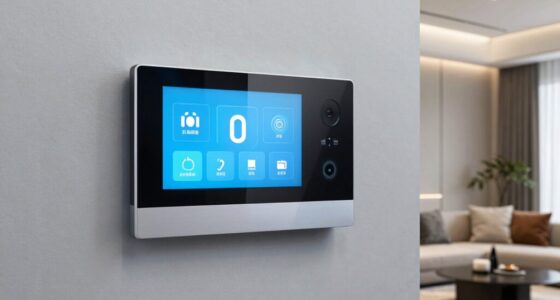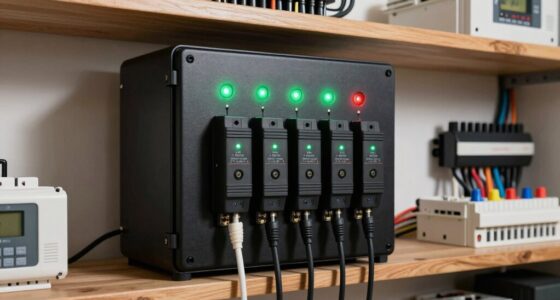
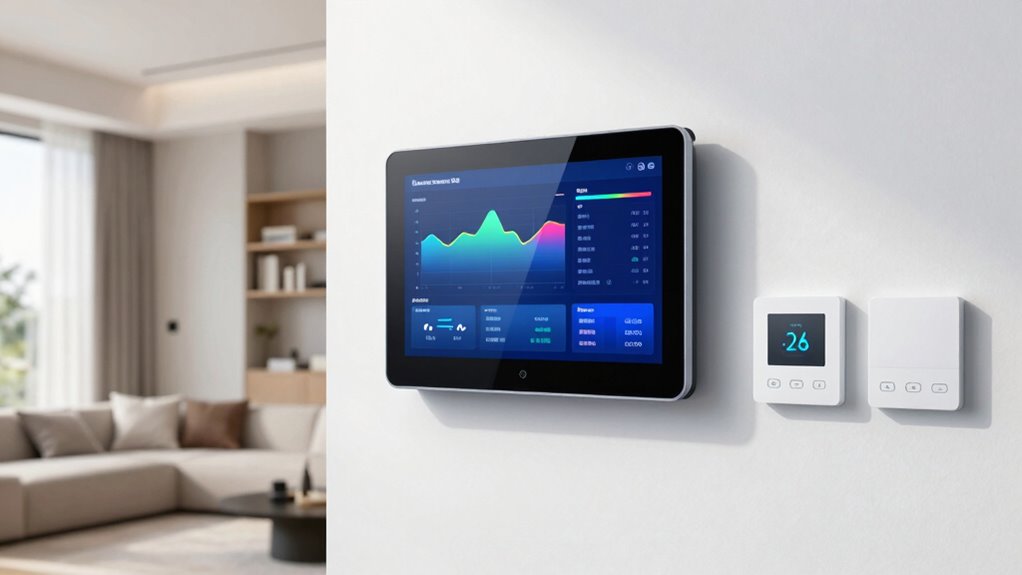

For anyone seeking comprehensive insight into their household energy use, home energy monitor systems for whole house tracking are essential. The best overall pick, Emporia Vue 3, combines detailed real-time data with affordability and smart home compatibility. Meanwhile, the SIEMENS Inhab Smart Home Energy Monitor offers professional-grade circuit sensing for advanced users, but at a higher cost. Most options balance between ease of installation, data granularity, and integration with smart home setups, yet tradeoffs often include complexity or price. Continue reading for a detailed breakdown of these systems, their strengths, and their limitations.

Get travel and outdoor gear delivered free with Prime
- Fast, free delivery on millions of items
- Prime Video, Amazon Music and more included
- Member-only deals all year
Complete the kit



Key Takeaways
- Most top-performing systems offer real-time data with cloud connectivity, but some prioritize local control via open APIs.
- Higher sensor count generally improves accuracy and coverage but increases complexity and cost.
- Compatibility with smart home platforms like Alexa or Home Assistant is a key differentiator for tech-savvy users.
- Entry-level options often lack detailed circuit-level tracking, making them better suited for basic energy monitoring.
- Premium models provide extensive data and customization but may overwhelm beginners or casual users.
| SIEMENS Inhab Smart Home Energy Monitor with Circuit Sensors |  | Best Overall for Comprehensive Whole-House Monitoring | Circuit Level Sensors: 16-50 Amp | Main Sensors: 2-200 Amp | Compatibility: USA and Canada | VIEW ON AMAZON | See Our Full Breakdown |
| Smart Home Energy Monitor with 16 50A Circuit Sensors |  | Best for Multi-Phase Systems and Wi-Fi Flexibility | Number of Sensors: 16 50A circuit sensors | Supports: Single-phase up to 240VAC, split-phase, three-phase | Connectivity: Dual-band Wi-Fi, RJ45 wired | VIEW ON AMAZON | See Our Full Breakdown |
| Smart Energy Consumption Monitor with 18 Circuit Monitoring |  | Best for Integration with Tuya Ecosystem and Detailed Data | Sensors: 2×200A + 16×50A | Compatibility: Tuya devices | Connectivity: WiFi 2.4 GHz | VIEW ON AMAZON | See Our Full Breakdown |
| Leviton LWHEM-2R Whole Home Energy Monitor with CTs |  | Best for Leviton Ecosystem Integration and Remote Management | Model: LWHEM-2R | Connectivity: Wi-Fi | Includes: Monitor with one pair of CTs | VIEW ON AMAZON | See Our Full Breakdown |
| Meross Smart Home Energy Monitor, Real-Time Power & Cost Tracking |  | Best for Privacy-Conscious Users and DIY Integration | Certification: ETL, UL 61010 | Compatibility: Single-phase 2-wire, split phase, 3-phase | Max Current: 200A main, 60A branch | VIEW ON AMAZON | See Our Full Breakdown |
| Emporia Energy Monitor with 16 Sensors and 4 Smart Plugs Bundle – Whole Home Electricity Tracking & Control |  | Best Overall for Comprehensive Home Energy Management | Sensors: 16 | Smart Plugs: 4 | Compatibility: iOS, Android, Alexa | VIEW ON AMAZON | See Our Full Breakdown |
| Emporia Vue 3 Home Energy Monitor + 1 Smart Plug Bundle – Whole Home Electricity Usage Tracking & Real-Time Control – Supports Solar Net Metering – Compatible with iOS, Android, Alexa |  | Best Value for Focused Whole-House Monitoring | Energy Monitor Type: Whole-home | Monitoring Capacity: Up to 200 A single-phase panels | Connectivity: Wi-Fi 2.4 GHz | VIEW ON AMAZON | See Our Full Breakdown |
| Emporia Energy Monitor with 8 Sensors and 2 Smart Plugs Bundle |  | Best for Mid-Range Whole-Home Monitoring and Automation | Sensors: 8 | Smart Plugs: 2 | Compatibility: iOS, Android, Alexa, Google Assistant | VIEW ON AMAZON | See Our Full Breakdown |
| Energy Monitor with 3 300A Circuit Level Sensors, WiFi Power Meter for Home Energy Management |  | Best for Precise Circuit-Level Monitoring | Sensors: 3 x 300A | Connectivity: WiFi 2.4 GHz | Accuracy: ±2% | VIEW ON AMAZON | See Our Full Breakdown |
| Refoss Smart Home Energy Monitor with Open API, Home Assistant, No Cloud |  | Best for Privacy-Conscious, Tech-Savvy Users | Model: EM16P | Control: Local Web UI, Open API, MQTT | Accuracy: ±1% | VIEW ON AMAZON | See Our Full Breakdown |
| Aeotec Home Energy Meter 8 – Smart Electricity Monitor with Z-Wave Long Range |  | Best Overall for Multi-Phase and Long-Range Monitoring | Model: Home Energy Meter 8 | Connectivity: Z-Wave Long Range | Clamp-On Sensors: 2x200A | VIEW ON AMAZON | See Our Full Breakdown |
| Smart Home Energy Monitor with 16 50A Circuit Sensors, Real-Time Power & Cost Tracking, Compatible with Home Assistant |  | Best for Multi-Circuit, Local Monitoring in DIY Smart Homes | Sensors: 16 50A sensors | Supported Voltages: Single-phase up to 240VAC, 3-phase up to 415Y/240VAC | Connectivity: WiFi, MQTT | VIEW ON AMAZON | See Our Full Breakdown |
| WiFi Home Energy Monitor with 2 x 120A CTs and Power Tracking |  | Best for Accurate Solar and Home Energy Management | Current Transformers (CTs): 2 x 120A | Connectivity: WiFi | Compatibility: Smart Life app | VIEW ON AMAZON | See Our Full Breakdown |
| Refoss Smart Home Energy Monitor with 16 60A Circuit Sensors |  | Best for Detailed Circuit Monitoring and Privacy | Number of sensors: 16 | Sensor current rating: 60A | Supported systems: Single-phase, Split-phase, 3-phase Wye | VIEW ON AMAZON | See Our Full Breakdown |
| Emporia Vue 3 Home Energy Monitor – Real-Time Electricity Usage and Power Consumption Meter |  | Best for Safety, Reliability, and Simple Monitoring | Certification: UL Listed | Supported Systems: Single-phase, 3-phase Wye | Sensors Included: Sixteen 50A sensors | VIEW ON AMAZON | See Our Full Breakdown |
| home energy monitor systems for whole house tracking | Connectivity | Compatibility |
|---|---|---|
| SIEMENS Inhab Smart Home Energ | — | USA and Canada |
| Smart Home Energy Monitor with | Dual-band Wi-Fi, RJ45 wired | — |
| Smart Energy Consumption Monit | WiFi 2.4 GHz | Tuya devices |
| Leviton LWHEM-2R Whole Home En | Wi-Fi | Leviton Smart Circuit Breakers |
| Meross Smart Home Energy Monit | WiFi, Open API | Single-phase 2-wire, split phase, 3-phase |
| Emporia Energy Monitor with 16 | — | iOS, Android, Alexa |
| Emporia Vue 3 Home Energy Moni | Wi-Fi 2.4 GHz | iOS, Android, Alexa, Google Home |
| Emporia Energy Monitor with 8 | — | iOS, Android, Alexa, Google Assistant |
| Energy Monitor with 3 300A Cir | WiFi 2.4 GHz | Single-phase, split phase, 3-wire, 3-phase systems |
| Refoss Smart Home Energy Monit | — | — |
| Aeotec Home Energy Meter 8 | Z-Wave Long Range | — |
| Smart Home Energy Monitor with | WiFi, MQTT | — |
| WiFi Home Energy Monitor with | WiFi | Smart Life app |
| Refoss Smart Home Energy Monit | Wi-Fi with external antenna | — |
| Emporia Vue 3 Home Energy Moni | Wi-Fi | — |
More Details on Our Top Picks
SIEMENS Inhab Smart Home Energy Monitor with Circuit Sensors
This model stands out for its robust integration directly into electrical panels, offering real-time energy tracking for the entire house and individual circuits. Compared with the Meross Energy Monitor, it provides a more seamless, panel-internal setup suited for those who want a comprehensive view without extensive customization. Its support for personalized alerts and advanced energy management makes it ideal for homeowners seeking detailed control. The main tradeoff is that installation generally requires a professional, and it’s limited to the U.S. and Canada, which could be restrictive for international users. For those comfortable with electrical work or willing to hire a pro, this offers the most complete monitoring experience.
Pros:- Real-time energy monitoring with a dedicated mobile app
- Supports personalized alerts and advanced energy management features
- Easy installation in existing electrical panels
Cons:- Limited to USA and Canada, restricting international users
- Installation may require professional help, increasing setup complexity
Best for: Homeowners wanting a fully integrated, professional-grade system with comprehensive circuit-level insights.
Not ideal for: Renters or DIY enthusiasts uncomfortable working inside electrical panels or residing outside North America.
- Circuit Level Sensors:16-50 Amp
- Main Sensors:2-200 Amp
- Compatibility:USA and Canada
- Standards:CE marked, UL Listed
Our verdict“This is best suited for homeowners seeking a high-fidelity, integrated monitoring system willing to invest in professional installation.”
Smart Home Energy Monitor with 16 50A Circuit Sensors
This monitor makes the most sense for users with complex wiring, supporting single-phase, split-phase, and three-phase systems. Unlike the Leviton LWHEM-2R, it offers clamp-on sensors for easy installation and supports both dual-band Wi-Fi and wired connections, enhancing connectivity stability. Its ability to monitor multiple system types broadens its appeal for larger or more diverse electrical setups. The main tradeoff is that it requires access to the circuit panel, which might be a challenge for some DIYers or renters. If you need detailed, flexible circuit monitoring in a multi-phase home, this is a well-rounded choice.
Pros:- Provides detailed real-time energy data for multiple circuits
- Supports multiple system types, including three-phase setups
- Easy clamp-on sensors simplify installation
- Supports stable dual-band Wi-Fi and wired connections
Cons:- Requires circuit panel access for installation
- No built-in display—requires smartphone or web interface
Best for: Homeowners with complex phase systems seeking flexible, reliable Wi-Fi connectivity and easy clamp-on installation.
Not ideal for: Renters or those uncomfortable opening their electrical panel or with only single-phase wiring.
- Number of Sensors:16 50A circuit sensors
- Supports:Single-phase up to 240VAC, split-phase, three-phase
- Connectivity:Dual-band Wi-Fi, RJ45 wired
- Installation:Clamp-on sensors
- Weight:4 pounds
- Dimensions:5.75 x 2.95 x 1.1 inches
Our verdict“This model appeals to users with multi-phase wiring and a preference for flexible connectivity options who are comfortable with installation complexity.”
Smart Energy Consumption Monitor with 18 Circuit Monitoring
This pick makes sense for users who want detailed power data and smart home integration, especially with Tuya-compatible devices. Unlike the Meross Energy Monitor, it offers accuracy within ±2% and supports complex circuit configurations with multiple sensors. Its user-friendly app simplifies setup, making it suitable for those with some technical comfort. The main tradeoff is that installation should be performed by qualified personnel for safety, and Wi-Fi stability is critical for accurate data. If you prioritize detailed monitoring and smart integration, this model delivers reliable, comprehensive insights.
Pros:- Highly accurate real-time power monitoring
- Supports integration with Tuya smart home devices
- Easy to install with a user-friendly app
- Helps reduce bills through detailed data
Cons:- Installation requires qualified personnel for safety
- Wi-Fi connection must be stable for reliable data
Best for: Tech-savvy homeowners seeking high accuracy and Tuya ecosystem compatibility for energy management.
Not ideal for: Inexperienced users or those who prefer plug-and-play solutions without professional installation.
- Sensors:2×200A + 16×50A
- Compatibility:Tuya devices
- Connectivity:WiFi 2.4 GHz
- Accuracy:±2%
- Monitoring:Power, voltage, current, power factor
- Installation:Clamp-on
Our verdict“Ideal for users who want precise, integrated energy data with smart home compatibility and are comfortable with professional setup.”
Leviton LWHEM-2R Whole Home Energy Monitor with CTs
This system excels for users already invested in Leviton smart devices, offering real-time energy data and remote control via Wi-Fi. Compared with the Meross or Siemens options, it emphasizes integration with Leviton’s smart circuit breakers and remote scheduling. Its setup can be complex for those unfamiliar with Leviton products, and it’s limited to Leviton-compatible systems, which narrows its appeal. The main tradeoff is that full functionality depends on compatible Leviton components, making it less flexible for mixed systems. If you want a tailored solution within Leviton’s ecosystem, this provides solid control and monitoring.
Pros:- Real-time monitoring and control via Wi-Fi
- Seamless integration with Leviton smart devices
- Supports remote scheduling and energy management
Cons:- Requires compatible Leviton smart circuit breakers
- Setup can be complex for non-technical users
- Limited support outside Leviton ecosystem
Best for: Homeowners with Leviton smart circuit breakers seeking integrated remote control and energy management.
Not ideal for: Users without Leviton breakers or who prefer universal compatibility across brands.
- Model:LWHEM-2R
- Connectivity:Wi-Fi
- Includes:Monitor with one pair of CTs
- Compatibility:Leviton Smart Circuit Breakers
- App:My Leviton
Our verdict“This is best for Leviton homeowners wanting seamless integration and remote control within a dedicated ecosystem.”
Meross Smart Home Energy Monitor, Real-Time Power & Cost Tracking
This pick shines for users who prioritize local data storage and no subscriptions while wanting detailed power and cost insights. Compared to the Siemens or Leviton, it supports circuit-level monitoring and integrates smoothly with Home Assistant, making it ideal for DIY enthusiasts and those concerned about privacy. Its ability to store up to 5 years of data provides long-term insights. The main tradeoff is that setup can be complex for non-technical users, and some reviews mention connectivity issues. If you value privacy, local control, and integration flexibility, this model offers a compelling solution.
Pros:- Accurate real-time energy and cost tracking
- Supports circuit-level monitoring
- Integrates with Home Assistant and offers local data storage
- No subscription fees, long-term data storage
Cons:- Setup can be challenging for non-technical users
- Connectivity issues reported by some users
- Limited to US electrical systems
Best for: DIY-savvy homeowners focused on privacy and long-term energy data management with smart home integration.
Not ideal for: Users unfamiliar with technical setup or those requiring plug-and-play solutions without extensive DIY effort.
- Certification:ETL, UL 61010
- Compatibility:Single-phase 2-wire, split phase, 3-phase
- Max Current:200A main, 60A branch
- Data Storage:Up to 5 years
- Connectivity:WiFi, Open API
- Included Components:Wire harness, CTs, insulation plugs
Our verdict“Best suited for privacy-conscious homeowners who want detailed, long-term energy data with smart home integration and are comfortable with DIY setup.”
Emporia Energy Monitor with 16 Sensors and 4 Smart Plugs Bundle – Whole Home Electricity Tracking & Control
This bundle stands out for its extensive coverage, including 16 sensors and 4 smart plugs, offering a detailed picture of your home’s energy use. Unlike the simpler Emporia Vue 3 bundle, this setup supports solar net metering and automation across multiple circuits, making it ideal for homeowners seeking full control. The complexity of setup and Wi-Fi dependency can be downsides for less tech-savvy users, but for those willing to invest time, this system provides unparalleled insight. Its comprehensive monitoring and automation features justify its larger scale and slightly higher price point, especially for households with renewable energy systems or multiple circuits to manage.
Pros:- Extensive coverage with 16 sensors for detailed household monitoring
- Supports automation and remote control via app and smart plugs
- Compatible with solar net metering for renewable energy integration
- Real-time data for proactive energy management
Cons:- Setup can be complex and time-consuming
- Dependent on Wi-Fi stability for full functionality
- Higher initial cost compared to simpler systems
Best for: Homeowners wanting complete, scalable energy management with solar integration and automation.
Not ideal for: Casual users seeking a simple, plug-and-play device without extensive setup or multiple sensors.
- Sensors:16
- Smart Plugs:4
- Compatibility:iOS, Android, Alexa
- Features:Real-time monitoring, automation, solar net metering support
Our verdict“This system is best suited for tech-savvy homeowners aiming for comprehensive, customizable home energy oversight, including solar support.”
Emporia Vue 3 Home Energy Monitor + 1 Smart Plug Bundle – Whole Home Electricity Usage Tracking & Real-Time Control – Supports Solar Net Metering – Compatible with iOS, Android, Alexa
Compared with the larger Emporia bundle, the Vue 3 with a single smart plug offers a more affordable entry point while still providing real-time, detailed energy data across your entire home. The Vue 3 excels in simplicity and ease of installation, making it suitable for homeowners new to energy monitoring, but its limited number of smart plugs means automation is more focused. Users seeking extensive device control or multiple sensors might find it restrictive, but its straightforward setup and solid features make it a smart choice for those prioritizing core insights without complexity.
Pros:- Real-time, detailed energy data for the entire home
- Easy to install and compatible with popular voice assistants
- Supports solar net metering and expandable with additional sensors
- Affordable bundle for basic monitoring needs
Cons:- Limited to only one smart plug in the bundle
- Wi-Fi dependency for full functionality
- May require some electrical knowledge for installation
Best for: Homeowners seeking a straightforward, cost-effective way to monitor whole-house energy use with optional device automation.
Not ideal for: Large households or users needing multiple sensors and extensive device control beyond one smart plug.
- Energy Monitor Type:Whole-home
- Monitoring Capacity:Up to 200 A single-phase panels
- Connectivity:Wi-Fi 2.4 GHz
- Compatibility:iOS, Android, Alexa, Google Home
- Includes:Vue 3 Energy Monitor, 1 Smart Plug
Our verdict“Ideal for users wanting reliable, real-time home energy insights without extensive automation complexity.”
Emporia Energy Monitor with 8 Sensors and 2 Smart Plugs Bundle
Compared to the larger Emporia bundle, this option offers a balanced mix of 8 sensors and 2 smart plugs, providing enough detail for most households without overwhelming users. Its compatibility with Alexa and Google Assistant supports convenient voice control, but fewer sensors mean less detailed circuit-specific data than the 16-sensor setup. This bundle is well-suited for homeowners who want a good level of monitoring and automation without the higher price or complexity of larger systems. The installation might require some electrical knowledge, but its multi-assistant support makes it flexible for various smart home setups.
Pros:- Good balance of sensors and smart plugs for whole-home and device monitoring
- Supports popular voice assistants for convenient control
- Helps reduce energy costs through automation and monitoring
- Compatible with Alexa and Google Assistant
Cons:- Installation may require electrical knowledge
- Limited sensors compared to larger setups for detailed circuit insights
- Wi-Fi reliance for full functionality
Best for: Households that want a solid middle-ground in energy monitoring with automation features.
Not ideal for: Homeowners requiring very detailed circuit data or extensive sensor coverage for complex homes.
- Sensors:8
- Smart Plugs:2
- Compatibility:iOS, Android, Alexa, Google Assistant
- Wi-Fi:2.4 GHz
- App:Emporia app for tracking and automation
Our verdict“This bundle offers a versatile, middle-tier solution ideal for users seeking both whole-home tracking and some automation features.”
Energy Monitor with 3 300A Circuit Level Sensors, WiFi Power Meter for Home Energy Management
Compared with the sensor-heavy Emporia options, this device focuses on accuracy at the circuit level with three 300A clamp-on sensors, making it ideal for detailed appliance or circuit monitoring. Its ±2% accuracy and data export capabilities provide precise insights for managing high-power devices, but its limited number of sensors means it isn’t suitable for comprehensive whole-house tracking. Installation should be handled by qualified professionals, especially for safety reasons, and it works best in standard single-phase systems. This monitor excels in detailed circuit analysis but isn’t designed for broad, whole-home automation or extensive sensor coverage.
Pros:- High accuracy at the circuit level with 300A sensors
- Supports data export for detailed analysis
- Easy to install with clamp-on sensors
- Integrates with smart home platforms
Cons:- Requires professional installation for safety
- Limited to certain electrical systems (no Delta systems)
- No direct Wi-Fi—depends on integrated system compatibility
Best for: Homeowners with specific high-power appliances or circuits needing accurate, circuit-level data.
Not ideal for: General users seeking extensive whole-house monitoring or automation across many circuits.
- Sensors:3 x 300A
- Connectivity:WiFi 2.4 GHz
- Accuracy:±2%
- Compatibility:Single-phase, split phase, 3-wire, 3-phase systems
- App Support:SmartLife app
Our verdict“Perfect for users needing precise, circuit-specific energy data, especially for high-power appliances.”
Refoss Smart Home Energy Monitor with Open API, Home Assistant, No Cloud
Compared to cloud-dependent options like the Emporia bundles, the Refoss monitor emphasizes local control and data privacy, making it ideal for users who prefer to keep their energy data within their own networks. Its open API and support for Home Assistant and OpenClaw AI allow for extensive customization and automation, especially for those with solar setups or advanced smart home systems. The device’s circuit-level insights and high accuracy (±1%) are appealing, but setup requires some technical skill, and it lacks built-in Wi-Fi, relying instead on a wired or local network connection. This system fits best for users who prioritize privacy and customization over plug-and-play convenience.
Pros:- Ensures data privacy with local control and no reliance on cloud services
- Supports home automation platforms like Home Assistant
- High accuracy with circuit-level insights
- Supports solar energy optimization and peak management
Cons:- Requires technical knowledge for installation and setup
- Limited to specific circuit sensor capacities
- No built-in Wi-Fi—relies on local network connection
Best for: Tech-savvy homeowners seeking local, secure energy management with open-source integration.
Not ideal for: Users uncomfortable with technical setup or those needing simple, cloud-based monitoring.
- Model:EM16P
- Control:Local Web UI, Open API, MQTT
- Accuracy:±1%
- Current Range:200A (main), 1–60A (branch)
- Installation:Clamp-on, supports most home circuit panels
Our verdict“Best suited for privacy-focused, tech-savvy users wanting deep customization and local control over energy data.”
Aeotec Home Energy Meter 8 – Smart Electricity Monitor with Z-Wave Long Range
This model excels at providing comprehensive real-time energy data across multiple phases, making it ideal for larger or complex electrical setups. Its support for surplus power measurement from sources like solar sets it apart from simpler monitors like the Emporia Vue 3, which primarily focus on basic consumption. The extended Z-Wave Long Range connectivity ensures reliable data transmission even in large homes or properties with challenging layouts. However, the requirement for a compatible Z-Wave hub and the complex setup process may deter beginners. This pick suits homeowners with advanced smart home integrations who need detailed, multi-phase monitoring, but it’s less suitable for those seeking plug-and-play simplicity.
Pros:- Real-time energy and surplus power tracking
- Supports multiple phases including solar integration
- Extended Z-Wave Long Range for broad coverage
- Secure data encryption with AES-128
Cons:- Requires a compatible Z-Wave hub for full functionality
- Setup can be complex for beginners
Best for: Homeowners with multi-phase systems and existing Z-Wave hubs who want detailed, scalable energy insights.
Not ideal for: Users new to smart home tech or without a compatible Z-Wave hub, as setup complexity could be overwhelming.
- Model:Home Energy Meter 8
- Connectivity:Z-Wave Long Range
- Clamp-On Sensors:2x200A
- Supports:2-phase power
- Encryption:S2, AES-128
- Range:up to 1 mile / 1.7 km
Our verdict“This is best suited for tech-savvy homeowners with complex electrical systems seeking detailed energy data.”
Smart Home Energy Monitor with 16 50A Circuit Sensors, Real-Time Power & Cost Tracking, Compatible with Home Assistant
This monitor stands out for its easy clamp-on installation and ability to track up to 16 circuits simultaneously, making it a practical choice for managing shared or rental properties. Compared with the Refoss Smart Home Energy Monitor, which offers extensive data analytics and local control, this model emphasizes local data handling with support for popular platforms like Home Assistant. Its support for various electrical configurations, from single-phase to three-phase, broadens its applicability. The reliance on MQTT and the need for a compatible smart home setup might be a barrier for less experienced users. This system appeals to DIY enthusiasts who want detailed circuit-level insights without cloud dependency.
Pros:- Simple clamp-on sensors for easy installation
- Supports multiple circuits and electrical configurations
- Local data processing without cloud reliance
- Compatible with popular smart home platforms
Cons:- Requires MQTT server and compatible setup
- Measurement accuracy limited to around 1%
Best for: DIY homeowners or property managers managing multiple circuits with existing smart home setups.
Not ideal for: Users seeking plug-and-play solutions or those without technical experience in MQTT or smart home configurations.
- Sensors:16 50A sensors
- Supported Voltages:Single-phase up to 240VAC, 3-phase up to 415Y/240VAC
- Connectivity:WiFi, MQTT
- Warranty:1 year
Our verdict“Ideal for tech-savvy users wanting detailed circuit-level energy data with local control capabilities.”
WiFi Home Energy Monitor with 2 x 120A CTs and Power Tracking
This device offers precise measurement of voltage, current, and power, making it well-suited for homes with solar systems or those interested in load balancing. Compared to the Refoss Smart Home Energy Monitor, which emphasizes detailed circuit monitoring, this model focuses on core power data with simple installation and real-time app control. Its bi-directional power monitoring and dynamic load balancing features support optimizing solar exports and grid consumption. The reliance on WiFi and limited compatibility info could pose challenges for integration with broader smart home ecosystems. It’s best for homeowners seeking accurate, real-time energy data with solar support, but not for those needing extensive circuit-level monitoring.
Pros:- High-accuracy power measurement for solar and home use
- Easy installation with split-core CTs
- Supports load balancing and export control
- Real-time data via mobile app
Cons:- Requires reliable WiFi connection
- Limited info on broad smart home system compatibility
Best for: Homeowners with solar installations wanting accurate tracking and load management.
Not ideal for: Users without stable WiFi or those needing detailed circuit breakdowns without additional solar features.
- Current Transformers (CTs):2 x 120A
- Connectivity:WiFi
- Compatibility:Smart Life app
- Features:Bi-Directional Power, Load Balancing
Our verdict“Best suited for solar-equipped homes aiming for precise power management and export optimization.”
Refoss Smart Home Energy Monitor with 16 60A Circuit Sensors
This monitor offers extensive circuit tracking for detailed energy analysis, making it ideal for users concerned about data privacy and local control. Its 16 sensors support a wide range of electrical systems, and the device’s focus on local data storage and analytics ensures no cloud dependency. Compared to the Emporia Vue 3, which emphasizes real-time mobile access, Refoss’s strength lies in its extensive data retention and privacy features. Its need for technical setup and lack of an integrated display may deter less experienced users. This product is perfect for energy-conscious homeowners with technical skills who prioritize local control and detailed circuit insights.
Pros:- Supports up to 16 circuits for detailed analysis
- Local data storage for 5 years, no cloud needed
- Supports multiple electrical system types
- Easy to install with adjustable sensors
Cons:- Requires technical electrical setup
- No built-in display; app-only data viewing
Best for: Homeowners with technical knowledge seeking detailed, privacy-focused energy monitoring.
Not ideal for: Less experienced users or those wanting a simple plug-and-play device with visual displays.
- Number of sensors:16
- Sensor current rating:60A
- Supported systems:Single-phase, Split-phase, 3-phase Wye
- Data storage:5 years
- Warranty:2 years
- Connectivity:Wi-Fi with external antenna
Our verdict“Ideal for users wanting comprehensive, privacy-focused circuit monitoring with extensive data retention.”
Emporia Vue 3 Home Energy Monitor – Real-Time Electricity Usage and Power Consumption Meter
The Emporia Vue 3 offers trusted safety certification with UL listing and a straightforward mobile app interface, making it suitable for users seeking reliable, real-time data for basic home energy management. Its support for solar and net metering aligns with environmentally conscious homeowners. Compared to the WiFi Home Energy Monitor, which emphasizes advanced load management, the Vue 3 prioritizes safety and ease of use. Its need for additional sensors to monitor 3-phase systems and limited data retention for minute data are tradeoffs for its simplicity. This model is best for homeowners wanting a dependable, certified monitor with straightforward controls, but not for those needing detailed circuit info or extensive customization.
Pros:- UL-certified for safety and dependability
- Supports solar and net metering
- Mobile app with real-time data access
- Includes multiple sensors for critical loads
Cons:- Additional sensors needed for 3-phase systems
- Limited to 7 days of detailed data retention
Best for: Homeowners prioritizing safety, reliability, and straightforward solar monitoring.
Not ideal for: Advanced users or those needing detailed circuit-level data without additional sensors.
- Certification:UL Listed
- Supported Systems:Single-phase, 3-phase Wye
- Sensors Included:Sixteen 50A sensors
- Connectivity:Wi-Fi
- Data Retention:7 days
- Warranty:1 year
Our verdict“This is a solid choice for safety-conscious homeowners seeking reliable, certified energy data with solar compatibility.”

How We Picked
These products were selected based on a combination of technical performance, ease of installation, build quality, and value for different user needs. Priority was given to systems that provide comprehensive whole house tracking, including circuit-level data, while also considering user interface and smart home compatibility. We evaluated each option for reliability, data accuracy, setup complexity, and ongoing maintenance. The ranking reflects a balance between advanced features for power users and simplicity for casual homeowners, ensuring diverse needs are addressed.Factors to Consider When Choosing Home Energy Monitor Systems For Whole House Tracking
Choosing the right home energy monitor system depends on multiple factors beyond just sensor counts or compatibility. Buyers should consider their technical skill level, budget, and whether they want local control or cloud-based data. Prioritizing features like smart home integration or solar net metering support can significantly affect long-term satisfaction. Understanding these broader considerations can help avoid common pitfalls like overpaying for features you don’t need or selecting a system incompatible with existing smart devices.Sensor Coverage and Accuracy
More sensors generally mean more detailed data, especially for large or complex homes. Circuit-level sensors provide granular insights, but they can also increase installation difficulty and cost. Assess whether you need detailed circuit data or if overall consumption tracking suffices. Remember, an overly complex setup might require professional installation, adding to the total expense. Conversely, too few sensors can miss critical insights, reducing the system’s usefulness.
Ease of Installation and Use
Some systems are designed for DIY installation with clear instructions and minimal tools, while others may require professional help. Consider your comfort with electrical work and whether the system offers features like plug-and-play sensors or easy wiring. User interface matters too—intuitive apps and dashboards reduce frustration. A system with complicated setup might deter regular use, defeating its purpose of providing ongoing energy insights.
Smart Home Compatibility
Matching your energy monitor with existing smart home platforms can enhance automation and control. Look for systems that support popular hubs like Alexa, Google Assistant, or Home Assistant. Compatibility can streamline your energy management, allowing voice commands or automation routines. However, be aware that some integrations are limited or require additional setup, which could be a barrier for less tech-savvy users. Consider whether the added smart features justify the price premium.
Data Privacy and Local Control
While cloud-based systems offer convenience and remote access, they also raise privacy concerns. If data security is a priority, opt for solutions like Refoss that emphasize local control and open APIs. These systems often avoid storing data in the cloud, reducing vulnerability to breaches. However, local-only systems might lack remote monitoring features, so weigh your need for privacy against convenience.
Value and Long-Term Costs
Initial price is just one part of the total cost. Consider ongoing expenses such as subscription fees, maintenance, or sensor replacements. More comprehensive systems tend to cost more upfront but can save money by providing precise data to optimize energy use or support solar integration. Balance your budget with your energy management goals, and avoid overspending on features you won’t utilize.
Frequently Asked Questions
Can I install a home energy monitor system myself?
Many systems are designed for DIY installation, especially those with plug-and-play sensors or simple wiring. However, circuit-level monitors that connect directly to your electrical panel may require a licensed electrician to ensure safety and compliance. Assess your comfort with electrical work and choose a system that matches your skill level. Proper installation is crucial for accurate data and safety, so don’t hesitate to seek professional help if needed.
Will a home energy monitor system save me money?
Yes, especially if it provides detailed insights that help you identify high-consuming appliances or inefficient usage patterns. By understanding where energy is going, you can make targeted changes, like scheduling appliances or upgrading to more efficient devices. Keep in mind, the upfront cost and complexity vary; investing in a more detailed system can pay off with greater savings over time, but simpler models can still deliver useful baseline information.
Are these systems compatible with solar panels or net metering?
Many high-end and specific models support solar integration and net metering, allowing you to track energy production versus consumption. Systems like Emporia Vue 3 and certain professional-grade monitors can interface with solar inverters or utility meters. Compatibility varies, so verify whether the system explicitly supports solar data if that’s a priority. Proper integration can help optimize your solar use and maximize savings.
How often do sensors need maintenance or replacement?
Most sensors are designed to last several years, with some requiring minimal maintenance. Battery-powered sensors need periodic battery replacements, while wired sensors are generally maintenance-free once installed. Regularly checking sensor connections and ensuring firmware updates keep the system running smoothly. Budget for potential sensor replacements over the system’s lifespan to avoid surprises in the future.
What’s the best choice for someone new to energy monitoring?
For beginners, systems with straightforward installation, clear dashboards, and reliable app support are ideal. Devices like the Emporia Vue 3 offer user-friendly interfaces and setup that don’t require electrical expertise. Avoid overly complex systems with extensive circuit wiring unless you’re comfortable with electrical work. Starting with a simple, affordable monitor can provide valuable insights without overwhelming you, making it easier to scale up later if desired.
Conclusion
For most users, the Emporia Vue 3 stands out as the best overall choice, balancing ease of use, detailed data, and affordability. Budget-conscious homeowners or renters may prefer simpler models that still provide useful insights, while tech enthusiasts will find premium options with extensive smart home integrations appealing. If privacy or local control is a priority, systems like Refoss are worth considering. Finally, those with solar or specific energy management needs should focus on models explicitly supporting these features. Tailor your choice to your technical comfort, budget, and energy goals for the best results.
Fall Picks
fall essentials
As an affiliate, we earn on qualifying purchases.