TL;DR
A compact travel toiletry bag keeps your everyday care items organized while taking up little space in a suitcase or backpack. Compare its dimensions with the toiletries you actually use, choose a layout that fits your trip, and treat a water-resistant lining as spill protection rather than a guarantee against leaks. For flights, check current liquid rules for your route; in the United States, TSA generally limits carry-on liquid containers to 3.4 ounces (100 milliliters) and requires them to fit in one quart-size clear bag, subject to exceptions and screening procedures.
A toiletry bag can look tiny on a product page and still swallow half your carry-on once you add your toothbrush, sunscreen and that bottle of face wash you refuse to leave behind. The word compact has no universal size definition, so the useful question is whether a bag fits your routine without crowding your luggage.

Get travel and outdoor gear delivered free with Prime
- Fast, free delivery on millions of items
- Prime Video, Amazon Music and more included
- Member-only deals all year
This guide helps you compare dimensions, compartments, materials and closures before you buy. You’ll also get a practical way to pack for flights, prevent messy spills and decide whether a hanging design earns its place. For example, a two-night trip with one shampoo bottle calls for a different setup from a week away with medication and a full skincare routine.
Product features and travel rules can vary. Check the bag’s product details and current official security guidance for your route before you pack. A smart choice should make the morning easier: open the bag, find what you need, and get on with your day.
Compare a bag’s actual dimensions with your usual toiletries; “compact” and capacity labels have no universal standard.
Choose compartments that separate items you use together, since too many dividers can shrink usable space.
Pick a soft pouch for flexible packing or a hanging design when you have a safe place to hang it.
Treat a water-resistant lining as help with small spills, and secure liquids in a separate sealed pouch.
Check current official liquid rules for every airport on your route; TSA’s standard U.S. carry-on limit is 3.4 ounces (100 milliliters) per container, with req…
Choose a bag that fits your real routine
A compact travel toiletry bag is a small organizer for the personal-care items you actually use on a trip, sized to fit your luggage without unnecessary bulk. There is no standard measurement for “compact,” and brands may describe capacity differently, so compare dimensions and layout rather than trusting the label alone. Think of it like choosing a lunchbox: the right size depends on what you bring, not the word printed on the lid.
For a weekend away, your list might include a toothbrush, toothpaste, deodorant, a small cleanser and daily medication. Lay those items on a table and measure the space they take up before shopping. If the bag’s width and depth suit your kit but it is much taller than you need, it may waste room in a personal-item backpack.
Photos can help, but look for ones showing the bag beside common objects or packed with toiletries. A stated capacity is only a guide; a wide opening can make a small bag easier to use than a deeper one with a narrow zipper. A compact travel toiletry bag should make your routine easier to manage, not tempt you to pack products you rarely touch.
Check the packed dimensions, too. A soft pouch can compress around clothes, while a rigid organizer keeps its shape and can protect a glass bottle. The tradeoff is luggage space: a rigid shell may claim the same capacity but be harder to tuck into a crowded suitcase.
Products Worth Considering

Samsonite Omni 2 Hardside 3-Piece Luggage Set – Midnight Black

Samsonite Tour Deluxe Hard-Sided Golf Travel Case

DJI Mini 5 Pro Fly More Combo with DJI RC 2, 1-Inch CMOS
As an affiliate, we earn on qualifying purchases.
Pick compartments that help you find things fast
Compartments help when they separate the items you reach for most, such as a toothbrush, small bottles or makeup. Elastic loops, mesh pockets and clear panels can stop things from sliding into a heap, but each divider takes up space. A compact travel toiletry bag works best when its pockets match your habits rather than offering a separate slot for every object.
Picture arriving late at a small hotel and brushing your teeth before bed. A loop that holds your toothbrush upright and a mesh pocket for toothpaste can save you from rummaging through a jumble of bottles. A clear panel may also help you spot a familiar container quickly, while opaque fabric offers more privacy for personal items.
Try a simple sorting rule: group what you use together. Keep dental care in one pocket, small grooming tools in another, and liquids in a separate pouch if you have room. If a design has many narrow elastic loops, check whether your bottles and tools actually fit them. An organizer designed around tiny sample tubes can waste space if you carry one broad sunscreen bottle.
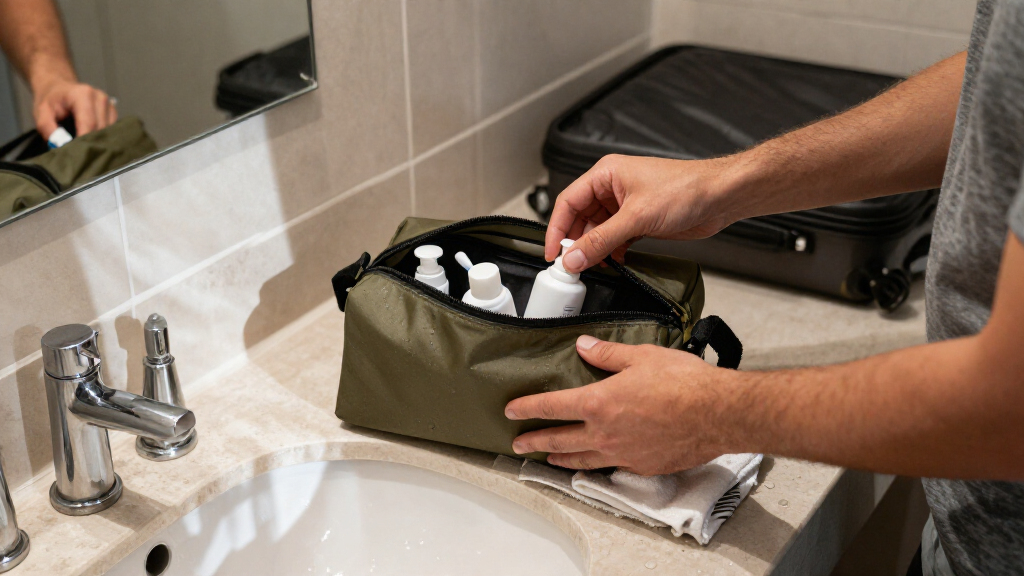
Before buying, imagine opening the bag on a shallow sink ledge. Can you see the essentials, or do you need to unpack the whole thing? Easy access matters most when you share a bathroom, get ready in a hurry, or want to keep the counter clear. More pockets are useful only when they reduce that daily shuffle.
Compare soft pouches with hanging organizers
A soft pouch packs flexibly, while a hanging toiletry organizer gives you access to its contents when counter space is limited. Neither style wins for every trip: your bathroom, luggage and routine decide which one earns its place. A hanging hook is handy when there is a suitable towel rail or door hook, but it does little if the room offers nowhere safe to hang it.
| Feature | Soft pouch | Hanging organizer |
|---|---|---|
| Packing | Compresses around clothes | May keep a more fixed shape |
| Bathroom access | Needs a counter or shelf | Can hang from a suitable hook |
| Organization | Often simple and flexible | May offer several visible sections |
| Best fit | Light packing and short stays | Shared bathrooms or limited counter space |
Imagine a weekend in a friend’s apartment, where the bathroom sink is already crowded. A hanging bag could keep your items together and off the counter, provided you can hang it securely. On a train or camping trip, a soft pouch may be easier to tuck into a daypack and use wherever you stop.
Check how the bag closes and whether its opened shape suits your needs. A hanging design can offer quick access, but may be awkward to fold back into a small personal item. A pouch takes fewer moving parts, yet you may have to place it on a wet counter. Pick the style for the space you expect, and treat the hook as a useful extra rather than a must-have feature.
Keep small leaks from turning into a suitcase mess
A water-resistant lining can help contain minor spills and make cleanup easier, but it does not promise to hold a serious leak. “Water-resistant” and “leakproof” describe different levels of protection, and seams or zipper areas can let liquid escape. Think of the lining like a rain jacket: useful against a splash, but not a sealed bottle.
For example, a shampoo cap can loosen when a suitcase shifts under a seat. Tighten each closure before packing, then place liquid bottles in a separate sealed pouch if a spill would ruin clothes or electronics. A small reusable pouch gives you a second barrier and makes it easy to pull liquids out at security or in a shared bathroom.
A compact travel toiletry bag should have a lining you can wipe clean, especially if you pack lotions or oils. Check the maker’s care instructions: some bags allow hand-washing, while others only need a damp cloth. Seams, zipper tape and fabric edges may need gentler care than the main lining.
A lined bag can simplify cleanup; secure bottle closures and a separate sealed pouch help limit the mess.
Keep medicines and time-sensitive essentials somewhere you can reach without unpacking every bottle. If you use prescription medicine, follow its storage instructions and keep it accessible during travel. A bag’s compartments can help with organization, but they do not replace safe storage or careful packing.
Pack for airport screening without guessing
For air travel, liquid restrictions generally apply to the containers and packing method, not the toiletry bag itself. Rules vary by country, airport and screening procedure, so check the official requirements for each airport on your route before you leave. In the United States, TSA’s standard carry-on rule limits liquid containers to 3.4 ounces (100 milliliters) or less, placed in one quart-size clear bag, subject to exceptions and screening procedures.
Suppose you are flying from the United States with a 150-milliliter bottle that is half full. The bottle’s size may still exceed the standard container limit; the amount remaining inside does not change its printed capacity. Check the current TSA guidance and your airline or destination authority’s instructions rather than assuming a toiletry pouch counts as the required clear bag.
Use this quick packing sequence before you zip up:
- Check the rules for your departure and connecting airports using their official security sources.
- Sort liquids from solid items such as a comb or toothbrush.
- Read container sizes and choose travel-size containers where the rules require them.
- Place liquids as directed in the required clear bag or other permitted format.
- Pack the rest separately so you can reach essentials without digging through liquids.
Some routes, screening lanes or item types may have exceptions, and procedures can change. A compact travel toiletry bag makes the kit easier to carry, but it does not make every container acceptable. Verify official guidance close to departure and leave enough time to repack if needed.
Choose materials you can clean and carry for years
Nylon and polyester are common choices because they are lightweight and can dry quickly after cleaning. The lining, seams and zipper matter just as much as the outer fabric: a wipe-clean interior helps after a lotion spill, while a weak seam can become the first point of failure. Product claims differ, so check care labels and construction details before you buy.
Imagine returning from a three-day trip with toothpaste residue near the zipper. A smooth lining may let you wipe it away with a damp cloth; a textured interior could take longer to clean. If you expect frequent travel, look for sturdy stitching and a zipper that moves without catching. A heavier, structured design may protect bottles, but it can also claim more room in your luggage when empty.
Reusable refill bottles can reduce your reliance on disposable travel-size packaging, and a durable bag may serve you for many trips. Some designs use recycled fabrics or advertise antimicrobial treatments, but the practical value and durability vary by product. Check the product details for what material is recycled and how the maker recommends washing the bag.
Try not to choose by fabric name alone. A thin nylon pouch with a smooth lining could suit a light weekend kit, while someone carrying grooming tools might prefer a sturdier shape. Match material and construction to how often you travel, where you store the bag, and how much cleanup you are willing to do.
Frequently Asked Questions
What size toiletry bag counts as compact?
There is no universal compact size. Compare the bag’s dimensions with your usual toiletries and the space in your suitcase or backpack. A pouch that holds a weekend kit may feel too small for a week away with a full skincare routine.
Can I take a toiletry bag through airport security?
Travelers can generally carry toiletry bags through security, but the contents must follow the rules for the airport and route. Check official guidance for liquid limits, required clear bags and any exceptions before departure. A regular toiletry bag does not automatically meet a liquid-packing requirement.
Are hanging toiletry bags worth it?
A hanging design can help when counter space is limited and there is a suitable place to hang it. It may be less convenient to pack than a soft pouch, especially in a small personal item. If you often stay in shared bathrooms, the added access can be worthwhile.
How can I stop toiletries from leaking in my luggage?
Tighten closures, check bottles before packing, and put liquids in a separate sealed pouch for another layer of protection. A water-resistant lining can help with minor spills but may not contain a serious leak. Keep medicine and other essentials accessible.
What material is easiest to clean?
Look for a wipe-clean lining and read the care instructions for the specific bag. Nylon and polyester are common lightweight outer materials, but seams and zipper areas can need extra care. A damp cloth may be enough for a small toothpaste smear; follow the maker’s instructions for a larger spill.
Conclusion
Choose your bag by laying out what you use, checking the dimensions, and asking whether you can find each item quickly in the bathroom you expect to share. A simple, wipe-clean layout that fits your routine will usually serve you better than extra pockets you never use.
Secure your bottles, check official flight rules, and let the bag earn its place in your luggage. The best one leaves room for the trip itself.