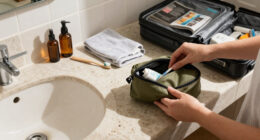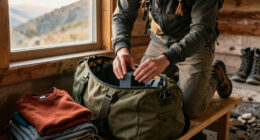

Use this guide to choose a compact travel toiletry bag, decide what belongs inside, and pack it so your essentials are easy to reach and less likely to leak. It is written for travelers who want a simple setup for a weekend away or a longer trip with access to laundry or shops. Allow about 30-45 minutes to gather your items, check your travel rules, and pack the bag. You will finish with a toiletry kit sized for your trip, with liquids contained and everyday items grouped where you can find them.

Get travel and outdoor gear delivered free with Prime
- Fast, free delivery on millions of items
- Prime Video, Amazon Music and more included
- Member-only deals all year

Purevave Compact Men’s Toiletry Travel Bag – Hanging Dopp Kit, Waterproof Wash Pouch, Black
- ✔ Dimensions: 10.04 x 3.54 x 5.12 inches
- ✔ Weight: 7 ounces
- ✔ Material: Nylon with durable water-repellent coating

Travelon Compact Hanging Toiletry Kit
- ✔ Dimensions, closed: 9 x 5.5 x 2.5 inches
- ✔ Dimensions, open: 16 x 9 x 1 inch
- ✔ Weight: 0.44 pounds (listed)

Tooletries Koby Dopp Kit Toiletry Bag – Mini (8.5" x 2.75" x 2") Charcoal
- ✔ Dimensions: 8.5 x 2 x 2.75 inches
- ✔ Weight: 0.15 kg
- ✔ Material: Silicone
Difficulty: Beginner | Time: 30-45 minutes
What You’ll Need
Tools & Materials:
- A small toiletry bag with a secure closure
- Travel-size bottles or solid versions of your usual toiletries
- A resealable waterproof pouch for liquids
- A small towel or tissue for checking bottles
- A list of personal care items you use
Knowledge:
- Basic familiarity with your daily personal care routine
- Awareness of your airline’s current carry-on liquid rules, if flying
Check your airline and destination rules before filling containers. Limits for liquids, aerosols, and medications vary by location and travel method. Keep prescription medicines in their original packaging when practical, and carry them according to applicable rules. If you have skin sensitivities or use a specific product for a health need, pack that item before optional extras.
Purevave Compact Men’s Toiletry Travel Bag – Hanging Dopp Kit, Waterproof Wash Pouch, Black
The Purevave makes the strongest all-round case for a compact trip because it combines a manageable size with more structure than a simple pouch. At 10.04 x 3.54 x 5.12 inches, it is slim enough to fit in a backpack or carry-on, while its multiple zippered compartments and elastic bands give small grooming items defined places. That organization is useful when we want to keep travel bottles and everyday essentials from shifting together.Compared with the Travelon, Purevave gives up the wide-open layout and mesh-pocket visibility, but adds water-resistant DWR nylon and waterproof zippers for more protection around damp bathroom surfaces. It is also less minimalist than the Tooletries Koby Mini, which packs smaller and wipes clean more easily. The tradeoff is a constrained capacity: larger bottles or a full week-plus kit may not fit comfortably. Its black-only color offering is another small limitation for travelers who prefer to distinguish bags by color.We would choose this model when one compact bag needs to cover a mix of travel and gym use without sacrificing basic separation. The hanging loop can help keep the pouch accessible in a bathroom, though the supplied details do not describe a swivel hook or a fully open layout like Travelon’s. It is the best balance here, but not the roomiest or the smallest.
Pros:
- Compact dimensions suit backpacks and carry-ons.
- Multiple zippered compartments and elastic bands help separate essentials.
- Water-resistant nylon and waterproof zippers offer added spill protection.
- Hanging loop allows access without leaving the bag on a counter.
Cons:
- Limited capacity can be restrictive for longer trips or larger bottles.
- Black is the only listed color.
Best for: Travelers who want a compact, organized kit with water-resistant materials and room for a modest set of essentials.
Not ideal for: Anyone carrying large toiletry bottles, a broad grooming routine, or enough supplies for an extended trip.
Bottom line: Choose the Purevave for the best combination of compact packing, internal organization, and water resistance in this lineup.
“Choose the Purevave for the best combination of compact packing, internal organization, and water resistance in this lineup.”
Travelon Compact Hanging Toiletry Kit
When counter space is tight, the Travelon Compact Hanging Toiletry Kit is the most access-focused design in this group. It opens from a closed 9 x 5.5 x 2.5 inches to a 16 x 9-inch layout, with two zippered compartments, three mesh pockets, and a swivel hook. Instead of digging through a deep pouch, we can hang it open and see smaller items at a glance. That layout gives it a clear advantage over the more enclosed Purevave.Travelon is also the only pick here whose main appeal is its unfolded organization rather than water protection or a minimal footprint. Its polyester ripstop construction is described as durable and lightweight, but it is not water resistant. That matters if toiletries leak or the kit is set beside a wet sink. The Purevave is the safer fit for moisture-prone packing, while the Tooletries is easier to wipe clean. Travelon’s 0.44-pound listed weight and 2.5-inch closed depth are reasonable for a hanging organizer, but this is not the smallest choice once packed.We would pick it for travelers who value visible organization and hands-free access over spill protection. Its capacity is still limited, especially for larger bottles, and its mesh layout may not suit anyone who wants toiletries fully enclosed. For a compact kit that opens into a bathroom station, it is the distinct specialist in this ranking.
Pros:
- Swivel hook lets the kit hang fully open for convenient access.
- Two zippered compartments and three mesh pockets aid visibility and separation.
- Ripstop polyester is designed to resist tears.
- Folds into a defined 9 x 5.5 x 2.5-inch shape.
Cons:
- Not water resistant, so damp conditions and leaks require extra care.
- Limited capacity may not fit larger toiletry bottles.
- Its opened layout is broader than the other bags when in use.
Best for: Travelers using compact or shared bathrooms who want a hanging organizer that opens wide and keeps small items visible.
Not ideal for: People who prioritize water resistance, need to contain potential leaks, or pack bulky toiletry bottles.
Bottom line: Choose Travelon when a clear, hanging bathroom layout matters more than water resistance or the smallest packed footprint.
“Choose Travelon when a clear, hanging bathroom layout matters more than water resistance or the smallest packed footprint.”
Tooletries Koby Dopp Kit Toiletry Bag – Mini (8.5" x 2.75" x 2") Charcoal
The Tooletries Koby Mini is the most compact option by length, measuring 8.5 inches, and its silicone construction gives it a different strength from the fabric bags. The surface is easy to wipe clean, and the leak-resistant design is suited to wet grooming items or a small set of daily essentials. Compared with the Purevave, it is more pared back: there are fewer internal compartments, but also less structure to take up space.That simplicity is both the reason to choose it and its main constraint. At 8.5 x 2 x 2.75 inches, the Koby Mini is best for a small routine, such as a few grooming basics, rather than a broad collection of bottles and accessories. The heavy-duty zipper and hanging loop support straightforward access, but the product details do not describe the kind of multiple pockets offered by Purevave or the open mesh layout of Travelon. Those alternatives make it easier to separate small items.For a gym bag, backpack, or carry-on where every bit of space counts, we like the compact shape and cleanable material. Its charcoal-only color and limited capacity make it less adaptable than Purevave for varied travel needs. Choose it when minimal size and simple cleanup matter more than compartment-by-compartment organization.
Pros:
- Shortest listed length in this lineup at 8.5 inches.
- Silicone construction is easy to wipe clean.
- Leak-resistant design suits wet grooming items.
- Heavy-duty zipper and hanging loop support simple access.
Cons:
- Limited internal compartments reduce organization options.
- Small capacity may not fit a larger grooming kit.
- Only charcoal is listed.
Best for: Minimal packers carrying a few essentials who want a small, wipe-clean bag for travel or gym use.
Not ideal for: Travelers with larger grooming kits, several bottles, or a strong need to separate small items into compartments.
Bottom line: Pick the Koby Mini when reducing bulk and cleaning up quickly matter more than flexible organization.
“Pick the Koby Mini when reducing bulk and cleaning up quickly matter more than flexible organization.”
As an Amazon Associate we earn from qualifying purchases.
Before You Start
Set out the products you use during a normal morning and evening. Include items needed for health, hygiene, vision, or dental care before adding cosmetics or extras. Check how many nights you will be away and whether you can refill, wash, or buy supplies during the trip. A compact kit works best when it holds the items you will actually use, rather than full-size duplicates or products packed “just in case.”
If you are flying, check current liquid and toiletry rules for each airport or airline on your route. Do not assume that rules are identical between countries or that a container is allowed because it is only partly full. Follow the applicable size limits and pack liquids so they can be removed for screening if required.
Step-by-Step Instructions
Step 1: Choose a bag that fits your trip
Measure the space where you plan to store the kit, such as a carry-on pocket, backpack compartment, or bathroom shelf. Choose a bag that fits that space when closed and has room for your essential items without stretching at the seams. Look for a zipper or closure that stays shut, an easy-to-clean lining, and a shape that stands up or opens wide enough for access. A hanging hook can help in a small shared bathroom, but it adds bulk; choose one only if you expect to use it.
Match the bag style to how you travel. A soft pouch is flexible and easy to tuck into luggage. A structured case protects items from being crushed and is easier to keep open on a counter. For a short trip, a single compact compartment may be enough. For a longer trip, a few pockets can separate liquids, tools, and daily essentials without making the bag oversized.
Tip: Do not choose by the empty bag’s appearance alone. A bag that is too small can strain its zipper, while a very large one invites unnecessary packing.
Check: The empty bag fits your planned luggage space and closes without force.
Step 2: Sort items by need
Place your usual toiletries on a clean surface and make three groups: daily essentials, useful extras, and items you can leave behind. Put medication, dental care, contact lens supplies, sunscreen, and any product you need for a health or skin condition in the essential group. Consider trip length and destination when choosing extras. For example, a comb may be useful every day, while a styling tool may be unnecessary if you can manage without it.
Check each product’s purpose and avoid packing two items that do the same job unless you have a clear reason. A small bar of soap may replace a bottle for some travelers; a combined shampoo and conditioner may suit some hair types. Keep products that do not work for you at home, even if they are small. Your travel kit should support your real routine, not a new one you may not follow.
Tip: If a product is medically necessary or difficult to replace, prioritize it over optional grooming items.
Check: You have a short, usable essentials group and a separate pile of optional items to review.
Step 3: Check containers and travel limits
Read the label and inspect every bottle, jar, and tube you plan to pack. Remove items that are nearly empty, cracked, sticky, or past their usable date. For products you use often, transfer only the quantity needed for the trip into travel-size containers that are suitable for that product. Label containers if you cannot identify them by sight, and note the product name rather than relying on memory.
For air travel, compare container sizes and packing requirements with the current rules for your route. A half-empty oversized bottle may still count as an oversized container under some screening rules. Place permitted liquids together in the required clear bag if your route calls for one. Keep medicines and other regulated items packed according to their specific instructions.
Tip: Do not transfer products into unmarked containers if you may confuse them or need the original instructions.
Check: Each container is intact, suitable for its contents, and within the rules that apply to your trip.
Step 4: Prevent leaks before packing
Close each liquid container firmly, wipe the outside clean, and turn it upside down over a tissue for several seconds. Replace a cap or bottle that seeps. For bottles with screw tops, check that the threads are clean and the cap sits straight before tightening it. Place liquids inside a resealable waterproof pouch, then close the pouch and press out excess air. Leave room inside it so the closure can seal fully.
Keep the liquid pouch separate from dry items such as toothbrushes, cotton swabs, and hair ties. If a product has a pump or flip-top, make sure it cannot open when squeezed against other items. You can add a small piece of absorbent material around a particularly messy product, but do not rely on it as the only protection against a leak.
Tip: Test containers over a sink or washable surface before putting them near clothing or electronics.
Check: No tissue becomes wet during the leak check, and the sealed pouch contains each liquid separately from dry supplies.
Step 5: Group small items for quick access
Put items with the same use together. Keep dental items in one small pouch or pocket, hair items in another, and medications or first-aid items in a clearly identified section. Place products you reach for first near the top or in the easiest pocket to open. Keep sharp tools such as nail clippers or tweezers in a secure pocket or protective cover, and follow any applicable rules for carrying them.
Use small containers only when they help you find or protect items. Too many tiny bags can take up space and make the kit harder to search. If your toiletry bag has several pockets, assign each pocket a consistent purpose. If it has one main compartment, use one or two simple pouches rather than loose piles.
Tip: Keep items that must stay clean, such as a toothbrush, inside a cover or separate sleeve.
Check: You can point to the pocket or pouch for each item group without unpacking the whole bag.
Step 6: Pack the bag in a stable order
Place heavier, sturdy items near the bottom or against the back of the bag. Add the liquid pouch in a position where it stays upright when possible. Fill gaps with soft items such as a folded washcloth, but leave room to remove the items you need each day. Put frequently used products near the opening and rarely used extras deeper inside.
Arrange bottles so caps are not pressed against hard edges or sharp tools. Keep the toothbrush and other clean items away from any product that could leak. Zip the bag slowly and check that fabric, cords, or pouch edges are not caught in the closure. If the bag bulges or the zipper pulls apart, remove an item or use a slightly larger bag rather than forcing it closed.
Tip: Pack the kit in the same orientation you expect it to sit in your luggage, especially if it contains liquids.
Check: The bag closes smoothly, stays compact, and its most-used items are reachable without removing everything.
Step 7: Check weight, access, and completeness
Lift the packed bag and place it in your luggage compartment. Confirm that it fits without bending the case or displacing items you need more often. Open it once as if you were at your destination. Check that you can remove a toothbrush, daily cleanser, or medication without unpacking the other groups. If you must dig through the kit, move those items closer to the opening or give them a dedicated pocket.
Compare the packed contents with your trip list. Confirm that essential products are present, the liquid pouch is sealed, and any item that must remain accessible during travel is stored accordingly. Remove duplicates and extras that did not make the list. Add a small note to your packing list about anything you still need to pick up, such as a product you cannot transfer until departure day.
Tip: Keep items you need during the journey, such as hand sanitizer or medication, in an accessible place that follows travel rules.
Check: The closed kit fits your luggage, opens easily, and contains every item on your essential list.
Step 8: Store and maintain the kit after the trip
After arriving, place the kit on a dry surface or hang it where it will stay clean. Keep the liquid pouch upright when possible. After your trip, empty damp items, wipe the lining, and let the bag dry fully before storing it. Refill travel bottles only after washing and drying them according to the product and container instructions. Replace any bottle, pouch, or closure that leaked or stopped sealing.
Before your next trip, review what you used and what stayed untouched. Replenish everyday essentials, remove products that were unnecessary, and update your list if your routine or travel plans changed. This keeps the kit ready without letting it gradually fill with forgotten samples and half-used containers.
Tip: Do not store a damp toothbrush or wet washcloth in a closed bag; trapped moisture can cause odor or residue.
Check: The bag is dry, clean, and ready to refill, and your packing list reflects what you actually used.
Common Mistakes to Avoid
- Packing full-size products for a short trip. — Estimate how much you will use, then select suitable travel containers or solid alternatives. Keep the original product at home unless the full size is needed or permitted for your travel method.
- Assuming a partly filled bottle meets a size limit. — Check the container’s marked capacity and the rules for your route. Follow the stated limits for the container itself, not only the amount of product inside.
- Putting all small items loose in one compartment. — Group related supplies in a few labeled or easy-to-recognize pockets. Separate clean items from liquids and protect sharp tools.
- Forcing an overfilled bag closed. — Remove optional items or choose a bag that fits the complete essential set. A strained zipper can open in luggage and make items harder to reach.
Troubleshooting
Problem: A bottle leaks during the upside-down test.
Solution: Empty and clean the bottle, inspect the cap and threads, and try a replacement container. Repeat the test over a sink before packing. Store any bottle that still seeps in a separate sealed pouch or leave it behind.
Problem: The bag will not fit in your carry-on compartment.
Solution: Remove optional items, switch to smaller suitable containers, or choose a softer pouch that uses the available space. Recheck the packed bag while it is closed; do not force it into a tight space if the closure may open.
Problem: You cannot find a daily item quickly.
Solution: Move it to a pocket near the opening or place it with the other items used in that routine. Keep the same pocket assignments each time you pack so you can find supplies by habit.
Problem: You are unsure whether an item can go in your cabin bag.
Solution: Check the current rules from your airline and the screening authority for every airport on your itinerary. Pack restricted or oversized items in checked luggage when allowed, or leave them out. Ask the airline or screening authority about unusual medical or personal care items.
What Success Looks Like
Your finished toiletry kit closes without pressure, fits the luggage space you selected, and contains the personal care items you need for the trip. Liquids sit inside a sealed protective pouch, dry and clean items stay separate, and the products you use each day are easy to reach. You have checked applicable travel rules and can confirm the kit against a short packing list.
Next Steps
Keep the packing list with your travel documents or save it where you can find it before the next trip. After each journey, note which items ran out, leaked, or went unused, then adjust the kit before packing again. Replace worn containers and let the bag dry fully after cleaning. If you travel by air, check route rules again before each trip because screening requirements can change.
Frequently Asked Questions
What size should a compact travel toiletry bag be?
Choose a size that fits your luggage and holds the essentials you will use on that trip. There is no single size that works for every traveler: a weekend kit may need only a small pouch, while a longer trip or specialized routine may need more space. Pack your items first, then choose a bag that closes comfortably around them.
How do I keep toiletries from leaking in my luggage?
Inspect containers, tighten caps, and test each liquid over a tissue before packing. Keep liquids together in a sealed waterproof pouch and position the pouch upright where possible. Replace containers that seep, and keep liquid products away from clothing and items that must stay dry.
Should I use travel bottles or buy toiletries at my destination?
Use travel bottles when you need a specific product, want to avoid buying another container, or may not find the product at your destination. Buying toiletries at your destination can make sense for common products on a longer trip, if shops will be accessible. Follow travel rules and use containers suitable for the product.
Can I pack medication in a toiletry bag?
You can pack many personal medicines with toiletries, but keep medicines protected, identifiable, and stored according to their instructions. Original packaging can help identify the contents. Check the rules for your destination and airline, especially for prescription medicines, liquids, needles, or temperature-sensitive products. Keep medicines needed during the journey accessible.
How often should I clean a travel toiletry bag?
Clean the bag after spills and after trips, then let it dry fully before storage. Follow the care label for washing or wiping the lining. Empty damp items promptly, and replace a pouch or container that continues to hold residue or odor after cleaning.
Fall Picks

DJI Osmo Action 5 Pro Essential Combo Waterproof 4K Action Camera
As an affiliate, we earn on qualifying purchases.