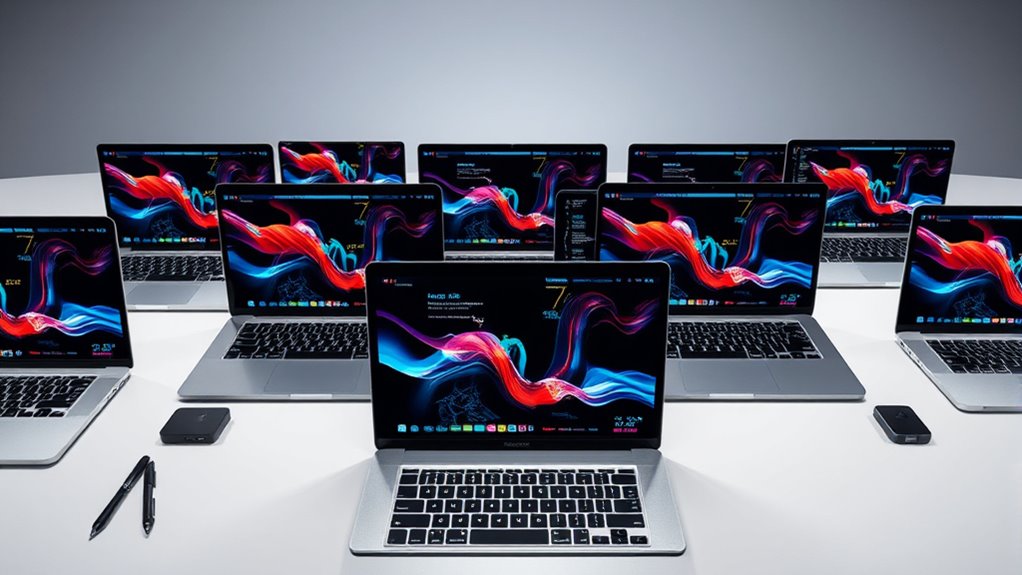

For data science and AI, I rank the 2026 16.2-inch MacBook Pro with M5 Pro, 48GB memory, and 1TB SSD as the strongest all-around choice here: it pairs substantial memory with a large display for coding and analysis. The 14.2-inch M5 Pro with 24GB is a more portable option, while the M5 Max with 128GB suits demanding local workloads that can use its extra memory. The main tradeoffs are memory and sustained workload capacity versus portability, storage, and the risk of paying for power your tools cannot use. An M5 MacBook Pro with 16GB can handle learning and lighter work, but it leaves less room for large datasets, containers, and local models. Read on for the full breakdown and help matching a configuration to your workload.

Get travel and outdoor gear delivered free with Prime
- Fast, free delivery on millions of items
- Prime Video, Amazon Music and more included
- Member-only deals all year
Complete the kit



Key Takeaways
- The 48GB M5 Pro configuration leads for mixed workloads: it offers more headroom than the listed 24GB and 16GB Pro models while retaining a 1TB SSD.
- Memory creates the clearest separation: the M5 Max’s 128GB is the standout for large local models and memory-heavy workflows, but most buyers should first confirm their software can use that capacity.
- Portability comes with a memory tradeoff: the 14.2-inch M5 Pro has 24GB, while the 16.2-inch M5 Pro has 48GB; choosing between them is about workload headroom as well as screen size.
- The two 16GB M5 Pro listings differ in storage, not listed memory: the 1TB model gives more room for datasets and environments than the 512GB version, while neither matches the memory headroom of the M5 Pro upgrades.
- Air and Neo models are not direct substitutes for the Pro picks: the listed 16GB Air configurations suit portable study and lighter analysis, while the Neo’s 8GB makes it the most constrained choice for multitasking and local AI work.





| macbook pro for data science and ai | Storage | Display | Processor | Ports |
|---|---|---|---|---|
| Apple MacBook Pro 13-inch | 512GB SSD | 13-inch LCD, 2560 × 1600 pixels | Intel Core i7, 2.3 GHz, 4 cores | — |
| Apple 2026 MacBook Pro Laptop | 1TB SSD | 16.2-inch Liquid Retina XDR | Apple M5 Pro, 18-core CPU and 20-core GPU | Three Thunderbolt 5, MagSafe 3, SDXC, HDMI, headphone jack |
| Apple 2025 MacBook Pro Laptop | 1TB SSD | 14.2-inch Liquid Retina XDR | Apple M5, 10-core CPU and 10-core GPU | Three Thunderbolt 4, MagSafe 3, SDXC card slot, HDMI, headphone jack |
| Apple 2026 MacBook Neo 13-inch | 512GB SSD | 13-inch Liquid Retina | Apple A18 Pro | — |
| Apple 2026 MacBook Air 15-inch | 512GB SSD | 15.3-inch Liquid Retina | Apple M5 chip | — |
| Apple 14.2-inch MacBook Pro wi | 1TB SSD | 14.2-inch Liquid Retina XDR, up to 1600 nits peak brightness | — | Three Thunderbolt 4, MagSafe 3, SDXC card slot, HDMI, headphone jack |
| Apple MacBook Pro Laptop with | 4TB SSD | 16.2-inch Liquid Retina XDR | M5 Max, 18-core CPU | Three Thunderbolt 5, MagSafe 3, SDXC, HDMI, headphone jack |
| Apple 2026 MacBook Pro Laptop | 1TB SSD | 14.2-inch Liquid Retina XDR | Apple M5 Pro, 15-core CPU | Three Thunderbolt 5, MagSafe 3, SDXC, HDMI, headphone jack |
| Apple 2026 MacBook Air 13-inch | 512GB SSD | 13.6-inch Liquid Retina | Apple M5 | Two Thunderbolt 4, MagSafe, headphone jack |
| Apple 2025 MacBook Pro Laptop | 512GB SSD | 14.2-inch Liquid Retina XDR | Apple M5, 10-core CPU | Three Thunderbolt 4, MagSafe 3, SDXC card slot, HDMI, headphone jack |
More Details on Our Top Picks
Apple MacBook Pro 13-inch (2020), Intel Core i7, 32GB RAM, 512GB SSD, Silver (Renewed)
The standout here is 32GB of memory, which gives this compact, older MacBook Pro room for multitasking and moderate data preparation. That capacity exceeds the 16GB in the 14.2-inch M5 MacBook Pro, but memory alone does not make this the stronger machine for AI: its four-core Intel processor and integrated graphics are a poor fit for demanding model training or GPU-heavy workloads. I’d choose it mainly when a project depends on Intel-era software or when a familiar macOS development setup matters more than current performance. The renewed condition adds another compromise: cosmetic wear is possible, and the stated battery capacity is only above 80% of original. Its 13-inch, high-resolution screen is portable, but the 90-day warranty is much shorter than the reassurance many buyers want for a primary work computer.
Pros:- 32GB of memory supports larger multitasking workloads than the 16GB M5 MacBook Pro configurations listed
- 512GB SSD provides useful room for development tools and datasets
- 2560 × 1600 display offers a sharp workspace in a compact 13-inch format
- Renewed unit is stated to be tested and fully functional
Cons:- Four-core Intel processor and integrated graphics limit demanding AI and parallel workloads
- Battery is stated to retain only more than 80% of its original capacity, with possible cosmetic wear
- 90-day warranty and potentially non-original accessories offer less reassurance than a new model
Best for: Developers who need an Intel-based Mac for legacy tools and want 32GB of memory for local data work.
Not ideal for: Buyers training modern AI models locally, or anyone who needs strong graphics performance, a long warranty, or a pristine new laptop.
- Model year:2020
- Processor:Intel Core i7, 2.3 GHz, 4 cores
- Memory:32GB LPDDR4X
- Storage:512GB SSD
- Display:13-inch LCD, 2560 × 1600 pixels
- Graphics:Integrated Intel graphics
- Battery:56 Wh; stated to exceed 80% of original capacity
- Condition and warranty:Renewed; 90 days
Our verdict“Choose this renewed model for Intel-dependent development and ample memory, not for current-generation AI performance.”
Apple 2026 MacBook Pro Laptop with M5 Pro Chip, 16.2-inch Liquid Retina XDR Display, 48GB RAM, 1TB SSD, Wi-Fi 7, Space Black
For data science that needs to stay on the laptop, I rank this first because it pairs an 18-core CPU and 20-core GPU with 48GB of unified memory. That gives larger notebooks, simultaneous development tools, and memory-hungry workloads more headroom than the 16GB M5 MacBook Pro or 15-inch M5 MacBook Air. The 1TB SSD also leaves more room for project files than the Air’s 512GB. Its 16.2-inch Liquid Retina XDR screen is useful when comparing code, charts, and documentation side by side, while Thunderbolt 5 and HDMI give professional setups more connection options. The tradeoff is substantial portability: at 4.71 pounds, it is heavier than the Air, and its power is excessive for coursework, cloud-based notebooks, or light analysis. I’d reserve this configuration for professionals who can use its extra compute and memory regularly.
Pros:- 48GB unified memory offers more room for large datasets and concurrent applications than the 16GB options
- 18-core CPU and 20-core GPU are the strongest listed combination for demanding local work
- 1TB SSD provides more project storage than the 512GB Air and MacBook Neo
- Thunderbolt 5, HDMI, and SDXC support a varied workstation setup
Cons:- At 4.71 pounds, it is considerably less convenient to carry than the 3.32-pound 15-inch MacBook Air
- Its high-end compute and memory are unnecessary for cloud-first or introductory data science
- The large 16.2-inch chassis may be awkward for buyers who favor a compact laptop
Best for: Data scientists and ML engineers who run sizable local workloads, keep many tools open, and need a large high-quality display.
Not ideal for: Students mainly using hosted notebooks or travelers prioritizing low carry weight over local compute and memory.
- Processor:Apple M5 Pro, 18-core CPU and 20-core GPU
- Memory:48GB unified memory
- Storage:1TB SSD
- Display:16.2-inch Liquid Retina XDR
- Connectivity:Wi-Fi 7 and Bluetooth 6
- Ports:Three Thunderbolt 5, MagSafe 3, SDXC, HDMI, headphone jack
- Battery life:All-day, as stated in the product description
- Weight:4.71 pounds
Our verdict“Pick this Pro when substantial local AI workloads justify its memory, graphics capability, and heavier build.”
Apple 2025 MacBook Pro Laptop with M5 Chip, 14.2-inch Liquid Retina XDR Display, 16GB RAM, 1TB SSD, Silver
This 14.2-inch Pro makes more sense than the 16.2-inch M5 Pro model for people who want a portable workstation, but its 16GB of unified memory sets a clear ceiling for local data and AI workloads. The M5’s 10-core CPU and GPU suit coding, analysis, and moderate experimentation; they do not match the M5 Pro’s 48GB memory and larger core counts when projects grow. Its 1TB SSD is a useful advantage over the 512GB MacBook Air, particularly for keeping environments and datasets on hand. The Liquid Retina XDR display and broad selection of listed ports—including HDMI and SDXC—make it a capable desk companion in a smaller frame. I’d pick it for frequent travel and general professional work, but skip it if large models or datasets routinely push past 16GB.
Pros:- Compact 14.2-inch Pro format is easier to carry than the 16.2-inch M5 Pro model
- 1TB SSD offers twice the listed storage of the 15-inch M5 MacBook Air
- M5 10-core CPU and GPU provide a capable base for coding and everyday analysis
- HDMI, SDXC, MagSafe 3, and three Thunderbolt 4 ports support varied peripherals
Cons:- 16GB unified memory is restrictive for large local datasets and memory-heavy AI work
- Its M5 chip has less CPU and GPU capacity than the M5 Pro configuration in this roundup
- The product description notes limited ports for some professional workflows despite its listed connections
Best for: Mobile analysts and developers who want a compact Pro display and ports for coding, visualization, and moderate local workloads.
Not ideal for: ML practitioners working with large models or datasets who need more than 16GB of memory for local computation.
- Processor:Apple M5, 10-core CPU and 10-core GPU
- Memory:16GB unified memory
- Storage:1TB SSD
- Display:14.2-inch Liquid Retina XDR
- Ports:Three Thunderbolt 4, MagSafe 3, SDXC card slot, HDMI, headphone jack
- Battery life:All-day, as stated in the product description
- Color:Silver
Our verdict“Choose this compact Pro for portable coding and moderate analysis, but favor the M5 Pro model when local AI workloads need more memory and compute.”
Apple 2026 MacBook Neo 13-inch Laptop with A18 Pro Chip, Liquid Retina Display, 8GB RAM, 512GB SSD, FaceTime HD Camera, Touch ID – Indigo
The MacBook Neo is the entry point in this lineup for learning Python, working through introductory notebooks, and connecting to remote compute. Its 13-inch Liquid Retina display and stated battery life of up to 16 hours favor classes and everyday portability, while 512GB of storage gives projects more room than a bare-minimum setup. But the 8GB of unified memory is the defining limitation: compared with the 16GB M5 MacBook Air, it leaves less breathing room for IDEs, browsers, and datasets running together. The A18 Pro is described as having AI capabilities, but the product data gives no CPU or GPU core count, so I wouldn’t choose it for serious local model work. Touch ID and iPhone integration help with daily use; they don’t offset the restricted memory for demanding workflows. This is a learning-and-cloud-compute pick, not a workstation substitute.
Pros:- Portable 13-inch format suits classes and frequent movement between study spaces
- 512GB SSD offers practical room for coursework and development tools
- Battery life is stated as up to 16 hours
- Touch ID and iPhone integration support convenient everyday use
Cons:- 8GB unified memory is the lowest capacity among these listed models and limits local workloads
- Product data does not specify CPU or GPU core counts, making compute capacity harder to compare
- Smaller screen gives less room for code, plots, and documentation than the 15.3-inch Air or Pro displays
Best for: New data science students using lightweight coding exercises, browser-based tools, and remote notebooks rather than large local datasets.
Not ideal for: Researchers, ML engineers, and multitaskers who need memory for local model work or several demanding applications at once.
- Processor:Apple A18 Pro
- Memory:8GB unified memory
- Storage:512GB SSD
- Display:13-inch Liquid Retina
- Camera:1080p FaceTime HD
- Battery life:Up to 16 hours
- Security:Touch ID, FileVault, Find My
- Color:Indigo
Our verdict“Choose the Neo for introductory, cloud-first learning, but spend up to the 16GB M5 Air or Pro if local data work is a regular need.”
Apple 2026 MacBook Air 15-inch Laptop with M5 Chip, 16GB RAM, 512GB SSD, Liquid Retina Display, Midnight
The 15-inch M5 Air is the sensible middle ground for data science buyers who want a roomy screen and modern performance without carrying the 16.2-inch M5 Pro. Its 15.3-inch Liquid Retina display makes notebooks, charts, and reference material easier to arrange than on the 14.2-inch M5 MacBook Pro, while the 3.32-pound build is far lighter than the 4.71-pound 16-inch Pro. With 16GB of unified memory, it can handle everyday analysis and coding, though it falls well short of the M5 Pro’s 48GB for larger local workloads. The 512GB SSD is also half the storage of the compact M5 Pro MacBook Pro. Its stated 18-hour battery life and Wi-Fi 7 suit a mobile, cloud-connected workflow; the lack of a dedicated GPU and limit of two external displays make it less suited to graphics-heavy or multi-monitor setups.
Pros:- 15.3-inch display gives data work more room than the 14.2-inch M5 MacBook Pro
- At 3.32 pounds, it is much lighter than the 16.2-inch M5 Pro MacBook Pro
- Up to 18 hours of stated battery life supports long mobile work sessions
- M5 chip and 16GB memory suit everyday analysis and development
Cons:- 512GB SSD provides less local storage than the 1TB M5 MacBook Pro options
- No dedicated GPU option limits appeal for graphics-heavy local AI workloads
- Limited to two external displays, which may constrain a multi-monitor desk setup
Best for: Students and analysts who want a large screen for coding and visualization, carry their laptop often, and use cloud compute for heavier AI tasks.
Not ideal for: ML engineers needing substantial local GPU capacity, more than 16GB of memory, or more than two external displays.
- Processor:Apple M5 chip
- Memory:16GB unified memory
- Storage:512GB SSD
- Display:15.3-inch Liquid Retina
- Battery life:Up to 18 hours
- Camera:12MP Center Stage
- Connectivity:Wi-Fi 7, Bluetooth 6, Thunderbolt 4 ports, MagSafe, headphone jack
- Weight:3.32 pounds
Our verdict“Pick this Air for a light, large-screen laptop for everyday data work, and choose the M5 Pro MacBook Pro for heavier local AI workloads.”
Apple 14.2-inch MacBook Pro with M5, 10-core CPU, 10-core GPU, 16GB memory, and 1TB SSD (Space Black)
For data science learners and analysts who want a Pro laptop without stepping up to a Pro or Max chip, this configuration pairs the M5’s 10-core CPU and GPU with a useful 1TB SSD. That extra room can hold datasets, environments, and project files more comfortably than the 512GB drive in the 2025 14-inch MacBook Pro with M5. The 14.2-inch XDR screen, SDXC slot, HDMI, and three Thunderbolt 4 ports also make it a capable desk-to-class machine with fewer adapter needs. Its limit is 16GB unified memory: it suits notebooks, moderate analysis, and smaller local models, but memory-heavy workloads may outgrow it. Buyers training large models should look instead at the M5 Max with 128GB.
Pros:- 1TB SSD leaves more room for datasets and project environments than the 512GB M5 Pro and base M5 configurations.
- 10-core M5 CPU and GPU suit everyday analysis, coding, and moderate on-device AI tasks.
- Liquid Retina XDR display provides a bright, high-contrast workspace.
- Three Thunderbolt 4 ports, HDMI, and SDXC support useful desk and media workflows.
Cons:- 16GB unified memory can constrain large datasets, containers, and local model work.
- The M5 Max model offers far more GPU and memory headroom for demanding AI workloads.
- The 14.2-inch screen gives less workspace than the 16.2-inch Pro models.
Best for: Students and working analysts who keep multiple datasets and development environments locally but run modest models or use remote compute for heavier AI work.
Not ideal for: Machine-learning practitioners who need to load large models or several memory-intensive tools at once; 16GB unified memory is the main constraint.
- Chip:Apple M5
- CPU:10-core
- GPU:10-core
- Display:14.2-inch Liquid Retina XDR, up to 1600 nits peak brightness
- Unified memory:16GB
- Storage:1TB SSD
- Ports:Three Thunderbolt 4, MagSafe 3, SDXC card slot, HDMI, headphone jack
- External displays:Up to two
- Weight:3.41 pounds
Our verdict“Choose this configuration if 1TB of local storage matters more to your data workflow than extra memory or higher-tier GPU performance.”
Apple MacBook Pro Laptop with M5 Max, 16.2-inch Display, 128GB Memory, 4TB SSD, Space Black
This is the lineup’s clearest choice for researchers and developers who need substantial compute and memory on the laptop itself. The M5 Max 18-core CPU, 40-core GPU, and 128GB unified memory give large datasets and demanding local workloads far more room than the 24GB M5 Pro configuration or the 16GB M5 models. A 4TB SSD also suits sizeable project libraries and model files, while the 16.2-inch XDR display offers more space for code, plots, and documentation. That capability comes with a real portability cost: it is larger and likely heavier than the 14.2-inch Pros, whose compact size is easier for commuting. Its battery is described only as all-day, with no duration supplied.
Pros:- 128GB unified memory provides extensive headroom for large datasets and memory-demanding local workflows.
- 40-core GPU and 18-core CPU are better suited to demanding compute than the M5 and M5 Pro options here.
- 4TB SSD accommodates substantial local datasets, models, and project files.
- 16.2-inch XDR display and Thunderbolt 5 ports support a powerful desk setup.
Cons:- The larger display and high-end configuration make it less convenient to carry than the 14.2-inch MacBook Pros.
- Its capabilities may be unnecessary for workflows that rely mainly on cloud GPUs or remote servers.
- The product data gives no specific battery-duration figure.
Best for: AI researchers and data scientists who need to run memory-intensive workloads locally, keep large model and dataset libraries, and prefer a spacious screen.
Not ideal for: Students or mobile analysts whose work is mostly notebooks, cloud compute, or moderate datasets; this configuration brings more size and capability than they may use.
- Processor:M5 Max, 18-core CPU
- GPU:40-core
- Display:16.2-inch Liquid Retina XDR
- Unified memory:128GB
- Storage:4TB SSD
- Ports:Three Thunderbolt 5, MagSafe 3, SDXC, HDMI, headphone jack
- Wireless:Wi-Fi 7, Bluetooth 6
- Battery:All-day; duration not specified
Our verdict“Pick this model when large-scale local AI workloads justify its extra size and extensive memory, GPU, and storage capacity.”
Apple 2026 MacBook Pro Laptop with M5 Pro Chip, 14.2-inch Liquid Retina XDR Display, 24GB RAM, 1TB SSD, Wi-Fi 7, Silver
The M5 Pro configuration is the middle ground for people whose data work has outgrown an entry-level memory allocation but does not call for the M5 Max’s 128GB. Its 24GB unified memory gives notebooks, analysis tools, and moderately demanding local AI tasks more breathing room than the 16GB M5 Pro alternatives, while the 15-core CPU and 16-core GPU step up compute capability. The 1TB SSD matches the storage of the 14-inch M5 Pro model described elsewhere in the roundup, but this listing adds Wi-Fi 7 and Thunderbolt 5. Compared with the 16.2-inch M5 Max, it is the more portable professional choice; in exchange, its GPU and memory ceiling are much lower for large local models.
Pros:- 24GB unified memory offers more working room than the 16GB M5 configurations.
- 15-core CPU and 16-core GPU provide a stronger professional workload tier than the standard M5 chip.
- 1TB SSD balances local project storage with a compact 14.2-inch form.
- Thunderbolt 5 and Wi-Fi 7 provide current high-speed connectivity.
Cons:- 24GB remains far below the 128GB available in the M5 Max model for large local AI workloads.
- The 14.2-inch screen offers less workspace than the 16.2-inch Pro.
- Apple ecosystem dependence may not suit buyers who need broad compatibility with non-Apple workflows.
Best for: Data scientists and AI developers who want a portable professional Mac for substantial coding and analysis, with more than 16GB memory but no need for extreme local model capacity.
Not ideal for: Researchers running large models or memory-heavy pipelines locally; the M5 Max configuration offers considerably more memory and GPU headroom.
- Processor:Apple M5 Pro, 15-core CPU
- GPU:16-core
- Display:14.2-inch Liquid Retina XDR
- Unified memory:24GB
- Storage:1TB SSD
- Wireless:Wi-Fi 7, Bluetooth 6
- Ports:Three Thunderbolt 5, MagSafe 3, SDXC, HDMI, headphone jack
Our verdict“Choose this M5 Pro when professional data work needs more memory and connectivity than a standard M5, but not the bulk of a Max configuration.”
Apple 2026 MacBook Air 13-inch Laptop with M5 Chip, 16GB RAM, 512GB SSD, Liquid Retina Display, Touch ID, Wi-Fi 7 – Midnight
For coursework, Python notebooks, and cloud-based AI tools, this Air prioritizes portability over the sustained-workload features of a MacBook Pro. The M5 chip and 16GB unified memory can suit learning and moderate analysis, while the compact 13.6-inch Liquid Retina screen and up to 18 hours of battery life favor long days away from a desk. Compared with the 14.2-inch M5 MacBook Pro, it gives up the XDR display, three Thunderbolt ports, HDMI, SDXC, and the Pro’s listed support for two external displays; it also has only 512GB storage. That makes it a less flexible workstation for frequent peripheral use or growing local datasets. Choose it over the Pro when carrying weight and battery runtime matter more than expanded ports and workspace.
Pros:- M5 chip and 16GB unified memory suit study, coding, and moderate data analysis.
- Up to 18 hours of battery life supports long sessions away from outlets.
- 13.6-inch design is more compact than the 14.2-inch MacBook Pro options.
- Wi-Fi 7, MagSafe, and two Thunderbolt 4 ports cover common mobile needs.
Cons:- 512GB SSD leaves less room for datasets and model files than the 1TB Pro configurations.
- Two Thunderbolt 4 ports offer less connection flexibility than the MacBook Pro’s broader port selection.
- The product data does not specify a dedicated GPU, making it a less compelling pick for GPU-heavy local AI work.
Best for: Students and early-career analysts who mainly use notebooks, coursework datasets, and remote AI compute, and value a light, battery-focused laptop.
Not ideal for: Data professionals who regularly connect several peripherals, need a larger local dataset library, or run demanding workloads for extended periods.
- Processor:Apple M5
- Display:13.6-inch Liquid Retina
- Unified memory:16GB
- Storage:512GB SSD
- Battery life:Up to 18 hours
- Camera:12MP Center Stage
- Ports:Two Thunderbolt 4, MagSafe, headphone jack
- Wireless:Wi-Fi 7, Bluetooth 6
- Audio:Four-speaker system with Spatial Audio and Dolby Atmos
Our verdict“Choose this Air for portable study and cloud-assisted data science; choose a MacBook Pro for heavier local compute and a broader workstation setup.”
Apple 2025 MacBook Pro Laptop with M5 Chip, 14.2-inch Liquid Retina XDR Display, 16GB RAM, 512GB SSD, Space Black
This is the straightforward entry point to the MacBook Pro experience for data science: the 10-core M5 CPU and GPU, XDR display, all-day battery description, and a strong selection of built-in ports. Compared with the 1TB M5 model in this roundup, it has the same listed chip and memory but half the SSD capacity, so growing datasets or multiple local environments may require external storage or cleanup. It is also less suited to large local AI workloads than the 24GB M5 Pro, whose extra memory and higher-tier chip give demanding projects more room. For students or analysts working with moderate datasets and cloud compute, the lower storage ceiling may be an acceptable compromise for access to HDMI, SDXC, and three Thunderbolt 4 ports.
Pros:- 10-core M5 CPU and GPU provide a capable base for coding, analysis, and moderate AI tasks.
- Liquid Retina XDR display supports detailed work with code, charts, and visualizations.
- Three Thunderbolt 4 ports, HDMI, and SDXC make peripheral connections convenient.
- All-day battery is described for work away from a desk.
Cons:- 512GB SSD provides less dataset and project space than the 1TB M5 configuration.
- 16GB unified memory is restrictive for large models and several demanding tools at once.
- The M5 Pro model is a stronger fit for heavier professional workloads.
Best for: New data science students and analysts who want a MacBook Pro for coding and moderate datasets, and are comfortable keeping larger files externally or in the cloud.
Not ideal for: Buyers who store large datasets locally or run memory-intensive AI tools; the 512GB SSD and 16GB unified memory are tighter limits than the M5 Pro or 1TB M5 options.
- Processor:Apple M5, 10-core CPU
- GPU:10-core
- Display:14.2-inch Liquid Retina XDR
- Unified memory:16GB
- Storage:512GB SSD
- Battery life:All-day
- Ports:Three Thunderbolt 4, MagSafe 3, SDXC card slot, HDMI, headphone jack
- Camera:12MP Center Stage
- Audio:Six speakers with Spatial Audio and Dolby Atmos
Our verdict“Pick this MacBook Pro as a capable starting point for data science if your datasets are moderate and 512GB of storage is enough.”

How We Picked
I ranked these configurations around the work data science and AI buyers actually run: notebooks, data cleaning, local databases, development environments, containers, and model experimentation. Memory received the most weight because it affects how much data and how many tools can stay active at once; I also considered chip tier, SSD capacity, screen size, portability, and the flexibility to handle longer or more demanding sessions. I treated listed specifications as configuration facts, not proof that every model or workflow will run at the same speed.
The order favors systems that balance useful memory headroom, storage, and Pro-class capability before systems built for lower-intensity work or niche needs. The M5 Pro models rank ahead of the 16GB M5 Pro configurations for heavier multitasking, while the M5 Max earns a specialized high-end position because its 128GB memory can matter greatly for suitable local workloads but may be excessive for routine analysis. Air and Neo models rank lower for sustained or memory-heavy work, and the 2020 Intel MacBook Pro ranks last because its older platform and renewed status make it a less compelling long-term choice for this use case.
| macbook pro for data science and ai | Ports | Battery life |
|---|---|---|
| Apple MacBook Pro 13-inch | — | — |
| Apple 2026 MacBook Pro Laptop | Three Thunderbolt 5, MagSafe 3, SDXC, HDMI, headphone jack | All-day, as stated in the product description |
| Apple 2025 MacBook Pro Laptop | Three Thunderbolt 4, MagSafe 3, SDXC card slot, HDMI, headphone jack | All-day, as stated in the product description |
| Apple 2026 MacBook Neo 13-inch | — | Up to 16 hours |
| Apple 2026 MacBook Air 15-inch | — | Up to 18 hours |
| Apple 14.2-inch MacBook Pro wi | Three Thunderbolt 4, MagSafe 3, SDXC card slot, HDMI, headphone jack | — |
| Apple MacBook Pro Laptop with | Three Thunderbolt 5, MagSafe 3, SDXC, HDMI, headphone jack | — |
| Apple 2026 MacBook Pro Laptop | Three Thunderbolt 5, MagSafe 3, SDXC, HDMI, headphone jack | — |
| Apple 2026 MacBook Air 13-inch | Two Thunderbolt 4, MagSafe, headphone jack | Up to 18 hours |
| Apple 2025 MacBook Pro Laptop | Three Thunderbolt 4, MagSafe 3, SDXC card slot, HDMI, headphone jack | All-day |
Factors to Consider When Choosing Macbook Pro For Data Science And Ai
I would choose a MacBook for data science by starting with the bottleneck in my actual workflow, not by chasing the largest chip name. These broader checks help separate a sensible development machine from a portable laptop that will depend on remote compute for demanding jobs.
Match Memory to the Work You Run at Once
Memory needs grow when a notebook, browser tabs, an IDE, a database, and a container stack run together. Dataset size alone is not a reliable guide: libraries may copy data into memory, and several active tools can consume capacity before model work begins. For coursework and cloud-based notebooks, 16GB may be workable; frequent local analysis benefits from more headroom. Large local models can require far more, but the model’s architecture, quantization, runtime, and context length all affect demand. I would check the memory guidance for the frameworks and models I plan to use before buying a high-memory configuration. Extra memory is difficult to add later, so it deserves more attention than a small difference in included storage if workloads are growing.
Decide Which AI Work Belongs on the Laptop
A MacBook can be a development client for cloud GPUs, a machine for smaller local experiments, or a tool for running larger workloads locally; those are different buying jobs. Framework support for Apple silicon and its GPU acceleration varies, and some research stacks, CUDA-specific tools, or production environments may require Linux or NVIDIA hardware. A powerful Mac does not remove those compatibility limits. If most training happens on rented or institutional compute, prioritize comfortable coding, memory for data preparation, and reliable connectivity over the highest chip tier. If privacy or offline access calls for local inference, verify that your chosen runtime supports the model and Apple GPU path you need. I would test a representative project before making local AI capability the main reason to upgrade.
Budget SSD Space for Data and Development Environments
Datasets are only part of storage use: package environments, container images, cached model weights, checkpoints, and project copies accumulate quickly. A 512GB drive can work when data lives on external or network storage, but it demands more active housekeeping than a 1TB configuration. External SSDs can add space, yet moving active data between drives may complicate scripts, backups, or travel workflows. Keep local capacity distinct from memory: a large SSD does not let a model exceed available RAM or unified memory. I would estimate the footprint of a typical project, keep room for temporary files, and choose a storage plan before the drive fills. For restricted or sensitive datasets, confirm that the storage and backup setup meets the applicable handling rules.
Choose Screen Size Around Your Work Pattern
A larger display can make side-by-side notebooks, documentation, and plots easier to manage without an external monitor. A 14-inch model is simpler to carry and can pair with a desk display when working at home or in a lab. The larger Pro configurations in this roundup also come with more memory, so buyers should distinguish the benefit of the screen from the benefit of the configuration. Air models offer a lighter alternative for people who value mobility and mostly use remote compute, but a thinner design is not the same thing as a Pro-class machine for sustained workloads. Think about where analysis happens most often, how many windows must stay visible, and whether a monitor is already part of the setup. Avoid paying for a larger laptop display if the machine will spend nearly all its working time docked.
Pay More Only for Work That Uses the Headroom
Higher-tier chips and large memory configurations make sense when jobs regularly exceed the comfortable limits of a lower configuration or when time saved has real value. They are less persuasive for introductory Python, SQL practice, lightweight visualization, and workloads run on remote servers. Before upgrading, identify the slow or constrained step: CPU-bound preparation, GPU-supported model work, memory pressure, or storage limits. A bigger chip will not fix software incompatibility, and added memory will not speed every task. The M5 Max’s 128GB is a specialized choice rather than a default target for every AI learner. I would buy for the workload I can describe today, with reasonable room for growth, rather than assume every data science project needs workstation-level hardware.
Treat Older and Renewed Hardware as a Separate Risk
An older Intel MacBook Pro may still serve basic coding tasks, but it is a different proposition from the Apple silicon models in this list. Compatibility, energy use, sustained performance, and the future support window can affect how useful it remains for evolving data tools. A renewed unit also calls for close attention to its condition, battery health, included warranty, and return terms, since those details can vary by seller. I would not select an older machine for local AI just because its listed memory looks generous; the full platform and software path matter too. It can make sense as a secondary or short-term development computer when the workflow is modest and the condition is verified. For a primary machine expected to handle years of new projects, the newer silicon options are the safer fit.
Frequently Asked Questions
Is 16GB of memory enough for data science and AI on a MacBook Pro?
It can be enough for learning, notebooks, SQL work, modest datasets, and projects that use cloud compute. The limit appears sooner when I keep an IDE, browser, database, containers, and data-processing jobs open together. Local model inference can also exceed what a 16GB configuration handles comfortably, depending on model size and runtime. In this lineup, 16GB M5 Pro models are more capable choices for lighter work than the 8GB Neo, but they have less headroom than the 24GB and 48GB M5 Pro configurations. If I expect to run larger local workloads or multitask heavily, I would prioritize a higher-memory model.
Should I choose the 48GB M5 Pro or the 128GB M5 Max?
I would choose the 48GB M5 Pro for a broad mix of analysis, coding, and moderate local experimentation. The 128GB M5 Max is for workflows that can use very large memory capacity, such as suitable local model workloads or unusually large in-memory datasets. More memory does not automatically mean every application runs faster, and software support can set the actual limits. The M5 Max configuration also includes 4TB of storage, which helps with local datasets and model files, but that capacity may be unnecessary if projects live on network storage. Check the memory footprint and hardware support of a representative workload before paying for the specialized configuration.
Can an M5 MacBook Air replace a MacBook Pro for data science?
For learning, remote notebooks, data exploration, and lighter coding, a 16GB M5 Air can be a practical alternative. It is less suited to buyers who regularly run demanding local workloads or want the additional memory options represented by the Pro configurations here. The 15-inch Air offers a larger workspace, while the 13-inch Air favors easier carrying; neither listed configuration has the 24GB or 48GB memory of the M5 Pro options. If a cloud server or lab machine handles model training, the Air may be the more sensible laptop role. If the laptop itself must host demanding local work, I would lean toward a higher-memory Pro.
Does a MacBook Pro work for AI projects that require CUDA?
Not as a substitute for a CUDA-capable NVIDIA system: Apple silicon uses a different GPU platform, and software support depends on each framework and project. Some AI tools support Apple silicon acceleration, while others expect CUDA or need changes to run well on a Mac. I would inspect the installation instructions for the specific libraries, model runtimes, and deployment environment I need. If CUDA is a firm requirement, plan to use a compatible remote server or a separate NVIDIA-based machine rather than buying the most powerful Mac and assuming it will meet that requirement. A MacBook can still be useful for editing code, preparing data, and connecting to remote compute.
Is the renewed 2020 Intel MacBook Pro a sensible option for current AI study?
It may handle basic programming and older tools, but I would treat it as a limited or temporary option rather than a primary AI workstation. Its Intel platform differs from every Apple silicon model in this roundup, and compatibility with current frameworks and acceleration paths needs verification. The listed 32GB memory is useful for some multitasking, but it does not erase the tradeoffs of an older processor, battery, and software support outlook. Since it is renewed, battery condition, warranty, and return terms also matter to the decision. For ongoing study with local experimentation, a newer M5 configuration is a more future-facing fit.
Conclusion
Best overall: I would pick the 16.2-inch M5 Pro with 48GB memory and 1TB SSD for buyers who want substantial headroom across analysis, development tools, and local experimentation. Best value: the 14.2-inch M5 MacBook Pro with 16GB and 1TB is a more restrained Pro choice for students and analysts who want ample listed storage but do not need the higher-memory configurations. Best premium: the M5 Max with 128GB and 4TB is for buyers whose local workloads can use that capacity. Best for beginners: the 13-inch M5 Air with 16GB suits learning and cloud-first projects; the Neo is better kept to basic work because it has 8GB. Best for portable Pro performance: choose the 14.2-inch M5 Pro with 24GB, while the 15-inch Air better suits someone who wants a larger screen for lighter work. I would skip the renewed 2020 Intel model for a primary machine unless its condition and software fit are clear and the workload is modest.
Halloween Picks
halloween
As an affiliate, we earn on qualifying purchases.