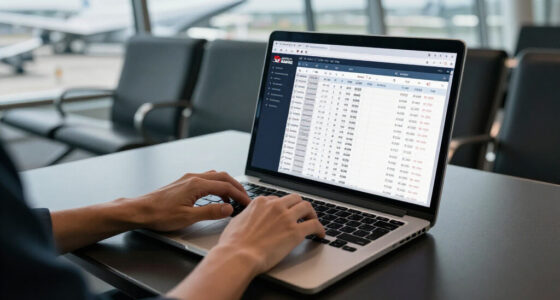
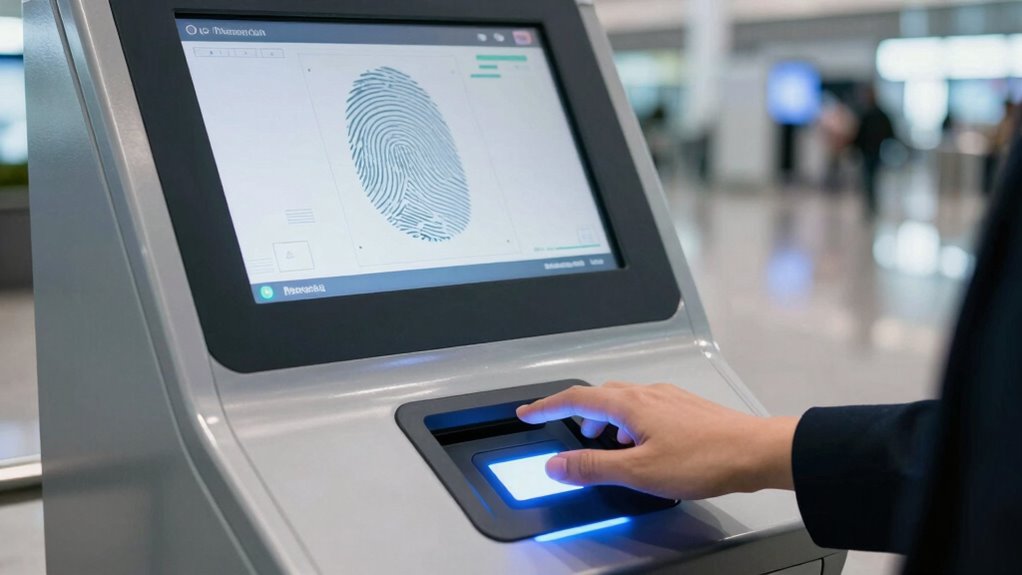

When you use biometric boarding, your facial or fingerprint data is captured and matched with secure databases to verify your identity, replacing the need for a boarding pass or ID. The data is stored securely—either locally, on airport servers, or in the cloud—and encrypted to prevent unauthorized access. Airlines follow strict privacy rules, but concerns about how your data is used and kept safe remain. If you want to understand how your data is managed and protected, keep exploring.

Get travel and outdoor gear delivered free with Prime
- Fast, free delivery on millions of items
- Prime Video, Amazon Music and more included
- Member-only deals all year
Key Takeaways
- Biometric data such as facial images or fingerprints is captured and matched to secure databases for boarding.
- Data is encrypted and stored locally, in airport systems, or in the cloud, depending on the airport’s policies.
- Airlines and airports follow strict privacy regulations to protect biometric information from unauthorized access.
- Responsible handling includes transparency about data collection, storage duration, and deletion policies.
- Continuous system improvements aim to enhance accuracy, security, and passenger convenience during boarding.
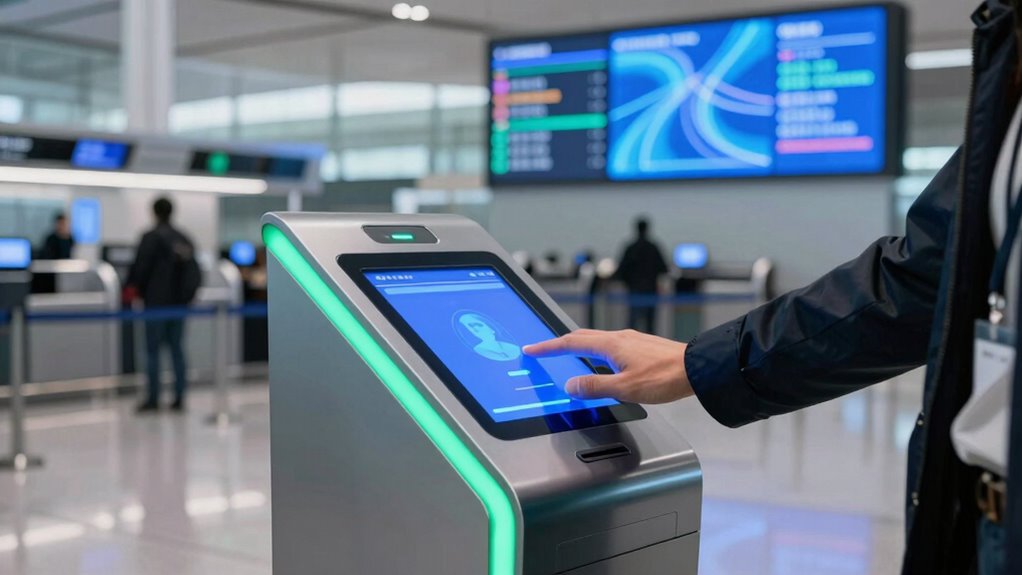
Have you ever wondered how airports are making boarding faster and more secure? It’s thanks to biometric technology, which streamlines the process by verifying your identity through facial recognition or fingerprint scans. Instead of showing a boarding pass or ID, you simply stand in front of a camera or place your finger on a scanner. This system instantly matches your biometric data to the records stored in a secure database, allowing you to move quickly through security and onto your flight. It’s convenient, reduces wait times, and minimizes contact with shared surfaces—especially important during health crises. But as you embrace this innovation, it’s natural to have questions about what happens to your data.
One major concern revolves around privacy. When your biometric information is captured, it’s stored somewhere—either locally on the device, in a secure airport database, or in the cloud. You might worry about who has access to that data and how it’s protected from misuse or breaches. Airlines and airports claim to follow strict data privacy regulations and encrypt your information to prevent unauthorized access. Still, the idea of your face or fingerprint being stored digitally can feel intrusive, especially if you’re unsure about the data’s longevity or how it might be used beyond boarding. Transparency from the operators about data collection, storage, and deletion policies can help ease these concerns, but it’s important to stay informed and cautious.
Biometric data privacy depends on secure storage, clear policies, and transparency to ensure responsible handling.
Another critical aspect is technological accuracy. For biometric systems to work seamlessly, they need to be highly precise. False positives—where someone is mistakenly identified as someone else—could lead to security risks or inconvenience. Conversely, false negatives—failing to recognize the rightful traveler—can cause delays or frustration. As technology advances, these systems become more accurate, but no system is perfect. Airports continually refine their algorithms, using high-quality cameras and sophisticated software to minimize errors. You can help by ensuring your biometric data is clear and up-to-date, which improves recognition accuracy and speeds up your boarding process.
Additionally, understanding the importance of data-driven strategies in developing these systems can be reassuring, as they rely on extensive testing and improvements to enhance reliability. You can help by ensuring your biometric data is clear and up-to-date, which improves recognition accuracy and speeds up your boarding process.
In the end, biometric boarding offers a smarter, faster way to travel, but it’s essential to understand what happens behind the scenes. Your biometric data is a valuable piece of personal information that needs to be handled responsibly. While airports work hard to balance convenience with security and privacy, staying informed about how your data is used and maintained will empower you to make choices aligned with your comfort level. As this technology evolves, so will the safeguards, making your airport experience safer, quicker, and more efficient.
biometric facial recognition scanner
As an affiliate, we earn on qualifying purchases.
As an affiliate, we earn on qualifying purchases.
Frequently Asked Questions
How Long Is Biometric Data Stored by Airlines?
Most airlines store your biometric data for the duration specified in their data retention policies, which can range from a few months to several years. You might have privacy concerns about how long your data is kept and how securely it’s stored. Always review the airline’s privacy policy to understand their data retention practices, and know that you can request data deletion if you’re uncomfortable with the length of storage.
Can Biometric Data Be Shared With Third Parties?
Did you know that over 60% of travelers are concerned about data privacy? Yes, biometric data can be shared with third parties, but only if airlines have your explicit consent or if required by law. Always review airline policies on third-party sharing to protect your privacy. Being informed helps you make smarter choices about how your biometric data is utilized and ensures you’re aware of potential privacy implications.
What Security Measures Protect My Biometric Information?
Your biometric information is protected through robust security measures like data encryption, which scrambles your data to prevent unauthorized access, and strict access controls that limit who can view or handle it. These measures ensure that only authorized personnel can access your sensitive data, keeping it safe from breaches. Rest assured, organizations prioritize these protections to safeguard your biometric details and maintain your privacy and security.
Is Biometric Data Required for All Airports?
Biometric data isn’t required at all airports; it depends on the country and airline. You might encounter it at specific hubs for faster check-ins, but privacy concerns remain. To protect your data, airports use data encryption and strict security protocols. If you’re uncomfortable, you can often opt out or choose traditional methods. Always review the airport’s policies to understand how your biometric information is handled and safeguarded.
Can I Opt Out of Biometric Boarding Procedures?
Yes, you can opt out of biometric boarding procedures. If you have privacy concerns, you should notify airline staff beforehand. Airlines are required to follow legal compliance standards, which often include providing alternatives for passengers who refuse biometric data collection. While opting out might mean additional manual checks, your privacy rights are protected, and you won’t be forced to participate in biometric procedures if you prefer not to share your data.
Conclusion
Now that you know the ins and outs of biometric boarding, you can confidently navigate the process. Remember, your data is diligently documented, and your privacy is a priority. By understanding what happens behind the scenes, you can make smarter, safer choices. So, stay savvy, stay secure, and steer smoothly through your سفر. With a little awareness, you’ll breeze through boarding, feeling confident and in control every step of the way.
Halloween Picks
halloween
As an affiliate, we earn on qualifying purchases.