

The main mistake that leaves you underpowered is choosing low-efficiency solar panels and undersized batteries. Cheaper panels often perform poorly on cloudy days or when shaded, reducing your power supply when you need it most. Without enough battery capacity, you won’t store enough energy for nighttime or overcast weather. To avoid this, you need to select high-quality panels and properly sized batteries. Keep going to discover how to optimize your camping solar setup for reliable power.

Get travel and outdoor gear delivered free with Prime
- Fast, free delivery on millions of items
- Prime Video, Amazon Music and more included
- Member-only deals all year
Key Takeaways
- Using low-efficiency solar panels reduces power generation, especially on cloudy or shaded days.
- Underestimating battery capacity leads to insufficient energy storage for nighttime or overcast conditions.
- Poor panel positioning diminishes sunlight exposure and overall system performance.
- Relying on cheap, low-quality equipment compromises durability and consistent energy output.
- Failing to consider environmental factors results in system inefficiencies and power shortages.
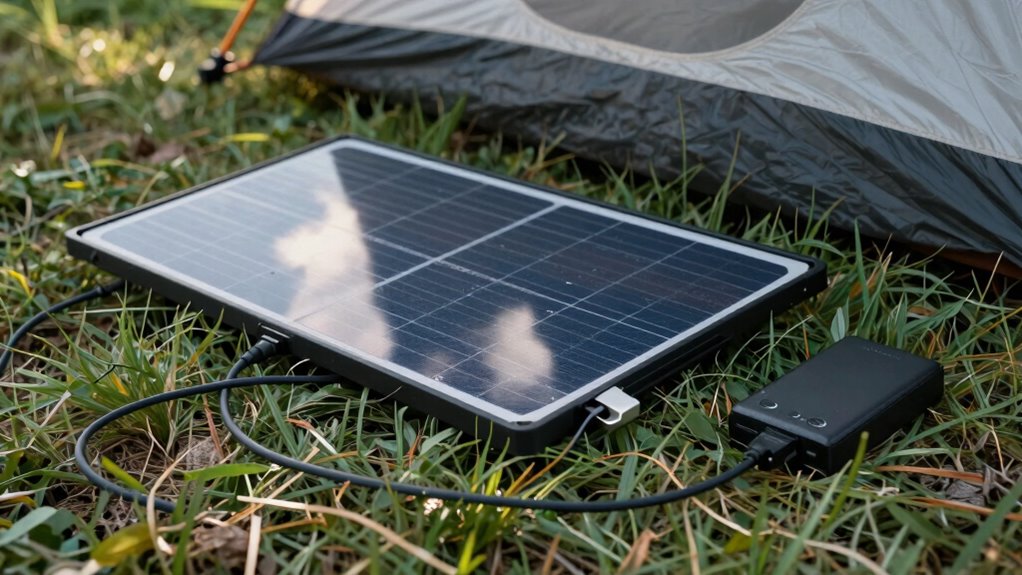
Camping solar kits can be incredibly useful, but many outdoor enthusiasts make simple mistakes that undermine their effectiveness. One common mistake is overlooking the importance of solar panel efficiency. You might think that any portable solar panel will do, but in reality, the efficiency of your solar panel determines how much sunlight it converts into usable electricity. Cheaper panels with lower efficiency won’t generate enough power on cloudy days or in shaded spots, leaving you underpowered when you need energy most. To avoid this, you should invest in higher-quality panels with better solar panel efficiency ratings. They might cost a bit more upfront, but they’ll produce more consistent power and make your camping experience smoother. Additionally, understanding the relationship between efficiency and output can help you make smarter choices when selecting equipment. It’s also beneficial to consider how different weather conditions can impact the overall system performance, as this can influence your equipment choices. Recognizing how environmental factors influence system performance can help you better prepare for various camping scenarios.
Another mistake people often make is not paying enough attention to battery capacity selection. You might buy a solar kit with a small battery simply because it’s cheaper or more compact, but this can backfire quickly. If your battery isn’t large enough to store the energy generated during the day, you’ll run out of power at night or during cloudy weather. This is especially frustrating when you’re trying to power multiple devices or keep essential gear like lights and communication equipment running. When selecting a battery capacity, think about your actual energy needs. Count up the devices you plan to run and estimate their daily consumption. Then, choose a battery that comfortably exceeds that amount to ensure you won’t be left in the dark. Remember, a larger capacity might mean a slightly heavier or bulkier setup, but it pays off by providing a reliable power supply. Proper system design can help improve overall efficiency and performance.
Many campers also underestimate how weather conditions can impact both solar panel efficiency and battery performance. Overcast skies, rain, and even dust can reduce the amount of sunlight hitting your panels, lowering their output. If your kit isn’t designed to handle these variations—either through higher efficiency panels or sufficient battery capacity—you may find yourself with less power than expected. To combat this, position your panels optimally and consider upgrading to models designed for low-light conditions. Additionally, choosing a battery with good temperature tolerance ensures it won’t lose capacity in cold or hot weather. Being aware of the impact of environmental factors can help you better plan and adapt your setup for different camping situations. Incorporating weather-resistant equipment into your setup can further safeguard against performance issues caused by environmental challenges.
In the end, avoiding these mistakes comes down to understanding the relationship between solar panel efficiency, battery capacity, and environmental factors. By selecting high-efficiency panels and a battery size that matches your needs, you’ll maximize your camping solar kit’s performance. Don’t fall into the trap of underestimating your power requirements or settling for cheap, low-quality equipment. With the right choices, you’ll stay powered up and enjoy your outdoor adventure without the frustration of running out of juice.
high efficiency portable solar panel for camping
As an affiliate, we earn on qualifying purchases.
As an affiliate, we earn on qualifying purchases.
Frequently Asked Questions
How Do I Determine the Right Solar Kit Size for My Needs?
To determine the right solar kit size, start by calculating your daily energy needs based on your devices’ power consumption. Consider your battery capacity to store enough energy for cloudy days or extended trips. Also, factor in panel efficiency to guarantee the solar panels can produce sufficient power given your available sunlight. This way, you avoid underpowered setups and ensure you have reliable energy wherever you camp.
What Are Common Signs My Solar Kit Is Underperforming?
You’ll notice your solar kit underperforming if your battery isn’t maintaining a proper charge or if shading issues block sunlight. Keep an eye on your battery’s health—if it’s not holding a charge, it’s a sign. Also, check for shading from trees or structures that could reduce sunlight exposure. Regular maintenance and positioning your panels for maximum sun can improve performance and prevent underpowered camping experiences.
Can I Upgrade My Solar Kit Later if Needed?
Yes, you can upgrade your solar kit later; think of it as adding new sails to your boat. You might expand your battery storage to hold more power or swap out your portable panels for more efficient ones. Just make sure your new components are compatible with your existing system. Upgrading is a smart way to keep your energy voyage smooth, even as your power needs grow.
How Weather Affects My Solar Kit’s Efficiency?
Weather greatly impacts your solar kit’s efficiency. Cloudy, rainy, or snowy days reduce sunlight, lowering power output. Shading issues from trees or buildings further decrease performance, so make sure your panels are clear of obstructions. Regular battery maintenance is essential, especially in fluctuating weather, to keep your system running smoothly. Being aware of weather patterns helps you optimize your setup, guaranteeing consistent power and preventing underperformance during less sunny days.
Are There Safety Concerns With Installing Solar Kits?
Yes, there are safety concerns with installing solar kits, but ironically, it’s often overlooked. Fire hazards can occur if wiring isn’t properly managed, and electrical safety risks stem from improper connections or damaged components. You might think solar power is risk-free, yet neglecting proper installation can lead to dangerous situations. Always follow safety guidelines, guarantee secure wiring, and avoid shortcuts to protect yourself from potential fire hazards and electrical accidents.
Conclusion
To avoid being underpowered on your camping trips, remember that choosing the right solar kit isn’t just about capacity but also efficiency. Nearly 60% of users report insufficient power due to poor compatibility or outdated technology, emphasizing the importance of proper research. By selecting a kit tailored to your energy needs and staying informed about the latest advancements, you guarantee your devices stay charged and your trip stays enjoyable. Don’t let a simple mistake ruin your outdoor adventure.
Halloween Picks
halloween
As an affiliate, we earn on qualifying purchases.