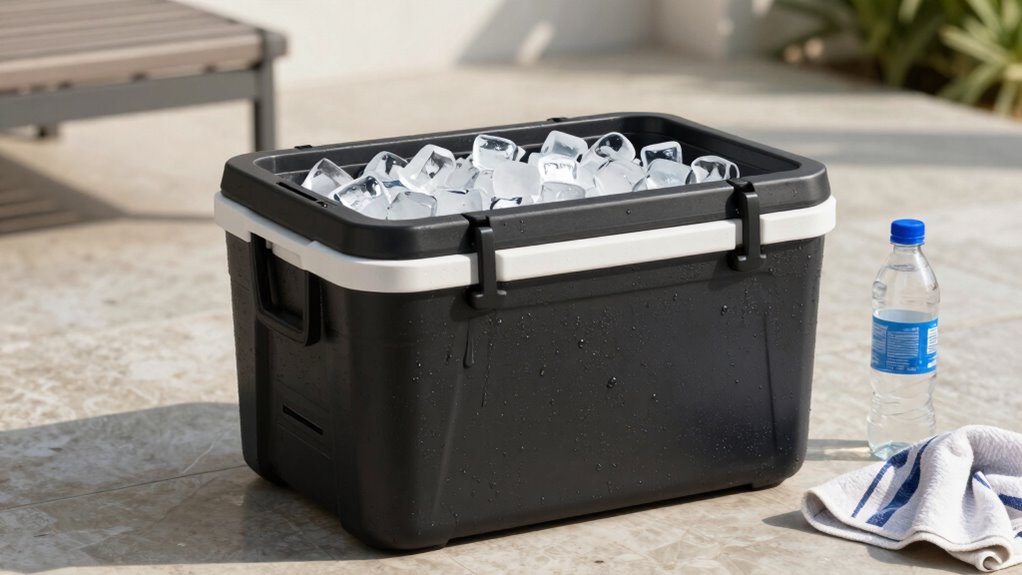

Your cooler choice hinges more on how you handle ice than on its size. If you prefer traditional ice, opt for a model with excellent insulation and enough space for ice blocks. If you use ice packs or prefer a mess-free setup, look for coolers designed to work well with alternatives and feature strong seals. Your ice habits shape the type of cooler that will keep your items cold longer and easier to manage—discover more by exploring further.

Get travel and outdoor gear delivered free with Prime
- Fast, free delivery on millions of items
- Prime Video, Amazon Music and more included
- Member-only deals all year
Key Takeaways
- Ice management style determines whether to prioritize coolers with superior insulation or easy access for ice replacement.
- Preference for traditional ice favors larger, well-insulated coolers with ample storage for ice blocks.
- Using ice pack alternatives reduces mess and extends cooling time, influencing the choice of coolers with good seal design.
- Frequent ice replenishment requires coolers designed for easy access and quick ice swaps, regardless of capacity.
- Long-term storage needs benefit from highly insulated coolers that maintain cold temperatures with minimal ice handling.
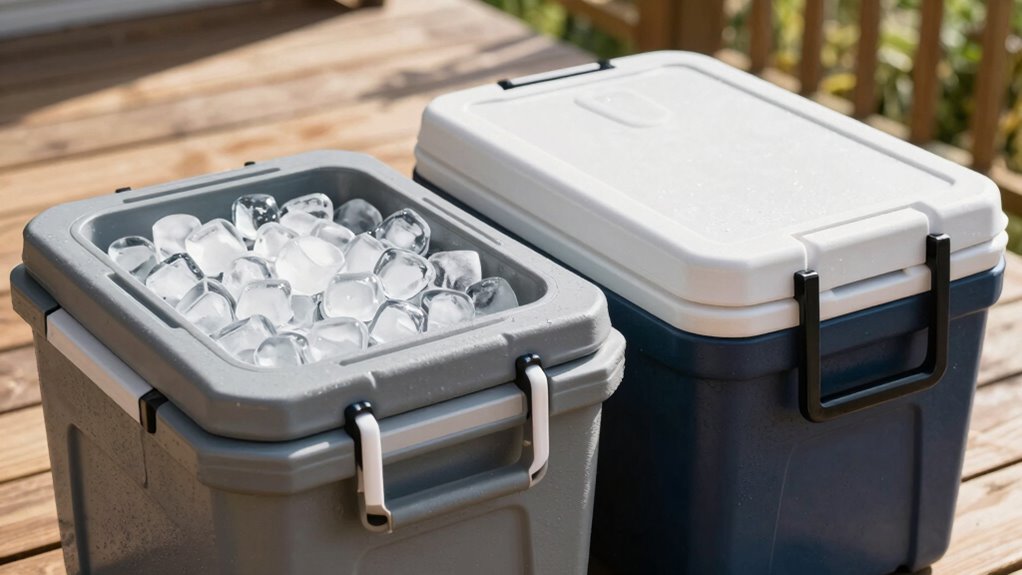
Choosing the right cooler hinges on how you handle your ice. Your ice management habits can make a significant difference in the type of cooler you should pick. If you prefer to keep things simple and rely on traditional ice, a cooler with excellent insulation and ample space for ice blocks might suit you best. But if you’re looking to minimize meltwater or want to avoid frequent ice replacements, you’ll need to evaluate other options. Ice pack alternatives, such as gel packs or reusable ice packs, can keep your items cold longer and reduce mess. These alternatives are especially handy if you’re conserving space or want a cleaner, more organized cooler setup.
Understanding insulation quality can help you select a cooler that maintains cold temperatures more effectively over time. Your choice also depends heavily on whether you’re on the go or staying stationary. Portable cooling options like compact, lightweight coolers designed for quick access or small packs are perfect for day trips, picnics, or short outings. They’re easy to carry and quick to refill or replace, especially when you use ice pack alternatives that don’t melt as fast as traditional ice. If you’re planning a longer trip, investing in a cooler with superior insulation becomes essential. Such coolers can maintain low temperatures for days, reducing the need for frequent ice replenishment, regardless of whether you’re using traditional ice or ice pack alternatives. Additionally, considering cooler material can impact overall durability and insulation performance. Proper cooler maintenance can also extend its lifespan and maintain optimal insulation.
Good seal design is also crucial in preventing warm air from entering and cold air from escaping, which directly affects the cooler’s efficiency. Thinking about your ice habits also guides you toward the type of cooler that matches your style of packing. If you tend to load your cooler with a lot of ice and water to keep everything chilled, a larger, more insulated model might be your best bet. But if you prefer to keep everything dry or avoid the mess of melting ice, you might lean toward coolers that work well with ice pack alternatives. These coolers often feature better seals and drainage systems, preventing leaks and making cleanup easier. Water leakage is a common concern with traditional ice, which is why choosing a cooler with good drainage can make a big difference. The convenience of portable cooling options comes into play here, too, as they allow quick swaps of ice packs without compromising the temperature.
Ultimately, your ice habits shape your cooler choice more than capacity does. If you’re someone who likes to fill your cooler with ice and let it sit for days, focus on thermally efficient models and traditional ice. But if you want a more flexible, low-maintenance approach, then portable cooling options and ice pack alternatives should be at the top of your list. By understanding how you handle your ice, you can select a cooler that keeps your food and drinks perfectly chilled while fitting your lifestyle.
As an affiliate, we earn on qualifying purchases.
Frequently Asked Questions
How Does Ice Type Affect Cooler Performance?
You’ll notice that the ice type directly impacts cooler performance by affecting ice melting rates and insulation quality. Using block ice melts more slowly, keeping your cooler colder longer, while crushed ice melts faster, requiring more frequent refills. High-quality insulation helps retain cold temperatures regardless of ice type, but selecting the right ice depends on your ice habits. Choosing the best combination guarantees your cooler stays effective throughout your trip.
What Cooler Features Improve Ice Retention?
To improve ice retention, look for coolers with superior insulation, which helps keep the cold inside longer. Additionally, a well-designed drain plug enhances efficiency by allowing you to remove melted water easily, preventing temperature fluctuations. You should also consider cooler thickness and seal quality. When these features work together, your cooler maintains ice longer, regardless of how often you open it or the outside temperature.
Can Choosing the Right Cooler Reduce Ice Usage?
Yes, choosing the right cooler can slash your ice usage. Think of it as a fortress of insulation—better cooler insulation keeps the cold in and the warmth out, making your ice last longer. When you pick a cooler designed for ice longevity, you won’t need to constantly top up. It’s like having a loyal ice guardian that preserves your chill, saving you trips and extra ice.
How Often Should I Replace or Refresh Ice in My Cooler?
You should replace or refresh the ice in your cooler every 1 to 2 days, depending on your ice storage and cooler insulation. If your cooler has excellent insulation, ice lasts longer, so you can refresh less often. Keep an eye on melting ice or water levels, and add fresh ice as needed to maintain cold temperatures. Regularly checking guarantees your contents stay cold and fresh without overusing ice.
Do Different Climates Impact Cooler and Ice Combination Choices?
Think of your cooler as a ship steering through different seas. In hot, humid climates, you need better climate adaptation, choosing a cooler with superior insulation and ice retention, even if it’s less portable. Conversely, in cooler or dry environments, portability might take priority. Your choice hinges on balancing climate factors with your ice habits, ensuring your cooler stays effective, whether docked in tropical heat or breezy mountain air.
Conclusion
So, next time you’re eyeing that massive cooler, remember—your ice habits might just be the real boss here. It’s ironic how a cooler’s size isn’t always the game-changer; instead, it’s how you handle your ice. You might think bigger means better, but if you’re an ice-changer, a smaller, smarter cooler could actually be your best friend. Who knew that the secret to cold drinks isn’t capacity, but your own habits?
Halloween Picks
halloween
As an affiliate, we earn on qualifying purchases.