
The quality of water you use in your espresso machine greatly affects the flavor and overall experience. Poor water can cause mineral buildup, scale, and inconsistent temperature or pressure, all of which ruin your shot. Regular maintenance, including water filtration and cleaning, is key. Achieving a balanced grind size and stable water conditions also matter. Want to uncover more simple tweaks that make a big difference? Keep exploring to make every shot perfect.
Key Takeaways
- Water quality and filtration directly influence espresso flavor, clarity, and machine longevity.
- Consistent grind size ensures even water flow, extraction, and optimal taste.
- Regular machine maintenance prevents mineral buildup, clogging, and temperature fluctuations.
- Proper water temperature and pressure control are vital for balanced, flavorful espresso shots.
- Integrating water filtration, grind consistency, and maintenance optimizes water interaction and overall espresso quality.
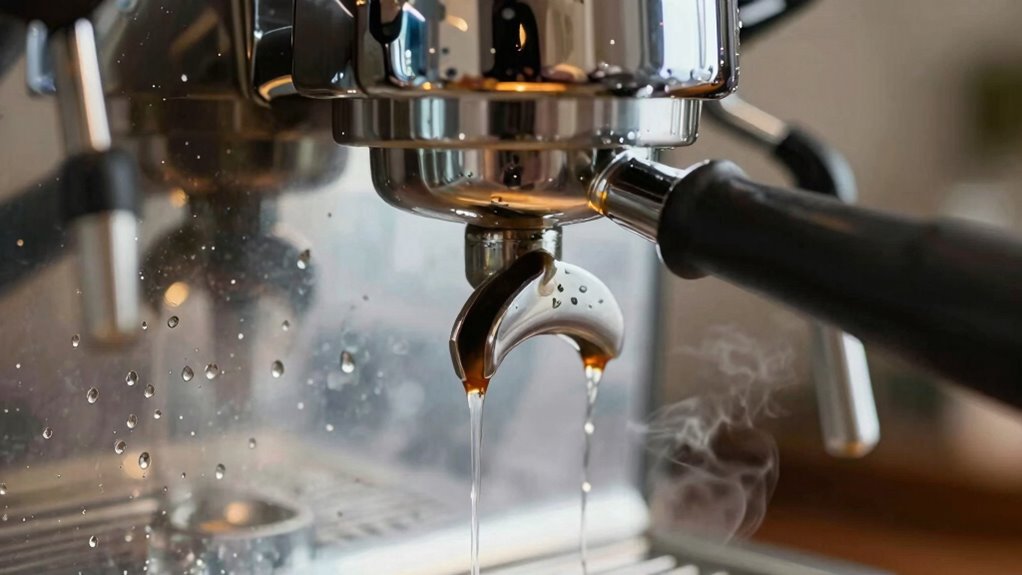
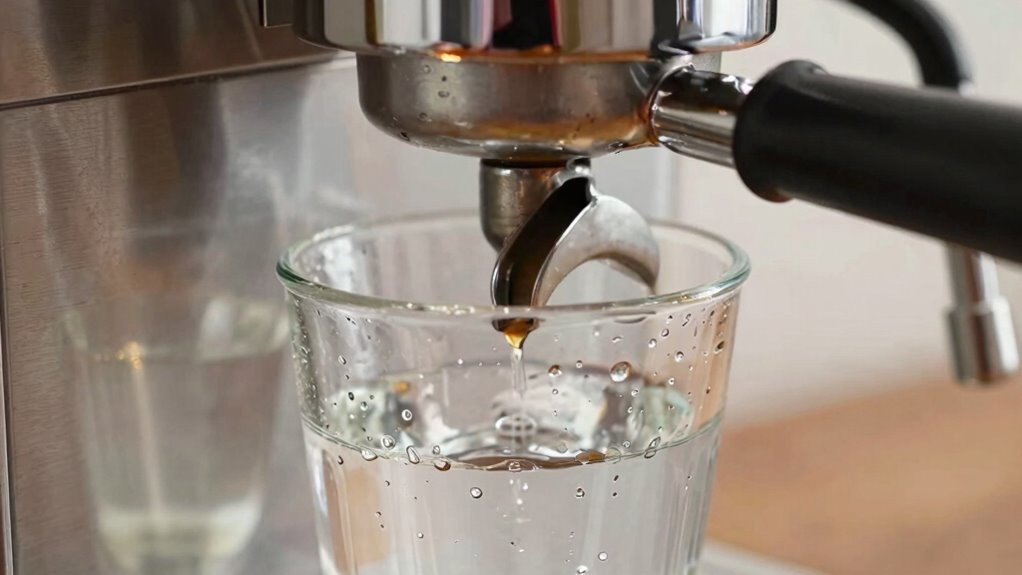
Have you ever wondered how baristas craft those rich, flavorful shots of espresso? The secret lies in a combination of precise technique and well-maintained equipment. But one of the most overlooked yet essential factors is the water you use and how your machine handles it. The water quality, temperature, and flow directly influence the taste and texture of your espresso. To achieve that perfect shot, you need to pay close attention to grind consistency and machine maintenance, as these elements work together to optimize water delivery and extraction. Proper water filtration can also significantly improve the taste and reduce mineral buildup, ensuring your machine operates smoothly.
First, consider grind consistency. It might seem minor, but the grind size and uniformity of your coffee grounds are critical. If your grind is too coarse, water flows through too quickly, resulting in a weak, under-extracted shot. Too fine, and it might clog the machine or cause over-extraction, leading to bitter flavors. Consistent grinding ensures your water interacts evenly with the coffee, extracting the full range of flavors without any bitterness or sourness. Using a burr grinder helps achieve this consistency, giving you uniform particles that promote even extraction. When your grind is inconsistent, you risk uneven water flow, which can compromise the quality of your espresso, regardless of how perfect your water temperature is.
Consistent grind size ensures even water interaction and optimal flavor extraction.
Next, machine maintenance plays a pivotal role in preserving water quality and flow. Regular cleaning prevents mineral buildup and clogs that could restrict water flow or alter temperature stability. Descaling your machine periodically is essential, especially if you’re in an area with hard water, as mineral deposits can insulate heating elements and interfere with proper water temperature. Additionally, replacing water filters as recommended ensures the water entering your machine is free of impurities that can affect taste and cause damage over time. A well-maintained machine not only produces better-tasting espresso but also lasts longer and performs more reliably. Neglecting maintenance can lead to inconsistent water pressure, temperature fluctuations, and ultimately, a compromised shot.
Furthermore, understanding and controlling water temperature and pressure are intertwined with machine upkeep. When your machine is clean and functioning correctly, it maintains stable pressure and temperature, which are essential for extracting the ideal flavors. If your machine struggles with maintaining these parameters, it might be time for a thorough cleaning or part replacement. Proper machine maintenance isn’t just about hygiene; it’s about creating an environment where water can do its best work. When these elements align—grind consistency, clean equipment, and stable water parameters—you’ll notice a marked improvement in your espresso’s richness, balance, and complexity.
espresso machine water filter
As an affiliate, we earn on qualifying purchases.
As an affiliate, we earn on qualifying purchases.
Frequently Asked Questions
How Does Water Mineral Content Affect Espresso Flavor?
Your espresso flavor depends heavily on water mineral content. Too many minerals, like calcium and magnesium, can dull the taste, so water softening helps reduce these and enhances clarity. Mineral filtration removes impurities and excess minerals, ensuring a smoother, more balanced shot. By controlling mineral levels, you improve extraction and flavor, making your espresso richer and more consistent. Proper water treatment is key to achieving that perfect espresso taste.
What Water Temperature Is Ideal for Espresso Extraction?
You should aim for an ideal water temperature of around 195-205°F (90-96°C) for espresso extraction. To achieve this, make certain your water filtration system maintains temperature stability, preventing fluctuations that can impact flavor. Using filtered water not only helps with mineral content but also promotes consistent temperature, which is vital for extracting the best flavors from your coffee. Proper temperature control ensures a balanced, rich espresso taste.
Does Water Pressure Impact Espresso Quality?
Think of water pressure as the conductor of your espresso symphony. If it’s off-key, the whole performance suffers. Proper pressure regulation guarantees water flows smoothly through the coffee, extracting rich flavors. Water filtration also plays a role, removing impurities that could hinder pressure consistency. When both elements work harmoniously, your espresso hits every note perfectly, delivering a balanced, exquisite taste that elevates your coffee experience.
How Often Should I Clean My Machine’s Water System?
You should clean your machine’s water system at least once a month to maintain peak performance. Regularly check your water filtration system and replace filters as recommended to prevent mineral buildup. Descaling frequency depends on your water hardness—if you have hard water, do it more often, roughly every 1-3 months. Proper maintenance ensures your espresso tastes great and your machine stays in top shape.
Can Water Quality Influence Espresso Machine Longevity?
Yes, water quality can influence your espresso machine’s longevity. Using water with proper filtration helps reduce mineral buildup, which can clog internal parts and damage your machine over time. Hard water, rich in minerals, accelerates wear and tear, while filtered water minimizes these risks. Regularly maintaining your water system guarantees your machine stays in top shape, extends its lifespan, and keeps your espresso tasting great.
coffee grinder burr
As an affiliate, we earn on qualifying purchases.
As an affiliate, we earn on qualifying purchases.
Conclusion
Now that you know how that tiny detail—your water quality—can make or break your espresso, imagine the perfect shot just a sip away. Will you notice the subtle difference in flavor or miss out on that elusive, rich aroma? The secret lies in that small, seemingly insignificant element. As you prepare your next brew, ask yourself: are you ready to open the true potential of your machine? The taste of perfection is waiting—are you ready to discover it?
espresso machine descaler
As an affiliate, we earn on qualifying purchases.
As an affiliate, we earn on qualifying purchases.
water quality testing kit for espresso
As an affiliate, we earn on qualifying purchases.
As an affiliate, we earn on qualifying purchases.