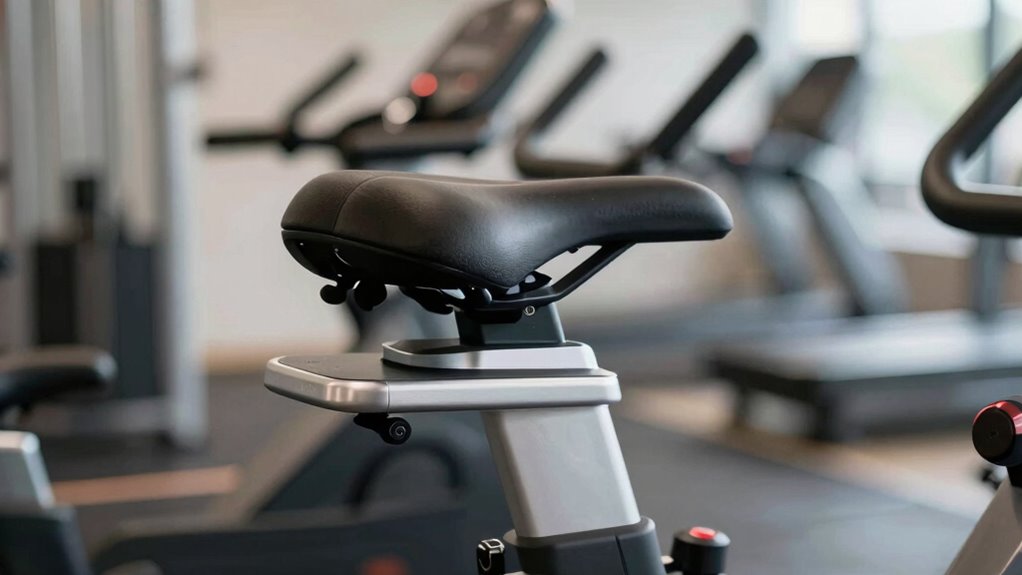

The quickest way to improve knee comfort on an exercise bike is adjusting your saddle height and ensuring proper pedal alignment. Make sure your saddle is set so your leg fully extends at the bottom of the pedal stroke with just a slight knee bend. Also, ensure your pedals are straight and parallel to the ground at 3 and 9 o’clock positions. Small tweaks in these areas can make a big difference—if you want to learn how to perfect your setup, keep exploring.

Get travel and outdoor gear delivered free with Prime
- Fast, free delivery on millions of items
- Prime Video, Amazon Music and more included
- Member-only deals all year
Key Takeaways
- Adjust saddle height so your knee is slightly bent at the bottom of the pedal stroke for optimal comfort.
- Ensure pedals are straight and parallel to reduce lateral knee stress during pedaling.
- Secure pedal straps properly to maintain foot position and prevent misalignment.
- Test and fine-tune saddle position to allow full extension without overreach or sway.
- Regularly check and correct pedal alignment and saddle height for sustained knee comfort.
Getting the fit right on your exercise bike is vital for comfort, performance, and injury prevention. One of the most overlooked yet impactful adjustments is guaranteeing proper pedal alignment. When your pedals are correctly aligned, your knees move smoothly through the pedal stroke without wobbling or feeling strained. Misaligned pedals can cause uneven pressure on your knees, leading to discomfort or even long-term injury. To check pedal alignment, make sure the pedals are straight and parallel to the ground when at the 3 o’clock and 9 o’clock positions. Adjust the pedal straps if needed so your feet remain securely in place without excessive lateral movement. Proper pedal alignment ensures your knee tracks directly over the foot, reducing unnecessary stress and improving power transfer during each pedal stroke. Ensuring correct pedal alignment is essential for a safe and effective workout. Additionally, paying attention to proper bike setup can significantly enhance comfort and reduce the risk of injury.
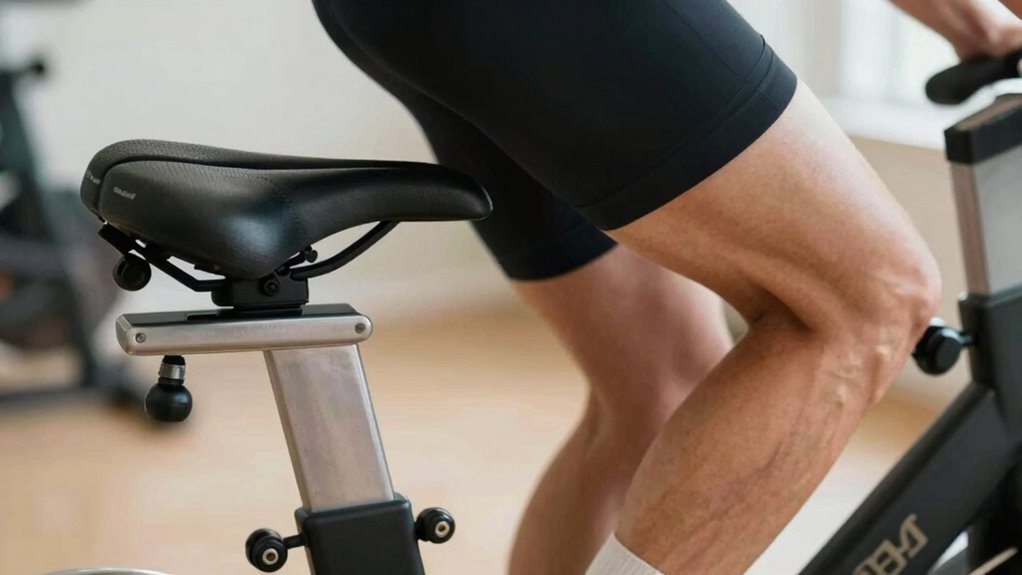
A proper bike fit can also help prevent misalignment issues and improve overall riding experience. Equally important is saddle height. An improper saddle height can cause knee pain, inefficient pedaling, and fatigue. When your saddle is too low, you tend to overreach with each pedal stroke, placing undue strain on your knees and hips. Conversely, if it’s too high, your hips may sway or you might struggle to maintain proper form, which increases the risk of injury. To find the right saddle height, sit on your bike and place your heel on the pedal at the bottom of the pedal stroke. Your leg should be fully extended with a slight bend in the knee. When you move your foot into the proper riding position with the ball of your foot on the pedal, there should be a gentle bend in your knee. This position ensures efficient pedaling and reduces knee stress.
Adjusting saddle height isn’t a one-time fix; it’s an essential step to tailor your bike to your body. Taking the time to properly measure your saddle height can help you achieve better comfort and prevent injuries. Additionally, understanding metaphysical concepts like angel numbers and spiritual guidance can help foster mental clarity and focus during your workouts, contributing to better overall performance. Then test your setup by riding for a few minutes, paying attention to how your knees feel. If you notice discomfort or excessive strain, revisit your saddle height and pedal alignment. Small tweaks often make a big difference in knee comfort and overall riding efficiency. Remember, the goal is to maintain a natural, fluid movement that doesn’t cause pain or fatigue too quickly. By focusing on proper pedal alignment and saddle height, you’re setting yourself up for a more comfortable, effective workout and protecting your knees from avoidable injuries.
exercise bike saddle height adjustment
As an affiliate, we earn on qualifying purchases.
As an affiliate, we earn on qualifying purchases.
Frequently Asked Questions
Can Adjusting Saddle Tilt Improve Knee Comfort?
Yes, adjusting saddle tilt can improve knee comfort. When you tilt the saddle slightly upward or downward, it affects how your knees track during pedaling, reducing strain. Make sure saddle padding is comfortable, and check your frame alignment to prevent uneven pressure. Small adjustments make a big difference, helping you avoid pain and enhance your ride. Experiment with tilt and padding to find the most comfortable, knee-friendly position.
How Does Pedal Type Affect Knee Strain?
Using the right pedal type can dramatically reduce knee strain—it’s like giving your joints a superhero shield! When you choose clipless pedals, you promote better muscle engagement and control, which helps distribute pedaling forces more evenly. On the other hand, higher pedal resistance can increase strain if your muscles aren’t engaged properly. So, opt for pedals that match your fitness level and focus on smooth, controlled movements to protect your knees.
Is There a Preferred Cadence for Knee Health?
For knee health, maintaining a moderate cadence with consistency is key, ideally around 80-100 RPM. Keep your foot positioning proper, ensuring your foot stays flat and centered on the pedal to reduce strain. Avoid sudden changes in cadence and focus on smooth, controlled pedaling. This approach minimizes knee stress, promotes joint stability, and helps prevent injury, making your workout safer and more effective.
Does Handlebar Positioning Influence Knee Pain?
Yes, handlebar positioning can influence knee pain. When you adjust handlebars higher or farther forward, you often change your riding posture, which impacts resistance levels and heart rate zones. A more relaxed position reduces strain on your knees by allowing better alignment, preventing overextension or awkward angles. Proper handlebar placement helps maintain a smooth cadence, keeps your resistance levels ideal, and minimizes knee discomfort during your ride.
Can Specific Footwear Reduce Knee Discomfort?
Yes, specific footwear can reduce knee discomfort. Choose shoes with good footwear cushioning to absorb shock and lessen impact on your knees. Orthopedic insoles can also provide extra support and proper alignment, which helps prevent strain during cycling. When you wear the right footwear, your knees experience less stress, making your ride more comfortable and reducing the risk of pain or injury over time.
Conclusion
Adjusting your seat height and position on the exercise bike can dramatically improve knee comfort. Think of it like tuning a musical instrument—you want everything aligned perfectly for the best sound, or in this case, the best ride. When your saddle is just right, you reduce strain and prevent injury, making your workouts more enjoyable. So, take a moment to fine-tune your bike; it’s a simple change that delivers fast, noticeable comfort and better performance.
Halloween Picks
halloween
As an affiliate, we earn on qualifying purchases.