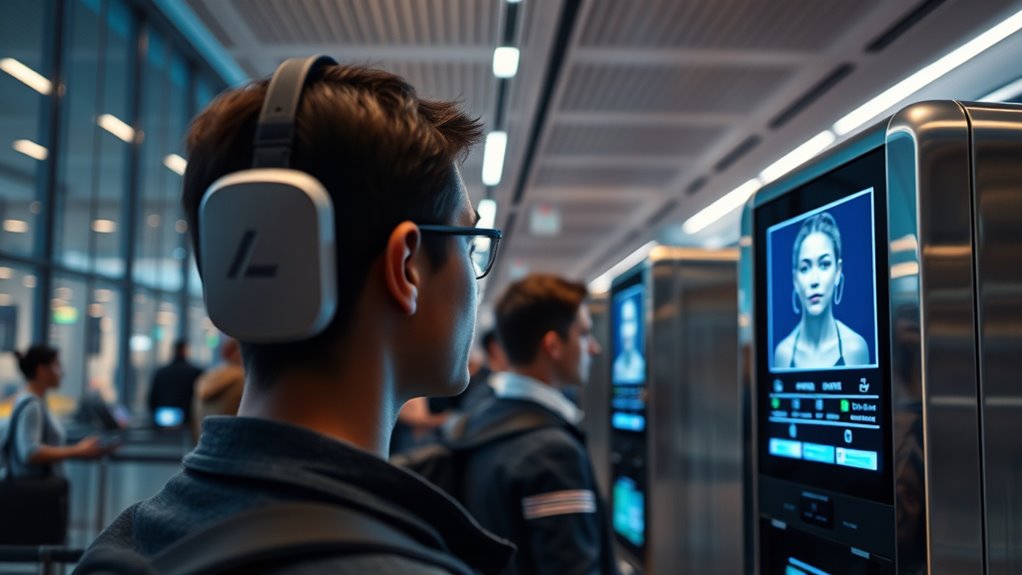

Facial recognition and biometric boarding are making travel faster and more contactless. You’ll likely use your face or fingerprints as digital tickets, skipping traditional check-in counters and boarding passes. This streamlined process reduces wait times and manual checks, but it also raises concerns about privacy and data security. Airports are working to balance efficiency with privacy protections. To discover how these innovations will shape your future trips, keep exploring what’s next in travel technology.
Key Takeaways
- Facial recognition and biometric boarding streamline check-in and boarding, reducing wait times and eliminating manual identity checks.
- Travelers can use facial recognition as digital tickets, replacing traditional passports and boarding passes.
- Privacy and data security are important concerns, with airlines implementing strict policies to protect biometric information.
- Integration varies across airports, affecting the travel experience and requiring infrastructure upgrades and staff training.
- Future travel will be more seamless and contactless, with increased adoption balancing efficiency and privacy considerations.
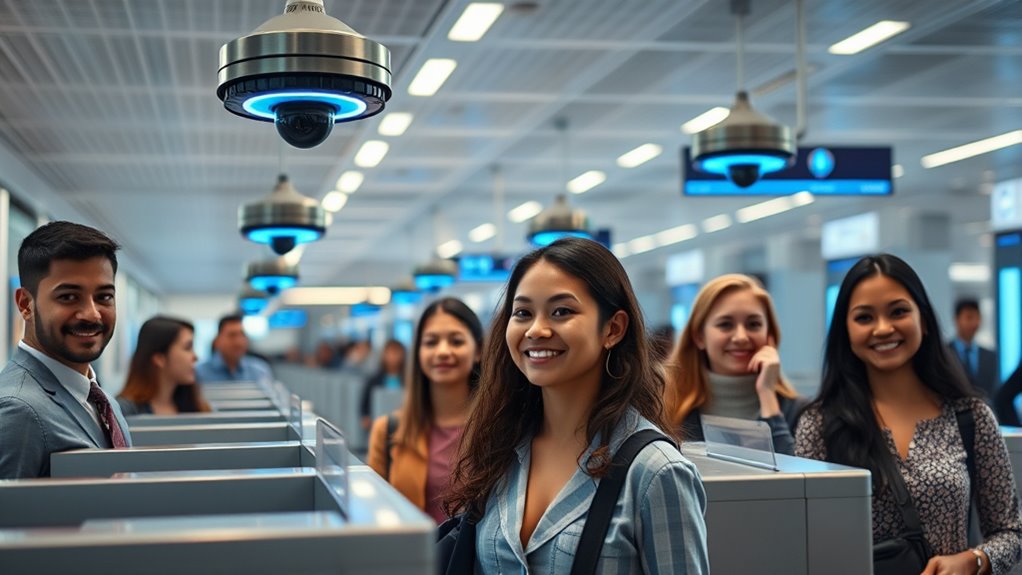
Facial recognition and biometric boarding are transforming the way travelers check in and board flights. As airports adopt these technologies, you’ll notice quicker processes and a more seamless journey. Instead of fumbling with passports or boarding passes, your face becomes your ticket, allowing for faster identity verification. However, this shift also raises important questions about privacy concerns, especially regarding how your personal biometric data is stored and used. Many travelers worry about the potential for data breaches or misuse, and airlines are under pressure to ensure robust security measures are in place. You might feel uneasy about sharing your biometric information, fearing it could be exploited or accessed without your consent. Airlines and technology providers are working to address these concerns through stricter data protection policies and transparent communication about how your data is handled.
Technology integration is at the core of this evolution, blending facial recognition systems with existing airport infrastructure. You’ll find that these systems need to be seamlessly embedded into the check-in counters, security lanes, and boarding gates to function efficiently. This integration aims to eliminate manual checks, reduce wait times, and minimize human error. As this technology becomes more widespread, you’ll likely see fewer lines at security and boarding areas, making your travel experience smoother. Yet, the integration process isn’t without its challenges. Airports must invest heavily in new hardware, software, and staff training to ensure everything runs smoothly. This means ongoing upgrades and maintenance, which could temporarily disrupt services or lead to technical glitches.
Moreover, the success of facial recognition and biometric boarding hinges on widespread adoption and cooperation among airlines, airports, and governments. You might encounter variations in how different airports implement these systems, which could affect your overall experience. For example, some airports might require additional identity verification steps or have stricter privacy policies. Despite these differences, the overarching goal is to create a faster, more secure way to travel. Still, the implementation of these technologies must balance efficiency with privacy rights, ensuring travelers feel safe and confident in their data security. As you prepare for future trips, expect these innovations to become more common, transforming your journey from check-in to boarding into a more streamlined and contactless process.
Frequently Asked Questions
How Secure Is My Biometric Data Against Hacking?
Your biometric data is generally secure, thanks to robust data encryption that protects it from hacking vulnerabilities. Airports and security agencies continually update their systems to prevent breaches, making hacking attempts difficult. However, no system is entirely foolproof. You should stay informed about security updates and avoid sharing your biometric info unnecessarily. While risks exist, proper encryption and security measures markedly reduce the chances of your data being hacked.
Will Facial Recognition Work for All Skin Tones?
Just like the Renaissance celebrated diverse art, modern facial recognition tech aims to embrace skin tone diversity. While some initial systems showed technology bias, advancements now improve accuracy across all skin tones. You can expect future biometric boarding to work more reliably regardless of your skin color, as developers work to eliminate bias. So, rest assured, facial recognition is increasingly inclusive, making travel smoother for everyone.
Can Biometric Data Be Used for Purposes Other Than Boarding?
Biometric data can be used beyond boarding, but watch out for data misuse and commercial exploitation. Airlines or third parties might utilize your data for marketing or other purposes without your clear consent. Always read privacy policies carefully, ask questions about how your data will be used, and stay informed. Protect your biometric information to avoid unauthorized use and ensure it isn’t exploited for commercial gains.
Are There Any Health Risks Associated With Biometric Scanning?
You might worry about health risks with biometric scans, but they’re generally safe. While medical concerns like skin irritation or eye strain from prolonged exposure exist, serious issues are rare. Think of it as trading a brief moment of eye strain for the convenience of quick identity verification. Overall, biometric scanning is designed with safety in mind, and you shouldn’t experience significant health risks during the process.
How Is Passenger Privacy Protected During Biometric Boarding?
You’re protected during biometric boarding through strict privacy measures. Your data is secured with advanced encryption, ensuring it stays confidential. Airlines follow clear consent procedures, so you actively agree before your biometric data is used. Additionally, access to your information is limited to authorized personnel, and strict policies govern data sharing. These steps work together to safeguard your privacy while making the boarding process faster and more secure.
Conclusion
As you experience biometric boarding, remember that over 85% of airports worldwide are adopting facial recognition technology to speed up security. This means you’ll likely spend less time in lines and more time enjoying your journey. While these innovations improve convenience, they also raise privacy concerns. Embrace the future of travel with confidence, knowing that these advancements aim to make your trips smoother and safer. Your next adventure is just around the corner—ready to take off?