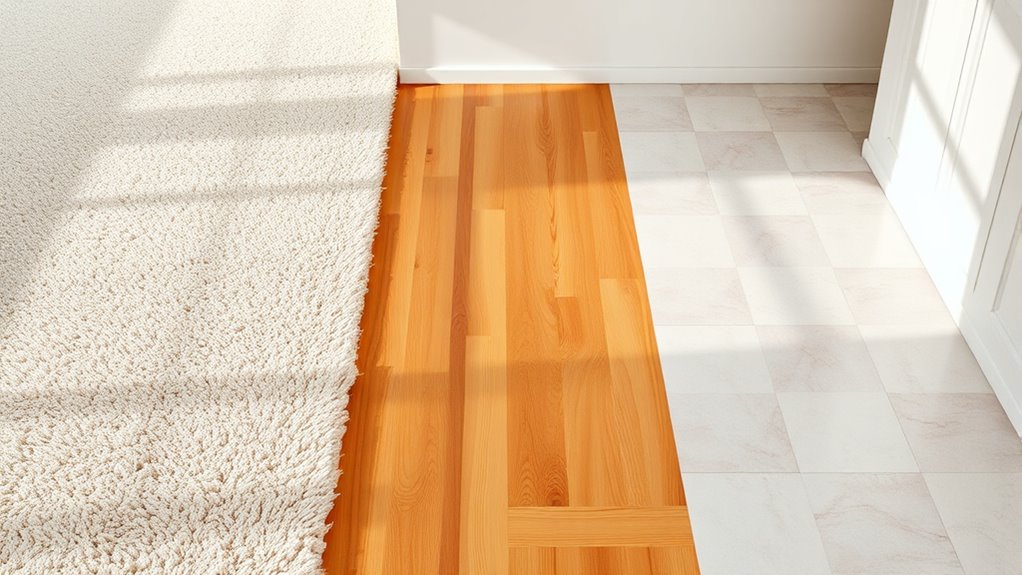

When choosing between carpet, hardwood, and tile, consider your lifestyle and priorities. Carpet offers warmth and comfort but wears faster and needs more frequent cleaning. Hardwood provides a timeless look, durability, and sustainability if responsibly sourced, though it’s pricier upfront. Tile is highly durable, moisture-resistant, and easy to maintain, making it ideal for high-traffic or damp areas. To make the best choice tailored to your needs, explore the pros and cons in detail.
Key Takeaways
- Hardwood offers a timeless, durable, and long-lasting option with a classic aesthetic, suitable for living areas.
- Carpet provides warmth and comfort but requires more frequent cleaning and replacement, ideal for bedrooms.
- Tile is highly durable, moisture-resistant, and easy to maintain, perfect for kitchens and bathrooms.
- Sustainability varies; responsibly sourced hardwood and natural fiber carpets are eco-friendlier options.
- Budget considerations depend on initial costs and long-term durability, with hardwood being more expensive upfront but lasting longer.
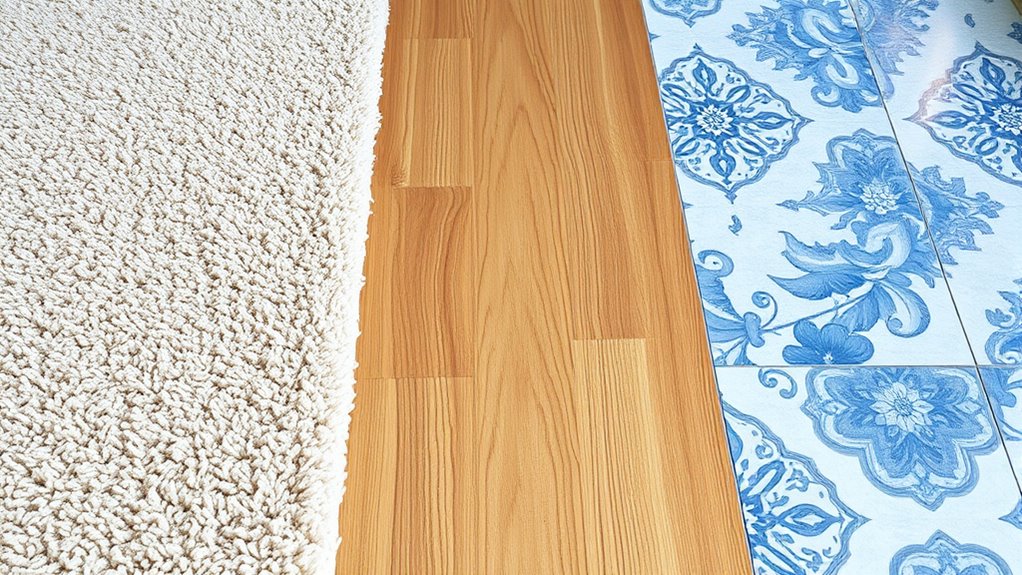
Choosing the right flooring can transform the look and feel of your space, but with so many options available, it’s easy to feel overwhelmed. When deciding between carpet, hardwood, and tile, you need to weigh factors like durability, maintenance, aesthetics, and especially sustainability considerations and budget constraints. Your choice impacts not only the style of your home but also its environmental footprint and long-term costs.
Choosing flooring involves balancing style, durability, sustainability, and budget for a long-lasting, eco-friendly home.
If sustainability is a priority, hardwood flooring might appeal to you. Many hardwood options are sourced responsibly, especially those certified by organizations like FSC or PEFC, which ensure sustainable forestry practices. Hardwood flooring is durable and can last for decades, reducing the need for frequent replacements, which is better for the environment. However, high-quality hardwood can be expensive upfront, so you’ll want to consider whether it fits within your budget constraints. Keep in mind that cheaper hardwood options may not be as sustainably sourced or durable, so it pays to do your research.
Carpet, on the other hand, tends to be more budget-friendly initially. It offers warmth and comfort underfoot, making it a popular choice for bedrooms and living areas. But when it comes to sustainability considerations, carpet can be tricky. Many carpets are made from synthetic fibers derived from petroleum, which aren’t environmentally friendly. Plus, carpets can trap dust, allergens, and bacteria, requiring regular cleaning and replacement, which might not align with eco-conscious living. If you want a more sustainable carpet option, look for those made from natural fibers like wool, jute, or recycled materials, but be aware that these often come with higher price tags. Additionally, considering eco-friendly flooring materials can help you make a more sustainable choice.
Tile flooring offers a middle ground. It’s typically made from natural materials like clay or stone, which can be quite sustainable if sourced responsibly. Tile is highly durable and resistant to moisture, making it ideal for kitchens and bathrooms. Maintenance is straightforward, and tiles can last for decades with proper care. The initial cost can be moderate to high, depending on the type of tile you choose, but its longevity often offsets the upfront expense. When considering sustainability, look for tiles produced with environmentally friendly processes and low VOC emissions.
In the end, your decision will hinge on balancing your aesthetic preferences, environmental impact, and budget constraints. Think about how much wear and tear the space will endure, how long you want the flooring to last, and what fits within your financial plans. Making an informed choice ensures that your floor isn’t just beautiful but also aligns with your values and practical needs.
hardwood flooring planks
As an affiliate, we earn on qualifying purchases.
As an affiliate, we earn on qualifying purchases.
Frequently Asked Questions
How Do Flooring Options Affect Indoor Air Quality?
Flooring options substantially impact your indoor air quality through air filtration and allergen control. Carpets tend to trap dust, pet dander, and allergens, possibly aggravating allergies. Hardwood and tile allow easier cleaning, reducing airborne particles and improving overall air quality. Choosing the right flooring helps you manage allergens better, especially if you have sensitivities. Regular cleaning and proper ventilation further enhance air filtration, creating a healthier indoor environment.
What Are the Best Flooring Choices for Pet Owners?
As a pet owner, you want pet-friendly materials that withstand scratches and are easy to clean. Opt for scratch-resistant surfaces like tile or laminate flooring, which handle claws well and resist damage. These options also prevent pet hair and dander buildup, making maintenance simpler. Avoid carpets that trap fur and stains. Choosing durable, pet-friendly materials guarantees your home stays comfortable and clean while accommodating your furry friends.
How Does Flooring Impact Home Resale Value?
Flooring acts as the foundation of your home’s charm, influencing resale value more than you might think. Durable flooring like hardwood or tile can boost your home’s appeal, while cheaper, less durable options may cost you in the long run. Consider installation costs and flooring durability, as high-quality materials often lead to higher resale value. Investing wisely can turn your home into a magnet for future buyers, like a beacon guiding them home.
Are There Eco-Friendly Flooring Alternatives?
You’re wondering if eco-friendly flooring alternatives exist. Yes, plenty of sustainable options use eco-friendly materials like bamboo, cork, reclaimed wood, and recycled tiles. These materials minimize environmental impact and offer durability and style. By choosing sustainable options, you’re not only helping the planet but also adding unique character to your home. Eco-friendly flooring is becoming more accessible, allowing you to make environmentally conscious choices without sacrificing aesthetics or quality.
What Maintenance Routines Are Recommended for Each Flooring Type?
For stain removal and routine cleaning, your approach varies by flooring type. With carpet, vacuum regularly and treat stains promptly to keep it fresh. Hardwood needs sweeping or vacuuming often and occasional damp mopping with gentle cleaners. Tile requires sweeping and mopping, especially grout lines. Always use appropriate cleaning products to avoid damage. Regular maintenance keeps each floor looking its best and prolongs its lifespan.
moisture-resistant ceramic tiles
As an affiliate, we earn on qualifying purchases.
As an affiliate, we earn on qualifying purchases.
Conclusion
Ultimately, selecting the right flooring is like finding the perfect outfit—it reflects your style and suits your needs. Whether you prefer the cozy embrace of carpet, the timeless elegance of hardwood, or the durable charm of tile, each has its own story to tell. Weigh your lifestyle and preferences carefully, and remember, the right choice will be the foundation that makes your space truly feel like home—standing tall and strong, just like your vision.
luxury plush carpet for bedrooms
As an affiliate, we earn on qualifying purchases.
As an affiliate, we earn on qualifying purchases.