
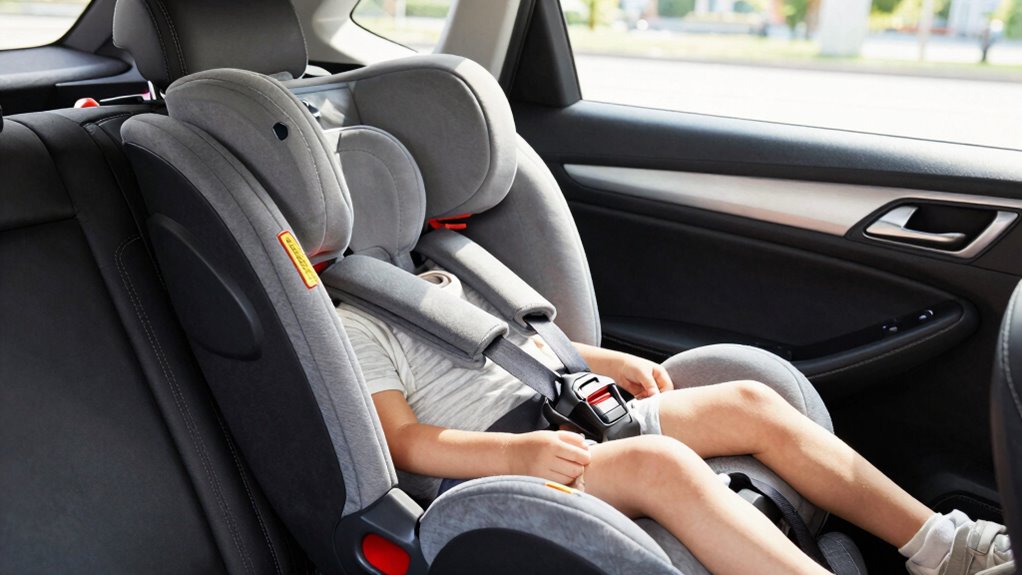

The biggest mistake that causes damage when flying with a car seat is not securing or protecting it properly during transport. Many travelers simply check the seat as luggage without using a protective cover, which exposes it to rough handling and potential breakage. To avoid this, you should confirm airline policies, use a protective bag, and handle the seat carefully. Keep an eye out for more tips that can help you protect your child’s car seat on your trip.
Key Takeaways
- Checking the airline’s policy on carrying and installing the car seat prevents mishandling and damage.
- Using a protective bag or box shields the seat from rough handling and impact during transit.
- Improper installation or failure to secure the seat tightly can cause damage and compromise safety.
- Checking the car seat for FAA approval ensures it meets airline safety standards and prevents damage.
- Handling the seat carefully and avoiding rough handling reduces the risk of cracks, breaks, or internal damage.
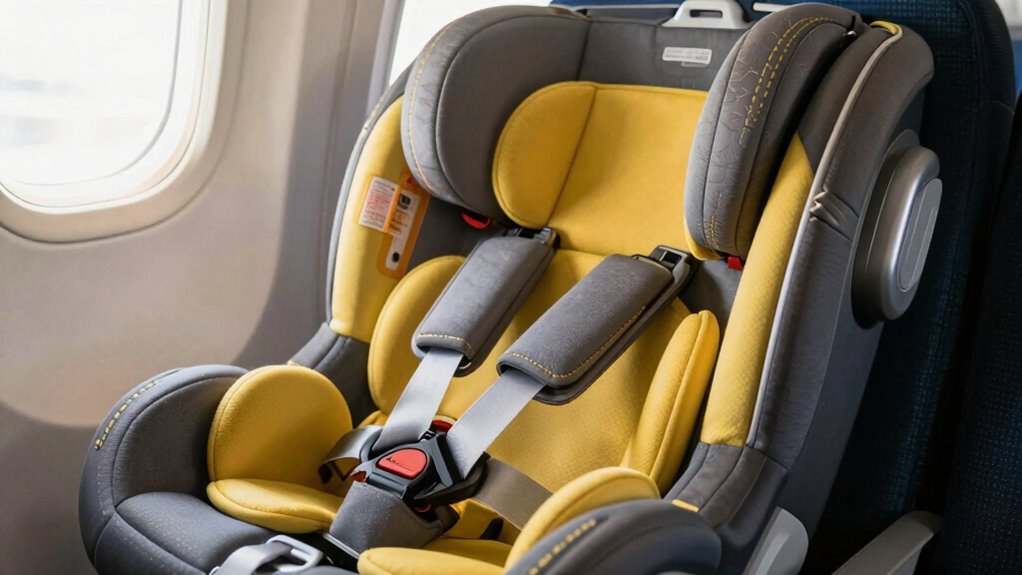
Traveling with a car seat can seem overwhelming, but with the right preparation, it becomes much easier. One of the most common mistakes travelers make is not understanding airline policies regarding car seats. Many parents assume the rules are complicated or restrictive, but most airlines actually allow you to bring your child’s car seat free of charge, provided it meets certain standards. Before you fly, it’s essential to check your airline’s policies on car seat safety and transport. Some airlines require the seat to be FAA-approved or have specific labels indicating it’s safe for aircraft use. Knowing these details ahead of time prevents surprises at check-in and guarantees your seat will be accepted.
Check airline policies on car seats to ensure safety and avoid surprises at check-in.
You should also verify whether your airline permits car seats in the cabin or if they need to be checked. Most airlines allow car seats to be brought on board if you have a purchased ticket for your child, but policies vary, so reviewing this information early helps you plan. Remember, even if your airline does allow a car seat in the cabin, it’s your responsibility to secure it properly and guarantee it’s compliant with safety standards. When you understand airline policies and prioritize car seat safety, you reduce the stress of traveling and protect your child’s well-being during the flight.
Once at the airport, the key is to handle the car seat carefully to avoid damage. Many parents mistakenly think they should check the seat as luggage, but this increases the risk of damage from rough handling. Instead, consider using a protective bag or box designed for car seats, which can help keep it in good condition. If you’re bringing the seat onto the plane, make sure it’s installed correctly and tightly secured. Airlines often require that the car seat be installed using the airplane seatbelt, following the manufacturer’s instructions for vehicle safety. Proper installation is essential; a loose or improperly secured seat isn’t just unsafe but also diminishes the protective benefits it offers your child.
Another mistake is not familiarizing yourself with how to install the seat in the airplane seat. Many parents overlook practicing the installation at home, which can lead to confusion and improper setup at the airport. Take the time to practice installing the seat in your car and at least visualize or practice in a similar seat at home. This preparation ensures you can quickly and securely install it on the plane, maintaining the integrity of the seat’s safety features. Additionally, understanding the importance of juice extraction techniques can remind you to keep your child’s safety and well-being a priority during travel.
In essence, understanding airline policies and prioritizing car seat safety are the most critical steps to prevent damage and ensure your child’s safety during your flight. Proper planning and handling make the entire process smoother, giving you peace of mind and a safer journey for your little one.
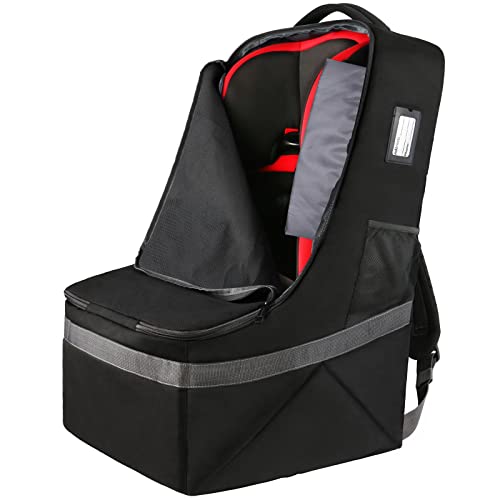
YOREPEK Padded Car Seat Travel Bag Backpack for Airplane, Heavy Duty Car Seat Bags for Air Travel, Carseat Cover for Airplane Travel with Shoulder Strap, Car Seats Carrier for Airport, Black
Wide Compatibility for Air Travel: This 17"(L) × 17"(W) × 28"(H) YOREPEK car seat travel bag is designed…
As an affiliate, we earn on qualifying purchases.
As an affiliate, we earn on qualifying purchases.
Frequently Asked Questions
Can I Use a Car Seat After It’s Been Damaged in a Flight?
If your car seat has been damaged during a flight, don’t use it until you perform a thorough car seat inspection. Check for cracks, broken parts, or compromised harnesses. If you notice any damage, avoid damage repair techniques on your own; instead, consult the manufacturer’s guidelines or contact a professional. Using a damaged car seat can jeopardize your child’s safety, so prioritize safety over reuse.
Are There Specific Airlines With Better Policies for Car Seat Travel?
While airline policies vary, some airlines have more accommodating baggage regulations for car seats. You’ll find that major carriers like Delta, Southwest, and JetBlue often offer better policies, allowing free or discounted car seat transport. These airlines prioritize family travel, making it easier to navigate baggage regulations. However, always verify each airline’s specific policies before booking, so you avoid surprises and ensure your child’s safety and comfort during the flight.
How Do I Prevent Damage During Airport Security Checks?
To prevent damage during security screening, you should remove your car seat from the stroller or travel system beforehand. This way, it goes through the scanner separately, reducing the risk of harm. Use a protective cover or bag for extra security, and handle the car seat gently. Being prepared and attentive during security checks helps ensure your car seat stays safe and undamaged throughout your journey.
What Are the Best Travel Accessories to Protect My Car Seat?
You should invest in car seat covers and travel padding to protect your car seat during travel. Car seat covers shield against dirt, scratches, and minor impacts, while travel padding offers extra cushioning to prevent damage from bumps. Use durable, well-fitted covers and wrap padding around vulnerable areas for maximum protection. These accessories keep your car seat in great condition and give you peace of mind during your journey.
Is It Safe to Check a Car Seat With a Stroller?
In the blink of an eye, checking a car seat with a stroller is generally safe if you follow proper travel tips. You should secure the car seat properly and use a sturdy bag or box to protect it. Always prioritize car seat safety by ensuring it’s properly installed upon arrival. While some airlines allow it, double-check their policies to avoid surprises and keep your child’s safety top priority.

Graco Contender Slim Convertible Car Seat, West Point, Lightweight Travel Car Seat with Compact, Space-Saving Design, Rear-Facing 5–40 lbs, Forward-Facing 26.5–65 lbs, Easy to Transfer, FAA Approved
Convertible car seat grows with your child from rear-facing harness (5-40 lb) to forward-facing harness (26.5-65 lb)
As an affiliate, we earn on qualifying purchases.
As an affiliate, we earn on qualifying purchases.
Conclusion
Remember, over 70% of parents accidentally damage their child’s car seat by not securing it properly during flights. Always double-check your car seat’s installation and follow airline guidelines to avoid costly mistakes. Properly secured, your child’s seat can withstand the rigors of travel and keep your little one safe. Don’t let a simple oversight turn into a costly repair—stay vigilant and protect your investment every time you fly.

Orzbow Car Seat Carrier for Airport, Folding Car Seat Travel Bag & Cart with 4 Wheels and High Load-Bearing, Padded Gate Check Bag Fits Most Infant Car Seats & Carriers, Easy to Use, Black
CONVENIENT TRAVEL: Available to detach the set into car seat bag and cart and use them separately, Orzbow…
As an affiliate, we earn on qualifying purchases.
As an affiliate, we earn on qualifying purchases.

Child Airplane Travel Harness – Cares Safety Restraint System – The Only FAA Approved Child Flying Safety Device
Simple to install and usable on any window or center seat in the airplane, except in the emergency…
As an affiliate, we earn on qualifying purchases.
As an affiliate, we earn on qualifying purchases.