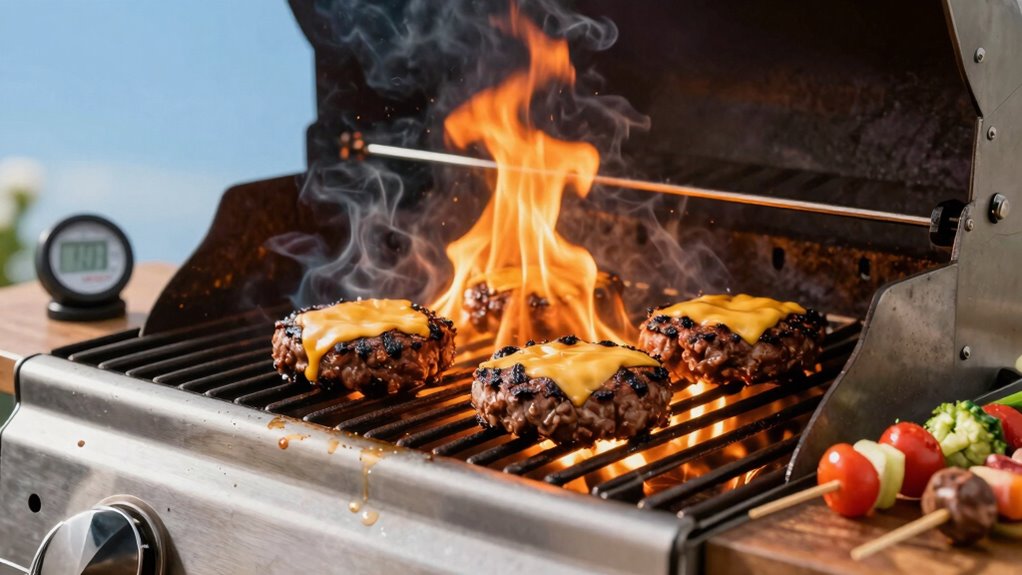
To get juicy, perfect results on your outdoor grill, mastering temperature control is essential. Use separate heat zones to sear and slowly cook, and always monitor temperature with reliable tools like digital probes or built-in gauges. Maintaining steady heat—around 225°F to 250°F for smoking or 450°F to 550°F for searing—ensures tender, flavorful meat. Proper accessories like water pans and thermometers make this easier, and if you want to reveal more tips, keep exploring how fine-tuning temperature makes all the difference.

Get travel and outdoor gear delivered free with Prime
- Fast, free delivery on millions of items
- Prime Video, Amazon Music and more included
- Member-only deals all year
Key Takeaways
- Master grill temperature zones to optimize searing, cooking, and resting for juicy, flavorful meats.
- Use accurate thermometers or digital probes to monitor and maintain precise grill temperatures.
- Keep grill temperature stable with accessories like water pans, heat-resistant mats, and adjustable grates.
- For tender results, cook at 225°F–250°F during low-and-slow smoking sessions.
- Adjust grill heat between 450°F–550°F for perfect searing and caramelization.
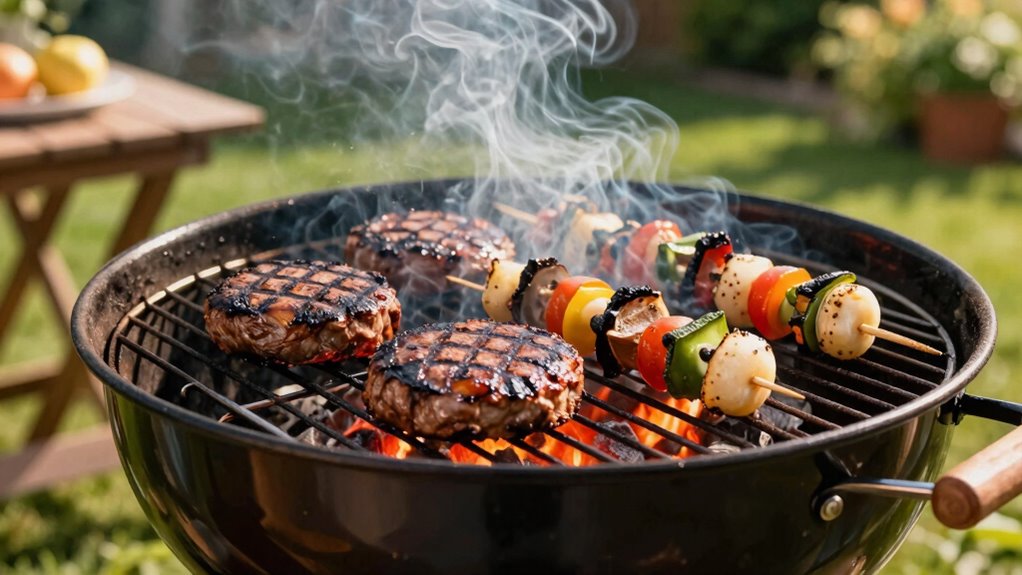
Are you ready to elevate your outdoor gatherings? Mastering the perfect grilling temperature is the secret to juicy, flavorful results every time. Whether you’re firing up a classic gas grill or exploring the smoky depths of smoker grills, understanding and managing temperature is key. It’s not just about having a hot grill; it’s about controlling that heat precisely to ensure your meats stay tender and moist. Using the right grill accessories can make this process easier and more consistent, transforming your backyard into a professional-style kitchen.
First, focus on your grill’s temperature zones. Many grills, especially smoker grills, offer multiple zones, so you can sear, cook, and rest your food at different heat levels. This control allows you to cook low and slow for tougher cuts or crank up the heat for a quick sear. The correct temperature depends on what you’re grilling, but a good rule of thumb is to aim for around 225°F to 250°F for smoking, which results in tender, flavorful meat. For direct grilling or searing, you’ll want hotter zones around 450°F to 550°F. Fine-tuning these zones requires a reliable thermometer—digital probes or built-in gauges can help you keep track without lifting the lid too often, which can cause temperature fluctuations. Accurate temperature control is essential for achieving perfect grilling results and avoiding dry or undercooked meat.
Incorporating the right grill accessories can elevate your control over temperature. A quality meat thermometer ensures your proteins reach the ideal internal temperature, preventing overcooking or undercooking. A heat-resistant mat or an adjustable grill grate can help maintain consistent heat distribution, especially on uneven surfaces. For smoker grills, consider using wood chips or chunks, which add flavor and help regulate temperature through smoke production. Using a water pan in your smoker grill can stabilize temperature and add moisture, keeping your meat juicy. Some advanced grill accessories even include digital controllers that monitor and adjust temperature automatically, making your grilling experience more precise and less stressful.
digital meat thermometer for grilling
As an affiliate, we earn on qualifying purchases.
As an affiliate, we earn on qualifying purchases.
Frequently Asked Questions
How Does Ambient Temperature Affect Grill Heat Consistency?
Ambient temperature impacts your grill’s heat consistency by affecting how well it retains heat. When it’s cold outside, wind effects can cause temperature fluctuations, making it harder to maintain steady heat. Using good grill insulation helps insulate your grill, minimizing heat loss. Keep an eye on wind effects, especially in chilly weather, and consider shielding your grill to make certain of consistent temperatures for juicy, perfectly cooked results.
What Is the Ideal Temperature Range for Cooking Different Meats?
You should aim for specific temperature ranges based on the meat you’re cooking: 120-130°F for rare, 130-140°F for medium-rare, 140-150°F for medium, and 160°F and above for well-done. Maintaining these temps helps preserve meat marbling, ensuring juicy, flavorful bites. Proper heat also enhances flavor, making your grilled meats tender and delicious. Use a reliable meat thermometer to hit these targets precisely.
How Can I Prevent Hot Spots on My Outdoor Grill?
To prevent hot spots on your outdoor grill, start with regular grill cleaning to remove grease and debris that cause uneven heat. Use fuel management wisely by distributing charcoal or adjusting propane valves evenly. Rotate your food frequently and avoid overcrowding the grates. These steps help maintain consistent heat, ensuring your meats cook evenly and stay juicy. Proper maintenance and smart fuel use are key to a perfectly grilled meal every time.
Does Grill Lid Position Impact Cooking Temperature and Results?
Yes, your grill lid position influences cooking temperature and results. Using effective lid strategies, like keeping it closed for indirect heat or opening it for direct grilling, helps regulate temperature. Incorporate temperature regulation techniques by adjusting the lid based on what you’re cooking. This control ensures even heat distribution, prevents flare-ups, and keeps your food juicy, giving you better results every time you grill.
What Tools Help Monitor and Control Grill Temperature Accurately?
You can effectively monitor and control your grill temperature using digital thermometers and heat control devices. Digital thermometers provide real-time, accurate readings of grill and meat temperatures, helping you achieve perfect results. Heat control devices, like adjustable vents or electronic controllers, allow you to fine-tune airflow and temperature settings precisely. Together, these tools give you the confidence to cook juicy, flavorful dishes every time, ensuring ideal grill performance.
Conclusion
So, next time you fire up your outdoor grill, remember the secret: controlling the temperature makes all the difference. It’s funny how a simple tweak can turn a good meal into a perfect one, just like that perfect summer evening when everything falls into place. Keep an eye on the heat, and you’ll find that juicy, flavorful results become your new norm. Sometimes, it’s these little details that make the biggest memories.
Columbus Day / Indigenous Peoples' Day Picks
long weekend sales
As an affiliate, we earn on qualifying purchases.