
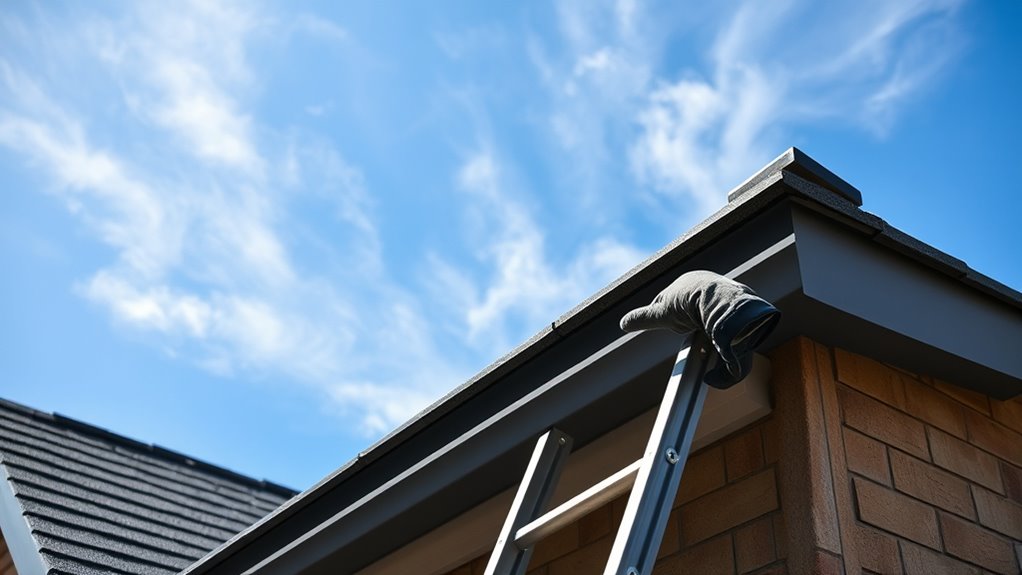

To inspect and maintain your roof, regularly check for damaged or missing shingles, cracked flashing, and signs of leaks in the attic. Clean gutters and downspouts to prevent water issues, and make certain vents are clear for proper airflow. Use a sturdy ladder and safety gear, and work with someone if possible. Staying on top of these tasks helps extend your roof’s lifespan and keeps your home safe—discover more tips to keep your roof in top shape.

Get travel and outdoor gear delivered free with Prime
- Fast, free delivery on millions of items
- Prime Video, Amazon Music and more included
- Member-only deals all year
Key Takeaways
- Regularly inspect your roof for damaged, missing shingles, or flashing issues to catch problems early.
- Clean gutters and downspouts frequently to prevent water overflow and foundation damage.
- Ensure roof vents and attic areas are unobstructed to promote proper ventilation and moisture control.
- Use a sturdy ladder and safety gear when inspecting or cleaning your roof, avoiding wet or damaged surfaces.
- Schedule professional inspections periodically to identify issues beyond basic visual checks and maintain roof longevity.

Your roof is a vital part of your home’s structure, protecting you from the elements and ensuring your comfort. Regular inspection and maintenance are key to keeping it in good shape. One of the first things to think about is roof ventilation. Proper ventilation helps prevent moisture buildup in your attic, which can lead to mold, rot, and even structural damage over time. If your attic feels excessively hot or humid during summer, or if you notice ice dams forming in winter, it’s a sign that your roof ventilation might need attention. Making sure your vents are unobstructed allows air to circulate freely, regulating temperature and moisture levels. Check for blocked soffit vents, ridge vents, or gable vents, and clear any debris or obstructions. Installing or upgrading ventilation systems can drastically improve your roof’s longevity and energy efficiency.
Gutter cleaning is another essential aspect of roof maintenance. Gutters channel rainwater away from your roof and foundation, but when they clog with leaves, twigs, or dirt, water can overflow and cause damage. Overflowing gutters can lead to water seeping into your roof’s edges or pooling around your foundation, creating leaks or foundation problems. Regularly cleaning your gutters, especially during fall and after storms, is necessary. Use a sturdy ladder and gloves to remove debris, and flush the gutters with water to make sure they’re clear. While you’re at it, inspect the downspouts to verify they direct water away from your home’s base. Properly maintained gutters help prevent water from backing up onto your roof, reducing the risk of leaks and rot.
As you perform routine inspections, look for damaged or missing shingles, cracked flashing, or signs of wear around roof vents or chimneys. Addressing small issues early can save you money and prevent more extensive repairs later. When inspecting, don’t forget to check the underside of your roof in your attic for signs of leaks or water stains. These could indicate issues with your roof’s waterproofing or ventilation system. Regular upkeep, including gutter cleaning and making sure proper roof ventilation is in place, helps extend your roof’s lifespan and keeps your home safe and dry. Remember, safety comes first—use a sturdy ladder, work with a buddy if possible, and avoid walking on the roof if it’s wet or damaged. With consistent care, your roof will continue to shield your home effectively for years to come.
As an affiliate, we earn on qualifying purchases.
Frequently Asked Questions
How Often Should I Schedule Professional Roof Inspections?
You should schedule professional roof inspections at least once a year, especially after severe weather. During these visits, professionals check for issues like poor roof ventilation and gutter maintenance problems that can cause damage over time. Regular inspections help catch small issues early, ensuring your roof stays in good shape and extends its lifespan. Don’t forget to clean your gutters regularly to prevent water damage and maintain proper roof ventilation.
What Are Signs of Hidden Roof Damage?
You should be alert for signs of hidden roof damage like shingle deterioration and flashing issues. If shingles look curled, cracked, or missing, it indicates underlying problems. Flashing problems, such as rust or gaps, can cause leaks. Also, watch for water stains inside your home or persistent mold. These signs point to damage you might not see right away but require prompt professional inspection and repair to prevent further issues.
Can I Repair Minor Roof Damage Myself?
You can handle minor roof damage yourself, but always prioritize safety precautions. For simple DIY repairs like replacing shingles or sealing small leaks, make sure you have the right tools and work on a dry, stable surface. Always use a sturdy ladder and avoid working in bad weather. If you’re unsure or the damage is extensive, it’s best to call a professional to prevent further issues or accidents.
How Does Weather Affect Roof Longevity?
Weather affects your roof’s longevity considerably. Frequent weather patterns like heavy rain, snow, or hail can cause wear and tear over time, while extreme temperatures expand and contract roofing materials, leading to cracks. Climate impact varies depending on your location, so it’s essential to regularly inspect your roof for damage and maintain it properly. Staying proactive helps extend your roof’s lifespan despite the challenges posed by changing weather conditions.
What Materials Are Best for Different Climates?
When choosing roofing materials, you need to consider climate-specific roofing options to ensure durability. For hot, sunny areas, opt for metal or clay tiles that resist heat and UV rays. In cold, snowy climates, asphalt shingles or slate work well, providing insulation and snow resistance. For rainy regions, choose materials like asphalt or rubber membranes that offer waterproofing. Proper roofing material selection helps your roof withstand weather challenges and last longer.
Conclusion
Now that you know the essentials of inspecting and maintaining your roof, imagine catching early signs of trouble before they turn into costly disasters. Regular checks could save you time, money, and stress down the road. But what hidden issues might still be lurking above your head? Stay vigilant, trust your instincts, and don’t ignore the signs. Your roof’s health isn’t just about today — it’s about protecting everything that matters tomorrow.
Halloween Picks
halloween
As an affiliate, we earn on qualifying purchases.