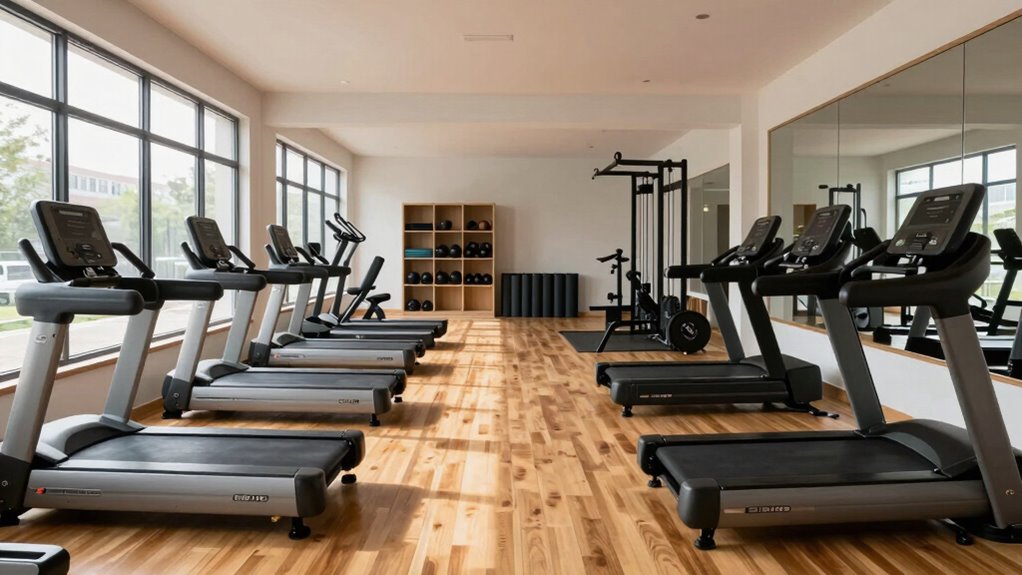

Start with traffic flow when planning your home gym because it guarantees you move safely and smoothly between exercises without congestion or hazards. Prioritizing layout helps you identify the best spots for equipment, making the space feel less crowded and more functional. It also prepares your gym for future upgrades, keeping pathways clear and adaptable. If you want to create a safe, efficient environment that motivates your workouts, understanding traffic flow is key—keep going to learn how to do it right.

Get travel and outdoor gear delivered free — and shop member deals
- Fast, free delivery on millions of items
- Access to Prime Big Deal Days deals on October 6–7
- Prime Video, Amazon Music and more included
Key Takeaways
- Prioritizing traffic flow ensures a safe, unobstructed space that enhances overall workout safety and reduces injury risk.
- Starting with traffic flow optimizes space usage, allowing for better equipment placement and future adaptability.
- Focusing on layout first creates a more functional environment, preventing overcrowding and improving movement efficiency.
- Designing around traffic flow promotes a personalized, comfortable workout experience tailored to specific routines.
- A well-planned flow helps avoid costly rearrangements and enhances long-term space and equipment management.
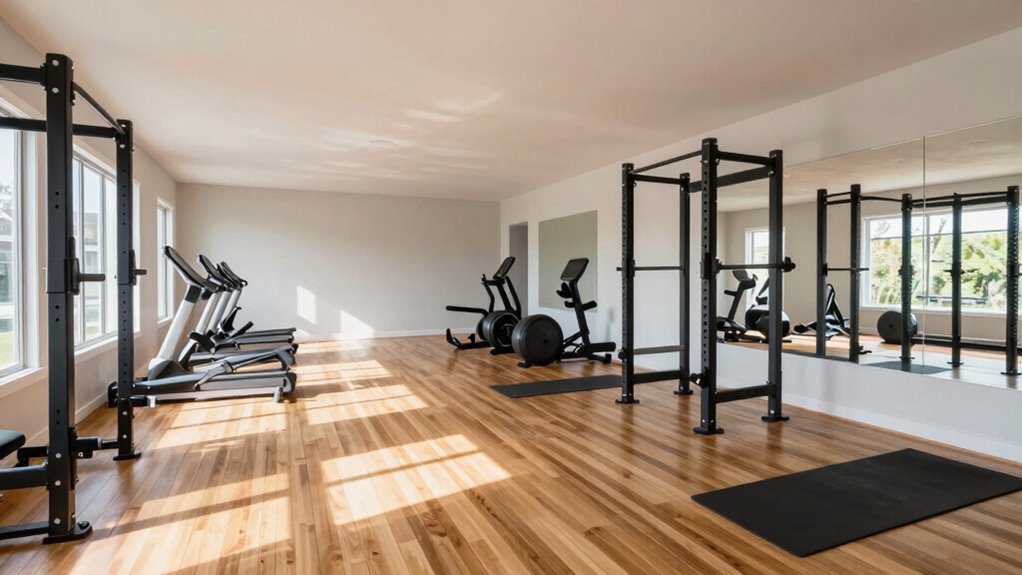
Creating an efficient home gym depends heavily on proper traffic flow, which guarantees you can move smoothly between equipment without congestion or hazards. When you prioritize traffic flow first, you lay a solid foundation for workout customization and space optimization. This approach helps you identify the ideal spots for equipment placement based on your workout preferences, making your gym more functional and tailored to your needs.
Prioritizing traffic flow creates a safe, functional, and personalized home gym layout for seamless workouts.
Thinking about traffic flow early on means you consider the pathways you’ll use during your workouts. You want clear, unobstructed routes that let you transition from warm-up to main exercises with ease. This reduces the risk of accidents, such as tripping over equipment or bumping into weights, which can happen if space isn’t well planned. When your gym layout promotes smooth movement, you won’t feel cramped or forced to awkwardly navigate around bulky machines. Instead, you’ll enjoy a seamless flow that motivates you to stick with your fitness routine. Recognizing the importance of space planning can help you create a more efficient and enjoyable workout environment.
Additionally, understanding traffic flow can help you anticipate how your space might evolve over time, allowing for easier upgrades or modifications without disrupting your workout environment. Proper spatial arrangement is essential for maximizing both safety and functionality, especially as your fitness needs change. Being mindful of space utilization can also prevent overcrowding and help you maintain a balanced layout. Space optimization is another key benefit of starting with traffic flow. By carefully planning pathways, you can maximize the available space, fitting in the equipment you need without overcrowding. Incorporating smart layout techniques can further enhance your gym’s adaptability and usability in the long run. When you design your layout with traffic flow in mind, each piece of equipment has its designated spot, minimizing clutter and creating a visually appealing environment. A well-optimized space also allows for future upgrades or additions, as you’ll already have a clear understanding of how new equipment can be integrated without disrupting existing pathways.
Focusing on traffic flow before equipment lists ensures you create a workout zone that’s both practical and enjoyable. It encourages thoughtful workout customization because you can tailor the layout to match your specific exercises and routines. Whether you’re into strength training, cardio, or yoga, a layout built around smooth movement supports your goals. Ultimately, this proactive planning helps you avoid the common pitfall of overbuying gear that doesn’t fit well into your space or workflow. Instead, you craft a home gym that’s efficient, safe, and inspiring—one that truly meets your fitness needs while making the most of every square inch.
As an affiliate, we earn on qualifying purchases.
Frequently Asked Questions
How Do I Assess My Current Space for a Home Gym?
To assess your space for a home gym, start by measuring the area and noting existing features like windows and doors. Think about equipment placement to guarantee there’s enough room for movement and safety. Consider lighting design to create a bright, energizing environment, and avoid cluttered corners. Visualize different arrangements, keeping traffic flow in mind, so you can optimize space and make your workouts comfortable and efficient.
What Are Common Mistakes in Designing Gym Traffic Flow?
A common mistake is overlooking how equipment placement affects movement, leading to cramped or awkward pathways. You might also forget about lighting optimization, making certain areas less inviting or harder to use. To avoid this, visualize your space as a flowing river, ensuring equipment is arranged for smooth traffic flow. Pay attention to clear, unobstructed paths and strategic lighting, creating an inviting, functional environment that encourages consistent workouts.
How Can I Maximize Small Gym Spaces Effectively?
To maximize a small gym, focus on smart storage solutions to keep clutter minimal and create open space. Use vertical storage and multi-purpose furniture to save floor area. Enhance the space with effective lighting options like bright LED fixtures or layered lighting to make it feel larger and inviting. Prioritize clear traffic flow by arranging equipment thoughtfully, ensuring you can move freely without obstruction, making your small gym more functional and comfortable.
What Traffic Flow Principles Improve Workout Safety?
Did you know that improper equipment placement is linked to a 30% increase in workout injuries? To improve safety, focus on clear movement pathways and logical equipment placement. Keep enough space between machines for easy movement, avoiding congestion. Design traffic flow so you can move smoothly without twisting or stepping into others’ space. Prioritize open pathways and strategic positioning to minimize accidents and create a safer, more efficient workout environment.
How Often Should I Reevaluate My Gym Layout?
You should reevaluate your gym layout every 6 to 12 months, or whenever you add new equipment or notice issues like poor lighting placement. Regular checks help you optimize equipment placement and lighting, ensuring safety and flow. Pay attention to how easily you move between stations and whether lighting illuminates all areas well. Adjusting these aspects keeps your workout space efficient, safe, and motivating as your needs evolve.
Conclusion
Remember, a well-planned traffic flow keeps your home gym running smoothly, much like a medieval marketplace bustling with activity. Don’t get lost in the shiny allure of every new gadget; focus on how you move through your space. Prioritize layout first—think of it as your “secret weapon”—and equipment will fall into place. When you design with flow in mind, your workouts will feel as effortless as a well-choreographed dance, making every sweat session more enjoyable.
Fall Picks
fall essentials
As an affiliate, we earn on qualifying purchases.