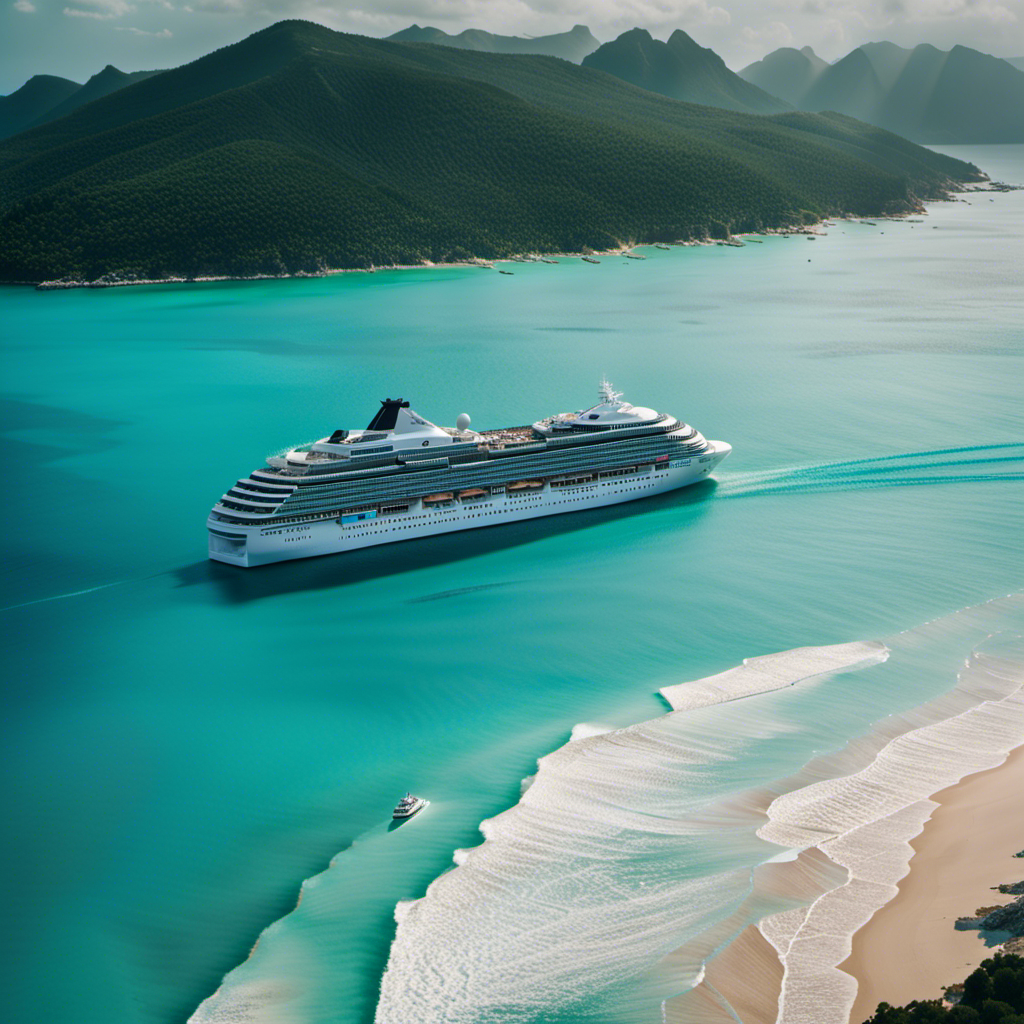
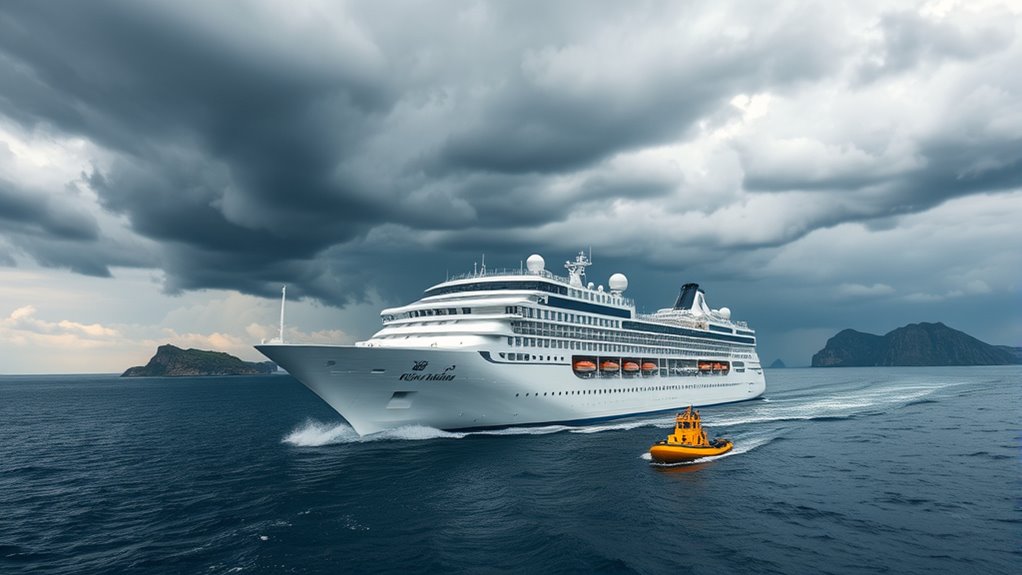

When storms threaten, cruise lines act quickly to keep you safe by adjusting itineraries and rerouting ships away from turbulent areas. They use advanced weather data to plan alternative routes, sometimes skipping ports or scheduling extra time at safer stops. They communicate these changes clearly, so you’re informed every step of the way. This way, your safety remains the top priority without compromising the overall experience. To discover more about how ships navigate stormy challenges, keep exploring the details below.
Key Takeaways
- Cruise lines implement immediate safety protocols and route modifications upon detecting storm threats.
- They plan alternative routes and adjust itineraries, skipping or replacing affected ports.
- Decisions are based on real-time weather data, sea conditions, and coordination with authorities.
- Changes are promptly communicated to passengers through onboard announcements and digital messages.
- Safety remains the top priority, with actions designed to protect passengers while maintaining a positive experience.

When a storm disrupts your cruise plans, cruise lines act quickly to guarantee passenger safety and minimize delays. They understand that storms can be unpredictable and potentially dangerous, so their first priority is ensuring everyone stays safe. To do this, they implement specific storm safety protocols, which often involve making route modifications to avoid turbulent weather. These adjustments are made as soon as the ship’s crew detects storm activity nearby, and they’re designed to protect both passengers and crew while keeping the journey as smooth as possible. Additionally, cruise lines continuously monitor weather conditions using advanced weather forecasting technology to make informed decisions promptly. Route modifications are a common response to a storm threat. Instead of sticking to the original itinerary, the ship’s captain and navigational team plan alternative routes that steer clear of storm-affected areas. These route changes might mean skipping certain ports or destinations initially scheduled for that day. While this can be disappointing if you were enthusiastic to explore specific locations, it’s a necessary step to prevent any risk of rough seas or dangerous weather conditions. Cruise lines communicate these changes promptly, often via onboard announcements or digital messages, so you know what to expect and can plan accordingly. The decision to adjust the itinerary isn’t taken lightly. It involves careful assessment of weather forecasts, sea conditions, and safety considerations. Once a route modification is decided upon, the crew works swiftly to update navigation plans, reroute the ship, and inform passengers of the new schedule. This proactive approach helps minimize disruptions and ensures the cruise remains as enjoyable and safe as possible under the circumstances. You might notice the ship sailing along different paths or visiting alternative ports that are less affected by the storm. In some cases, cruise lines might extend the stay at a safe port or add extra activities to compensate for missed stops, all aimed at maintaining passenger satisfaction. Throughout this process, your safety is always the top priority. Cruise lines invest heavily in weather monitoring technology and trained crew members who are prepared to respond to storm threats efficiently. They coordinate with maritime authorities and weather agencies to stay updated on storm developments, making real-time decisions to adapt routes swiftly. While storm safety measures might cause some itinerary changes, rest assured that these actions are taken with your well-being in mind. The goal is to keep everyone safe without sacrificing the overall experience, even if it means a few adjustments along the way.
cruise ship weather monitoring technology
As an affiliate, we earn on qualifying purchases.
As an affiliate, we earn on qualifying purchases.
Frequently Asked Questions
How Do Cruise Lines Notify Passengers About Itinerary Changes?
Cruise lines notify you about itinerary changes through passenger communication channels like emails, phone calls, and onboard announcements. They prioritize storm preparation to guarantee your safety and keep you informed promptly. You should regularly check your email and the cruise line’s app for updates. Often, they also post notices on the ship’s bulletin boards. Clear and timely communication helps you stay aware of any changes and plan your activities accordingly.
Are There Compensation Policies for Canceled Ports?
You might wonder if you’ll receive compensation for canceled ports after a storm. Cruise lines typically have storm preparedness plans and prioritize passenger communication, but policies vary. Some offer onboard credits, future cruise discounts, or partial refunds, depending on the situation. Stay alert and review your cruise line’s specific policies. Knowing this, you can better navigate the unexpected, turning a potentially disappointing experience into an opportunity for valuable compensation.
How Do Crew Plan Rerouting and Safety Procedures?
You’re responsible for planning rerouting and safety procedures by consulting updated navigation charts to navigate safely around storm-affected areas. You’ll conduct emergency drills regularly to ensure crew members are prepared for any situation, including storms or rerouted routes. These drills help everyone understand their roles, while navigation charts guide you on alternative routes. This proactive approach guarantees passenger safety and smooth operations even when weather disrupts your original itinerary.
What Factors Determine When to Cancel or Reschedule Ports?
You determine when to cancel or reschedule ports based on storm preparedness and passenger safety. If a storm poses a threat to safety, the cruise line will reroute or skip ports. They monitor weather reports closely and weigh factors like storm severity, forecast accuracy, and potential hazards. Prioritizing passenger well-being, they make timely decisions to make certain everyone stays safe and comfortable during the voyage.
Do Itinerary Changes Impact Cruise Prices or Refunds?
About 30% of cruise itineraries change due to storms, which can affect prices and refunds. When storms hit, cruise lines prioritize storm preparedness and guest communication, often offering partial refunds or future cruise credits if itineraries are altered. These changes might lead to slight price adjustments, but most companies aim to keep costs fair. Staying informed helps you understand how your booking might be impacted and what compensation is available.
cruise itinerary adjustment guide
As an affiliate, we earn on qualifying purchases.
As an affiliate, we earn on qualifying purchases.
Conclusion
So, next time a storm hits, remember how cruise lines often find themselves rerouting unexpectedly—almost like the sea has its own plans. You might think it’s just bad luck, but it’s also a coincidence of weather and navigation working together. These adjustments aren’t just about safety—they’re about embracing the unpredictable nature of the ocean. So, when your cruise changes course, know it’s all part of the adventure, guided by the sea’s own whims.

Cruise Ship Essentials, Travel Power Strip – No Surge Protector Cruise Approved, Outlet Extender Multi Plug Outlet with 4 AC Outlets 3 USB (2 USB C), 3 Sides Plug Adapter for Travel Cruise Essentials
【Cruise Ship Essentials】- The wall plug outlet with NO surge protection NO extension cords, which is cruise ship…
As an affiliate, we earn on qualifying purchases.
As an affiliate, we earn on qualifying purchases.
10PCS Large Cruise Door Magnets, Magnetic Waterproof Navigation Boat Anchor Cruise Ship Car Decors, Decorative Refrigerator Protector Magnets for Refrigerator, Carnival Cruise Party
Value Pack: It comes with 10 large cruise-themed magnets featuring fun and iconic designs like ships, anchors, lifebuoys,…
As an affiliate, we earn on qualifying purchases.
As an affiliate, we earn on qualifying purchases.